Showing posts with label Gokarna. Show all posts

Sunday, October 28, 2018

410. Homonyms in Tulu language.


The antique vs.the modern: Relics of  regalia in Barkur town, Udupi district.

Ancient words that have survived in a region, when properly recognized and analysed without bias, are like old antique coins that can be useful tools in deciphering the paleo (past) socio-linguistic environment of the terrain. This is true of coastal Karnataka and the Tulunadu. In this context, I would like to point out that some of our old words, inclusive of place names, have been grossly misinterpreted, especially because of the dual or more than two possible meanings associated with them.
 The homonyms in English language are similar sounding words with differing meanings. For example, the English homonymous word ‘fair’ basically has dual meanings such as (1) a festive congregation or exhibition or (2) justified, free from dishonesty.  In the similar vein, we can find homonym words, words sounding similar but with differing meaning in Tulu language.
A homophone is a type of homonym where the sound is similar but the spelling and the meaning are different. Homonyms and homophones in a language may possibly indicate incorporation of similar sounding words from ancient cultures that prevailed once upon a time in the region.
Homonyms and homophones prevailing in Tulu language have a special historical significance as they can through significant light on the obscure aspects of socio-linguistic heritage we have inherited.
 We shall discuss in this post a few Tulu and relevant coastal homonyms and homophones, whose original meanings have largely been either obscure or misinterpreted or misunderstood features of our heritage.

Bari
Bari is a well known common Tulu word used for distinguishing the inherited surname of an individual. A person can have two “bari” tags inherited from his or her two parents, but usually matrilineal ‘bari’ is recognized and honored especially while deciding traditional matrimonial alliances in community circles.
Bari in Tulu is a homonymous word. Even though, the word ‘bari’ is a common word in Tulu, most of the Tulu people consider the ordinary meaning of the word: namely, the side. In Kannada areas of the coast, the word has been morphed into ‘bari’ > ‘bali’ or   even “balli” especially in Kundapura and in parts of Uttara Kannada. Interestingly, the Kannada words ‘bali’ means proximity and “balli” means tendril or creeper or thread.
However, the ancient word ‘bari’ has another meaning namely, the house. In ancient days a person in the community was identified by the name of his house!  This practice was also common in Kerala where they use the word “illam” or the house. This original meaning of the word “bari” has unfortunately been forgotten during the course of prolonged history!
Similarly, especially in northern India, in ancient days, the persons were identified (or tagged) by the name of their cowsheds (‘goshāla’) or the “gothra”.
Incidentally, the homonymous word ‘bari’ signifies the ancient heritage of Tulu language. The word was a part of Munda/Prakrit language and sub-cultures that prevailed in this land during early centuries of the Common Era. The word ‘bari’, having the meaning of house, still exists in eastern and northeastern parts of India especially in Bengali and other allied languages.

Nari
‘Nari’  (short a; ನರಿ ) is not a common word in Tulu. It is a common Kannada word for jackal. The common word for jackal in Tulu is ‘kuduke’. However, you can find place names in Tulunadu such as ‘Naringana’(ನರಿಂಗಣ) and ‘Narimogaru’ (ನರಿಮೊಗರು).
The ancient word ‘nari’ in tribal languages represented tiger (not jackal) and we can find this still preserved and existing in the neighboring Kodava language. Incidentally, Tulu has forgotten the original tribal word ‘nari’ which has been shifted to jackal and original tribal word replaced by ‘pili’ (ಪಿಲಿ), a word from Dravida lingual lineage.
The word " nari" in Tulu has another meanings such as (a) dented  (b) broken or (c) wet, soft and rotten.  But these meanings would not appear appropriate in terms of toponyms.

 Nayi
Nāyi (ನಾಯಿ) is a common name for dog in most of the Dravidian languages including Tulu and Kannada. Therefore, while analyzing   place names like Nayampali, Nayibasadi etc. in Tulu region, some of our earlier researchers have attributed the meaning of dog to the word nāyi. It is interesting to note that there are ancient place names all over India containing the prefix of nayi. The word nayi (ನಯಿ), originally   derived from Prakrit, in all India context suggests new and not dog!
Historical correlations as pointed out above also suggest that the Prakrit was a dominant language in parts of south India especially ancient equivalents of Maharashtra, Karnataka and coastal Tulunadu. Thus it is logical to assume that the word nayi in ancient place names of Tulunadu also means new rather than dog! Further it was a common practice to name new towns with prefix tags suggestive of newness such as pudu, posa, hosa, nayi, nava etc.
Gokarna
Gokarna is a well known coastal place in Uttara Kannada district, often interpreted as northern boundary of ancient Tulunadu. The place name is usually interpreted based on its usual sound that echoes a Sanskrit word go+karna which simply means ear of the cow. 
However, if we look for Prakrit words in the place name then we find that the word gokar means serpent, snake or Nāga. Since –Na is a common spatial suffix indicative of settlement or village (as we find in place names like Marne, Muddann, Belmann, etc), the Prakrit word Gokarna is equivalent of Nāgur or even Uchila in connotation. As a counter proof, we find numerous villages across India containing the word gokar including the place name Gokarana. (see: Post 366. Mystery of Gokarna and Havyaka).
Thus,  gokar (Prakrit) = Nāga, serpent . Gokar+Na= Nāga village; Nāgur.
Further the Gokarna region is also known as  Havika, Haviga(> Haiga) or Havyaka. A simple analysis of the word reveals that these words are Kannada equivalents of the word Gokarna.
 (Haviga= hāvu+ga. Havika= hāvu +ka;  hāvu=serpent; ka or ga= village).

Gokarna, Havyaka and the Nāga cult
It is well known that the ancient cult of Nāga worship, once widely prevalent all over India, has remained steadfast in coastal Karnataka, especially in Tulunadu. The original meaning associated with the word Gokarna and Havika (Havyaka), as explained here, further strengthens our notion of historical prevalence of the ancient Naga cult in Uttara Kannada, where the influence of Nāga cult is under waning stage as a consequence of domination of subsequent religious cults.

Summary
Homonyms and their dual meanings discussed in this post are:
(a) Bari (ಬರಿ) =1.Side (Dravida origin); 2.House (Munda derivation)
(b) Nari (ನರಿ) =1.Jackal 2. Tiger (Tribal origin, also exists now in Kodava)
(c) Nayi=1.Dog (< nāyi, ನಾಯಿ); 2. New. ( ನಯಿ:Prakrit derivation).
(d) Gokarna (ಗೋಕರ್ಣ) =1. Cow’s  ear. (Sanskrit   derivation);  2. Nāga village (< gokar+Na. Prakrit derivation)

Feedback
Readers may contribute their considered opinions in the comment section, with or without including their independent analysis of words and place names, for the benefit of healthy discussions and further interpretations.
R

Friday, October 14, 2016

366. Mystery of Gokarna and Havyaka

Many of the place names that appear simple on the face may in fact be more complex in reality because of the obscurity in the historical evolution of our land.   It is necessary that care should be taken, while deciphering the original meaning intended and attributed to the place name, by our ancestors who gave the particular name at a remote point in the past history.     Similarly it would be wise to discard the apparent  but untrue meanings that may be attached to  the  name because  of      limitations  in  our  understanding the history and meaning of  the original word. Let us analyze the place name Gokarna and its relation to ethnic words Ha(v)iga and Havyaka.
Legends of Gokarna
Gokarna is a well known place in West Coast of Karnataka, located on the flank of Aghanāshini River in Kumta Taluk, Uttara Kannada district.  The Gokarna is a renowned tourist spot famous for Hindu religious ceremonies especially in the celebration of traditional posthumous rites apart from attractive beaches like Om beach, Kudle beach and main Gokarna beach.
Legends related to the epic Ramayana describe the Gokarna as the place where Asura King Rāvana, while carrying Ātma-linga requested Lord Ganapati (Ganesha) to hold the Ātma-linga for a short while as he wanted a brief respite from the burden. But legends envisage that   the Lord Ganapati tactfully or rather playfully placed the Linga on the coastal sand which was installed permanently. The Rāvana who returned to the site was perplexed to find that the Linga could not be moved from the place in spite his best physical efforts. Ultimately, Rāvana had to leave the Ātma-linga entrenched in that place which later became famous shrine of the Lord Shiva in the name of Mahābaleshwara.
Toponym : Gokarna
The analysis of the toponym (place-name) Gokarna appears quite simple at the outset as it apparently contains two rudimentary Sanskrit words:  Go (=cow) and karna (=ear).  Therefore Gokarna=Cow’s ear. There are legends supporting the hypothesis of Cows ear stating that the Ātma-linga came out a cow’s ear.
However, if you are a serious   student of Indian place names, you may feel that it is unusual that a place should be named after the ear of a cow (in spite of our respect for the holy cow).
The basic reasons for dissent are:
(1) The place names coined by our ancestors reflect the words selected from the language existing at that time in that region.
(2)  Most of our place names are desi words which may have been modified in the due course of time. (The term desi usually reflects the words derived from Prakrit, Munda or Dravida languages.)
(3)  Most of our ancient place names end with characteristic spatial indicator suffixes or morphemes like –na, -ka, -ga, -sa, -ba, -va,-ma, -la,-ala, etc (or their variants and modifications.).  (You may peruse previous/older posts in this blog dealing with toponymic analyses).
(4)  If you apply such a kind of logical place name analysis, then, the origin of the word would be: Gokarna = gokar + Na.
Many Gokarnas' !
It may surprise you to know that there are many places in India,  known by the name of Gokarna. The census of India 2011 database reveals that that are several villages distributed in different states of India, carrying the name “Gokarna” with or without additional modifier suffixes. A few places named exactly as "Gokarna" also exist in Gujarat and West Bengal besides Karnataka.
This may lead to controversy  as to which was the actual Gokarna referred to in the epic Ramayana.  Note that there is a village by the name of “Gokarni” in West Bengal. In Uttar Pradesh, there are "Gokhar" as well as "Gokhari" villages. In Uttara-khand, "Gokhuri"  and in Rajastan, "Gokhri" named villages are found.  Besides, there are many villages bearing  varying names such as: "Gokhara", "Gokharpada", "Gokarnapur", "Gokarnabinda", "Gokarneshwar", "Gokarnakhal", "Gokarnameri" and "Gokharkuda" especially in the State of Odissa. There is village known as "Gokhar Bedi" in Madhya Pradesh.  In Gujarat, "Gokharva" and "Gokharwala", villages are found. In Andhra Pradesh, apart from villages named as “Gokarnapuram” you will also find “Gokarnapalle” and “Gokaram”. In Bangalore District near Devanahalli there is a “Gokare” village. You can also find villages named “Gokhar” in Uttar Pradesh and Nepal.

Gokhar: the Nāga cult
Gokhar (or Gokar) means Nāga, cobra or serpent in Prakrit and its derived languages like Odissi.  Therefore, places known as Gok(h)arna  were ancient villages, originally were named after the  cult of Nāga, which was a holy deity for the native tribes.   The prevalence of ancient cult of Nāga worship  has been well known in different parts of ancient India.
Thus, the Gokarna and its derivative toponyms are suggestive of ancient areas dedicated to the cult of Nāga worship in the antiquity. These place names also indicate that in these regions Austro-Asiatic Munda and/or Prakrit languages prevailed during a specific period in the past history.
That the toponym Gokarna originally meant place of serpent cult can also be proven by the existing alternate historical name for the Uttara Kannada (region around Gokarna) by the name of  “Haiga” ( or Haviga).

Haiga, Haviga = Gokarna
The analysis of the place name "Gokarna" (= village of Nāga ) throws light further on another disputed term in the Indian history : Haiga or Havika. The Kannada dialect in Uttara Kannada district is generally pronounced little bit faster ,such that some of the words unintentionally get mutilated or distorted in the spoken language. Thus the term "Haviga" is generally pronounced as "Haiga" in the local dialect of Gokarna and surrounding areas. We can see that 
the word “Haviga” [Hāv+(i)+ga] in Kannada is equivalent of  Prakrit word "Gokarna," as hāvu means Nāga or serpent in Kannada and –ga is an ancient suffix indicative of a settlement, habitation or village. Thus Haviga (also Havika or Haiga) is the Kannada eqivalent of the Prakrit place name Gokarna.

Lingual transition: Prakrit to Kannada
Thus, the place name Gok(h)arna on translation to Kannada has become Havika or Haviga, where in suffix -ka or -ga is indicative of habitation, similar to the prefix -na in Gokharna. This is suggestive of an important historical fact which documents the change of administrative language in the region from Prakrit to Kannada. The date of lingual transition probably can be assigned as ca.300 CE.

Havyaka
Thus it can be realized that the Brahmins originating from Havika or Haviga (Uttara Kannada district) area of Karnataka are traditionally designated as Havika or Havyaka Brahmins.  The word Gokhar is known as Haavu in Kannada. 

Controversies
However, the origin of the word “Havyaka” has also been disputed in learned circles. Basically,
 so far there are two schools of explanations in vogue with regard to the origin of the word "Havyaka".
(1) It has been suggested that the category of Brahmins traditionally engaged in the rituals of offering Havana (Havya) and Homa were considered as Havyaka.
(2) Alternately, the category of Brahmins,  hailing from the region of "Haiga" were known as "Havyaka".

(3) It can be seen that the origin of the word "Haiga" ( or Haviga) is itself has been somewhat controversial, as there is  a school of thought suggesting that the word "Haiga" might have been derived from the term "
Pashuka". There has been a suggestion that Haviga came from "aavu" which means cow in Old Kannada.


Of all the hypotheses discussed above, it appears that the word "Haviga" (shortened to Haiga as it is customary in the dialectical version of Kannada of Uttara Kannada) gave rise to the word Havyaka - one related to the region of Havika/Haviga.  Clearly, the term "Havika/Haviga" is the Kannada translation of the Prakrit place name word "Gokarna". 
Thus, the Gokarna region of Uttara Kannada,   has been known as “Haiga” (or “Haviga”) in historical documents probably after 3rd Century  CE. The native (Kannada) word ”Haiga” was the deformed version of the Kannada word Hāviga.  

Ucchila(=Gokarna, Haviga)
In this context, we can study a similar meaning, analogous place name from Tulunadu. The place name "Ucchila" is equivalent of Gokarna or Haviga as Ucchu+ila means habitation (-ila) of the Serpent (Ucchu). There are at least two coastal villages in Tulunadu (1.Near Kapu, Udupi district and 2.Near Manjeshwar, Kasargodu District, Kerala) bearing the name of Ucchila.

Historical implications
Thus it is concluded that term “Hāviga” or “Haiga “ as employed  in historical inscriptions refer specifically to the region of Gokarna in Uttara Kannada. Corroborative historical data (discussed elsewhere and also in our older posts,) suggests that Prakrit language prevailed as administrative language in Karnataka probably up to ca. 200 or 300 CE.  Further, Kannada language dominated and took the place of regional administrative language, which is also evident by the natural translation of the Prakrit term Gokarna into Hāviga. 
Thus, it can be concluded that "Haiga" was the Kannada term for the "Gokarna" (in Karnataka) and the term Havyaka as applied to the group of people meant the Brahmins of Gokarana (or Haiga) region.  
It is interesting to note that out of the two analogous terms, Gokarna and Haiga (Haviga), the latter has gone out of usage in the long run, whereas the former has remained in active usage. The term Gokarna stayed with the people as favorite, possibly because of its  appeal as a word apparently akin to Sanskrit, the widely respected language, . 
R

Thursday, October 11, 2007

44. The scale of human migration

Normally, our perceptions are based on the present environments and therefore we have difficulty in visualizing the scenarios from the past. Many people cannot digest the concept of migrations because they imagine whole massive population, in the scale they see now around, moving out from one place or region to the other.
One small event in the relatively recent history shall be useful to envisage the scale of migrations that occurred in the past history.
Nadava migration
About 500 years ago, five families of Nadavas from Kundapur taluk, left their original homeland due to differences with local people, travelled some 100 km distance northward crossing a number of coastal rivers to Ankola- Gokarna area of Uttara Kannada district and resettled there. Now, after passage of five centuries, the population of Nadava community in the Ankola- Gokarna region exceeds 10,000.
Five centuries have contributed significant changes to the language, culture and beliefs of the migrated Nadavas of present Uttara Kannada. Their language ‘Nadava Kannada’ now is slightly different from that of the present ‘Kundapur Kannada’. Their beliefs also have undergone minor changes: the cult of spirit worship has taken back seat and local influence of Lord Tirupati Venkataramana has taken over. The ‘moolasthana’ concept has almost vanished,but the ‘bari’ concept has become ‘balli’ concept.. The Bermer cult has been modified into an annual festival of Bommayya devaru.

Blog Archive

Books for Reference

  • A Comparative Study of Tulu Dialects By Dr. Padmanabha Kekunnaya. Govinda Pai Reserach Centre, UDupi. 1994
  • Koti Chennaya: Janapadiya Adhyayana. By Dr. Vamana Nandavar. Hemanshu Prakashana ,Mangalore.2001.
  • Male kudiyaru. Dr B. A.Viveka Rai and D.Yadupathi Gowda, Mangalore University,1996.
  • Mogaveera Samskriti By Venkataraja Punimchattaya. Karnataka Sahitya Academy.1993.
  • Mugeraru:Jananga Janapada Adhyayana. By Dr Abhaya Kumar Kaukradi.Kannada & Culture Directorate,Bangalore & Karnataka Tulu Academy, Mangalore,1997.
  • Puttubalakeya Pad-danagalu. Ed: Dr B.A.Viveka Rai,Yadupati Gowda and Rajashri, Sri Dharmasthala Manjunatheswara Tulu Peeta. Mangalore University.2004
  • Se'erige. Ed:Dr K.Chinnapa Gowda.Madipu Prakashana,Mangalagangotri,2000.
  • Studies in Tuluva History and Culture.by Dr P Gururaja Bhat (1975).Milagres College,Kallinapur,Udupi.
  • Taulava Sanskriti by Dr.B.A.Viveka Rai, Sahyadri Prakashana,Mysore 1977
  • TuLu naaDu-nuDi By Dr.PalthaDi Ramakrishna Achar, Puttur.
  • TuLu NighanTu. (Editor in Chief: Dr U.P.Upadhyaya, Govinda Pai Research Centre,Udupi. Six volumes. 1988 to 1997
  • Tulu Patero-A Philology & Grammar of Tulu Language by Budhananda Shivalli.2004.Mandira Prakashana Mangalore. p.317. (The book is in Tulu Language using Kannada script)
  • TuLunadina ShasanagaLa Sanskritika Adhyayana. By Shaila T. Verma (2002) Jnanodaya Prakashana,Bangalore, p.304.(Kannada)
  • Tuluvala Baliyendre. Compiled by N.A.Sheenappa Hegde,Polali,Sri Devi Prakashana,Parkala,1929/1999

A Coastal estuary

A Coastal estuary
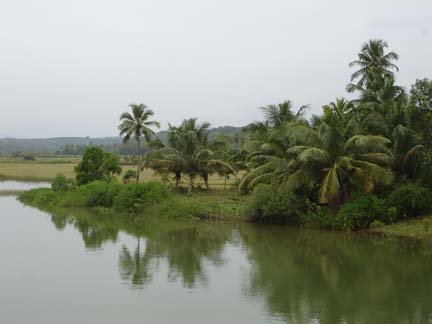
Holegadde near Honavar,Uttara Kannada dist, Karnataka

Copy? Right - but kindly remember to acknowledge!

Creative Commons License
This work is licensed under a Creative Commons Attribution 3.0 License.

" tulu-research.blogspot." ತುಳು ರಿಸರ್ಚ್. ಬ್ಲಾಗ್‌ಸ್ಪಾಟ್‌. ಇನ್

" tulu-research.blogspot."  ತುಳು  ರಿಸರ್ಚ್.  ಬ್ಲಾಗ್‌ಸ್ಪಾಟ್‌. ಇನ್
Have a nice day !