Showing posts with label paDdana. Show all posts

Friday, December 25, 2009

219. PāD-dana

The existing classification of Dravidian languages gives an overall impression that these evolved exclusively from the proto-Dravidian along a specific linear path. However, the origin and evolution of words in a language like Tulu may be more complex than visualized by linguists at present.

The word: PāD-dana
The Tulu word paD-dana appears to have had a complex origin, being possibly borrowed and adapted from the co-existing or pre- existing languages in the Karavali. Though it has been incorporated extensively in the Tulu usage, it does not sound like a original word of Tulu language. Amrita Someshwara in his work ‘Tulu PaDdana Samputa’ has also pondered over the issue.
The word paD-tana apparently is derived from old Kannada sources. The word ‘pāD(u)’ (=song) was commonly used in old Kannada. Later it became ‘hāDu’ in later Kannada, with p.> h transition. Similarly the suffix ‘–tana’ (=state of being; equivalent of English suffix ‘-hood’) is common usage in Kannada.(For, example siritana, baDatana, saNNatana, manetana etc). However, both these usages ‘pāD’ as well as ‘-tana’ are uncommon in Tulu. Therefore, it can be concluded that the word ‘paD-dana’ (or ‘paDtana’) was borrowed from old Kannada into Tulu. This is further supported by the reference in paDdanas that Panjurli came to Tulunadu from the Sahyadri Ghat areas, probably referring to ancient Kadamba Kingdom of Banavasi. Additionally, it may be noted that the name Varāhi (Varaha=Wild boar, Panjurli) has been applied to the River originating from Banavasi region.The old Kannada word pāDdana has been lost in the later versions of Kannada, probably as result of development of script and decrease of importance for the oral literature media.
pada
In Tulu phrase ‘pada panpini’ (= reciting a song), the word ‘pada’ is employed to represent an oral song. On the contrary, the word ‘pāDu’ (=song, as in old Kannada) or ‘pāTT’(=song, as in Tamil) is not in current usage in Tulu. Similarly, the suffix ‘-tana’ is not common in Tulu, except in words borrowed from Kannada. Thus the compound word ‘paD-tana’ (=act of singing) may have been borrowed from old Kannada along with the cult of Panjurli.
It is interesting to note that the word ‘pada’ evolved later to mean the word, especially in languages like Kannada that developed script in the due course. In current Kannada the equivalent of Tulu ‘pada’(=song) is ‘padya’(=poem).

Pārdana, pārteno
However there are some more equivalents of the word ‘paDdana’ in Tulu such as ‘pardana’ and ‘partena’ or ‘parteno’. However, these words were borrowed from ‘Gond’ and ‘Mundala’ languages. In Gondi language now prevalent in Vidarbha region of Maharastra, the word ‘pardan’ or ‘pardhan’ refers to tribal bards among Gonds.
Similarly, Mundala tribes use the word ‘partana’ or ‘partena’ or ‘parteno’ for the oral ballads.
The Gonds and Munda tribes were widespread in West Coastal region in the antiquity, probably before the arrival of tribes who spoke or introduced Tulu language in the Karavali region. Numerous ancient place names in the Karavali remain mute testimonies to the ancient existence of Gond and Munda tribes in the region.
PaTThana
There is an analogous Prakrit and Pali word known as ‘paTThana,’ whose original meaning has almost been lost. Some authors have surmised that it could be derived from the Sanskrit word ‘prārthana’. However, one of the Buddhist religious volumes in Pāli language has been known as ‘paTThana’, suggesting that it probably was in an oral ‘paD-dana’ form to begin with.The derived word 'paTTaN'(=reciting) has subsequently been absorbed in Hindi.
Prarthana
In the line of pardana- partana- paDdanas discussion, the Sanskrit word ‘prarthana’(=prayer) apparently has some relevance. Some authors have even suggested that the Sanskrit word ‘prarthana’ was the source or inspiration for the words partana- pardana- paDdanas. This seems unlikely since these tribal cultures were relatively more ancient and the Sanskrit was introduced in southern India more or less in the beginning of Christian Era.
Thus it seems likely that the coining of the Sanskrit word ‘prarthana’ was inspired from the tribal sequence of words namely : partana, pardana and paDdana.
Orature
Primitive cultures invented literature as creative pastimes long before the invention of script or the written word. The oral literature (‘orature’) was popular in Africa and other primitive centers of human evolution and dispersal.
Even the Vedas were a form of orature to begin with (ca.1700-500 BC), which were passed down the subsequent generations through recitation from memory. Contemporaneous Indian tribes like Mundas, Gonds and Others (who spoke Prakrit, Pali etc) had similar orature systems , like paD-dana ( or its regional variants such as partena, pardan or paTThan etc). This mode of folklore was also passed down the generations by sheer memory similar to Vedas. King Ashoka introduced the Brahmi script in India (ca. 300 BC) that revolutionized the documentation of literature. In many of the Indian languages, especially those with major royal patronage, scripts were introduced.
Note that the significance of oratures declined markedly in languages that developed popular scripts in due course like Sanskrit,Prakrit,Tamil,Kannada, etc as seen by the later disuse of the word (paDdana or its variants)in those languages.
Since some of the tribal languages of India may be older than Sanskrit, it may not be correct to consider that the preexisting languages borrowed some of these words from the Sanskrit. In reality, it may be the other way round.
Pardans (Gond bards, who apparently derived their names from singing pardan/paDdana), like Tamil Panans, acted like advisers to Kings, which subsequently introduced a new ministerial word pradhān (<.derived from 'pardan'). Similarly,the word 'pārteno' possibly led to coining of the Sanskrit word prārthana.
Sanskrit words, generally have been coined from word components that inherently carry the essence of meaning expressed in the final compound word. But if you split and analyze the words like 'prarthana' or 'pradhan', you may not get the root meanings tallying with the final meaning conveyed by the compound words.
With passage of time, we are unable to ascertain the original words that inspired formation of new words,and may be because of our inherent bias towards 'primitive' cultures.


®

Tuesday, February 26, 2008

97. Siri paDdana : A Tulu Sangham Epic

Antiquity of the Siri paDdana dates back to the period of Tamil Sangham literature. There are several Pali proper nouns in the Siri paDdana that show the backdrop of Buddhism during the composition of the oral epic. Buddhist elements have also been recognized in the environs of Tamil Sangham. The word Sangham (=association) itself is a word associated with Buddhism.
Tulu Sangham
Analogy between the Siri paDdana and the story of Kanaki in Sangham literature suggests that both epics were two different regional versions been built on the same story element. As noted by Peter Claus “there are some tantalizing similarities between the Siri cult and that of Pattini, and also between the Siri legend and that of Kanagi (Pattini)”.The similarity of story element in the Sangham Kanaki and Tulu Siri, leads us to conclude that the composition of Siri paDdana was contemporary of Tamil Sangham literature.
This leads us to visualize a period of an oral tradition of literary association that flourished for some time before Christ in Tulunadu that can be designated as Tulu Sangham. The Tulu Sangham tradition apparently added subsequent sequels in the due course like (a) Abbaga-Daraga and (b) Mayaga-Maipage to the original Siri paDdana by different bards. Minor contradictions in the different sequels possibly point to compositions by different bards at different times.

Sonne and others
Sonne is the name of daughter of Siri, the tragedy heroine. The meaning of Sonne is not zero! Sonna means gold in Pali language. The Hindi Sona and Sanskrit Suvarna are related to this word. Similarly, the proper names like Mayage (<=Mayakka), Maipage (Mayi-page) suggest Buddhist influence during the composition, the Maya(devi) being the name mother of Gautama Buddha. Even,the place names Lokanadu or Lankanadu evince Buddhist flavours. Other proper nouns Gindi (=bronze kettle type of vessel), Abbaga (=constellation of Krittika), Daraga (=constellation of Mrigashira) are not found in common Pali names and may be the usual Tulu female names in usage at that time. The usage of (male) period surnames in the paDdana like Alva, Ballaveru, Marla and Thola needs further analysis.

Chenne, the game
The word chenne is derived from the Pali word that means to relish, but the game and the cult evidently has been imported by the Tulu immigrants. Folklorist Peter Claus concludes that many of the elements found in Tulunad were imported along with the game as sort of historical baggage. The earliest representation of the game in Egypt would suggest that the game originated in the Middle East and traveled along trade routes even before Christ. The game symbolizes intelligence and cunningness and is played among peers. In India and Africa the game is represents rites connected with puberty and marriage.

Bermer
Though Pali words connected with Buddhism make interesting backdrop in the Siri paDdana, the ruling deity is Bermer, the ancient spirit God of Tulu people. The Shiva and Parvathi appear as characters in a sequel of the PaDdana, but there is no indication of their worship. Possibly the Siri PaDdana predates the period of initiation of Shiva worship.
The chief character of the paDdana, the landlord of Satyanapura is also called ‘Berma’ Alva .or ‘Berma’ Ballaveru in a sequel. Initially, he is issueless and the suggestion he gets is that his problem would be resolved if he arranges for the renovation of Bermer shrine.

Time and Tides
This leads us to interpret that Bermer worship was grossly neglected during the ascent of Buddhism in Tulunadu. The initial Buddhism being a religion without Gods, the people neglected the cult of Bermer and spirit worship that was prevalent among them. The bards of Tulu Sangham contemplated to revive the neglected Bermer worship on the wake of ascent and spread of Buddhism in the region. The story of Siri paDdana revolves around adultery and prostitution that was the major concern of thinkers of that period. Apparently, to discourage women pursuing paths of adultery, like their errant husbands, the bards poetically conceived special dignity and powers (to curse or bless) to women following paths of disciplined life.
®

.

Thursday, February 21, 2008

94. Antiquity of Siri

The living oral ballads in Tulu language known popularly as paDdanas are unwritten ancient documents that evolved along with the Tulu people, culture and language over a prolonged period of time. They not only reflect the poetic emotive talents of our ancestors, but are also mirrors of the changing culture, values and ethos of our people.

Evolved paDdanas
But the paDdanas that survived amidst us at present are the intensely evolved versions. Since paDdana are orally transmitted folk ballads generation to generation, it is logical to expect modifications over the years reflective of the environmental perspectives of the person reciting it. In the current digital parlance, they can be compared to the Microsoft Windows Vista or the Adobe Photoshop CS3. I take the liberty of this odd comparison just to convince you the difficulty of visualizing and reconstructing the earliest version of paD-danas using the current versions. And given the prolonged evolutionary history Tulu people incurred the oldest, original form of any paDdana is nebulous to decipher. Still there are some glowing indices in the current versions of paDdanas that through light on their antiquity and overall Tulu cultural evolution.

Ancient Siri paDdana
The evidences discussed below permit me to propose that the original version of the Tulu paDdana on Siri may have been orally composed during ca. 300 BC or earlier.

1.Satyanapura
The first proof: King Ashoka’s Girnar rock edict in Pali language (ca.300 BC) describes a southern State of ‘Satiyaputto’ that can be translated as Satyapura. The name of the palace in the Siri paDdana, Satyanapura is akin to Satyapura or Sati(y)aputto.
Now there are no towns having the name of Satyanapura in Tulunadu. However, it can be presumed that ‘Satyanapura’(.>Satiaputo) was a prominent Tulu City-State during the period of King Ashoka.

2.Siri -A Pali word
Second proof of the antiquity of Siri is the word itself. Siri is the heroine of the Siri paDdana. The name Siri is not commonly used name for present day Tulu females.
The word ‘Siri’ exists in Tulu language and it means tender leafy shoot of a plant like coconut palm. In Pali language the word Siri represented the Godess of luck.There is some parallelism between the two meanings: (1) tender shoot (Tulu) and (2).luck (Pali). The growth of tender shoot (Siri) is perceived as lucky.
Normally, we are taught in schools that the word ‘Siri’ is the derivative (‘tatbhava’) of the Sanskrit word ‘Shri’. But this is questionable and the truth may be the other way round, since the mythology of Lord Vishnu and his wife Shri (Lakshmi) evolved as late as 500BC or still later. The Pali and related Prakrit language existed before Vedas and it can be considered logically that Sanskrit (= refined) was a refined, evolved language after the older Prakrit (=natural) language. Since, it can be established that religious cults have borrowed from each other, it can be proposed that ‘Siri’, the Godess of luck of early Buddhist period, eventually evolved into ‘Shri’, the Godess of wealth.
To summarize: Siri.> Shri.
Thus the Pali word ‘Siri’ in the said PaDdana displays unmistakable shadows of early Buddhism in the early Tulu history dating back to ca.300 BC.

3. Ancient cult of Possession.
Third proof for the antiquity of the original Siri paDdana is the persistence of the ancient cult of possession attached to the Siri festivals.
The annual celebration of Siri festival is quite unique and unlike other kola, nema etc celebrations associated with other Tulu spirits. It is a celebration of the ancient art of trances or possessions. This cult was prevalent during the early history of the southern India and is well documented in Tamil Sangham literature that is estimated to have been compiled between the periods ca.200BC to 200AD.George Hart discusses some aspects of the cult of possessions described in Sangham literature.

4. Chenne mane: An ancient game
Peter Claus reports that Chenne Mane, a rural game associated with the Siri cult (or Mancala game as known in other parts of India and Srilanka) is known to have been played by rural folks since ca.200 BC. The game is prevalent in parts of Africa and Middle East, a fact suggestive of origin of the game in Africa-Mediterranean region. The game may have been brought to Tulunadu by the Early Tulu immigrants.

Evidently, the Siri paDdana has evolved extensively since its inception during early years of Buddhism in Tulunadu. The implicit indications of Jainism attached to it in the current versions of Tulu Siri paDdana are only reflective of the theological evolutions in the Tulunadu with the passage of times.
®

Blog Archive

Books for Reference

  • A Comparative Study of Tulu Dialects By Dr. Padmanabha Kekunnaya. Govinda Pai Reserach Centre, UDupi. 1994
  • Koti Chennaya: Janapadiya Adhyayana. By Dr. Vamana Nandavar. Hemanshu Prakashana ,Mangalore.2001.
  • Male kudiyaru. Dr B. A.Viveka Rai and D.Yadupathi Gowda, Mangalore University,1996.
  • Mogaveera Samskriti By Venkataraja Punimchattaya. Karnataka Sahitya Academy.1993.
  • Mugeraru:Jananga Janapada Adhyayana. By Dr Abhaya Kumar Kaukradi.Kannada & Culture Directorate,Bangalore & Karnataka Tulu Academy, Mangalore,1997.
  • Puttubalakeya Pad-danagalu. Ed: Dr B.A.Viveka Rai,Yadupati Gowda and Rajashri, Sri Dharmasthala Manjunatheswara Tulu Peeta. Mangalore University.2004
  • Se'erige. Ed:Dr K.Chinnapa Gowda.Madipu Prakashana,Mangalagangotri,2000.
  • Studies in Tuluva History and Culture.by Dr P Gururaja Bhat (1975).Milagres College,Kallinapur,Udupi.
  • Taulava Sanskriti by Dr.B.A.Viveka Rai, Sahyadri Prakashana,Mysore 1977
  • TuLu naaDu-nuDi By Dr.PalthaDi Ramakrishna Achar, Puttur.
  • TuLu NighanTu. (Editor in Chief: Dr U.P.Upadhyaya, Govinda Pai Research Centre,Udupi. Six volumes. 1988 to 1997
  • Tulu Patero-A Philology & Grammar of Tulu Language by Budhananda Shivalli.2004.Mandira Prakashana Mangalore. p.317. (The book is in Tulu Language using Kannada script)
  • TuLunadina ShasanagaLa Sanskritika Adhyayana. By Shaila T. Verma (2002) Jnanodaya Prakashana,Bangalore, p.304.(Kannada)
  • Tuluvala Baliyendre. Compiled by N.A.Sheenappa Hegde,Polali,Sri Devi Prakashana,Parkala,1929/1999

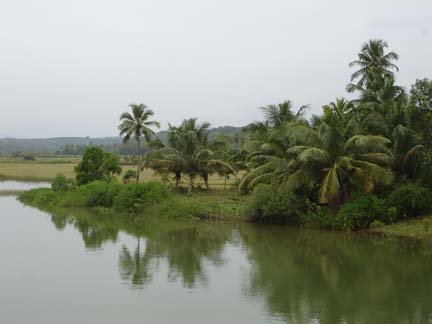
A Coastal estuary

A Coastal estuary
Holegadde near Honavar,Uttara Kannada dist, Karnataka

Copy? Right - but kindly remember to acknowledge!

Creative Commons License
This work is licensed under a Creative Commons Attribution 3.0 License.

" tulu-research.blogspot." ತುಳು ರಿಸರ್ಚ್. ಬ್ಲಾಗ್‌ಸ್ಪಾಟ್‌. ಇನ್

" tulu-research.blogspot."  ತುಳು  ರಿಸರ್ಚ್.  ಬ್ಲಾಗ್‌ಸ್ಪಾಟ್‌. ಇನ್
Have a nice day !