Showing posts with label antiquity. Show all posts

Sunday, July 13, 2008

126. Totems in our antiquity


An image of a totem of Rabbit.

We generally take for granted that totems were traditionally used by the primitive aborigines of Africa or America. The Oxford dictionary defines totem as ‘a natural object or animal believed by a particular society to have spiritual meaning and adopted by it as an emblem’.
Our analysis and earlier discussion on the antiquity of Sāliyān lineage led straight into the realm of totems. Analytical inputs from Manjunath and Ashok Shetty unravelled ‘spider’ (or ‘Tālya’) as an ancient totemic emblem of the Sāliyān/ Tāliāna lineage of Tulu communities. This leads us to investigate deeper into the footprints of totemic emblems in Tulunadu.

African heritage
I have emphasized earlier that Tulu people were immigrants and have had African heritage in their antiquity. This is in conformity with the popular recent concept of migration of people from Africa. The basic words ‘Tulu’ and ‘Bant’ have been shown to be imported from our African roots. Similarly our word ‘Kola’ (the celebration or reception, the custom) is from Africa. There have been several other borrowed items that have been part and parcel of our culture: the cult of Spirit worship, Tree worship (Marava), the tradition of Oral literature (PaDdana), Totems

Totem of Rabbit:‘Muger’
One of the major tribal groups at present in Tulunadu is called ‘Mugera’ or ‘Méra’. The words ‘muger’ or ‘mér’ refer to rabbit. Dr. Abhaya KaukraDi in his work on ‘Mugeraru’ (1997) infers that the word ‘Mugera’ or ‘Mera’ came into being because these tribes are experts in hunting rabbits. However there is a strong possibility of the rabbit being a totem for this tribal community in the antiquity.

There is one more community not related to ‘Mugera’ / ‘Mera’ tribes discussed above but also called ‘Mugér’ or ‘Moger’ especially along the coast. These are fishers by profession and in Tulu regions they have been renamed as ‘Mogaveera’ during the beginning of the Twentieth century. I have tried to explain the word origin of ‘Moger’ (now, Mogaveera) earlier based on the words ‘mogaru’ or ‘mugér’ which means river-plains (as in ‘Jeppina mogaru’, Narimogaru etc). There is also a view that Moger is derived from the word 'moge' to draw water.The availbility of alternate choice of meanings for the words is inevitable during word-analysis due to ambiguities in the origin and existence of dual (or more) meanings for many of our words.
However in the light of our discovery of totemic roots of Sāliyān/ Tāliāna lineage, it appears that apart from the tribes ‘Muger /Mera’, there is a possibility that ‘Mogera’(Mogaveera) tribes in the antiquity also may have had rabbit as their totem in the antiquity.
More data on these aspects would be welcome.

Iruva
One of the ancient tribes I described based on relics of village names is the tribe of ‘Iruva’ or ‘Irava’. These may also be related to ‘Irula’ tribes and language found in interior Kerala. The name has close affinity to the tiny animal ant (‘Iruve’) which is a totem among some of the primitive African/American tribes.

More on elucidation on these aspects and suggestion of other totems may be expected from knowledgeable persons.

®
Reference:

Dr Abhaya KaukraDi (1997) ‘Mugeraru: Janjanga, Janapada adhyayana’ (in Kannada). Directorate of Kannada and Culture Bangalore. 292 p.

Thursday, February 21, 2008

94. Antiquity of Siri

The living oral ballads in Tulu language known popularly as paDdanas are unwritten ancient documents that evolved along with the Tulu people, culture and language over a prolonged period of time. They not only reflect the poetic emotive talents of our ancestors, but are also mirrors of the changing culture, values and ethos of our people.

Evolved paDdanas
But the paDdanas that survived amidst us at present are the intensely evolved versions. Since paDdana are orally transmitted folk ballads generation to generation, it is logical to expect modifications over the years reflective of the environmental perspectives of the person reciting it. In the current digital parlance, they can be compared to the Microsoft Windows Vista or the Adobe Photoshop CS3. I take the liberty of this odd comparison just to convince you the difficulty of visualizing and reconstructing the earliest version of paD-danas using the current versions. And given the prolonged evolutionary history Tulu people incurred the oldest, original form of any paDdana is nebulous to decipher. Still there are some glowing indices in the current versions of paDdanas that through light on their antiquity and overall Tulu cultural evolution.

Ancient Siri paDdana
The evidences discussed below permit me to propose that the original version of the Tulu paDdana on Siri may have been orally composed during ca. 300 BC or earlier.

1.Satyanapura
The first proof: King Ashoka’s Girnar rock edict in Pali language (ca.300 BC) describes a southern State of ‘Satiyaputto’ that can be translated as Satyapura. The name of the palace in the Siri paDdana, Satyanapura is akin to Satyapura or Sati(y)aputto.
Now there are no towns having the name of Satyanapura in Tulunadu. However, it can be presumed that ‘Satyanapura’(.>Satiaputo) was a prominent Tulu City-State during the period of King Ashoka.

2.Siri -A Pali word
Second proof of the antiquity of Siri is the word itself. Siri is the heroine of the Siri paDdana. The name Siri is not commonly used name for present day Tulu females.
The word ‘Siri’ exists in Tulu language and it means tender leafy shoot of a plant like coconut palm. In Pali language the word Siri represented the Godess of luck.There is some parallelism between the two meanings: (1) tender shoot (Tulu) and (2).luck (Pali). The growth of tender shoot (Siri) is perceived as lucky.
Normally, we are taught in schools that the word ‘Siri’ is the derivative (‘tatbhava’) of the Sanskrit word ‘Shri’. But this is questionable and the truth may be the other way round, since the mythology of Lord Vishnu and his wife Shri (Lakshmi) evolved as late as 500BC or still later. The Pali and related Prakrit language existed before Vedas and it can be considered logically that Sanskrit (= refined) was a refined, evolved language after the older Prakrit (=natural) language. Since, it can be established that religious cults have borrowed from each other, it can be proposed that ‘Siri’, the Godess of luck of early Buddhist period, eventually evolved into ‘Shri’, the Godess of wealth.
To summarize: Siri.> Shri.
Thus the Pali word ‘Siri’ in the said PaDdana displays unmistakable shadows of early Buddhism in the early Tulu history dating back to ca.300 BC.

3. Ancient cult of Possession.
Third proof for the antiquity of the original Siri paDdana is the persistence of the ancient cult of possession attached to the Siri festivals.
The annual celebration of Siri festival is quite unique and unlike other kola, nema etc celebrations associated with other Tulu spirits. It is a celebration of the ancient art of trances or possessions. This cult was prevalent during the early history of the southern India and is well documented in Tamil Sangham literature that is estimated to have been compiled between the periods ca.200BC to 200AD.George Hart discusses some aspects of the cult of possessions described in Sangham literature.

4. Chenne mane: An ancient game
Peter Claus reports that Chenne Mane, a rural game associated with the Siri cult (or Mancala game as known in other parts of India and Srilanka) is known to have been played by rural folks since ca.200 BC. The game is prevalent in parts of Africa and Middle East, a fact suggestive of origin of the game in Africa-Mediterranean region. The game may have been brought to Tulunadu by the Early Tulu immigrants.

Evidently, the Siri paDdana has evolved extensively since its inception during early years of Buddhism in Tulunadu. The implicit indications of Jainism attached to it in the current versions of Tulu Siri paDdana are only reflective of the theological evolutions in the Tulunadu with the passage of times.
®

Blog Archive

Books for Reference

  • A Comparative Study of Tulu Dialects By Dr. Padmanabha Kekunnaya. Govinda Pai Reserach Centre, UDupi. 1994
  • Koti Chennaya: Janapadiya Adhyayana. By Dr. Vamana Nandavar. Hemanshu Prakashana ,Mangalore.2001.
  • Male kudiyaru. Dr B. A.Viveka Rai and D.Yadupathi Gowda, Mangalore University,1996.
  • Mogaveera Samskriti By Venkataraja Punimchattaya. Karnataka Sahitya Academy.1993.
  • Mugeraru:Jananga Janapada Adhyayana. By Dr Abhaya Kumar Kaukradi.Kannada & Culture Directorate,Bangalore & Karnataka Tulu Academy, Mangalore,1997.
  • Puttubalakeya Pad-danagalu. Ed: Dr B.A.Viveka Rai,Yadupati Gowda and Rajashri, Sri Dharmasthala Manjunatheswara Tulu Peeta. Mangalore University.2004
  • Se'erige. Ed:Dr K.Chinnapa Gowda.Madipu Prakashana,Mangalagangotri,2000.
  • Studies in Tuluva History and Culture.by Dr P Gururaja Bhat (1975).Milagres College,Kallinapur,Udupi.
  • Taulava Sanskriti by Dr.B.A.Viveka Rai, Sahyadri Prakashana,Mysore 1977
  • TuLu naaDu-nuDi By Dr.PalthaDi Ramakrishna Achar, Puttur.
  • TuLu NighanTu. (Editor in Chief: Dr U.P.Upadhyaya, Govinda Pai Research Centre,Udupi. Six volumes. 1988 to 1997
  • Tulu Patero-A Philology & Grammar of Tulu Language by Budhananda Shivalli.2004.Mandira Prakashana Mangalore. p.317. (The book is in Tulu Language using Kannada script)
  • TuLunadina ShasanagaLa Sanskritika Adhyayana. By Shaila T. Verma (2002) Jnanodaya Prakashana,Bangalore, p.304.(Kannada)
  • Tuluvala Baliyendre. Compiled by N.A.Sheenappa Hegde,Polali,Sri Devi Prakashana,Parkala,1929/1999

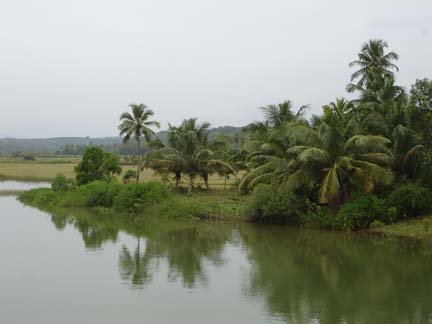
A Coastal estuary

A Coastal estuary
Holegadde near Honavar,Uttara Kannada dist, Karnataka

Copy? Right - but kindly remember to acknowledge!

Creative Commons License
This work is licensed under a Creative Commons Attribution 3.0 License.

" tulu-research.blogspot." ತುಳು ರಿಸರ್ಚ್. ಬ್ಲಾಗ್‌ಸ್ಪಾಟ್‌. ಇನ್

" tulu-research.blogspot."  ತುಳು  ರಿಸರ್ಚ್.  ಬ್ಲಾಗ್‌ಸ್ಪಾಟ್‌. ಇನ್
Have a nice day !