Showing posts with label Maikala. Show all posts

Saturday, May 24, 2008

114. Ayikala


A few of the recognizable vestiges of Buddhism that prevailed in the Karavali / Tulunad region have been traced in some of the earlier posts herein. There may still be skeptics who doubt the extinct evidences of Buddhism in Tulunadu. Apart from the eternal confusion between the parallel paths of Buddhism and Jainism, it may also be true that Jainism that swayed strong influence over Tulunad during the later centuries of the Common Era inadvertently masked the older evidences of existence of Buddhism.

Mayikala
An ancient ‘Mayikala’ devoted to the worship of Gautama Buddha’s mother Mayadevi is traceable in the Mangalore city of early centuries of Common Era. It is existing in the form of an older name of the city, ‘Maikala’ which is still retained and used by Beary merchants as an equivalent name of Mangalore.

Ayikala
The village of Ayikala (usually now pronounced as Aikala) in the northern part of Mangalore taluk. The Aikala village is located east of Kinnigoli town and to north of Kateel the famed temple town.
One neighbouring place forming the junction between Kinnigoli, Aikala and Damaskatte is called Mooru Kaveri (or Mooji Kaveri) poetically referring to three Kaveri(Kayar) trees. Some people have reinterpreted the name as Moodu Kaveri.
The Puttige village that was a power centre of Jain chieftains in the later centuries is to the east of Aikala.
The Aikala village on the Mulki- Kinnigoli - Mudabidri road, is known for granite stone quarries. There is also a temple devoted to Shakti/Durga worship. The traces of theologic evolution of Ayi.>Bhagavathi.> Durga may be relevant here. Original location of Ayikala shrine may be quite difficult to trace now.

Aikala  refers to a 'kaLa' (=field; field shrine) occupied by or named after Ay tribes. Ay tribes were a kind of cattle breeders similar to Yeda, Ida or Yedava/Yadava tribes. Kings and chieftains from the Ay tribes were known to have ruled parts of Kerala. It is possible that they settled in parts of Mangalore Taluk like villages of Aikala.
Aihole in Bijapaur district also reminds us of the Ay tribes settled in various parts of Karnataka in the antiquity.

Prakrit pockets in Tulunadu.
Sham Baa Joshi has deciphered the existence of pockets of Prakrit language within southern Karnataka during the period (before 10th Century CE) when Maharastra and Karnataka shared common socio-political territories. It can be recalled that the medieval Kannada text Kavirajamarga (ca. 10th Century) described that Kannada country as the territory stretched between the rivers of Kaveri and Godavari.

Ayikala proves the Sham Baa Joshi’s theory of existence of pockets of settlements that employed pre-Marati Prakrit language in medieval Karnataka. The pocket settlements of Prakrit language speakers, possibly represented by Buddhist and Jain monasteries, existed in ancient Tulunadu also.
One of the possibility is that Buddhists during the early centuries of CE chose the place Ayikala known for large rocky outcrops, with the intention of carving out cave temples or Viharas.
Buddhism was dominant in the West coast of Maharastra,during the historical past, as evident by the presence of numerous cave temples and rock-cut Viharas, carved in basalt rocks . Thus, the free flow and migration of monks along the western coastal track can be visualized.

Alternate explanations

The word Aayi of present Marati language was derived from the older Prakrit language. The ‘aayi’ is equivalent of the word ‘maayi’, the mother.

The word Aikala has several possible alternate explanations.Manjunath has offered some additional details on the word 'ayi'(see 'comments' below).One of the interesting points cited by him is that the word ayi (=mother) has entered Kannada as ta-ayi!
**
Hosabettu Viswanath has explored the word Aikala further.I quote some of his points :

'Aya' or 'Ayi' has so many shades of meaning. While 'aya' means 'adrishta' (fortune/goodluck), it has also means 'a kind or mode of tax' (See p.141 of Tulu Lexicon).So 'Ayakal>Ayikal' may mean a toll gate (Sunkada katte). There must be some historical clue if it is so. Let the locals come forward with the explanation.

Following alternative explanations may also be worth noting:

1. 'Ayi' (Five) is shortened form of 'ayin' in compound words, like 'Ayigeni' (a measure of five spans); 'Ayigoli padpu' meaning 'Panchvati' (a grove of five fig trees); 'Ayineer' (a ritual bath on the 5th day after menstruation); 'Ayinadu' (a province of five villages), etc.
2. 'Ayigal/Ayigulu' means a teacher or preceptor. In olden days such teacher's house is known 'Ayigal Math' and lessons are conducted under a tree. So 'Aigala Katte' may have been shortened as Ayigala>Ayikala.
3. 'Ayi' means ''Sayi', which in English means (to) die or expire. 'Kala' means small shrine for the departed Soul/ Bhoota (Spirit). Thus, it means a monument or five monuments for the Departeed Soul or Spirit.
4.  'Ayyalkal', is a stone representing 'Kshetrapala' of a temple.

**
Ay tribes
On overall analysis it appears that the Ay tribes were a kind of cattle-herders (Yadavas) spread in parts of peninsular India during the early centuries of Common Era. In southern India, Ay tribes were ruling parts of West Coast, especially in Kerala during the early centuries of the Common Era.
Ayikala,(ay+kala) in conclusion, represents a sacred place ('kaLa') of Ay tribes.

For additional data on the words aya,ayi and iya see post 201 on Aya.

®

Friday, January 4, 2008

65. Mayi-kala at Mangalore


Left:An image of Queen Mayadevi in Nepali-Tibetan Art form

Who is the first patron Godess of Mangalore city? If you ask this question to any of the bright kids of this city, you are likely to get the answer: Mangaladevi. Yes, it is true that Mangalore city is named after a Queen of Malabar called ‘Mangale’ who visited this place in the early 10th century and expired here on account of her ill-health.
Mayadevi
But, analysis of the available stray strings of historical data on Mangalore suggests that there was another Queen, who lent her name to the city before Mangale came here! That was, incidentally, the Queen Mayadevi of Lumbini, Nepal. Mayadevi was the mother of prince Siddartha who became famous as Gautama Buddha and founded the religion of Buddhism. During the initial phase of Buddhism, the Theravada school, there was no worship of idols or Gods. Further, during Mahayana period, Mayadevi and Buddha were worshipped. Mahayana school of Buddhism itself is said to have been originated in Southern India, as a result of movement to reach Buddhism to the masses ca.100 CE and became influential and active during 2nd to 5th century CE.
Mayi kala
A historical temple devoted to Mayadevi, mother of Gautama Buddha / Siddartha, is found in Lumbini, Nepal. During the early centuries of Christian Era the ancient Mangalore was evidently under the influence of Buddhism. A similar temple devoted to Mayadevi existed in the ancient Mangalore city, somewhat built in the local style of ‘saana’ or ‘kaLa’ devoted to spirits. Possibly, here she was worshipped as a spirit Godess. The Tulu word ‘kala’ is derived from the Early Munda language, meaning ‘a holy field’ (temple or ‘saana’) devoted to spirits. The ‘Mayi-kala’, the ‘kaLa’ devoted to Mayadevi (‘Mayi’) existed in heart of ancient town of Mangalore.
It is customary to designate localities using names of nearest landmarks. For example, the locality name ‘Hampana-katta’ in Mangalore was derived from a small ‘katte’( a rectangular structure for sitting under the shade of a tree) used by one philanthropic Appanna, some hundred year ago, to dispense drinking water to the passers by. Similarly the ‘Lalbagh’ locality in Mangalore is named after a house in the locality called ‘Lalbagh’!
In this way, the town area around Mayi kala was called Mayi kala. The name Mayi kala was applied to the old town of Mangalore. The said Mayi kala (place of Buddhist worship) may have been destroyed later due to change of faiths by the rulers or due to dominance of other schools of religious thoughts.
Nepal connection
The existence of a temple devoted to Mayadevi at Mangalore, suggests transfer of people, ideas and relations between Nepal and Mangalore on the West Coast during the early centuries of the Christian Era.
Beary community
The members of the Beary merchant community of Karavali and Malabar, who frequented the ancient township around Mayi kala, used this word to refer to the city of Mangalore since historical days and continue to use the word ‘Maikala’ even today, while other communities have totally forgotten about the origin or significance of the word Maikala.
In this way, the Bearys have preserved a significant string in the historical and cultural vestige of ancient Mangalore, and an evidence for prevalence of Buddhism in Tulunadu during ethe Early centuries of the Christian Era.
.

Blog Archive

Books for Reference

  • A Comparative Study of Tulu Dialects By Dr. Padmanabha Kekunnaya. Govinda Pai Reserach Centre, UDupi. 1994
  • Koti Chennaya: Janapadiya Adhyayana. By Dr. Vamana Nandavar. Hemanshu Prakashana ,Mangalore.2001.
  • Male kudiyaru. Dr B. A.Viveka Rai and D.Yadupathi Gowda, Mangalore University,1996.
  • Mogaveera Samskriti By Venkataraja Punimchattaya. Karnataka Sahitya Academy.1993.
  • Mugeraru:Jananga Janapada Adhyayana. By Dr Abhaya Kumar Kaukradi.Kannada & Culture Directorate,Bangalore & Karnataka Tulu Academy, Mangalore,1997.
  • Puttubalakeya Pad-danagalu. Ed: Dr B.A.Viveka Rai,Yadupati Gowda and Rajashri, Sri Dharmasthala Manjunatheswara Tulu Peeta. Mangalore University.2004
  • Se'erige. Ed:Dr K.Chinnapa Gowda.Madipu Prakashana,Mangalagangotri,2000.
  • Studies in Tuluva History and Culture.by Dr P Gururaja Bhat (1975).Milagres College,Kallinapur,Udupi.
  • Taulava Sanskriti by Dr.B.A.Viveka Rai, Sahyadri Prakashana,Mysore 1977
  • TuLu naaDu-nuDi By Dr.PalthaDi Ramakrishna Achar, Puttur.
  • TuLu NighanTu. (Editor in Chief: Dr U.P.Upadhyaya, Govinda Pai Research Centre,Udupi. Six volumes. 1988 to 1997
  • Tulu Patero-A Philology & Grammar of Tulu Language by Budhananda Shivalli.2004.Mandira Prakashana Mangalore. p.317. (The book is in Tulu Language using Kannada script)
  • TuLunadina ShasanagaLa Sanskritika Adhyayana. By Shaila T. Verma (2002) Jnanodaya Prakashana,Bangalore, p.304.(Kannada)
  • Tuluvala Baliyendre. Compiled by N.A.Sheenappa Hegde,Polali,Sri Devi Prakashana,Parkala,1929/1999

A Coastal estuary

A Coastal estuary
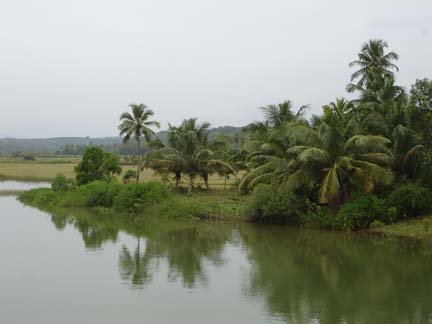
Holegadde near Honavar,Uttara Kannada dist, Karnataka

Copy? Right - but kindly remember to acknowledge!

Creative Commons License
This work is licensed under a Creative Commons Attribution 3.0 License.

" tulu-research.blogspot." ತುಳು ರಿಸರ್ಚ್. ಬ್ಲಾಗ್‌ಸ್ಪಾಟ್‌. ಇನ್

" tulu-research.blogspot."  ತುಳು  ರಿಸರ್ಚ್.  ಬ್ಲಾಗ್‌ಸ್ಪಾಟ್‌. ಇನ್
Have a nice day !