Some more discussion on the words: Samana, Samani and Savani. Hosabettu Viswanath has pointed out the analogy between the words Samani and Savani. He also cited related surnames like Somani among Gujarathis and frequency of proper names like Soman in Kerala. The Wiki on Shramana provides some additional leads on the word.
Shramana
Shramana> SamaNa (Pali, Prakrit) means wandering ascetic. The Shramana ascetic wandering movement was founded by Mahavira and Gautama Buddha. The word was apparently used by Buddhists as well as Jains owing to similarity (asceticism) of their faiths. It is opined that the word Samaņas (wandering monks) were more common during the early phase of Buddhism. The word was less used after the Vihara (Buddhist monasteries) were established and the wondering monks preferred to settle down. Related words like Samanera, Samaneri (=novice Buddhists), Sikhamānā (= Buddhist novice nun) were also used.
The Tulu/Kannada word ShikhamaNi may have been influenced by the Buddhist word Shikamānā.
The word Samanaeans was used by Greek philosopher Porphyry (233-305CE).The word Samanis was related to or influenced by the usage Samanaeans or vice versa. Possibly the word Samani was used for nuns.On the other hand, Jain ascetics earlier were usually known as Nighanta.Tamil Jains call themselves Samanar.
Sravana
The medieval Jains used the word Sravana>Savana more commonly than Samana or Samani. Sravana-belagola is a good example. Savaņur as well as Sāŋur (near Karkala) are derived from the same source.
However, there were no airtight demarcations between the two religions -Buddhism and Jainism-as far as usage of words are concerned as some of the Jain nuns even now have titles like Samani.
®

A heritage blog by: Ravindra Mundkur & Hosabettu Vishwanatha
Showing posts with label Samani. Show all posts
Showing posts with label Samani. Show all posts
Sunday, February 24, 2008


Friday, February 8, 2008
86. Samani
Glancing through the descriptions of foreign travelers to west Coast of India during the historical period, in Hobson Jobson dictionary, I chanced to stumble upon the word ‘Samani’ used by Rashidudeen during the end of thirteenth century CE.
Rashiduddeen
The entry on Rashiduddeen’s report on the West Coast of India during ca.1300CE is cited below:
c. 1300. -- "Beyond Guzerat are Konkan and Tána; beyond them the country of Malibár. . . The people are all Samanís (Buddhists), and worship idols. Of the cities on the shore the first is Sindabūr, then Faknūr, then the country of Manjarūr.
In the above passage, replace and read Gujarat (for Guzerat), Thana (for Tana), Malabar (for Malibar), Goa ( for Sindbur), Barakur (for Fakanur) and of course Mangalore (for Manjarur).The explanation for the word ‘Samanis’(=Buddhists) is presumably given by the editor of the dictionary.
The origin of the word ‘Samani’ is rather obscure with a random opinion that it is possibly of Polynesian origin. However, the Pali dictionary of proper names describes Samani as a princess. In Cambodia, neophytes to Buddhism were called Samanis or nens where as senior monks were designated as ‘bhikkus’. In Srilanka, the word Samani was applied to Buddhist nuns, specifically wandering female monks. Now the word Samani is also used by Jain nuns.
It appears that Rashiduddeen employed the word Samani to Buddhist monks in general.
A Surname: Samani
The significance of the word Samani lies in the fact that it is one of the surnames of a Tulu community, specifically the present day Bunts. Some surnames help us to trace episodes of historical evolution. It has been opined that during the course of time, the Buddhists of Karavali were not driven out but eventually assimilated with the local population.
The historical Jain-Bunt and vice-versa conversions in Tulunadu are rather well known so far. The present string of data adds to our knowledge that Tulu people also have vestiges of Buddhism in their historical heritage.
®
Subscribe to:
Posts (Atom)
A Coastal estuary
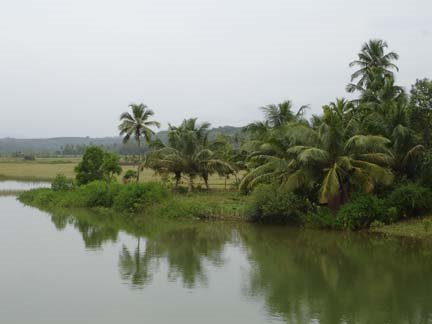
Holegadde near Honavar,Uttara Kannada dist, Karnataka
Copy? Right - but kindly remember to acknowledge!

" tulu-research.blogspot." ತುಳು ರಿಸರ್ಚ್. ಬ್ಲಾಗ್ಸ್ಪಾಟ್. ಇನ್

Have a nice day !