Showing posts with label Nettara Padavu. Show all posts

Tuesday, March 30, 2010

234. Padavu and PaDavu


While browsing through the old village maps of Mangalore, I happened to notice that the revenue village map encompassing present day Kulashekar, Shaktinagar,Kadri Padavu, Bikarnakatte etc area, was titled in Kannada as ‘PaDavu’. (‘D’ pronounced as in ‘dog’). The exact word ‘PaDavu’ could be recognized as ‘D’ is distinguished distinctly from ‘d’ in Kannada script. The village maps originally drafted / printed in the year 1893 contain old and original village names used during that period.
The word ‘PaDavu’ is not in current usage as a place name as it has been replaced by similar and generalized word ‘Padavu’('d' pronounced as 'the'). Even the mighty 'Tulu Nighantu', has not cited the word as a geographical indicator or place name.
Let us discuss the two geographical terms ‘padavu’ and ‘paDavu’ that are contrastingly different in meaning.
PaDavu
The Tulu Nighantu (=Tulu Lexicon) (vol 5, p.1896) describes the word paDavu’ under two heads: (1) large merchant boat or ship; also known as ‘pānDi’ and (2) oil storing utensil/ vessel. It can be seen both the above meanings are mutually related and based on the bowl like shape of the structure or the ‘container’ aspect.
However the Lexicon has inadvertently omitted the original word ‘paDavu’ which carries a geographical description. The word can be analyzed as follows:
‘paDa’ (=sunken, fallen, or depressed land)+’vu’ or ‘va’ (a spatial suffix)
Hence, ‘paDavu’= sunken land or depression; a bowl like structure or valley zone.
The word ‘paDa’ or ‘paDu’ or ‘paDDāyi’ (= western direction) is employed in Tulu (and other related Dravidian languages) as equivalent word to signify Western direction. The word ‘paDu’ appears to have been coined in west coast of India, where the western side (Coastal Karavali) is lower in elevation compared to the east (Sahyadri ranges or Western Ghats).
Padavu
The geographical indicator ‘paDavu’ is almost lost in current usage, because of confusion and replacement by another word ‘padavu’.
In current Tulu usage ‘padavu’ is used in the sense of plateau or elevated planar area.
In Christian Konkani the equivalent word is ‘pāduva’. (For example, Pāduva high school).It would be interesting to explore whether the Konkani word ‘pāduva’ was adapted form of ‘padavu’ or directly borrowed from a similar sounding Prakrit word.
Thus it appears that the word was originally ‘pāda +vu. It is possible that ‘pada’ is derived from or related to the word ‘pāda’, wherein, pāda= rocky hill. (Tulu word ‘paāde’ represents rock.).
However, the word ‘pada’ also represents higher level, elevation or grade. And thus, ‘padavu’ means an area of higher elevation or plateau. It is interesting here to note that Sanskrit word ‘padavi’ also means higher grade or honours.
It may not be surprising if the Sanskrit word ‘padavi’ was derived from or related to the ancient word ‘padavu’.However, H.Vishwanath opines that the word 'padavi' is derived from root 'pat' or 'pada' (i.e. foot) Padavi means stepped up position, rank. So Sanskrit 'Padavi' is not dervied from the word Padavu or Padavu.


Pada and Sira
While reviewing the words above, it may be pointed out that the words ‘pāde’ (=rock bed) and pāda (=foot; later, an unit) / ‘pada’(=a step, an unit, a word etc) apparently are related in derivation. Similarly the words ‘Sira’ (=peak, of rock; Sun, Light, supreme power, heaven, wealth etc) and ‘shira’ (=head) are related. The allusion of natural objects and forces , probably later, to parts of human body, like  foot and head makes an interesting study.
®

Friday, August 21, 2009

204. Agricultural settlements


Early human progress from forest life to farming and agriculture was considered to have been initiated some 6000 BC in Nile Valley region that hosted Sumerian civilization. Archeo-botanical studies have similarly suggested that agricultural culture was in vogue in southern India since 5000 BC.
The available data suggests that during that period Austro-Asiatics or Munda group of tribes prevailed in southern India and along the Karavali. Let us analyse the origin of place names like Nitte, Nitila, Nittur,Niddodi, Nidiyur,Nidambur, Nidle, Nidpalli,Nidikallu,Nettana,Nettaru, Nettara Padavu, Nettanige, etc.in the context of evolution of farming and agricultural cults in the Karavali.

neDu
A number of village names in Karavali suggest distinctly the initiation of agricultural practices in Karavali. ‘neDu is now a popular Dravidian word that means to plant seedling in Tulu, Kannada and other sister languages .
The word ‘neDu’ (ne+Du) originated as ‘ne’=to plant (or to straighten up a plant) in the (‘Da’,’Du’ or its variants ‘Ta’,’Te’ ) earth. ‘Da ‘ or ‘Ta’ has been cited as a word from Munda languages that represented the land, village or the habitation (Southworth, 2005).
naTTi
The word ‘naT’ was an variant of the agricutural word ‘neD’, as we see ‘naTTi’ represents the act of planting the crops.
naTT= (1) to plant.

nāDu vs. kāDu
Thus it follows that the word ‘nāDu’ (=land,country) was derived from ‘neDu’, or ‘naDu’ to plant. naDu.>nāDu.
nāDu= (1)cultivated land
The word ‘nāDu’ was invented by the early farming community as against the word ‘kāDu’(=forest,wilderness). Thus it is clear that prefix ‘na-‘ represents cultivation whereas ‘ka’- stands for wilderness or wild trees.
nāDava
The person associated with cultivation (farmer) or the one who lives in the cultivated region (nāDu) became known as ‘naDava’. The suffix va- represents habitation (cf. Post 197)
naDu, naDe
Cultivating crops became important activity of the civilized word. Thus the word ‘naDu’ (middle,central) became representative of the central or middle part of body or any object. Walking straight on two legs on the land was distinctly a progressive trait of civilized tribes, as compared to wild animals, therefore ‘naDe’ also stood for walking,behaviour or even the cattle owned by the civilized tribes.

Nitte & other farming villages
An older variant of the word ‘neDu’ was ‘niDu’ or ‘niTu’ as we see in the village name Nitte. Nitte is a popular educational centre near Karkala that has bloomed into an esteemed University.
Nitte : (niT+Te ). Ni= to collect seeds. niT= to plant seedlings,to straighten up (as in ‘nidpa’) Te=village. During early days of civilization ‘Nitte’ was also a proper name among tribals that obviously meant farmer!
Nitila :The word ‘niT’ repeats in other similar place names like Nitila (niT+ila, ila=village). Nittur(niTT+oor)
Nettila: neT=to cultivate; ila=village
Niddodi: (niD+oDi)niD=to cultivate; oDi=village.
NiDiyur: (niDi+ oor) . niD=to cultivate; oor=village. There are Tenka Nidiyur and Bada Nidiyur near malpe.(tenka=southern, baDa= northern).
Nidpalli: niD=to cultivate; palli=village.
Nidle: niD=to cultivate; le=village by the side of river.
Nettana: neTT+aNa. cultivated area.
Nettara: neTT+ ara. Cultivated open field.
Nettanige: neTT+aN+ige. Cultivated area + plains.
Nadsal: (naD+sa+al). Cultivated habitation beside a stream or river. Nadsal is a coastal village /locality near Padubidri.
Nadpal: (naD+pa+al). Cultivated area beside a river.Nadpal is a village in interior Karavali nearthe Ghats.


Humour
Tinges of humour can be delineated in the evolution of parallel words with slightly derisive meanings. For example, agriculture became a new-found passion among the evolving tribes that enterprising ones went on searching for new pastures suitable for cultivating crops. Thus the word nāD ( as in ‘nāDuni’) became equivalent of searching.
nāD=(2) to search.
Further getting the proper seeds for cultivating crops was not easy during those days. It often involved begging another person to part with seeds or seedlings under his custody. Thus we have the word nat( as in ‘naTTuni’)
naTT =(2) to beg!
®

Blog Archive

Books for Reference

  • A Comparative Study of Tulu Dialects By Dr. Padmanabha Kekunnaya. Govinda Pai Reserach Centre, UDupi. 1994
  • Koti Chennaya: Janapadiya Adhyayana. By Dr. Vamana Nandavar. Hemanshu Prakashana ,Mangalore.2001.
  • Male kudiyaru. Dr B. A.Viveka Rai and D.Yadupathi Gowda, Mangalore University,1996.
  • Mogaveera Samskriti By Venkataraja Punimchattaya. Karnataka Sahitya Academy.1993.
  • Mugeraru:Jananga Janapada Adhyayana. By Dr Abhaya Kumar Kaukradi.Kannada & Culture Directorate,Bangalore & Karnataka Tulu Academy, Mangalore,1997.
  • Puttubalakeya Pad-danagalu. Ed: Dr B.A.Viveka Rai,Yadupati Gowda and Rajashri, Sri Dharmasthala Manjunatheswara Tulu Peeta. Mangalore University.2004
  • Se'erige. Ed:Dr K.Chinnapa Gowda.Madipu Prakashana,Mangalagangotri,2000.
  • Studies in Tuluva History and Culture.by Dr P Gururaja Bhat (1975).Milagres College,Kallinapur,Udupi.
  • Taulava Sanskriti by Dr.B.A.Viveka Rai, Sahyadri Prakashana,Mysore 1977
  • TuLu naaDu-nuDi By Dr.PalthaDi Ramakrishna Achar, Puttur.
  • TuLu NighanTu. (Editor in Chief: Dr U.P.Upadhyaya, Govinda Pai Research Centre,Udupi. Six volumes. 1988 to 1997
  • Tulu Patero-A Philology & Grammar of Tulu Language by Budhananda Shivalli.2004.Mandira Prakashana Mangalore. p.317. (The book is in Tulu Language using Kannada script)
  • TuLunadina ShasanagaLa Sanskritika Adhyayana. By Shaila T. Verma (2002) Jnanodaya Prakashana,Bangalore, p.304.(Kannada)
  • Tuluvala Baliyendre. Compiled by N.A.Sheenappa Hegde,Polali,Sri Devi Prakashana,Parkala,1929/1999

A Coastal estuary

A Coastal estuary
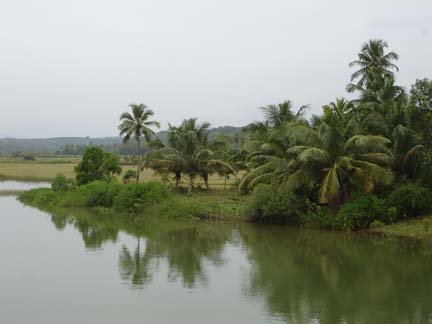
Holegadde near Honavar,Uttara Kannada dist, Karnataka

Copy? Right - but kindly remember to acknowledge!

Creative Commons License
This work is licensed under a Creative Commons Attribution 3.0 License.

" tulu-research.blogspot." ತುಳು ರಿಸರ್ಚ್. ಬ್ಲಾಗ್‌ಸ್ಪಾಟ್‌. ಇನ್

" tulu-research.blogspot."  ತುಳು  ರಿಸರ್ಚ್.  ಬ್ಲಾಗ್‌ಸ್ಪಾಟ್‌. ಇನ್
Have a nice day !