Showing posts with label Alupe. Show all posts

Monday, December 1, 2014

345. Mysterious History of Mangaluru

The Karnataka Government has finally resolved to officially modify the place name Mangalore to Mangaluru. However, there are voices of dissent as usual, with some preferring the ancient name Kudla. Some even may prefer the exact spelling of Mangalooru to match the appropriate pronunciation in the native languages.  
            The history of the city of Mangaluru has several shades of mystery attached to it. The place was known by different names in the past. Part of the Mangaluru city was under the Arabian Sea until probably 200 CE and the subsequent regression of the Sea,  coupled with recovery of land has been attributed to the mystic powers of Lord Parashurama in our legends. It is interesting to note that the two rivers of Mangaluru, Netravati and Phalguni have mysteriously drifted in the opposite directions across the plains of   Mangaluru though the  ages.The changes in the position of rivers with attendant seismic activities in the form of earth movements with passage of time have played major role in shaping the history and destiny of the city in the past.
           In retrospection, let us glance through the available and the reconstructed data on the history of the city.

Topography of Mangaluru at present

Megalithic and later tribes
The Mangaluru area known by different names was the home for numerous tribes in the past. Megalithic stone burial structures or dolmens, known locally as Kodakkal (=umbrella stone) existed as we find place names of Kodakkal near Padil-Kannur and (modified name of) Kodikkal near Urwa. Similarly, a number of locality names such as  Konchadi (Kom tribes), Yeyyadi, Iddya (Yey or Yedia or Idiya tribe), Maroli, Marakada, Maravur (Marava tribes), Bijai (Bija tribes), Bolar, Bolur, Belma (“Boll” or Bella: white/fair skinned tribes), Derebail, Derlakatte (Dera tribes), Eliyar padavu (Eli tribes), Kannur (Kanna tribes), Panambur (Pani tribes), Maladi, Malemar (Male tribes), Kordel (Kor or Koraga tribes), Kudumbi bittil(Kudubi tribes), Kenjar (Kench or reddish tribes), Nagori(Naga tribes), Kankanadi (Kanka tribes), Gujjarkere (Gujjars), Baikampadi, Baithurli (Bai tribes), Mangar, Mangala (Mang tribes) etc. remind us of the tribes that lived in these habitations in the past.
We can probably classify the settlers into (a) tribes of North Indian origin (b) tribes of African origin, (c) tribes of European origin and (d) tribes of austro Aisatic (Munda) origin.

Early Immigrants    of   African origin
Some of the local place names in Mangaluru are suggestive of settlements of tribals of African origin. Omanjur (Vamanjur) for example, is reminiscent of Om valley of Ethiopia which is considered to be the cradle of civilization and the deduced site of Early Man, Homo Sapien. Similarly Kinya village in the Southern part of Mangaluru Taluk is reminiscent of the region Kenya in Africa. (There is also another Kenya Village in Sullia Taluk). The Kaprigudda (or Keprigudda) near Attavar in Mangaluru reminds devotees of the ancient Egyptian Spirit God Kepri. Inccidentally, the Spirit Kepri is still worshipped in Karwar and parts of coastal Uttar Kannada.Besides, there are placenames suggestive of habitations of immigrant tribes like Derebail, Derlakatte (Dere tribes); Konchadi, Komdodi, Komapadavu (Kom tribes); Koikude (Koi tribes) etc.

Immigrants with fair skin
 Biologists have inferred that the human race initiated with black skin color and the fair or the white skin evolved in due course of time. Early tribes settled in Indian subcontinent were endowed with black colored skin. It seems along the history there was a distinct period when fair skinned tribes arrived into what was a dominion of early settled blacks. This can be surmised based on the existence of words/place names referring to fair skinned tribes/colonies of fair skinned tribes in most of the Indian languages.Thus, when tribes with fair skins arrived on the scene, they were distinguished by their distinct skin color. Bola, Bolla (or Bella in Kannada; Vella in Tamil; Gore in Hindi etc) suggest white skinned people and the settlements inhabited by these whites were termed as Bola, Bolar, Bollur, Bellur, Belman, Belgaum, Goregaon etc. Tribes with white skin were referred to Bellal (later modified to>Ballal ) or in other areas ( Vellal , Vellar). Similarly people with reddish skins (“kencha”) gave terms like Kenjar, Kemral, Kenchanakatte, Kemthur, Kemmannu, Kemminje etc.

Settlers of Austro-Asiatic Orign
Settlements of tribes of Austro-Asiatic origin, generally known as Munda tribes, are known by place names with prefix of Munda. Settlements of other tribes like Mang (Mangar, Mangala, Mangalapadi, Mangalpete), Bai (Baikampadi, Bendur [<.Bayndur], Baithurli, Bekal) etc are also known.

Settlers   of   North Indian origin
Movement of tribes within India are well documented by ethnic place names such as Gujjarkere (Gujjars), Panambur (Pani, Panab), Kannarapadi, Kannur (Kanna), Kankanadi (Kanka), Yeyyadi, Yedapadavu (Yedava, Yeyy, Idava, Yadava) etc.

Mahabharata & Ramayana
Even though several unverified obscure (now obsolete) names for a number of  places in the West Coast have been cited in the ancient Indian epics of Ramayana and Mahabharata, we are not sure what exactly was the  oldest name for  the place now we know as Mangaluru.

Olokhoira
Greek historians in the beginning of Common Era appear to have referred to the place as Olokhoira. Since the Greek travellers concentrated their attention on coastal ports of the day we can assume that Olokhoira was a marine port in those times. ( Some believe that Olokhoira may refer to ancient Udyavara).  Manjeshwara Govinda Pai has suggested that the term Greek term Olokhoira refers to Aluvakheda.
 The Aluva kheda or the Alupa kheda appears to be the present day Alupe valley (kheDa=valley, moat, depression) on the eastern part of Mangaluru city.(However, perceptions differ among the historians and a few tend to believe that Aluva kheda may refer to entire Tulunadu).

Artists impression map of submerged Mangaluru area ca 100 CE.

Legend of Parashurama
Former Alupe estuary is now a dried up river course of a deep valley between Maroli and Alupe. It was right on the West coast earlier and apparently the Greek historians referred to it as Olokhoira during the beginning years of the Common Era.  There was no mention of Mangalūru or even Kudla for the place at the beginning of Common Era! The possible reason for this is that the Arabian Sea transgressed and engulfed parts of the West Coast approximately during ca. 800 BC- 500 BC and receded only during ca. 200-300 CE. The regression of the Arabian Sea (ca. 200-300 CE) has been documented in legendary anecdotes  as a magical feat performed by a superhuman Parashurama, who was able to drive back the Sea by throwing his axe towards the Sea. The Bhargava clan ruled ancient Goa and parts of West Coast during the beginning of the Common Era and it seems that Parashurama apparently was a renowned charismatic sage among the Bhargavas. Later in the history,the  folk legends of the Parashurama appears to have been incorporated in the Sahyadri Khanda of Skanda Purana possibly during the regime of Kadamba King Mayura (ca. 400-500 CE).

Kudala- Kudla-Kodialbail
Now a days native people employ the term Kudla as an alternate local name in Tulu language for the Mangaluru city. However, it seems that originally  the term referred to a specific agricultural habitation located on the bank of a river during the pre-Dravidian days. Probably it dates back to the early agricultural phase in southern India corresponding to the period ca. 1500 BCE to 2800 BCE when horse gram ('kuDu') was one the earliest known  staple cereal grown in this region as well as other parts of the southern India.
The Kudla (Kudala) is normally pronounced with short u which probably decides the nature of the originally intended meaning of the word. The term Kudla appears to have originated as kuD+ala, wherein kuD means an agricultural or farm land and ala means a settlement by the side of river/ surface water body. The related words are Kudupu, Kudpadi, Kudthadka, etc. By analogy, the earliest pulse known to have been grown in South India happens to be known as “kuDu” (=horse gram) in Tulu language. The term "kuDu" (Macrotyloma uniflorum) appears unique to Tulu as the horse gram is known as Huruli (Kannada),Ulava (Telugu),Muthira (Malayalam), Kollu or Kaanam (Tamil), Kulith (Konkani) etc in other sister languages.[Incidentally, it has been reported that the horse gram seeds consists of polyphenols and flavonoids and proteins. Traditionally it was used in the treatment of patients suffering from jaundice and other ailments and recently it has found to contain anti-diabetic and anti-oxidant properties].
Earlier, there was an argument that the place name Kudala is actually Kūdla (or Koodla) which generally means confluence of two rivers. (The earlier proponents of this theme included this blogger also). For example, the Kannada place names Koodala, Koodali and Koodala-Sangama and so on refer to the confluence of rivers. However, Kudla (with short u) apparently has a distinct meaning different from Koodala as discussed in earlier paragraph.
           The term Kudla is at present used as a Tulu equivalent of Mangaluru. However, the exact location of the original Kudla within Mangaluru is difficult to decipher. However, it seems that  Kodial bail and the surroundings were known as Kudla to begin with.
            Regression of Arabian Sea  (ca 200-300 CE) eventually exposed and retrieved a five to six km wide tract of coastal land   buried under the sea till then. At the time of regression, the twin rivers of Mangaluru, namely the (southern) Netravati and the (northern) Phalguni (Gurupur) were flowing westward on the either sides of the (present day)  light house hill. The northern River Phalguni then flowed through the Kudala bail.
Kudala (Kud+ala) was an Ala (=habitation on the river bank) characterized of kuD (=good earth; agricultural field). The Kudala became Kudla and eventually the Kodial or the Kodial-bail, with successive settlements of new invaders with passage of time. Then the Kudla River (presently known as Phalguni) joined the Arabian Sea near Alike, south of   Kudroli temple.

Pandeshwara
The River Netravati flowed in the valley of Attavar and Pandeshwar and joined the Sea near Hoigebazar, Nireshivalaya. The estuary near Nireshivalaya served as old port known as Pandela. (The term Pandela (Pandi+ala) used to mean a boat harbor. Pandi was an old term for the sailing boat).
These evidences suggest that the Shiva temple established near the said Pandela (=Port) by Alupa rulers was designated as Pandeshwara.   The name of the God was extended as a place name that represented the area around the temple.

Mangara -Mangaruth
The area to the South of the river Netravati,the Yemmekere area, around third century onwards,  was known as Mangara. The place name Mangār has also been described in Tulu PaDdanas such as a region where the rule of the King of Mangār ("Mangarda Arasu") has been described. The ancient name Mangār within Mangaluru city still exists in the Western part of Mangaladevi area close to Yemmekere, where a premise with a group of Spirit (bhoota) shrines  continues to carry the name of Mangār compound.
The name Mangār (Mang= a tribe; ār= open field) possibly originated from the Mang tribes that inhabited the area. The Mangs are also known as Matanga in Maharastra, or as Minimadigs in Gujarat-Rajastan Region. .  It appears that whole area around Mangaladevi was earlier known as Mangār prior to the worship of Mangaladevi was introduced.
Similarly we find reference to ‘Mangarda parvata’ (Mountain of Mangar) in the Tulu paDdana (folklores) which probably refers to the present day light house hill located in the heart of the city. Thus it is possible that the light house hill was earlier known as Mangar hills.

Mangarouth
Similar to Mangarada Parvata, the ancient Port (‘Pandela’) of Mangar located near Pandeshwara (ca. 7th Century CE) appears to have been known as Mangarda or Mangarta Pandela. The pronunciation of the word was apparently corrupted in the usage of foreign travelers (Cosmas ca.650 CE) who apparently employed the word Mangarouth to refer to the Port of Mangar.
Incidentally, an area near Mangaladevi Temple is known as Manki. The “Manki stand” was a station used for parking   horse drawn jataka (Tonga) during the British period onwards. The ‘Manki’ is said to be a Munda word signifying the leader of a group of Munda tribal habitations.Thus the ancient name Manki has survived from the settlement of Munda tribes in the area.

Mayikala
The Beary people residing in the Karavali (West Coast) even now refer to the city of Mangaluru as Maikala. The word has been explained variously, some considering that the term Maikala originated from the charcoal market in the ancient town.
However it seems the word dates back to the days of prevalence of  Buddhism  in the West Coast before the rennaisance and ascent of the Hindu cult of Shakti or the Mother Goddess.  Under the spell of prevalent Buddhism, the cult of worshiping Mayi, the mother of Gautama Buddha, in specific divine plots ( kaLa or primitive form of a Temple) was introduced in several places. One of such Mayi-kala (ie Temple of Mother) dedicated to the worship of Māyi, probably existed in the ancient port town of Mangaluru. Thus it seems that the Mayi temple area was referred to as Mayikala by the Arab merchants visiting the ancient Port for trade.

Mangala
The word Mangala has several shades of meaning attached to it. Nowadays the word generally stands for the auspicious aspects of life. The term Mangala also means (1) Goddess Durga, or (2) a fort, or (3) camping ground. Incidentally, the term Durga also stands for a fort. 
However, the term Mangala (like Mangāra) initially could have evolved as Mang+ala ie, ala (=riverside habitation) of Mang tribes. It is interesting to note that Mangara and Mangala coexisted in the proximal area in the past when River Netravati flowed along the ancient path of Attavara-Pandeshwara valley, north of Mangara and Mangala.
The term Mangala also means an end or death. The ‘Mangala’  stands for culminating part (end) of a devotional chanting (bhajane) or even a traditional Yakshagana folk drama play. In the Natha tradition, the ‘Mangala’ is also said to be associated with the ceremony of death.

Mangaluru

Basically, the term Mangaluru stands for mangala+ ooru which simply means auspicious village in the current regional parlance, even though the origin of the name might have been different. The name Mangaluru has been considered to have derived from the temple of Mangaladevi in southern Mangalore. However, according to the available historical sources Shankara Acharya consecrated the pre-existing Bhagavati temple in the area as mother Goddess Mangaladevi.

Pingala shrine at Mangala 
Mangaluru, especially the Kadri, was a well known ancient center of Natha cult especially between 10th and 14th centuries CE. The Natha cult represented the transition of Buddhism to revival of Hinduism in the Southern India. According to historical sources, Queen Pingala of Kerala region was a staunch disciple of Macchendra Nath, the founder of Natha cult. She travelled to Mangaluru along with Goraksha Nath, the principal disciple of Macchendra Nath for taking part in certain celebrations associated with the Natha cult. However, unfortunately she fell ill on the way and eventually died at Mangala. According to the traditions prevalent during those days,after her death she was deified and worshiped as a Spirit or Bhagavati (in the tradition of Buddhist cult) .  Later under the waves of revival of Hinduism, sage Shankaracharya is reported to have transformed many of the former Bhagavati shrines into Temples of Shakti (the Mother Goddess) worship. Thus, the Bhagavati of Pingala was subsequently known  as Devi of Mangala  or the Mangala Devi.
These reconstructed sequence of   historical   events imply that possibly the term"Mangala" was the initial name of place.

Manjarur
One of the unusual names recorded by travelers like Rashiduddin (ca.1300 CE) and Ibn  Batuta (ca 1343 CE) for the ancient Mangaluru is Manjarur. At first it seems that the ancient usage Manjarur was a corrupt form of Mangaluru. On second thoughts, it appears that the city especially the northern part was probably known as Manjaruru under the spell of Natha cult in the city during 10th to 14th Centuries CE. However, now apparently there are no places in Mangaluru that carry relicts of the past place name Manjaruru, except Manjanakatte near Kulur and Manjalapade near Padushedde, both in the northern sector of present Mangaluru. An analysis of the Natha history evolved around Kadri temple suggests that the consecration of Manju -Natha worship was initiated at Kadri under the spell of Natha cult propogated by Macchendra Natha. Macchendra Natha, a sage of Nepal origin is said to have came to Mangaluru from West Bengal and settled in Kadri, Mangaluru. Thus it seems that during the Natha period of the history of Mangaluru, the place was   renamed as Manjaruru in honour of Manju Natha.

Manjārun
The Mangalūru was named as Manjarun in the records of   traveler Ibn Batuta (ca. 1342 CE). The term Manjarun appears to be a corrupt pronunciation of the place name Manjarur.

 Mangalūru
Obviously, the prevalent term Mangalore is an anglicized and stylized version of the place name originally  known as Mangala, Mangalapura or Mangalūru probably since 4th Century CE onwards. The name Mangalūru was popularized by Kings and administrators of   Vijaynagara who ruled over the coastal region from their capital located at Hampi in Bellary District, since 13th Century CE.

Bokkapatna: Vijayanagara Port
The Mangaluru Port during the time of Vijayanagara appears to have been located at Bokkapatna, obviously named after Bokka, one of Kings of Vijayanagara. The term Patna is a common word to represent colony or township of  Mogaveera fishermen. The name Bokkapatna has survived even till today, even though the estuary/port has migrated further south due to a natural disaster and altered its location during the year 1887.
The Port of Bokkapatna was at the ancient estuary of the River Phalguni (= River Gurpur). The Bokkapatna Port and the estuary survived up to 1887 till the river took an abrupt turn and flew  towards south and joined River Netravati, between Bengre and Ullal. It can be seen that the Battery to store war explosives (hence the name: Sultan Battery) was built near Bokkapatna by Tippu Sultan during 1769.The battery was located to counter enemies entering through the Bokkapatna, Mangaluru Port.

Mangaluru vs. Kudla
In fact the name Mangaluru comes from the southern part of present Mangalore especially the area aroud Mangaladevi. The northern part (at present central part of Mangalore) especially the area round Kodialbail was historically known as Kudla. Kudla means


Mangalur & Barkur States/Provinces
Incidentally, the Vijayanagar rulers had two coastal provinces in the Tulunadu sector, namely the (1) Mangalūru and (2) Bārkūru. In traditional ceremonies in Tulunadu until recently the gurikars (community leaders) used to welcome and call out invitees from the Mangalur seeme and Barkur seeme (seeme=territory). Even robbers were traditionally designated as Mangalur Takke   and   Barkur Takke (Takka= cheat) in   Tulu folk tales.

The Vijayanagar rulers selected Mangaluru and Barkur as these were the popular port towns in those days that specialized in exporting the goods  grown in the hinter land.

**   **

Other   Mangalūrus’, outside the Mangalūru.
The place name Mangalūru is not unique in India as there are several other  villages/towns named after Mangaluru especially in different parts of Karnataka and Maharastra. Besides, there is also an airport named "Mangalore" in Australia.
There is also a Chikkamagalur which is sometimes confused as Chikka Mangaluru. The place name Chikka-magala-ur (Chikmagalur) means younger daughters village and there is a matching Hiremagalur or the elder daughter’s   village.
Further, there are villages called “Mangalore”   in Mysore (Nanjangud Taluk), Koppal (Yelburga) and Shimoga (Sorab Taluk) Districts of Karnataka. There is a Mangalore in Cuddalore District (Tuttakudi Taluk)   of   Tamilnadu.  Besides,  Mangalore, there are two Mangaluru villages in Bijapur District (one each in Bijapur and Sindagi Taluks) and One Mangaluru in Bagalkot district (Badami taluk).
Further, there are not less than 27 places known as Mangalapur (~+a/~+am) in   Andhra Pradesh (5), Karnataka (4) Maharastra (2), Orissa (13), Tamilnadu (1), and West  Bengal (2).
**

®  

Saturday, May 19, 2012

301. Naravi & Sun worship – an overview


Life of settlers of an area is a history - whether recorded or not. What is not recorded buries into quick-sand of time. Toponym assumes the role of an identity marker, thereby enriching occupational vocabulary of language of that area. This can be analysed by studying the socio-political situation, conditioned by geography.  Changes are the handiwork of events and geography. Languages, political forces, borders, and social order resulting from faith and assimilation, are agents of change. Occupations change with human movements and/or climatic conditions.  Religion of one region may thrive in another area, conditioning it to the geography and environment of that area.
Naravi
Naravi (pronounced as nArAvi, ನಾರಾವಿ) is a village in Belthangadi Taluk of District Dakshina Kannada on the foothills of Western Ghats.  It is 20 km from Karkala on Karkala-Dharmasthala Road.  There is a well-known Suryanarayana Temple, dedicated to Surya, the Sun God.
Naravi was also known by its old name ‘Narol’ (ನಾರೋಳ್). The word ‘Narol’ is comparable to ‘Narod’ in Gujarat. 'Nara' means 'water crane' .  It should be read as 'water fowl (mundeyi kori = pelican). Other Tulu equivalent of 'nara' is 'nore'.  These birds live in bushes near water-bodies.  So we can deduce that the locality possibly got the name because of their presence in abundance.

Haunting Name
Word Naravi is both interesting and intriguing by virtue of its indistinct meaning.  It rhymes and compares with Dharavi of Mumbai*, Sharavu (Mangalore), Madaavu (meaning a place by the side of a canal, stream or river in Tulu) and Dharwad (North Karnataka).  All these places are indicative of ‘presence of water’.  But the local legend of Naravi belies this phenomenon. 
(Dharavi, in Mumbai, is a swamp area with mangrove vegetation sandwiched between Bandra-Mahim creek and Sion-Koliwada on West and East sides and erstwhile colony of Koli Fishermen before reclamation. Mithi River on its North debauches to Mahim Creek).
The Legend
There is a legend around the Sun Temple, built in 14th Century.  Sadvi (Pious woman) Ramadevi, belonging to noble gentry of ‘Ramera Guttu’ is instrumental in constructing this Temple.  She was an ardent devotee of Lord Surya Narayana, the Sun God.  She did not partake food without seeing the rising Sun.  Seasonal changes could make it impossible for her to get a glimpse of the Sun, thus making her to starve for days until she had a view of the Sun.  Noticing her unwavering devotion, Lord Surya Narayana instructed her in a dream to install the deity with celestial energy, lying near a River in South Western Part of Naravi, by constructing a temple.
Sun Temple of Naravi through ages.Photos from SuryanarayanaTemple


  The newly found idol of the deity was enshrined in a Temple as per Vedic rites by Brahmin priests.  All devotees experienced the presence of a young priest, exuding tremendous energy, among the priests. It was a miracle.  The young priest uttered ‘Na Ravi, Na Ravi’, i.e. ‘I am the Sun, I am the Sun’. Thereafter the place was known by the name ‘Naravi’.  The legend does not tell what the earlier name for Naravi was.
Sun Temple at Konark (Orissa) is well-known to all Indians and foreigners. Surprisingly, the temple at Naravi is less known
Etymology
Splitting the word, we get Nara + vi where Nara means water or knowledge (as in Narayana, the one whose abode is water or one who is embodiment of knowledge). The suffix ‘vi ‘  (also ‘va’ or ‘ve’ means a place (197.Dravidian spatial suffix ‘Va’).
Sun worship from antiquity
The Nature’s Laws are equal to all.  So the objects or many phenomena in the Nature are held in great awe by all human beings in the world from pre-historic times.  Thinking human mind creates symbols and numbers to forces of intelligence. Concentrating solely on anyone of these forces, individual soul identifies itself with the Divine soul, the primordial energy, power or force (Readers would do well if they read the life story of Ramana Maharshi, who simplified this technique by his own example).  Sun worship is one of the practices found in all civilizations of the globe. The Sun God is known by different names. Some of the Sun symbols are comparable to Indian symbol, especially in Mayan civilization.
India:  Surya or Suryanarayana is the one common name for twelve Suns, called as ‘Adityas’ in Puranas.  In Astrology he takes the central place. Varahamihira (505-587 AD - a mathematician, astronomer and astrologer in the Court of Vikramaditya, Ujjain) tells that only Maga Brahmins are entitled to do rites concerning the Sun.  Puranas say that Maga or Saka Dwipi Brahmins are invited by Lord Krishna of Dwaraka to cure his son Samba from leprosy.  We know from Puranas and Mahabharata that Yadavas dispersed to various places on destruction of ‘Dwaraka Nagari’ by ingression of Arabian Sea. This phenomenon is now proved by archaeological surveys.  We can presume that Maga Brahmins also migrated to coastal South from Gujarat coast, along with Yadavas.
Egypt: Egyptian Sun God is called ‘Ra’.  The winged Sun was an ancient symbol (300 BC) of Horus, identified with Ra, who moves in a Solar Boat.
Celtic Sun has semblance of Nakedness.  He holds a spear in standing posture.
Sumerian: Sumerian Sun holds many weapons, standing in one leg raised.
Akkadian Sun is seen in sitting posture.
Roman Sun stands with legs spread wide and upper portion of the body bent backwards and holds a weapon.
Incas, is a civilization of Mayans (?).  Their Sun God is holding an object, resembling a flower in both hands as is seen in Indian Sun idol with lotus flowers.
The Sun as progenitor
In the Mythology of India and other Asian countries, the Sun is considered as Progenitor of important royal families and/or powerful Tribes. We know about Suryavamshi Kings from the Epic of Ramayana. In Buddhism, the Bodhisattva of the Sun is known as ‘RI Gong RI Guang Pu SA (the Bright Solar Bodhisattva of the Solar Palace).

SUN TEMPLES OF INDIA
The oldest temple, dedicated to the Sun, is at Multan, which is now in Pakistan. There are many Sun Temples in India, which are important pilgrimage centres now.
Naravi: The temple is considered to have been established originally in the year 1486 by Ramaadevi during the regime of ruler Somanatha. The Sun Temple at Naravi was renovated in 2011.  
Maroli, Mangalore: There is an ancient Surya (Sun) Temple dating back to Alupa period of administration in Mangalore. Maroli is a village adjoining Alupe village and in older posts herein we suggested that Alupa Kings hailed originally from the village of Alupe. The Alupe (or Alupa) village was an estuary and a port town at the former mouth of River Netravati before the regression of Arabian Sea (attributed to legendary Lord Parashurama in folklores) and emergence of Pandeshwara Port.

Konark :   Built in 13th C. by King Narasimhadeva (1238-1250 CE) of Eastern Ganga Dynasty, the Temple is known as ‘Black Pagoda’.  The legend is that it was first built by Samba, the son of Lord Krishna by Jambavati. History says that it was built and rebuilt when vandalised by foreign invaders.  Entire complex is designed in the form of a Chariot, drawn by spirited horses. Powerful magnets, inserted in between rock layers, used to disturb merchant ships, by attracting them to shore and grounding them.  It is said that the Portuguese partially destroyed the temple to uphold their trade hegemony.
Modhera: Sun Temple built in 1026 CE by King Bhimdeva of Solanki Dynasty (supposed to be from Suryavamshi clan) lies on the Bank of Pushpavati in Modhera near Mehsana in Gujarat. It is so designed that the first rays of the Sun fall on the idol at the time of equinoxes.  Though it was ruined by foreign forces, it was almost destroyed by Allauddin Khilji.  We can still gauge its grandeur from the remnants of the Temple.
Katarmal:  The Temple, called as ‘Burhaditya or Vraddhaditya’ (the old Sun God) is built by Katarmalla, a Katyuri King in 9th C. When presiding Deity’s idol (of 10th C) was stolen, intricately carved doors and panels are shifted to Delhi National Museum.  It is situated 7 km from Almore (Uttarkand), 70 km away from Nainital.
Dakshinaarka:  The Temple, facing east, is at Gaya, Bihar, with a Surya Kunda (Tank).  Maga Brahmins, seeking a safer place from Lord Brahma, followed the disc thrown by him and settled down in Naimisharanya in Bihar where the disc plunged into the ground. Magadha, the present day Patna, took the name from Maga Brahmins.  The old temple was rebuilt or renovated by King Prataparudra of Warangal in 13th C. Rock pillars of this temple bear images of Shiva, Brahma, Vishnu, Surya and Durga.
There are two more Sun temples (1) Uttararka near Uttaramanas and (2) Gayaditya on the bank of River Phalgu, at Gaya.
(Note:   The Sun idols at Modhera and Gaya adorn Iranian type of belt and boots.)
Bhramaranya Dev:  The temple is at Unao near Jhansi, Madhya Pradesh.  Royal families, such as Peshwas and Datia rulers, were patrons of this temple.
Surya Pahar: Sun Temple at Surya Pahar/Pahad in Assam has images of twelve Adityas, sons of Kashyap Rishi and Aditi.  They are sculpted in a circular tablet.
Kumbhakonam: In Suryanaar temple at Kumbhakonam (Tamil Nadu) main deities are Surya, Vishwanatha, Vishalakshi and remaining eight Navagrahas (Celetial Bodies).
Arasavilli:  The main deity of Arasavilli Suryanarayana temple is known as ‘Padmapani’ – a 5 ft. granite statue. Arasavilli is near Srikakulam in Andhra Pradesh. He has Usha and Chhaya on his sides.  Padma (Lotus) means wisdom and Usha and Chhaya indicate iternity. 
Martand:  Sun Temple at Martand, meaning the (Dead) Sun, in Jammu & Kashmir is of 8th C.  It is in Gandhara style of architecture, which is mixture of Buddhist and Greek styles. There are two more temples on this stretch of Srinagar-Pehelgam Road at Avantipur.  They are dedicated to Avantishwara and are built in 9th C.  All these temples are in ruins, clad with snow but remind us the glory of the Past.
Temples in Tulu Nadu
In hymns to the Sun, He is described as ‘Aadi Deva’ (Primordial Divine entity).  He is Life of Life.  Assimilation of Trinity (Brahma, Vishnu and Maheshwara) is almost clear when we see temples named ‘Mahalingeshwara’ in Tulu Nadu. ‘Linga’ symbol is the manifestation of Shivashakti when the other energies lay hidden in it. Surya is the integral part of Narayana and Shiva.  We find such assimilation in Martanda-Mallari in Jejuri of Maharashtra. Celestial Bodies (Navagrahas) and Nagabrahma (Snake God) are inseparable part of Temples in Tulu Nadu.
-H. VISHWANATH, PUNE  & Ravi

Thursday, October 21, 2010

256. Mangalore: Antiquity & Evolution -3

Evolution of an ancient primitive tribal village called Manki through Mangar to Mangala, Mangalapura and Mangalur along the evolutionary timeline, with all these vestigial toponyms still surviving, evinces the changing faces and episodes the city Mangalore underwent during the last five to seven millennia.
Another significant, though controversial, toponym attributed to the ancient Mangalore is Nitra or Nitria that have been cited in the ancient Greek travel reports.
Nitra - Nitria
Greek writers Pliny (ca.23-29 CE) has mentioned Nitria and Ptolemy (ca. 150 CE) cited Nitra in their descriptions of Indian ports in the geographic accounts they compiled from their contemporary sailors. Yule and subsequently Govind Pai and others have considered these place names as old names of Mangalore because of the affinity to the name of River Netravati that flows in Mangalore.
Thus it can been considered that the name Netra or Netriya (Nitra or Nitria in Greek versions) was the old original name of the river Netravati and the adjacent port town on the bank of River Netravati.
..A Map of ancient Mangalore to be added
Netra means eye in Sanskrit. Possibly the Sanskirt language had permeated to the southern India by ca. 500 BC.
The Phalguni River was flowing in Kodialbail and Netravathi was flowing in Attavara Pandeshwara valleys during the beginning of CE.(Posts 253,254). The resultant morphology or shape of the island like land mass between Phalguni and Netravati appeared like an eye shaped peninsula, giving it the name of ‘Netra’. Thus it appears that the River Netravati derived its name from the eye shape of the land (Netra =eye) during early years of the Common Era.
Apparently the the name Netra for the port land was abandoned after the migration of said rivers and concurrent loss of the netra (eye) shape of the land. Thus the river beside Netra must also have been named ‘Netra’ or ‘Netriya’ which was later in the due course modified to ‘Netravati’.
The only connected vestigial name preserved along the river course happens to be ‘Netra-kere’ near Maripalla to the East of Mangalore.
Alupas from Alupe vilage
The merchant kings who ruled Tulunadu probably during the first fourteenth centuries of the CE were known as Alupa Kings. The origin of the word Alupa has been widely debated. They ruled parts of larger parts of Tulunadu probably from the beginnig of 4th CE upto 14 century CE,as evident from various inscriptions of the period, until taken over by Vijayanagar Kings, It appears that it is logical to assume that the name suggest the name of their hometown ‘Alupe’ a village on the banks of river Netravati in Eastern part of Mangalore (Post .74 ). It can be recalled that Govinda Pai + and Gururaja Bhat++ while discussing the various possibilities on the origin of the word, ‘Alupa’, have also felt independantly in their respective works whether Alupa was connected with the village Alupe.
Besides the village name, there are additional proofs cited below to confirm that Alupas were from Alupe village.
Aluvakheda
(1) The territory of Alupa kings has been described as ‘Aluva-kheda’ or ‘Aluvakheda 6000’ in several inscriptions. Ptolemy described the ‘Olokhoira’ which has been interpreted as Greek version of the word ‘Aluva-kheda’.
It is interesting to note that ancient suffixes –pe (as in village names Alupe, Didupe, Bajape etc) as well as –va (as in village names Shirva, Kakva etc) represent village areas. Therefore, we can deduce that the ‘Alupe’ village was also known as ‘Aluva’ village sometimes.
The word ‘Kheda’ means a gorge like depressed area bounded by steep cliffs. (Compare ‘kheDa’ with ‘kheDDā’, a large pit used traditionally to trap and tame wild elephants.). The description of the word ‘kheda,’ can be rightfully applied to the village of Alupe and Maroli, that are located in a large depressed gorge area bordered with steep cliffs.Thus it appears that the word ‘Aluvakheda ‘ was originally applied to the geography of Alupe, the hometown of Alupa Kings.
(2). The rare Sun temple of Mangalore is located within the gorge of Aluva-kheda described above.
(3).The ‘Kulashekara’ area named after one of the later Alupa Kings, called Veera Kula Shekara, is close to the Alupe- Maroli region.
Alupa Emblem
The royal seal on the Belamnnu copper plate inscription of Aluvarasa II (dated 730-760 CE) as well as Alupa coins display an emblem of twin fishes. A single fish was the emblem of Tamil Pandya Kings.The fish emblems of Pandya and Alupa Kings appear to have been inspired by earlier civilizations of Sindhu Saraswati (Harapa Mohenjodaro) where a large number of fish symbols have been discovered. The fish was a divine symbol for early marine merchant cultures as evident from the adoption of Matysa as the first incarnation of Lord Vishnu by Veda Vyasa.Thus it appears that the fish was a symbol of divinity among the ancient marine traders of India since the period of Sindhu-Saraswati civilization.
Alupa coin samples. (after: Govindaraya Prabhu & Nityanand Pai, 2006)

Pandya Dhanajaya
Alupa Kings designated themselves as ‘Shri Pandya Dhanajaya’ in the coins minted during their regime.The phrase ‘Sri Pandya Dhanajaya’adopted by the Alupa kings in their coins apparently compared themselves to the Arjuna, the hero of Mahabharat. The surname ‘Pandya’ has also been adopted by the Pandya Kings of Tamilnadu.The Tamil Pandya Kings were considered by several authors as progeny of Pāndavas of Mahabharat. However, it seemly logical that the word ‘Pandya’ or ‘Pandi-ya’ was connected to ‘Pāndi’ rather than Pandavas. The large boats used for marine trade in ancient south India were known as Pandi boats. Thus, an owner of a pāndi boat would be known as a Pāndiya or Pāndya.This explanation seems appropriate in view of the fact that Alupa Kings were Pāndi based marine traders. Probably, this explanation also applies to the origin of ancient Tamil Pandya kings.The place name ‘Pondichery’ has preserved the vestiges of Pandi marine merchant culture in the East Coast as well.
Alupas deserted Mangalore
Epigraphic inscriptions have suggest that Alupa Kings ruled ancient Mangar(u) or Mangarur from ca. 425 CE to ca. 750 CE. ** Epigraphic data for the period prior to ca. 425 CE has not been available so far, hence the earlier period is rather hazy. During ca. 750 CE Alupas abruptly changed their capital from home town Mangalore to Udyavara for historically unexplained reasons.
It appears that Alupas abruptly changed their venue due to intimidating earthquakes and consequent migration of rivers that affected ancient Mangalore ca. 750 CE.
The Netravati River was flowing through the valleys of Attavara and Pandeshwara probably till beginning of 8th Century CE. Probably, during ca. 750 CE due to sudden earth movements the Netravati changed its course and began to occupy the present path. Consequently, due to southward migration of ancient River Netravati, the port of Pandeshwara was closed down. Thus Alupa rulers abandoned Pandeshwara port of ancient Mangalore and migrated northward and settled in Udyavara, which was a upcoming port at that time ( Post ).The Alupas further returned to hometown Mangalore from Udyavara during the beginning of Tenth Century CE.
One interesting place name has preserved this hereto undocumented historic change or migration of flow path of the ancient River Netrāvati for the benefit of posterity. That wonderful place name is Jeppu!
Jappu, Jappina Mogaru
The place name ‘Jeppu’ or ‘Jeppina Mogaru’, as is known now, has been much abused and misunderstood. It should be ‘Jappu’ or ‘Jappina Mogaru’. The Tulu word ‘Jappu’ means to decline representing the historical lowering of water level in the river. (On the contrary, the erroneous usage, ‘Jeppu’ means to sleep). And ‘mogaru’ represents a river bank. Hence Jappina Mogaru represents the name adopted by the people to the river bank where the water level declined abruptly during the history.
There is one more mysterious aspect connected with the geological history of the village Jappina Mogaru. The revenue survey maps prepared by the surveyors of British regime during 1894, show two halfs of Jappina Mogaru divided by the river Netravati. It means that the original village of Jappina Mogaru has been bifurcated into two pieces during the last century , separated by the present flow position of River Netravati.
Ancient Temples of Mangalore
Apart from the Mangaladevi we discussed in the previous post, atleast ancient seven of the well known temples in Mangalore were installed before 10th Century CE. All these temples were originally installed on the banks of ancient rivers or perennial water Springs of Mangalore.
Mangalapura
Badami Chalukya epigraphs of 7th Century CE cited the name of ancient Mangalore as Mangalapura*.The name Mangalapura is popular among our Malayali neighbours even today.
To begin with, Mangalore was under the spell of Naga and Spirit worship cults since the ancient agricultural phase.Sun worship was evident during pre-Dravidian Munda cultural phase.Footprints of Buddhism were evident in the old place name ‘Mayi-kala’ for ancient Mangalore (Post 65,70). Early Skanda- Shiva- Ganesha cults collided with Buddhist cult. Bhagavathi cult evolved as a consequence of assimilation of Spirit cult and Buddhism. Rennaisance of Hinduism by Shankara led to the transition of Bhagavathi cult into widespead Durga cult.
Mayi-kala
With the advent of Arabs and later Bearys Islam made its presence in Mangalore.Some of the oldest Mosques of Mangalore (like Bunder, Kandathapalli) were also originally established during the period of 8-10 century CE. One of the old Buddhist names of Mangalore, ‘Mayikala’, has been preserved especially among the Muslim Beary community. One of the possible reasons for this could be that Mayikala existed in the Bunder region which was a major business area in the early history of Mangalore.Bearies, being a business community, frequented Mayikala area of Mangalore.
Kudupu
Kudupu appears to be an ancient village of ancient Kudu agricultural phase.It probably was an ancient center of Naga (serpent) worship. With advent of the Kumara-Skanda cult in the early centuries of CE it was developed into a temple dedicated to Kumara (Subramanya) worship. The old rivers flowing beside Kudupu changed its course with passage of time, leaving behind the evidences in the form of old river valleys that characterize the area around Kudupu.
Pandeshwara
In the olden days the large merchant boats engaged in trading rice, cereals and spices were known as ‘PānDi’ and the boat harbour was known as ‘PānDela’. River Netravati was flowing along Attavara- Pandeshwara valleys and joining the Sea near present Goodshed area where the ancient PanDela and the temple and township were located.
An Ishwara (Shiva) temple was built by the Alupa merchants in the PanDela (ancient port) area ca 4-5 century CE, and it was eventually known as PānDeshwara.
Another similar port place-name of ’PānDeshwara’ representing another ancient Alupa port exists near Hangārkatta, located between the coasts of Udupi and Kundapur.
Neere Shivalaya
The Neere-shivalaya Somanatha temple was originally an ancient Alupa temple devoted to Trimurtis- Brahma, Vishnu and Mahesha according to epigraphs found near Gollarkeri.* Neere Shivalaya is located near the ancient, Alupa period, PānDela of Mangalore.Neera Shivalaya, (neer=water) as the name suggests, was a Shiva temple (on an island) surrounded by waters of ancient River Netrāvati.
Sharavu
The Sharavu village, now part of heart of the Mangalore city area is known for an ancient temple dedicated to Lord Shiva and Ganapati. The place name Sharavu has been interpreted as ‘shara’ (=arrow) +’pura’ (=town) by legend creators of Stala-purana. However, the available geological evidences suggest that area could have been ‘Saravu’ (sara =lake, vu=village) to begin with. The waterworn pebble bearing sediments covering the Sharavu-Suchitra-Prabhat valley area suggest that area was under water (lake), connected with Phalguni river of Kudu and Kudla phase (post 253).
The original ancient temples appear to have been renovated during 10th to 11th century CE as evident from the study of idols in the temple.
Kadire
Kadire means ear or corn of paddy.It was customary to distribute corns of paddy (‘Kadire’) during ‘New crop’ (‘Posatt’, Puddar, Puttari, Onam) festival among the farming communities since ages.Now, the area is known as ‘Kadri’. During the course of history, some of the legend writers have modified the place-name also to ‘Kadali’ (=banana) or ‘Kadali-vana’ (orchard of banana).
Earthquakes resulted in upheaval of Kadri plateau ca.400-600 CE. After the earth movements, the flow path of Kudla segment of river Phalguni was diverted to new path. And a few new perennial water springs originated on the escarpment side of the Kadire cliff. The village on the top of the Kadire cliff was called ‘Nantur’ (Post 175).
Kadire was a Buddhist monastery till being occupied by the Natha sages Macchendra and Gorakha Naths. Natha sages revived Hinduism and led the transition of Buddhist to Natha/Shaiva cults during 10 th Century CE. The date of installation of the Lokeshwara bronze idol  at Kadire that evinces features indicative of transition from Buddhism to Hinduism has been reported as 968 CE.
The unique name ‘Manjunatha’ for Lord Shiva was created at Kadire.Later when a Shiva Linga was taken from Kadire temple to Dharmastala (ancient name ‘Kuduma’) another abode of Manjunatha was created.Origin of the word ‘manju’ in ‘Manjunatha’ has been debated.The word manju means beautiful (Prakrit)or mist (Tulu); the Tulu word ‘manja’ also means an elevated plateau like region. However, Manja or Manju (as in Manjanna) was also an ancient male proper name among Dravidians and pre-Dravidians. It appears that Macchendra had a son named Manju who incidentally expired in the area and Macchendra erected a memorial shrine in his memory in the tradition of Spirit worship vogue in the region.The name was extended to the form of Shiva with the signature suffix ‘Natha’ that represented the cult popularized by Macchendra Natha.
The Manjunatha Temple of Alupa period has been renovated further during Vijaynagar rule (14th Century CE) and subsequent periods.
Maroli
Maroli village, originally named after the ancient Marava tribes (Mara+Oli), is proximal to Alupe village, the home town of Alupa Kings. In this village there is a rare ancient temple, built by Alupa rulers and dedicated to the worship of Sun God (Surya-narayana).
The temple is located in a large circular valley formed after the migration of river path in the Maroli-Alupe villages.The structure of temple is said to be of ca. 11-12 century CE.
The origin of Sun worship in India dates back to ancient Munda tribal people.The cult of Sun worship (Singbonga) was also the tradition among Munda cultures that predated Tulu-Dravida civilization in the Karavali.
Attāvara
The Netravati River was flowing through the valleys of Attavara and Pandeshwara probably till 7th Century CE. Afterwards due to sudden earth movements the Netravati changed its course and began to occupy the present path.
There are two ancient temples in Attavara: One Uma Maheshwara, another Chakrapāni. The Uma Maheshwara temple is located on the banks of the old river course suggesting that originally it was built on the southern bank of the old river.Dr Gururaja Bhat suggested that the Ganapati idol of Attavara displays sculptural styles of Seventh Century CE. The original temples were renovated during subsequent periods.
Later Temples
Hanuman temple in the Gollarkeri, Mangalore was established in the 14th Century*. After the advent of Saraswaths from Portuguese Goa (ca. 16-17th Century CE), The Venkataramana (Dongarakeri, Car Street) and Mahamayi temples were installed in Mangalore. Māri temples (Halekote, Bolar and Urwa) were established during the regime of Keladi Nayaka Kings (15-17th Century CE).
Seventeenth Century also witnessed advent of Portuguese, German, French and British into Mangalore and the establishment of some of the oldest missions and churches in Mangalore like Basel Mission, Milagres and Rosario.
The Brahma Baidarkala Garodi at Kankanādi was established in the year 1874. The Kālikāmba temple, maintained by Vishwakarma community, was shifted from Mahakāli-paDpu, Jappu, to Car Street area.
Kudroli Gokarnatha temple was installed originally by Narayana Guru during the year 1912*.The name ‘Kudroli’ has been analysed by some as Kudure+Oli (a village of horse). However, the geological data suggest that it was a ‘kuduru+Oli’ (a village of river islands) as the region was covered by the estuary of the ancient river Phalguni in the historical past.
Kudroli Gokarnatha temple has been renovated in recent years into a beautiful structure such that it constitutes presently a major tourist attraction in the city of Mangalore.The annual Navaratri/Dasara celebrations centered in this temple has been known widely as Mangalore Dasara.
-
References:
Manohara Prasad. ’Nammuru’: (Serial articles on historical aspects of Tulunadu). Udayavani (Kannada Daily). Manipal.
*Temples of Dakshina Kannada (in Kannada) Ed: Murulidhar Upadhya Hiriyadaka & P.N. Narasimha Murthy. (2000). Ambalapādi. Udupi. 436 p.
**Govindaraya Prabhu, S. & Nityananda Pai, M (2006). The Alupas: Coinage and History.Sanoor, Karkala.200 p.
+ Manjeshwara Govinda Pai ( )
++Dr. Padur Gururaja Bhat (1963) Tulunadu. 228 p. Reprinted in 2009 by Dr Padur Gururaja Bhat Memorial Trust, Udupi.
®

Tuesday, February 19, 2008

91. Govinda Pai on Alupe

In an earlier post, I proposed that Alupa kings, were referred to as ‘Alupa’ because were actually from Alupe village in the eastern part of Mangalore.
A cross-reference to a published research note by Manjeswara Govinda Pai, in his reprinted paper in Tulu Sahitya Charitre, hints to me that Govinda Pai also did propose a similar suggestion earlier.

I am in search of his paper….

Monday, January 14, 2008

74. Alupa kings


Map showing the locations of ancient 'Alupe' and 'Kulashekara' in the eastern part of present Mangalore city. Blue shade represents interpreted river water (fluvial courses) of Nethravathy during the cited historical period.
One of the questions ignored by historians so far relates to the actual location of the capital or headquarters of the Alupa Kings. It is generally presumed that they were ruling from Mangalore town. But the fact is that there was no town called Mangalur in the beginning of the Christian Era. The name ‘Mangalapura’ or ‘Mangaloor’ came into being only after the Malabar Queen Mangale, who was traveling through the town, during late Ninth/early Tenth century CE, died here by ill-health.
Then, what was the name of the town before Tenth century CE?
The Tulunad was ruled by Alupa Kings, possibly since the beginning of Christian era till the region was occupied by the rule of Vijayanagara Kings. Nature of the word ‘Alupa’ has been discussed by many of the earlier historians. One of the interpretations suggested that Alupa was indicative chieftain status of the rulers that were generally subservient to the Kannada Kings. (‘aaLu’ (=rule) + ‘upa’ (=subordinate) or subordinate ruler).Some have suggested that Alupa name came from the ‘aluve’(estuary) of Mangalore city.
Kudala
One of the important facts regarding the history of Mangalore town is that it has changed its geographic form several times during the last two thousand years! The two rivers Gurupur and Nethravathy joined together near the Sea, giving the name ‘Kudala’ to the town. The word Tulu word ‘Kudala’ means joined (= kooD ) rivers (=aala ).And these two rivers joined together near Kudroli in the past and not near Bengre and Ullal as it is at present!
Alupe Kings!
But the analysis of the available historical and spatial data shows that the Alupa Kings were not ruling from Kudala, but from Alupe! Yes, they were ruling from Alupe, so they were called Kings of Alupe. However, Kannada inscriptions and writers stylized the word ‘Alupe’ into ‘Alupa’. Consequently, the original Alupe town was totally ignored by the historians!
The ancient Alupe habitation still survives in eastern part of present Mangalore city, located between Kankanadi and Padil. The word Alupe, apparently, derived from Early Munda languages, means the town by the side of River.( Aal=river,+ upe=town, habitation. There are several similar sounding place names in the District: Alupe, Bajape, Didupe etc.).
Kulashekara
Two of the Alupa Kings were called Kulashekara I and Kulashekara II (early 14th century CE). The place Kulashekara, north of Alupe in the present Mangalore city, is named after the said Kings.
It is suggested that archeologists and historians should investigate these Alupe-Kulashekara and surrounding areas for any possible clues and evidences for reconstruction of the past history.
®

Blog Archive

Books for Reference

  • A Comparative Study of Tulu Dialects By Dr. Padmanabha Kekunnaya. Govinda Pai Reserach Centre, UDupi. 1994
  • Koti Chennaya: Janapadiya Adhyayana. By Dr. Vamana Nandavar. Hemanshu Prakashana ,Mangalore.2001.
  • Male kudiyaru. Dr B. A.Viveka Rai and D.Yadupathi Gowda, Mangalore University,1996.
  • Mogaveera Samskriti By Venkataraja Punimchattaya. Karnataka Sahitya Academy.1993.
  • Mugeraru:Jananga Janapada Adhyayana. By Dr Abhaya Kumar Kaukradi.Kannada & Culture Directorate,Bangalore & Karnataka Tulu Academy, Mangalore,1997.
  • Puttubalakeya Pad-danagalu. Ed: Dr B.A.Viveka Rai,Yadupati Gowda and Rajashri, Sri Dharmasthala Manjunatheswara Tulu Peeta. Mangalore University.2004
  • Se'erige. Ed:Dr K.Chinnapa Gowda.Madipu Prakashana,Mangalagangotri,2000.
  • Studies in Tuluva History and Culture.by Dr P Gururaja Bhat (1975).Milagres College,Kallinapur,Udupi.
  • Taulava Sanskriti by Dr.B.A.Viveka Rai, Sahyadri Prakashana,Mysore 1977
  • TuLu naaDu-nuDi By Dr.PalthaDi Ramakrishna Achar, Puttur.
  • TuLu NighanTu. (Editor in Chief: Dr U.P.Upadhyaya, Govinda Pai Research Centre,Udupi. Six volumes. 1988 to 1997
  • Tulu Patero-A Philology & Grammar of Tulu Language by Budhananda Shivalli.2004.Mandira Prakashana Mangalore. p.317. (The book is in Tulu Language using Kannada script)
  • TuLunadina ShasanagaLa Sanskritika Adhyayana. By Shaila T. Verma (2002) Jnanodaya Prakashana,Bangalore, p.304.(Kannada)
  • Tuluvala Baliyendre. Compiled by N.A.Sheenappa Hegde,Polali,Sri Devi Prakashana,Parkala,1929/1999

A Coastal estuary

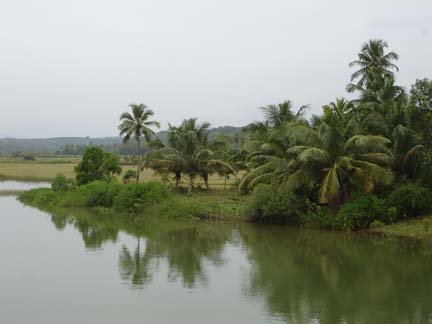
A Coastal estuary
Holegadde near Honavar,Uttara Kannada dist, Karnataka

Copy? Right - but kindly remember to acknowledge!

Creative Commons License
This work is licensed under a Creative Commons Attribution 3.0 License.

" tulu-research.blogspot." ತುಳು ರಿಸರ್ಚ್. ಬ್ಲಾಗ್‌ಸ್ಪಾಟ್‌. ಇನ್

" tulu-research.blogspot."  ತುಳು  ರಿಸರ್ಚ್.  ಬ್ಲಾಗ್‌ಸ್ಪಾಟ್‌. ಇನ್
Have a nice day !