Showing posts with label Mani. Show all posts

Sunday, July 1, 2012

303. Manipal , Manipura , Manila etc.


Manipal which was a sleeping   suburb in the outskirts of the temple town of Udupi, some five to six decades ago has grown into an internationally famous township,  known for educational and medical facilities, thanks to entrepreneurial skills of the Pai family. The Manipal is an elevated plateau with thick laterite capping and ample ground water resources relative to Udupi.
However, our interest in this note pertains especially to the origin of the place name Manipal and a group of other analogous place names that bear the name Mani, such as Manipura, Mani, Manila, Manihalla, etc.
Manipal
People say the place name of Manipal is derived from the name of a lake on the Manipal plateau known as Mannu-palla. The name Mannu palla for a natural water body appears a bit odd as ‘mannu’ means soil and ‘palla’ a lake. It could be that the earlier it was Manni Palla or Mani palla before being Mannu palla in native vocabulary.
Manipura
Now the name Mani palla is not an unique place name in the Karavali, There are many more places that carry the word or prefix of ’Mani’. When I cite Manipur at first you are likely to remember the Northeastern Indian State of Manipur. However, besides the Northeastern State there is also a place known as Manipur again in the outskirts of Udupi.
Mani halla
 A stream that flowing in the outskirts of Bantwal and joining river  Netravati  is known as Manihalla. You can across the stream Manihalla, on a narrow bridge while you travel from Bantwal to Guruvayakere, Belthangadi or Dharmastala.
Māni
A place Bantwal Taluk on NH 48 Mangalore to Bangalore Highway is known as Māni. Association with other place names suggests that it could have originally been Mani and later modified to Māni in peoples vocabulary. However, the usage Māni   could have been a later variant that is found in a number usages outlined below.
Manila
Manila is the capital of island State of Phillipines. However, there is similar sounding place name Mānila in Bantwal Taluk bordering Kerala.

Related words
There could be more such place names in different parts of southern and northeastern India. You can add similar other Mani place names known to you. Apart from these place names there are many words that contain the word Mani such as Manikya (a gem ; ruby), Manikarnika (An earring containing a gem; earlier name of Jhansi Laxmibhai; Name of a cremation Ghat at Varanasi),   Manikanta ( a person with gem stone around the neck; Lord Ayyappa), Manimekhala(a legendary Goddess of the Sea), Manikyadhara (Name of a Waterfall located at Babbudangiri, Chikmagalur district), etc.
Besides, Mani in Tamilandu and Māni, Maneshwara etc in Uttara Kannada are common proper names. Maniratnam is a  well known of a veteran film director.  In Tulu a Brahmin young man is  called Māni. The term Māni is also common in Spirit worship circles of Tulunadu. Tulu phrase  Maani ecchiD barpini denotes impersonation of a Spirit.

Mani
In the light of above discussion let us analyse the various meanings generally attributed to the word Mani in our culture. MaNi= (1) jewel, gem; (2) boy (3) Man.  Besides, there is another relevant word known as MaNN, or   MaNNu. Though the term mannu generally means soil in Tulu and Kannada we can see that this word was historically employed to denote a territory or an area or a village as in the place names like Belmannu, Kemmannu, KoDmaNNu, etc (discussed in older posts).
Mani tribes
In case,  you are content with the understanding that the term Mani exclusively means a gem stone you are in a small surprise: In fact, the wide geographic distribution of  place names such as (1) Manila in Karavali as well as in Phillipines and (2) Manipura  in West Coast apart from a Northeastern State reveals some clues.
Mani is the name of an ancient primitive (hunter-gatherer cultural style) tribe of African origin now largely domicile in southern Thailand and Malay Peninsula. The word Mani is of Mon-Khmer origin and means "human being". They are dark skinned and have been classified as Negrito people even though they speak Mon Khmer languages at present. In Malay language, they are known as ‘Orang asli’ or the original people,  that suggests that Mani people had settled in Malay Peninsula much before the advent of Mongoloid and Australoid people.
Mani people speak a language known as Maniq, a kind of Mon-Khmer language. The Maniq is alternately known as Tonga, Kensilu or Mos. It is considered that Mani people once spoke a language akin to Andamanese language but later adopted the language of the Mon–Khmer people living around them.
Tunga
The Maniq language is also known as Tonga or Tunga. Like Mani, Tunga is a common word in south India. People are called by names such as Tungappa or Tungamma. Similarly a well known river in Karnataka that flows in the district of Shivamoga  is known by the name Tunga.


Goy, Kui, Koye, Senoi, Sakai
The Mani tribes in Thailand were known by various alternate names that probably designated variants of the tribes. They have been referred to as Goy, Kui, Koye, Senoi or Sakai. The surname  Shenoy now prevalent among Konkanis  appear to have origin in the ancient term of Senoi.

Evolutionary significance
The distribution of ancient Mani and Tunga place names in Karavali Karnataka, Southern and Northeastern India , reminds us to consider undocumented obscure pages like that of Mani or Tunga tribes and their languages  and the footprints of impression they made in the evolution of languages and culture in the early history of our terrane.
Ò
Feed back: Feel free to shoot your impressions in the comment section after reading this note on Mani place names and the forgotten ancient  tribes.


Monday, July 7, 2008

124. Dissecting Strange words II

There are many strange sounding and unintelligible words around us in Tulu and Karavali Kannada. Some of these words transgress beyond the limits of Tulunadu and are found in diverse areas of the subcontinent.
*
Manjunat has added the following place names to the list:

Aerya(Erya)
Karinja(kAriJja)
Parappale(parappale)
Kayyara (kayyAra)
Kukkadi (kukkADi)
Mantampadi

* *
Narayana Shetty has added some more village names to the list of unintelligible words.

baNāl,
dembuge,
domDōLi,
hirgāna,
kampān,
kawDoor,
kudi,
maNāyi?
‘HaDamkOLi’, ‘Hamamja’(small hills)
Mumrgi(a rivulet in KawDoor village)
VarvāDi,

* *
Regarding the word ‘Kawdoor’ in his list, I was thinking of the sharp analogy between the words ‘Kawda’ and ‘Gauda’ and possibility of the two words being variants with the same meaning. Hosabettu Viswanath has attempted to decipher some of these words. I combine Viswanath’s notes with my stray ideas to logically demystify some of these strange words.

Aerya
Aer+ya=elevated area,ridge.

Heranje
'Haer' = to load, to fill a sack or sack itself filled with goods. 'Herett gaaDi' = Bullock cart used for transporting goods between ghats and Mangalore in olden days. Hence 'Heranje'(haer+anje) must be a loading centre, thus the village taking the name thereof.

Hirgāna, Naringāna
Hirgana=Hiregana: Hire(=large)+kāna(=forest).
Naringana: Narim(=fox, jackal)+kāna(=forest).

Kampān
The word ‘kampa’ may represent a extinct or assimilated tribal sect. There is a place called ‘Kamparabail’ in Bantvala Taluk.Similar to Kavada>Gavda transformations discussed below,it may may be worthwhile to explore possible kāmpa>gāmpa transformations.Sloven persons are called as 'Kampari' (woman) and 'Kampara' (man). These names are also used as proper names.

Kārinja
Kar+inja/e=dark/wooded+region/habitation

Kawdoor
There was a tribe of people called as 'KawDer', inhabiting ghat sections of the district around Puttur and other areas. So it is: Kawdera+Oor = Kawdoor. The ‘Kawde’ may be an ancient variant of the word ‘Gauda’. There are people in Maharashtra with surname of 'Kawade' and ‘Gawade’ (compare with: ‘Gowda’).
ShamBaa has suggested the origin of the word ‘Gauda’ as ‘Gawli’(=milkman, cowherder)>Gawda. One of the villages in Udupi taluk near Avarse is named 'Gawali'.
There is a sect called ‘Halu-matha’ (‘milk cult’) among the Gauda community of southern Karnataka.
The Tulu Lexicon (p.1009) describes Kaude = Milkman, A man bringing contribution to temple feasts. The other related words (and meanings) are: Kaudu = Fraud, Deceit.; Kaudig = smallpox. ‘KawaDe’ also stands for ‘cowries’ (small sea shells; ‘gavva’ in Telugu), used as money in olden days.

Kayyāra
Kayy+āra=hand/palm shaped(semicircular) ground. Compare with similar'KaibaTTalu' at Kadire,Mangalore.

Kemrāl, Mogrāl, Arala.
Kem (kempu=red)+ arāl (flower). Ruby- like bloomed flowers. The village must have been named after trees with ruby - red flowers. (Tulu Lexicon , p..904). Kemraal alternatively might be representing a "land abounding with ponds of Red Lotus flowers". In Tulu parlance lotus is "aralpoo or allipoo".Compare this with the villages called 'Tavarekere' in other parts of Karnataka.
If ‘Kemral’ is red flowers, then ‘Arala’ village stands for bloomed flowers or bloomed lotus. Similarly ‘Mogrāl’ would represent ‘mogg’ (=jasmine bud?) flowers or lotus buds.

Kukkādi
Kukka+aDi= Kukka, a tribal group+ aDi/pāDi(habitation). Compare with KukkeDi,Kukkandur(Karkal),Kukanur(Raichur),KaukraDi(<.kukaraDi),etc.And 'Kukke' of Subramanya.

MāNayi, MāNi
The place name MāNayi has several cousins in southeastern part of Tulunādui like Māni, Mānila etc. There is also another set of places with shorter vowel like ‘Manipura ‘ or Manipalla (>Manipal). For preliminary observation, the word ‘mani’ (=gem, pebble stone) looks different from ‘Māni’ (=lad or hero).
Generally, the word ‘māNi’ refers to male lad especially among Tulu Brahmins. But the word has other meanings beyond this. The MāNi is a spirit God popular in Uttara Kannada. (MāNi, MāNesvara (male), MāNakka (female) etc are the traditional common names among people in Ankola- Karawar region. That the spread of fame this Spirit God (a martyred war hero?), now worshipped in Uttara Kannada was not exclusive to northern Karavali is proven by the place names Māni and MāNila in the southern interiors of Tulunadu.
MāNi also refers to Spirit Oracle/Priest ('darshana pātri'). 'Maanechhidi barpuni' refers to a Spirit possessing the impersonator (pātri), manifested by physical shivering of the pātri.
Mani was also the name of an ancient dark skinned tribes of African origin widespread also in the Southeast Asian countries.

Mantampadi
Mantam+paDi=Mantam (<.manTap?)+ paDi(habitation).

Odilnāla, Oddathamuki
One possibility is ODu (Curved Tile, known as dambe) + ill’(house) + āla (stream, fluvial course). Does Odilnāla represent ‘a stream course by the side of the tiled house’ (?). Alternately ‘oD’ or ‘oDDa’ were a tribal sect represented by modern ‘oDDa’ or ‘VaDDa’(stone workers).Note for example,the hilly place name oDDathamuki (in Sullia taluk). And 'Oddarse'(VaDDarse).

Parappale
Para+pāle =Old Pāle tree.The bark of the Pāle tree oozes a bitter tasting milky latex that is traditionally considered to be medicinal in value.

Pilya
Possibly represents name of a tribal group. Note pilya – piLLe (Keralite) analogy. Other possibilities of ‘Pilya’ apparent include relation to ‘pile’ (=dirt, pollution)?

Pollya
Again the word Pollya is possibly related to name of tribal sect. Poliya may be related to tribes Poleya (>Holeya) or even Polla (>HoLLa). Other possibilities include relation to ‘pollu’(to stitch) or ‘poLLu’ (empty, barren, without seed).The word may be referring to rattan,cane and creeper considering its probable affinity to 'pollu'(to stitch or knit).

®

Blog Archive

Books for Reference

  • A Comparative Study of Tulu Dialects By Dr. Padmanabha Kekunnaya. Govinda Pai Reserach Centre, UDupi. 1994
  • Koti Chennaya: Janapadiya Adhyayana. By Dr. Vamana Nandavar. Hemanshu Prakashana ,Mangalore.2001.
  • Male kudiyaru. Dr B. A.Viveka Rai and D.Yadupathi Gowda, Mangalore University,1996.
  • Mogaveera Samskriti By Venkataraja Punimchattaya. Karnataka Sahitya Academy.1993.
  • Mugeraru:Jananga Janapada Adhyayana. By Dr Abhaya Kumar Kaukradi.Kannada & Culture Directorate,Bangalore & Karnataka Tulu Academy, Mangalore,1997.
  • Puttubalakeya Pad-danagalu. Ed: Dr B.A.Viveka Rai,Yadupati Gowda and Rajashri, Sri Dharmasthala Manjunatheswara Tulu Peeta. Mangalore University.2004
  • Se'erige. Ed:Dr K.Chinnapa Gowda.Madipu Prakashana,Mangalagangotri,2000.
  • Studies in Tuluva History and Culture.by Dr P Gururaja Bhat (1975).Milagres College,Kallinapur,Udupi.
  • Taulava Sanskriti by Dr.B.A.Viveka Rai, Sahyadri Prakashana,Mysore 1977
  • TuLu naaDu-nuDi By Dr.PalthaDi Ramakrishna Achar, Puttur.
  • TuLu NighanTu. (Editor in Chief: Dr U.P.Upadhyaya, Govinda Pai Research Centre,Udupi. Six volumes. 1988 to 1997
  • Tulu Patero-A Philology & Grammar of Tulu Language by Budhananda Shivalli.2004.Mandira Prakashana Mangalore. p.317. (The book is in Tulu Language using Kannada script)
  • TuLunadina ShasanagaLa Sanskritika Adhyayana. By Shaila T. Verma (2002) Jnanodaya Prakashana,Bangalore, p.304.(Kannada)
  • Tuluvala Baliyendre. Compiled by N.A.Sheenappa Hegde,Polali,Sri Devi Prakashana,Parkala,1929/1999

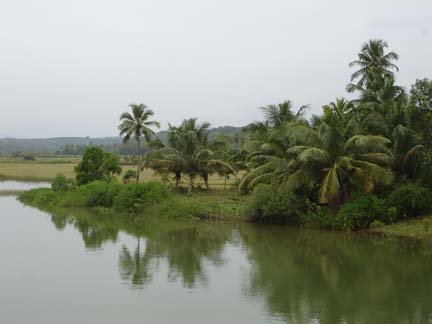
A Coastal estuary

A Coastal estuary
Holegadde near Honavar,Uttara Kannada dist, Karnataka

Copy? Right - but kindly remember to acknowledge!

Creative Commons License
This work is licensed under a Creative Commons Attribution 3.0 License.

" tulu-research.blogspot." ತುಳು ರಿಸರ್ಚ್. ಬ್ಲಾಗ್‌ಸ್ಪಾಟ್‌. ಇನ್

" tulu-research.blogspot."  ತುಳು  ರಿಸರ್ಚ್.  ಬ್ಲಾಗ್‌ಸ್ಪಾಟ್‌. ಇನ್
Have a nice day !