Showing posts with label Tulu words. Show all posts

Friday, October 11, 2019

422. Source of words ending with ‘o’ in Tulu


Some of my friends who write in Tulu language these days are getting fastidious about the purity of the expressed Tulu language. They make extraordinary efforts to filter out usage of   words derived from other languages like Sanskrit in Tulu.  These efforts appear ludicrous to people like me since there are no language that can claim itself as pure. All languages in the world have grown and evolved after absorbing words and features from other contemporaneous languages and cultures that came into their sphere of influence. And Tulu is not an exception to this rule.
The Tulu language has been classified as South Central Dravidian by linguists.. The reason for differentiation from other proximal and coexisting southern Dravidian languages (like Tamil, Kannada, Telugu, Malayalam etc) is that Tulu has absorbed a good share of antique words derived from the ancient languages of India like Prakrit and Austro-Asiatic Munda during the course of its evolution. Even though such features of assimilation has been evident in other coexisting languages also, the effect of homogenization within the languages has masked the evidences.

Tulu words ending with vowel o
Tulu has abundant words that end with the vowel o (pronounced ‘oh’) as in the example “pātero” which means a spoken language or a dialect. In some parts of the Tulunadu (ie traditional Tulu speaking areas), like around Udupi and Karkal, the alternate form of the same word “pātera” has also survived.  It appears that adding o at the end has been a standard practice for many Tuluvas knowingly or unknowingly. For example, a standard word like Bhārata (ie India) is usually modified as “Bārato” in some of the Tulu circles, imparting   the cultivated impression that adding o at the end is mandatory in Tulu .
In other Dravidian languages in the vicinity like, Kannada or Tamil or Malayalam this practice of adding o at the end of words apparently does not exists.
Then when and where from the   Tulu language acquired this specific feature?.

Prakrit based languages
The Prakrit and the Prakrit derived languages have ample words ending with o.  Emperor Ashoka’s edict dated ca.250 BC was in Prakrit/Pāli which was the administrative language in larger part of India. During the history, accordingly, the Tulu and Kannada speaking areas were under the influence of Prakrit (or ruled by kings wherein the common administrative language of the day was variants of Prakrit/Pāli (probably along with Austro-Asiatic Munda languages) up to around third or fourth century CE. In order to compare and to trace the source of words ending with 0 in Tulu we can compare a few random words current in Prakrit derived languages of the Northern India like Hindi and Bengali.

Hindi words ending with o.
Random word samples   from Hindi, for example, like: “aao, naacho, gaavo” would clarify the nature of Prakrit derived Hindi words associated with vowel o at the end.
Aavo= come
Naacho= dance
Gaavo= sing

Bengali words with o
In Bengali we can find the presence of added o not only at the end of words but also within words. Check the following Bengali word samples.

(a)Samples of Bengali words ending with o:
Pujo  (puja =worship)
Borno (varna=color/alphabet)
Samajo (samaja=society)
Also personal names like Supriyo, Arko etc.

(b) Samples of Bengali words with internal o:
Porichoy (parichay= acquaintance)
Bonomali (Vanamali=gardener)
Shomay (samay=time)
Jol (jal=water)
Roy (Rai=king)
Mondal (mandal=division)
Chakraborty (Chakravarthy=emperor/ a surname)
Danonjoy (Dhananjay; a personal name)

Unlike in Bengali, in Tulu language the words have an added vowel of   o only at their ends.

Prakrit influence on Tulu
In the overall analysis, we may conclude that the special feature of the Tulu words ending with a vowel of o has been acquired during contact with speakers of Prakrit languages. We can make further detailed analysis when direct resources from the Prakrit languages were available.
R

Sunday, February 13, 2011

270. Amara Mudnur


There is a strange heritage place name that belies mystery because of its similitude with a Sanskrit word, Amara. The word suggests a traditional practice of gift of land by Indian Kings  for perpetually maintaining military units under reliable military officers or the nayaks.
According to "Indian Epigraphical Golossary" (by Dineshchandra Sircar) Amara is a land or revenue granted by a ruler to his retainers for military service. It was the land assigned to Amara Nayaks ( traditonal military officers) who were entitled to collect only certain revenue with the obligation to raise a contingent of army for service.

Amara Mudnur, Amara Padnur
Amara was a large village set in the dense sylvan northern part of Sullia Taluk, Dakshina Kannada district. The’ Amara māgane’ was ruled by Tulu chieftains during the recorded history.The Amara ‘māgane’ (village cluster) was subsequently divided into western ‘Amara Padnur’ and eastern ‘Amara Mudnur’ villages, wherein ‘Padnūr’ (paDna+ūr) means western village and ‘Mūdnūr’ (mūDna+ūr) means eastern village.
The prefix ‘Amara’ in these place names at the first instance appears like a common Sanskrit word that means ‘immortal’. 
Amara Maagane was the traditional term used for the hereditary military grant lands or estates gifted to Amara Nayakas for raising and maintaining a unit of army in the service of the king or the ruler of the land.

ALTERNATE POSSIBILITIES
There are some alternate possibilities on the origin and source of this word .

Amara: An Ethiopian place name
Amara is also an Ethiopian African word used in Ethiopian place names as well.There are many places in Ethiopia that carry the place name prefix of Amara! Since there are several words of Ethiopian Afican origin in Tulu such as Tulu, Bantu, Kenya, Kola, Siri, Meru etc, the Amara could be another word from the same source that appears to have been brought here by the ancient African immigrants to Tulunadu.
Amhara tribes
The ‘Amara’ in the Sullia place name may also be a corruption of the African tribal name ‘Amhara’.
Ethiopia is also home to ancient Amhara nomadic tribes that speak a language known as Amharic. The Ethiopian word Amhara is usually analysed as free people (wherein am=people, hara=free or soldier).
Some suggest that African word Amara represents paradise. The latter meaning appears akin to the Sanskrit word Amara for the immortal.
There are other places along the West Coast that carry the place name Amara. For example, Amara-kantaka is a mountain peak in Vindhya/Satpura Range, giving birth to three rivers, viz. Narmada, Sone and Arvi. They drain into Arabian Sea, Ganga and Mahanadi respectively (Ganga and Mahanadi drain into  Bay of Bengal).  Word 'Amara' here is also noteworthy.

Amara in Sanskrit
Apart from the standard meaning of immortal (in Sanskrit), the term Amara was also a code for the number 33 which was supposed to be the total number of original Gods according to mythology.

Amar in Tulu
Apart from the above cited logical possibility of derivation of place name ‘Amara’ from an African root word, there are several shades of meanings attached to the widely used basic word Amar(u) in Tulu and other related Dravidian languages. Check the following range of meanings attributed to the word amar or amaru.
Amar 1=to shrink. or lag behind or stagger.
Amar 2= to adjust oneself or to arrange.
Amar 3= to settle, compose oneself.
Amar 4= to deposit (like sediment).
Amar 5=to hide or be hidden.
Amar 6= to seize, or hold or embrace.
Amar 7=twin or double
Amar 8= similar, to resemble.
Amar 9= appropriate or suitable.
Amar 10=to initiate or begin
Amar 11= wet soil or hedge of paddy field.
Amar 12= field canal.
 Also a  dividing hump or bund of a paddy field.  Note the related usages:
    (a) Amere kadpuni = Digging a shallow canal for he outflow of water for the paddy field.
    (b) Amare deepini  = Putting a dividing bund in a field or making a canal.
    (c) Amare Todu = A water canal in cultivation field.
Amar(ke) 13= space in between.
Amar 14= intimidate or threaten (Tamil, Malayalam)
Amara 15=immortal, without end or death. (Sanskrit).

-Ravi and Vishwanath.
®

Monday, July 7, 2008

124. Dissecting Strange words II

There are many strange sounding and unintelligible words around us in Tulu and Karavali Kannada. Some of these words transgress beyond the limits of Tulunadu and are found in diverse areas of the subcontinent.
*
Manjunat has added the following place names to the list:

Aerya(Erya)
Karinja(kAriJja)
Parappale(parappale)
Kayyara (kayyAra)
Kukkadi (kukkADi)
Mantampadi

* *
Narayana Shetty has added some more village names to the list of unintelligible words.

baNāl,
dembuge,
domDōLi,
hirgāna,
kampān,
kawDoor,
kudi,
maNāyi?
‘HaDamkOLi’, ‘Hamamja’(small hills)
Mumrgi(a rivulet in KawDoor village)
VarvāDi,

* *
Regarding the word ‘Kawdoor’ in his list, I was thinking of the sharp analogy between the words ‘Kawda’ and ‘Gauda’ and possibility of the two words being variants with the same meaning. Hosabettu Viswanath has attempted to decipher some of these words. I combine Viswanath’s notes with my stray ideas to logically demystify some of these strange words.

Aerya
Aer+ya=elevated area,ridge.

Heranje
'Haer' = to load, to fill a sack or sack itself filled with goods. 'Herett gaaDi' = Bullock cart used for transporting goods between ghats and Mangalore in olden days. Hence 'Heranje'(haer+anje) must be a loading centre, thus the village taking the name thereof.

Hirgāna, Naringāna
Hirgana=Hiregana: Hire(=large)+kāna(=forest).
Naringana: Narim(=fox, jackal)+kāna(=forest).

Kampān
The word ‘kampa’ may represent a extinct or assimilated tribal sect. There is a place called ‘Kamparabail’ in Bantvala Taluk.Similar to Kavada>Gavda transformations discussed below,it may may be worthwhile to explore possible kāmpa>gāmpa transformations.Sloven persons are called as 'Kampari' (woman) and 'Kampara' (man). These names are also used as proper names.

Kārinja
Kar+inja/e=dark/wooded+region/habitation

Kawdoor
There was a tribe of people called as 'KawDer', inhabiting ghat sections of the district around Puttur and other areas. So it is: Kawdera+Oor = Kawdoor. The ‘Kawde’ may be an ancient variant of the word ‘Gauda’. There are people in Maharashtra with surname of 'Kawade' and ‘Gawade’ (compare with: ‘Gowda’).
ShamBaa has suggested the origin of the word ‘Gauda’ as ‘Gawli’(=milkman, cowherder)>Gawda. One of the villages in Udupi taluk near Avarse is named 'Gawali'.
There is a sect called ‘Halu-matha’ (‘milk cult’) among the Gauda community of southern Karnataka.
The Tulu Lexicon (p.1009) describes Kaude = Milkman, A man bringing contribution to temple feasts. The other related words (and meanings) are: Kaudu = Fraud, Deceit.; Kaudig = smallpox. ‘KawaDe’ also stands for ‘cowries’ (small sea shells; ‘gavva’ in Telugu), used as money in olden days.

Kayyāra
Kayy+āra=hand/palm shaped(semicircular) ground. Compare with similar'KaibaTTalu' at Kadire,Mangalore.

Kemrāl, Mogrāl, Arala.
Kem (kempu=red)+ arāl (flower). Ruby- like bloomed flowers. The village must have been named after trees with ruby - red flowers. (Tulu Lexicon , p..904). Kemraal alternatively might be representing a "land abounding with ponds of Red Lotus flowers". In Tulu parlance lotus is "aralpoo or allipoo".Compare this with the villages called 'Tavarekere' in other parts of Karnataka.
If ‘Kemral’ is red flowers, then ‘Arala’ village stands for bloomed flowers or bloomed lotus. Similarly ‘Mogrāl’ would represent ‘mogg’ (=jasmine bud?) flowers or lotus buds.

Kukkādi
Kukka+aDi= Kukka, a tribal group+ aDi/pāDi(habitation). Compare with KukkeDi,Kukkandur(Karkal),Kukanur(Raichur),KaukraDi(<.kukaraDi),etc.And 'Kukke' of Subramanya.

MāNayi, MāNi
The place name MāNayi has several cousins in southeastern part of Tulunādui like Māni, Mānila etc. There is also another set of places with shorter vowel like ‘Manipura ‘ or Manipalla (>Manipal). For preliminary observation, the word ‘mani’ (=gem, pebble stone) looks different from ‘Māni’ (=lad or hero).
Generally, the word ‘māNi’ refers to male lad especially among Tulu Brahmins. But the word has other meanings beyond this. The MāNi is a spirit God popular in Uttara Kannada. (MāNi, MāNesvara (male), MāNakka (female) etc are the traditional common names among people in Ankola- Karawar region. That the spread of fame this Spirit God (a martyred war hero?), now worshipped in Uttara Kannada was not exclusive to northern Karavali is proven by the place names Māni and MāNila in the southern interiors of Tulunadu.
MāNi also refers to Spirit Oracle/Priest ('darshana pātri'). 'Maanechhidi barpuni' refers to a Spirit possessing the impersonator (pātri), manifested by physical shivering of the pātri.
Mani was also the name of an ancient dark skinned tribes of African origin widespread also in the Southeast Asian countries.

Mantampadi
Mantam+paDi=Mantam (<.manTap?)+ paDi(habitation).

Odilnāla, Oddathamuki
One possibility is ODu (Curved Tile, known as dambe) + ill’(house) + āla (stream, fluvial course). Does Odilnāla represent ‘a stream course by the side of the tiled house’ (?). Alternately ‘oD’ or ‘oDDa’ were a tribal sect represented by modern ‘oDDa’ or ‘VaDDa’(stone workers).Note for example,the hilly place name oDDathamuki (in Sullia taluk). And 'Oddarse'(VaDDarse).

Parappale
Para+pāle =Old Pāle tree.The bark of the Pāle tree oozes a bitter tasting milky latex that is traditionally considered to be medicinal in value.

Pilya
Possibly represents name of a tribal group. Note pilya – piLLe (Keralite) analogy. Other possibilities of ‘Pilya’ apparent include relation to ‘pile’ (=dirt, pollution)?

Pollya
Again the word Pollya is possibly related to name of tribal sect. Poliya may be related to tribes Poleya (>Holeya) or even Polla (>HoLLa). Other possibilities include relation to ‘pollu’(to stitch) or ‘poLLu’ (empty, barren, without seed).The word may be referring to rattan,cane and creeper considering its probable affinity to 'pollu'(to stitch or knit).

®

Blog Archive

Books for Reference

  • A Comparative Study of Tulu Dialects By Dr. Padmanabha Kekunnaya. Govinda Pai Reserach Centre, UDupi. 1994
  • Koti Chennaya: Janapadiya Adhyayana. By Dr. Vamana Nandavar. Hemanshu Prakashana ,Mangalore.2001.
  • Male kudiyaru. Dr B. A.Viveka Rai and D.Yadupathi Gowda, Mangalore University,1996.
  • Mogaveera Samskriti By Venkataraja Punimchattaya. Karnataka Sahitya Academy.1993.
  • Mugeraru:Jananga Janapada Adhyayana. By Dr Abhaya Kumar Kaukradi.Kannada & Culture Directorate,Bangalore & Karnataka Tulu Academy, Mangalore,1997.
  • Puttubalakeya Pad-danagalu. Ed: Dr B.A.Viveka Rai,Yadupati Gowda and Rajashri, Sri Dharmasthala Manjunatheswara Tulu Peeta. Mangalore University.2004
  • Se'erige. Ed:Dr K.Chinnapa Gowda.Madipu Prakashana,Mangalagangotri,2000.
  • Studies in Tuluva History and Culture.by Dr P Gururaja Bhat (1975).Milagres College,Kallinapur,Udupi.
  • Taulava Sanskriti by Dr.B.A.Viveka Rai, Sahyadri Prakashana,Mysore 1977
  • TuLu naaDu-nuDi By Dr.PalthaDi Ramakrishna Achar, Puttur.
  • TuLu NighanTu. (Editor in Chief: Dr U.P.Upadhyaya, Govinda Pai Research Centre,Udupi. Six volumes. 1988 to 1997
  • Tulu Patero-A Philology & Grammar of Tulu Language by Budhananda Shivalli.2004.Mandira Prakashana Mangalore. p.317. (The book is in Tulu Language using Kannada script)
  • TuLunadina ShasanagaLa Sanskritika Adhyayana. By Shaila T. Verma (2002) Jnanodaya Prakashana,Bangalore, p.304.(Kannada)
  • Tuluvala Baliyendre. Compiled by N.A.Sheenappa Hegde,Polali,Sri Devi Prakashana,Parkala,1929/1999

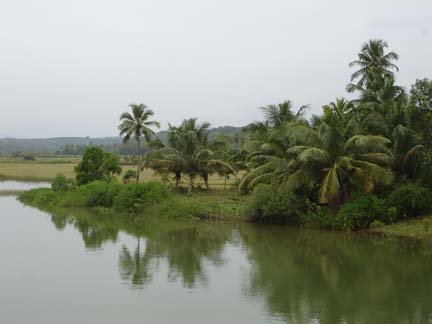
A Coastal estuary

A Coastal estuary
Holegadde near Honavar,Uttara Kannada dist, Karnataka

Copy? Right - but kindly remember to acknowledge!

Creative Commons License
This work is licensed under a Creative Commons Attribution 3.0 License.

" tulu-research.blogspot." ತುಳು ರಿಸರ್ಚ್. ಬ್ಲಾಗ್‌ಸ್ಪಾಟ್‌. ಇನ್

" tulu-research.blogspot."  ತುಳು  ರಿಸರ್ಚ್.  ಬ್ಲಾಗ್‌ಸ್ಪಾಟ್‌. ಇನ್
Have a nice day !