Showing posts with label Shirva. Show all posts

Thursday, July 9, 2009

197. Dravidian spatial suffix -va


Evolution and development of languages apparently progressed from simple smaller words to larger words. Some of the earlier simple and small words became part of the later complex words either as prefixes, suffixes or median components.
In Kannada the familiar spatial suffixes or village- indicators are –uru, -halli,- pete, -palya, etc. These familiar word-suffixes are still prevailing in current usage.
However, Tulu language has preserved several uncommon spatial suffixes that point to certain earlier stage of evolution of the language. Some of the suffix words appear rather uncommon because they are no longer exist in current usage except in toponyms (place-names).
The study of such extinct Tulu suffixes has special linguistic significance since these could have existed in other sister Dravidian languages also during an earlier historical stage of evolution of the language. We can also endeavor to trace tidbits of evolutionary trend in the sequence of word formations during the course of history.
One such generally extinct spatial suffix is –va (or '-wa').

1.Spatial suffix -va
We can see several ancient toponyms ending with –va in the Karavali area. Some typical examples are:
Shirva, Kakva , Urva, GOA,(also Uruval or Urva+al ),
Let us analyse some of these place names:
Shirva = (Shir+va). A place of divine rock. Shira represents rock which was considered as a symbol of divinity by the early cultures. The word Shira and Siri apparently originated in Mediterranean/African region and was brought here by early immigrant tribes. (See earlier post on Shira.)
Kakva =(Kakk+va).. A place inhabited during early history by Kakke tribes, presently extinct. Kakva is presently a hamlet near Atikaribettu northeast of Mulki town. There is one more Kakve near Koila vilage Puttur Taluk.
Urva = (uru+va). The word Uru or Ooru represents (1) earth, (2) Village or (3) Town. Uru or Ooru is a word borrowed from ancient Sumerian civilization by immigrant Dravidians during early history. Thus, Urva is a habitation place,locality or village. Presently Urva is an urban extension within Mangalore city.
GOA. (goh+va).Goh=cow, va=habitation.Goa: A region inhabited by cattle and cattle herders, historically.The place name Goa was translated as 'Pashupe' in Madvavijaya.
Sarve (<.Sarava; sara+va+e). Sara=lake or waterbody. Therefore ‘Sarve’ is a locality by the side of a lake.( Sarve is a modified form of original Sarva or Sarava). Sarave is a village in Puttur Taluk.The original lake apparently has been dried up now.
Sharavu (<.Sarava; sara+va+u). Represents a locality on the bank of a lake.Presently, Sharavu is locality in the heart of Mangalore city famous for a Ishvara and Ganapati temple. Originally the temple might have been on the bank of a lake.Now there is no lake in the neighbourhood of Sharavu temple, except for the temple pond(Kalyani). There is another Sharavoor hamlet near Alankar village in Puttur Taluk on the bank of River Kumardhara
Adve =(< aDva), ( pronounced ‘aDve’)=aDavi=forest or woods. Presently Adve is the name of a hamlet near Padubidri on Karkal road. It appears that the Adve area was a thick forest during early history.The word ‘aDavi’ is the Kannada equivalent of the same.
Ad+va =possibly a wooded area. The ‘aD’ root word represents (1) wood or tree; as In ‘aDar’(=wooden twigs)and (2) to cook. Note here that the two meanings of the word ‘aD’ namely (a)wood and (b)cook are mutually related in the sense that in the primitive societies wood was ignited for cooking food. In other words the verb ‘aD’ (=to cook, as in ‘aDpini’, ‘aDuge’, ‘aTil’(aD+il),’aDDe’ etc) was derived from the root word ‘aD’(=wood , plant or tree) which was the earliest invented fuel for cooking.
Irava (pronounced yirava or eerava; irava=Ira+va). A habitation of Ira or Irava ( or Iruva) tribes. The word signifying Ira tribes (yira or yire=leaf) exists as an place name
Ira= A colony of Ira tribes.
Other compound village names are:
Iruvail=Irava+(b)ail). A valley field occupied by Irava/ Iruva tribes.
Iravattur= Irava+attur. A village on the other side or bank inhabited by Iruva tribes.
( Note the vocalic parallelism between the tribal designations of ‘Irava’ and ‘YaDava’(>(a) Yādava,(b) YeDava(c) Ilava or Elava).
Kalwa (Kal+Va) (a Station in Central Railway, Mumbai). This place with rocky bedded natural canal forms the( of eastern branch of Ulhas River, which empties out to Thane Creek, Mumbai,the other main branch being debouching into Arabian Sea at Bhayandar, aka Vasai Creek. Kaluve or Kalve in Dravidian languages means tributary.This canal-like river tributary is now mostly hidden from view due to reclamation and construction of river over-bridges and railway bridges after Thane Station.
There are place-names with va as prefix. For example:
Vakola (Va+Kola), a marshy area in Bandra-Kurla-Santa Cruz zone, Mumbai.
Vasai creek:near Thane, Mumbai. Vasai was once a Buddhist place.It had a Stupa, dating back to pre-Christian era.

2. Compound suffix -val
The suffix –va has been combined with fluvial indicator –al to form a compound suffix –val to represent habitations on the bank of rivers.Note the following examples like Bantval and Uruval.
Bantvāl=(Bant+va+al). Al represents a river or a stream. Thus, compound suffix -val represents a locality on the bank of a river . A Bunt colony on the bank of river. Bantval town now cosmopolitan is located on the bank of River Netravati.
Uruvāl=(Uru+va+al). Uruval is a village(uru) place by the side of a river. Presently Uruval is a hamlet of Kuppettu village (Belthangadi taluk) located on the Guruvayankere-Uppinangadi road. There is a small stream flowing by the side of the hamlet of Uruval (There is another Tulu word ‘uruvol’ that is used for a sliding bamboo gate that Is erected to protect village properties.)

3. Compound suffix –vayi
‘Ayi ‘ is another Tulu/Dravidian spatial indicator. Aya=dimension. The suffix –va has been compounded with –ayi or –ai in some village names. For example: Peruvayi, Beluvayi.
Peruvayi. (Peru + vai).Peru= large .Thus, Peruvayi represents a large village or tribal settlement . Peruvayi presently is a village In the southern part of Bantval taluk.
Beluvayi is a village located between Mudabidre and Karkala.

4.Compound suffix –vase
The spatial suffix has been joined with another spatial suffix –se(or –shey) to form –vase or- vaashe compound suffix. For example, Kervashe, Amavase bail, Banavasi, Vashi, Kumbashi etc.
Kervāse: (Ker+va+se). A locality by the side of a lake. (kere). Kervase is a village in Karkal Taluk, Udupi district.
Amvāse bail: (Am+va+se+ bail). Amm possibly refers to an ethnic group dedicated to Amma (mother Godess) worship. Amvase bail is a remote village in Kundapura Taluk, Udupi district.
Banavasi: (bana+va+se). A settlement by the side of forest. A temple town near Sirsi, Uttara Kannada district, famous for relics of Kadamba dynasty.
Vashi: (va+shi). A habitation. A village name from Maharastra. (Vasa= habitation,accomodation).
Kumbashi: ( Kumb+va+se).A village in Kundapura taluk, Udupi district.


5. Evolution of the suffix –var
Though the existence of the antique spatial suffix –va has been explained above in the context of Tulu language and toponyms, it is not exclusive to Tulu but was a common feature of Dravidian languages. This we can realize when we trace the evolution of the suffix –va further along the timeline of thr history and development of the language.
Let us analyse some evolved spatial suffix like –vara or –avara. Note that the suffix –va has had an variant namely –ava, wherein the initial a was mild or almost mute in the beginning.
The -ar (or -ara) is another spatial suffix mostly representing open fields with even surface (somewhat like modern football grounds). The spatial suffix –ar (For example: Bolar, Todar,Adyar,Mijar etc) has been discussed in our earlier posts.
(a)va+ar= (a)vār.
‘Avara’ means an open space in several Indian languages.
There are spate of villages ending with suffix –avar not only in Tulunadu/ Karavali but all over Indian subcontinent showing the spread and/or influence of the Dravidian language group.
Attāvar, Neelāvara,Brahmavara,
Attavara. (atta+va+ara). Atta= other side (of river). Hence Attavara represents an open field/ ground on the other side of the river.Presently, Attavara is an extension in the heart of Mangalore city. The river alluded to in the toponym has been dried up leaving a valley as a relict evidence.
Brahmavara. (Brahma+va+ra). An open field dedicated to the God Brahma. Brahmavara is a prominent town north of Udupi along the NH17. The worship of Lord Brahma connoted in the toponym has been abandoned during the passage of history.The cult of Brahma worship (ca. 1500 BC – 400 CE) once dominant all over India including Karavali has remained in vestial state as ‘Bermer’ in Garodis of Tulunadu.
There are places with suffix –avara in other regions of Karnataka and Indian subcontinent.
Bānāvara (Hassan district, Karnataka)
Kārvāra(Uttara Kannada dist, Karnataka)
Dharmāvaram (Tamilnadu).
Peshāvar (Pakistan)

Some more spatial suffixes.
Suffix -Varse (va+ar+se) or averse or simply -arsey:
Avarse:(a+va+ar+se): a village in Udupi district and another village (Avarsa) near Karavar,Uttara Kannada.
Teggarse: (tegga+ar+sey). An open field of village with teak trees. (tega=teak).
Vasre: (va+se+arey): A village in Kundapur Taluk, Udupi district


6.Divine spatial suffix : Isha+avar
With the introduction of temple culture in ancient Indian cities (ca.4th Century CE onwards) the temple towns were named after the divinities installed.
Ishvara= yIsha (=God)+ avar(field)= Field of God!
There are abundant place names all over India that end with the suffix –ishvara:
Odi bande+ishvara= Odabhandeshvara .(Udupi dt, Karnataka)
Kota+ishvara=Koteshvara.(Udupi dt, Karnataka)
Pandi+ishvara = Pandeshvara.(Dakshina Kannada & Udupi dt, Karnataka)
Rama+ishvara+Rameshvara (Tamilnadu)
Soma+ishvara=Someshvara.(Dakshina Kannada & Udupi dt, Karnataka)
Manja+ishvara=Manjeshvara (Kerala)
Muruda+ishvara=Murudeshvara (Uttara Kannada, Karnataka)
Dhara+ishvara=Dhareshvara(Uttara Kannada, Karnataka)
Mahabal+ishvara=Mahabaleshvara (Maharastra)
Naga+ishvara=Nageshvara (Telugu proper name)
Nila+ishvara=Nileshavara (Kerala).
Triambaka+ishvara+Triambakeshavara(Maharastra).
Bhubana+ishvar=Bhubaneshvar(Orissa)
Sanke+shwara= Sankeshwara (1.Belagaum, Karnataka; 2. Gujarat)
Venkata+ishvara=Venkateshvara (Tirupati, Andhra Pradesh)[-not a place name]
Following the popular ancient custom of naming temple-towns in with suffix –ishvara, the word ‘Ishvara’ , consequently became an alternate word for representing the ‘God’!

- With inputs from Hosabettu Vishwanath.
®

Sunday, November 9, 2008

161. Antiquity of Shira

Tracing roots of some of the common words and place names surprisingly leads us to locations beyond the shores our country from where our ancestors apparently set out on journeys several hundreds or thousands of years ago. Digging at the roots also reveal the evolutionary nature of many of the ancient words that might with passage of time have been modified to acquire newer shades of meaning in the true sense of growth and evolution.

Shirva
The fascinating place-name is as mysterious as inscrutable it is. Shirva and Manchakal are twin urban villages to the south of the temple town of Udupi. The simple analysis Shir+va does not leads us anywhere as to it origin or meaning at the first attempt.
However,comparison with some similar place names throws some light on this word. Some of the village names that can be compared with Shirwa are: Shirthadi, Shiriyara, Shirur,Shiradi and Shira. The common thread in these names is Shira or Sira.
Infact, the name 'Shiriyara' (or Siriyara) prompts us to link these villages with the famous name of Siri, a legend in the Karavali.

Siri
Antiquity of the legendary name of Siri has been discussed in older posts. The roots of word Siri can be traced to some of the African heritages. Ethiopia has several places that contain the word Siri. Even the roots of the game Chenne ( Manquala games) popular since Siri days can be traced to African lands. Siri has been a popular word for Goddess of luck in Buddhism and Jainism and later it was adopted into Sanskrit as Shri who is equivalent of Goddess Lakshmi. The common title 'Shri' bestowed on our men to denote respectability originally came from the name of symbolic Goddess of luck, prosperity and wealth.
Some of the place names like Siriyara, Siribeedu, Siribagilu, Shirlalu etc appear to have been directly related to the legend of Siri in Tulunadu. (In these names s- or sh- sounds have been used interchangeably by different users).

Sira
However, the word Shira or Sira in our place names is not modification of Siri, but is an original word, though the words Siri and Sira appear to be interrelated in origin and evolution.
There are several distinct places known as Shira. The popular well known town Shira in Tumkur district, Karnataka is not the only example. There is a 'Shira' in Uttar Kashi district of Uttaranchal State in the northern India.. Besides there are several Shirur ( spelt variously as Shiroor, Sirur or Siroor etc) all over India.
However the word Sira, Siri and Siria can be traced in Africa and Europe. Syria is the name of a State in Africa. There are many hills and villages known as 'Siri' or 'Sire' in and around Ethiopia (Africa), Norway and Sweden (Europe). Sira is also the name of river in Norway. Old west Norse priest had a title called Sira. And in Nigeria a Siri (and dialect Sirawa) language is spoken.
These roots leads us to the conclusion that Tulu ancestors who immigrated to India from African Ethiopian roots in antiquity brought with them basic outlines of the legends connected with the 'Siri' of Tulu Siri paDdana.
These data suggest that the word Sira or Siri is not a word restricted to our region alone but rather transcontinental in nature that can be attributed to dispersal of the ancient word in tune with the human migration patterns.

Roots of the term Sira
In Indian languages the term Sira (or Shira) refers to head or peak (summit) in general. And possibly the Indian word Shila (rock) is derived from the original word Shira (r >l conversion). In Phoenician languages the word 'tsur' means rock and the term 'Syria' is considered to have been derived from or related to the cited word 'tsur'. The rocks especially meteorites that fall into the earth were reverently worshipped in the ancient days as we see the importance attached to the rock at Kaaba.
In Persian languages the word 'Siria' means sunny bright glowing light etc, apparently refers indirectly to Sun or the 'Surya ' of Indian languages. Thus Siri, Sari, Sara, Siria, Siraj etc male/female personal names popular in different parts of Africa Europe and India have been derived from the word Siri or Sira. Siri is a name popular in Norway and Sweden as is in India. The Indian title for respectable males, 'Shri' is derived from the word 'Siri'.
We can trace the origin of the word to ancient Sumerian language (6000-4000 BCE) where we encounter the phrase such as “E-gish-shir-gal “(=house of the great light). The Sumerian word 'Shir' or 'sher ' means to shine brightly.

The book of Ecclesiasticus of Old Testament is also known as the “Book of Sirach”. or “Ben Sira”. The book in Greek manuscripts is known as Sophia Iesou uiou Seirach, which means "the Wisdom of Jesus, the son of Sirach". It is also known as Sophia Seirach (=the Wisdom of Sirach). The Hebrew fragments of Ecclesiasticus describes: "Wisdom of Simeon, the son of Yeshua, the son of Eleazar, the son of Sira".
Thus since the days of Sumerian civilization (6000-4000 BCE) and even during the beginning of Common Era the word 'Sira' meant divine light or God which suggests a connotation to the major source of light, the Sun. Further,the word Sira appears recurrently in Islamic tradition (600 CE onwards) too. Biographies of Prophet Muhammad are known as 'Sirah Rasul Allah'.The male Arabic name 'Siraj' means guiding light.
An overall analysis of the word suggests that Sira originally meant bright day light derived from the Sun. The light was considered heavenly and divine since it spread from the vast sky: auspicious and lucky because of its contrast with dark night. Similarly the meteorites that fell on the Earth from the sky were also called Sira, possibly because ancient people thought that it came from heaven. Because of this feelings, the meteorite fragment that survived while falling through the Earth's atmospheric shield were considered divine tokens, as perceived by the historical reverence attached to a specific basaltic rock at Kaaba. Thus Sira represented sky or that is above our head. This meaning was extended to represent top or summit portion of human body or peak of any hill.
Indian context
Migration of people from the African-Mediterranean region to India during several periods in the early human history obviously carried with them their cultural strains as well as their words. Their language was modified as a consequence of admixing with the places they settled but the basic words were absorbed into the new languages they adapted to. Thus five basic meanings were attributed or retained to the word Sira/Siri in the Indian context as follows:
Sira =the peak, the head, the top portion or summit. Sira> Shira
Sira =the rock, Sira>Sila
Sira =column, length or vein . Sire> Sele (=water bearing joint in the rock). Compare 'sele' (rock joint or water spring) with 'shile', the rock.
Sira =the divine light (Sun). Siria>Surya.
Siri =luck. 1.Heroine of an ancient Tulu paDdana (Siri), possibly Tulu equivalent of tamil Sangham literature. 2.Goddess of luck, prosperity and wealth in Buddhist and Jain traditions. 3.Also absorbed into Hindu pantheon of Gods as Shree or Lakshmi. 4.Siri.> Shri (=respectful Indian title of a prosperous man)

Our relevant village names
The usually accepted Indian meaning of Shira(=head or peak )is not applicable in the case of many our village names that contain the word Shira or Sira.
The village name Shirā possibly means divine and/ or rocky. Similarly Siriyara (= Siria+ara) and Shirthadi (Shiratta +aDi) might have been designated after the Siri, the Goddess of luck or the rocks. Note the word 'Siria' is similar to the Siria or Syria place/State name of the African continent. Shirlal is Shirila+ āl or the river-side village of the Siris', the plural term Siris being applied to a group of legendary ladies associated with the paDdana story of the Siri. The Shirahatti may be a divine village. However, in some of the villages known as 'Shiroor's along the coast, there are no trace of rocky outcrops or peaks worth describing. Hence, these Shiroors might have been named after Siri or the divine Sira.
Shirva (Shir+va) possibly means a village with rocky outcrops. Incidentally, an African dialect in Nigeria is also known as Sirawa. The suffix '-va' as village indicator is less common in Tulunadu, the only other example that comes to mind is 'Urva' (Uru+va) in Mangalore. The '-va' suffix may be a variant of '-ya' suffix as in Suria, Neri(y)a, Uliya etc.
It is no longer a mystery that vestiges of human evolution and migration have been preserved even in the evolution of words that have been handed out to us through generations.
®

Blog Archive

Books for Reference

  • A Comparative Study of Tulu Dialects By Dr. Padmanabha Kekunnaya. Govinda Pai Reserach Centre, UDupi. 1994
  • Koti Chennaya: Janapadiya Adhyayana. By Dr. Vamana Nandavar. Hemanshu Prakashana ,Mangalore.2001.
  • Male kudiyaru. Dr B. A.Viveka Rai and D.Yadupathi Gowda, Mangalore University,1996.
  • Mogaveera Samskriti By Venkataraja Punimchattaya. Karnataka Sahitya Academy.1993.
  • Mugeraru:Jananga Janapada Adhyayana. By Dr Abhaya Kumar Kaukradi.Kannada & Culture Directorate,Bangalore & Karnataka Tulu Academy, Mangalore,1997.
  • Puttubalakeya Pad-danagalu. Ed: Dr B.A.Viveka Rai,Yadupati Gowda and Rajashri, Sri Dharmasthala Manjunatheswara Tulu Peeta. Mangalore University.2004
  • Se'erige. Ed:Dr K.Chinnapa Gowda.Madipu Prakashana,Mangalagangotri,2000.
  • Studies in Tuluva History and Culture.by Dr P Gururaja Bhat (1975).Milagres College,Kallinapur,Udupi.
  • Taulava Sanskriti by Dr.B.A.Viveka Rai, Sahyadri Prakashana,Mysore 1977
  • TuLu naaDu-nuDi By Dr.PalthaDi Ramakrishna Achar, Puttur.
  • TuLu NighanTu. (Editor in Chief: Dr U.P.Upadhyaya, Govinda Pai Research Centre,Udupi. Six volumes. 1988 to 1997
  • Tulu Patero-A Philology & Grammar of Tulu Language by Budhananda Shivalli.2004.Mandira Prakashana Mangalore. p.317. (The book is in Tulu Language using Kannada script)
  • TuLunadina ShasanagaLa Sanskritika Adhyayana. By Shaila T. Verma (2002) Jnanodaya Prakashana,Bangalore, p.304.(Kannada)
  • Tuluvala Baliyendre. Compiled by N.A.Sheenappa Hegde,Polali,Sri Devi Prakashana,Parkala,1929/1999

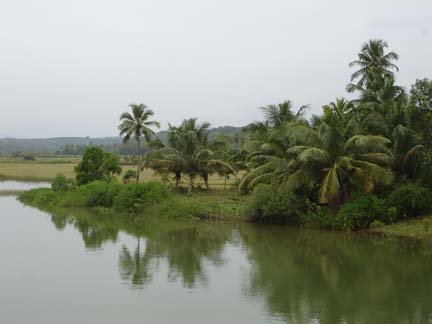
A Coastal estuary

A Coastal estuary
Holegadde near Honavar,Uttara Kannada dist, Karnataka

Copy? Right - but kindly remember to acknowledge!

Creative Commons License
This work is licensed under a Creative Commons Attribution 3.0 License.

" tulu-research.blogspot." ತುಳು ರಿಸರ್ಚ್. ಬ್ಲಾಗ್‌ಸ್ಪಾಟ್‌. ಇನ್

" tulu-research.blogspot."  ತುಳು  ರಿಸರ್ಚ್.  ಬ್ಲಾಗ್‌ಸ್ಪಾಟ್‌. ಇನ್
Have a nice day !