Showing posts with label kumara. Show all posts

Sunday, September 27, 2009

208. Murudeshwara


MuruDeshwara is a well known temple town near Honnavar in the Karavali Coast of Karnataka. RN Shetty group has invested special interest to develop Murudeshwara temple town into an interesting tourist attraction.
The original geomorphic feature of the Murudeshwara is a tombolo structure. A tombolo is a littoral rocky island connected to the coastal mainland through a strip of sand bar. Due to civil modifications in the area it is difficult to distinguish the original tombolo structure.However the tombolo features can be recognised if we watch the profile of the area at a distance from the beach north of Murudeshwara ( as can seen in the photo below)


The place name Murudeshwara has special historical significance as it unravels a hidden layer of theological history of the region. It reveals that the place renowned for the worship of Lord Shiva in the form of Murudeshwara, probably since 5th Century CE (or the Kadamba period) was earlier a site of Muruda (or Muruga) worship. Apart from documenting the cult of Kanda in the Karavali during the early centuries of CE, the toponym has also preserved the lesser known word ‘Muruda’.
Now the place name Murudeshwara is popular as a center of Shiva worship. However it can be deduced that the place was originally known as ‘Muruda’ during early history before the onset of Shaiva cult in the area.There are similar places known as Muruda in other parts of India. One such Muruda village still exists in Orissa in the east Coast of India.Another Murud is in coastal Raighad District of Maharashtra known for its famous beach.There is one more Murude village in Maharastra.
This specific place name ‘Muruda’ apparently was transformed into ‘Murudeshwara’ possibly ca. 5th to 6th Century CE. We have discussed earlier the significance of place names that end with the suffix of ‘eshwara’ as ‘eesh+vara’ or divine habitations ( see Post on suffix -va).

Muruda
Muruda literally means the God of the village or the vice versa. (muru=God,spirit. da=area,village). The component word Muru, discussed below, is of ancient African origin. Da is an ancient word from Munda languages.

Apart from the above we can also discuss some of the related words for comparison:
Mu = Three (as in Munneer = ocean)
Mu = Muddy soil, left by receding flood water.
Muru= A 'U' shaped ear ornament with a big precious stone - white or red), worn by men of older generation. A big 'OnTi' opposed to 'Tikki'.( OnTi and Tikki are two popular ear ornaments among Tuluvas of older generation.
Morod (Konkani)= a rough, coarse dry elevated land.
Murul= Punarpuli (Kokam or birinda) a medicinal sour fruit bearing plant.
Muru Meen = a fleshy and tasty fish. It is slightly curved below belly and deeply curved on upper side.

Muruda=Muruga
Muruda, the forgotten word preserved only in place names appears to be the equivalent (or regional variant) of the other familiar word Muruga. Muruga represents the ancient south Indian God also known by alternate names such as Kumara, Kanda,Skanda, Subramanya, Shanmuga etc. The suffix –ga, in Muruga, also represents a village or an habitation (as in place- names Herga, Binaga etc, for example). Therefore Muruda= Muruga.Thus both the ancient words Muruda as well as essentially originally meant: the God of the village.
The name Muruga ( Murugan) for Kumara or Kanda has been in usage mainly in Tamilandu. However, there are indications that the word was earlier in vogue in Eastern Karnataka also as evident by the name ‘Murugha Rajendra’ used by religious institutions based in places ranging from Gulbarga to Chitradurga.
The available data on Muruda=Muruga suggests that the equivalent cult was known as ‘Muruda’ in northern Karavali and Orissa Coasts dominated by Munda tribes in the historical past.In the southern Karavali place names like Kandavara provide evidence for the existence of Kanda (.> Skanda) cult.

Kumara=Muruga
It has been suggested that several early tribes in southern India had adopted worship of trees. Place names like Maravoor, Maroli, Maroor,Marodi etc in the Tulunadu remind us the heritage and footprints of Marava tribes in the region.In south Indian languges the word mara represents a tree.Early Tamil Sangam literature also documents anecdotes of spirits in trees. The soul of King was considered to have been lodged in a specific tree.The Kadamba tree was held sacred by early Munda tribes. Successive tribes adopted worship of other trees like Banyan, Peepal (Ashwatha or Bodhi), Banni, etc.The cult of Spirit in the tree (‘mara’),possibly evolved into the cult of Māra.The cult of Māra was evident during early centuries of CE, when Buddhism held sway in southern India also as evident from early Buddhist texts.
The cult of Māra subsequently evolved into the cult of Ku-Māra, the youthful God. Kumāra means an unmarried young man. It appears that the cults of youthful God prevalent among different tribes like Kumara, Kanda, Muruga and Muruda were unified and later considered synonymously.The regional cult of Kanda (=child) cult was later sanskritised as Skanda. And apparently the Kumara cult was Sanskritized as Subramanya (Su+brahman+ia).
The cult of Māra as tempter in certain regions later evolved independently into or equated to the cult of Kāma or the cupid.

African roots
There are overwhelming evidences for the suggestion that the word Muru originated in Africa and was distributed to other region probably along with the human migrants. For example, the name of the country ‘Morocco’ is said to have been originated from the Persian word ‘Marrakech’which in turn was derived from the Berber word ‘Mur-Akush’ that means the Land of God.
The word Muru also occurs as a surname in Arab names such as : Abd al-Fattah Muru.
It has been suggested by earlier researchers that the cult of Muruga (Murugan) is derived from the ancient East African concept of spirit God ‘Murungu’. In several African cults, Murungu is a Spirit God, the supreme being, the almighty, all-seer, all-giver, master of life and death, creator of all things and of man.The evolution and transition of spirit worship into Deity worship apparently has origins in Africa. In Meruimenti and Merutig languages, Murungu means God. In Nyaturucha languge it means evil spirit,spirit,ghost or apparition.In Nyaturwil languge it is Spirit or God.In Shona language it means employer.
In Uganda, the God Murungu is also known as Mulungu. Murungu is also a surname among Akamba tribes of Uganda and among speakers of Shona langauge, for example, Solomon Murungu. In Zambabwe,the word Murungu (=God) is also applied to white –skinned persons, mostly in an invective sense. Murungu is also the name of a place in Tanzania,United Republic of Kigoma.

Early tribal people have freely borrowed cults, concepts and above all words, from other civilizations. In other words migration of tribes during different periods in the history have carried cults originated in one region to the other.
The world was a global village long before the internet was invented!

-with Hosabettu Vishwanath
®

Thursday, May 1, 2008

112. The Temples of Karavali: Early phase

The evolution of the art of architecture of Temple construction and designing of idols in India during the early centuries of the CE were influenced and shared by various older religions of India like Buddhism, Hinduism and Jainism.
Buddhists were said to be the pioneers in building religious structures in India. King Ashoka (ca.273-236 BC) several commissioned construction of Buddhist monasteries, known as Viharas. A number of large cave monasteries, meditation halls and temples were dug out of basalts especially in Maharastra. Most of these were built along the Maharastra coastline. These were used as monasteries as well as lodgings for domestic and foreign travelers and merchants who visited nearby ports for trade. Later meditation halls known as Chaitya were added to the Vihara complexes. Those structures that preserved relics of Buddha were called Stupa. The globular super structures of the Stupas appear to have been influenced by the shape of granaries.

Apisidal: The type of temple architecture initially developed was based on the Buddhist Chaitya shrines consisted of a plan with a rectangular entrance and a circular rear. It has been described as Apisidal or horse shoe shape. The early Hindu temples adapted this style of architecture in temples. It is also sometimes called ‘gajaprasta’ or 'elephant back' design. This appears to have been influenced by the shape of early Buddhist cave temples.
Mahalingeswara temples at Brahmavara, Hejamadi, Kota,Bantra, and Puttur. Udupi Ananteswara temple at Udupi, Karinjeswara temple at Karinja, represent this type of U shaped or horse-shoe sectional plan.
Other temple plans have been developed on Square and on Rectangular planar sections.
Nagara and Dravida
The temple architecture in India developed along two lines: Nagara and Dravida. The Nagara style of temple architecture initially evolved in the northern India, was characterized by development of domes on the main temples. Whereas in the Dravida style, developed initially in ancient Tamilnadu, the pyramidal dome known as Gopura (gopuram) was placed on the entrance gate of the temple.
Subsequent experiments in temple construction involved a fusion of Nagara and Dravida styles known as Vesara style of architecture.


The oldest known temple in Karavali dedicated to Lord Shiva at Shambukallu,Udyavara,Udupi taluk.(Front view)

Karavali architecture
The Karavali temples like the native old style tiled houses characteristically have pyramidal sloping roofs covered with stone slabs, copper sheets or tiles. Possibly the earlier versions had similar styled wooden roofs in the past that were replaced by weathering proof stone slabs in the course of time. Narasimhamurthy (2000) proposed that this style be designated as Karavali style of architecture.
However, earlier workers like Havel have noted influence of Nepali architecture on the Karavali shrines and houses.

Skanda worship
It is generally observed that most of the old temples were devoted to the worship of Lord Shiva in various forms such as Mahalingesvara, Umamahesvara, Anantesvara etc. This is also true in the case of temples in the Karavali. The early phase of Shiva worship was followed by the worship of Ganesha, Durga Parameswari and Krishna I general.
However, it seems that in the post Vedic phase Skanda was the first God to be worshipped. The worship of Skanda or Devasenani was popular during the period of Chandrgupta Maurya and mentioned in the Artha Shastra of Kautilya (ca.250-300 BC). It is said Gautama Buddha saw idols of Skanda during his childhood.

Murungu and Murugan
Skanda is popular in southern India under the names of Kumara and Murugan. It has been suggested that the name Murugan has been derived from the Murungu the African God of Kenya. It is possible that immigrants from Africa brought the concept of God Murungu to southern India where the youthful God was designated Murugan.
The Skanda worship was strong during the Satavahana(2nd to 4th Century CE) and Kadamba period(4th to 6th Century CE) and as pointed by noted historian Sham.Ba.Joshi. The name Mayura is symbolic of Kumara worship. There are several villages in Dakshina Kannada that bear the name Kanda or the Skanda, such as Kandavara, apart from numerous places of worship of Subramanya. It appears that Kanda-Subramanya worship was dominant in Karavali during the Kadamba period. Most of the ancient Skanda temples built of mud and wood may have been destroyed due to onslaught of weathering and erosion.
The Kanda-Subramanya worship subsequently in the due course of history in Karavali was amalgamated with Naga worship.It is probable that the synthesis of Naga-Subramanya represents fusion of two cultural streams, representing two different worship ideologies(Naga and Subramanya) in the ancient Karavali society.


An Apisidal or Horse-shoe shaped Shiva temple (renovated)at Shambukall,Udyavara,Udupi district.(Back view)

Oldest temple in Dakshina Kannada & Udupi
The total number of temples in Dakshina Kannada and Udupi districts exceeds 1600. A compilation of the temples of Dakshina Kannada and Udupi districts, edited by Murulidhara Upadhya Hiriadaka and P N Narasimaha Murthy has been published (2000)by the management of Sri Janardhana and Mahakali temples of Amabalapadi, Udupi. Dr. Narasimhamurthy (2000) summarises that the Udyavara Shambukalllu temple and Vaddarse Mahalingeswara temple, both in Udupi taluk and district are the two oldest. The Vaddarse temple carries a seventh century CE inscription of King Alupendra I.
Narasimhamurthy (2000) states that the horse shoe shaped Shiva temple on Shambu kallu hillock of Udyavara, Udupi taluk, estimated to have been built originally during 4th to 5th Century CE, (now in renovated condition) is probably the oldest known temple in Dakshina Kannada and Udupi districts.The temple is built, without additional foundation, directly on a large elliptical dome of gray granite locally called Shambukallu.
The other by-product of the above data is that Udyavara near Udupi was one of the early centres of culture and power.Udyavara, incidentally means 'the ground of the rising Sun'.

Dr Padur Gururaja Bhat


Dr P.Gururaja Bhat (1924-1978) was a pioneer in the systematic study of temples of Karavali region. He analytically studied numerous temples and the idols therein and has written some 233 research papers relating to the history of temples distributed in Dakshina Kannada and Udupi districts. His books ‘Antiquities of South Kanara’ (1969) and ‘Studies in Tuluva History and Culture’ (1975) richly deserve to be reprinted now for the benefit of aficionados of the cultural evolution of the Karavali.


References
Murudhara Upadhya Hiriadaka (2000). Samapadakeeya. In: Dakshina Kannadada Devalayagalu.[Kannada].(Editors: Murulidhara Upadhya Hiriadaka and P N Narasimaha Murthy). Published by Sri Janardhana-Mahakali temple, Amabalapadi,Udupi. p.436., pp.31-60
Narasimhamurthy,P.N.(2000) ‘Prastavane’. In: Dakshina Kannadada Devalayagalu.[Kannada].(Editors: Murulidhara Upadhya Hiriadaka and P N Narasimaha Murthy). Published by Sri Janardhana-Mahakali temple, Amabalapadi, Udupi.p.436.,pp.61-84.
®

Monday, June 4, 2007

27. The Sweet Potato

The sweet potato (botanical name: Ipomea batatas) was a humble food of the masses since early historical days. Rama, the dark skinned prince of Ayodhya, during the early part of Indian history, went to live in the forest for fourteen years along with his wife Sita and brother Laxmana, only to honour the promise made by his father Dasharatha to his wife (Rama’s step mother Kaikei). Rama and others had to consume roots and tubers like sweet potatoes and wild fruits in the forest. Sweet potato is a common root that can be consumed in raw as well as cooked form.
Reports said that sweet potato (see, Manjunath) was also brought to India by the Portuguese some five centuries ago along with chilies, beans, potato, cassava, breadfruit, sunflower, groundnut, pineapple, guava, sapota, passion fruit, cashew, tobacco, onion, garlic and so on. Sweet potato is reported to be native to the American continents since 5000 years. Archeological evidences suggest that it was cultivated ca.2400 BC in South America; and Columbus is said to have discovered it in the Caribbean region during AD1502.
Balasubramanian, a reader commenting on Manjunath’s cited posting on imported vegetables, elucidated an interesting custom of using native vegetables and materials in shraddha ceremonies of Tamil Brahmins. Sweet potatoes are one of the acceptable tubers used in the preparation of ceremonial food, indicating that sweet potato has attained nativity to our land since long time. They use bitter gourd, raw bananas, banana stem, colocasia, snake gourd, cluster beans, local cucumber, sweet potato, ginger, raw mango and black pepper. Similar ceremonies in Tulu households make use of specified vegetables and allied materials for the preparation of meal on the uttarakriya day. Raw bananas, ash gourds and inner part of plantain (banana) stem constitute the essential vegetables for obituary ceremonies in Tulu families, though modernization has tacitly replaced some of the traditionally accepted items with currently prevalent ‘desi’ items (like chillies for black pepper) in the menu. These obituary traditions appears to be quite ancient and some research is desirable on the nature and evolution of our traditional ceremonies.
Balasubramanian distinguishes between ‘valli kizhangu’(=sweet potato) and ‘mara kizhangu’(=cassava). Even in Tulu, cassava (tapioca) is called ‘mara kireng’, wherein ‘mara’(= tree )refers to the shrub of cassava. However the Tamil word sarkarai valli kizhangu is a clear translation of sweet ‘vine tuber’ inspired by the imported name of sweet potato.
Apart from its emphasized nativity to American continents, the sweet potato is being grown in diverse lands such as Polynesia, New Zealand and China. In Polynesia, New Zealand and Peru, it is called ‘Kumara’. The similarity of the word Kumara to the Sanskrit word may be coincidence. However, according to linguistics like Michael Witzel, the word ‘Kumara’ in Rigveda, composed in Indo-Aryan language (early Sanskrit) has been considered an extraneous word borrowed from uncertain language. How the sweet potato traveled into different continents is still an unsolved mystery.
The Tulu and Tamil words for the sweet potato are interesting. In Tulu it is ‘kireng’ (also, ‘kileng’ and other variants) and in Tamil it is ‘kilang’ (or with slightly different but allied pronunciation like kizhangu). Both the words mean the same: keeL or keer =the lower or underground; ang=part. The nomenclature is quite original and not an adopted word from the imported name of sweet potato. Most of the imported vegetables and fruits have names similar to or derived from their foreign names. The Malayalam word ‘kiraNNu’ is related to Tulu and Tamil words. However, Kannada and Telugu have the word ‘genasu’ for the sweet potato. In Tulu there are several related species of sweet potatoes cited in Tulu Nighantu (=dictionary) such as: Tuppe kireng, koLLi kireng, guddoli kireng, toonNa kireng, pottel kireng, muLLu kireng, apart from the kempu kireng (=red sweet potato), boldu kireng (=white sweet potato) and mara kireng(=cassava). I have seen tuppe kireng, a short variety of tuber named after tuppa, the butter. MuLLu(=spines) kireng refers to one with spines. Other species may still be surviving in our rural areas and our botanists should look into these research aspects. All these tubers, some of them rare and vanishing species, could not have been brought by the Portuguese. Tribals in India still consume several variety of tubers. Many of these tubers are possibly native to our land since ages.
Similarity of Tulu and Tamil words for sweet potato (or allied tuber) suggest certain antiquity to the said tuber. Available evidences indicate that proto-Tulu and proto-Tamil tribes coexisted in early Vedic times (ca. 1500 to 500BC) as suggested by borrowing of Tulu/Tamil words in Rigveda. (See, previous postings, No.26).The reference to edible tubers in the Ramayana (ca. 500-200 BC) only confirms this postulation.
Similar problems exist for other agricultural crops also. For example, peanut (groundnut) is also considered a native of Americas, but it is reported to be cultivated in China since 1500 BC. The antiquity of agricultural crops suggests that many of these are as old as our civilization, if not more. For example, how to fix the nativity of a now ubiquitous plant like coconut? Coconut (Cocos nucifera) is found on the earth since Miocene age ca. 20 million years ago, i.e. long before man appeared on this planet.

South American nativity of sweet potatoes and several other agricultural crops has been asserted based on the extensive archeological and paleo-botanical studies carried out in the Americas. Similar studies in Indian context are highly desirable for better understanding of our past.

Blog Archive

Books for Reference

  • A Comparative Study of Tulu Dialects By Dr. Padmanabha Kekunnaya. Govinda Pai Reserach Centre, UDupi. 1994
  • Koti Chennaya: Janapadiya Adhyayana. By Dr. Vamana Nandavar. Hemanshu Prakashana ,Mangalore.2001.
  • Male kudiyaru. Dr B. A.Viveka Rai and D.Yadupathi Gowda, Mangalore University,1996.
  • Mogaveera Samskriti By Venkataraja Punimchattaya. Karnataka Sahitya Academy.1993.
  • Mugeraru:Jananga Janapada Adhyayana. By Dr Abhaya Kumar Kaukradi.Kannada & Culture Directorate,Bangalore & Karnataka Tulu Academy, Mangalore,1997.
  • Puttubalakeya Pad-danagalu. Ed: Dr B.A.Viveka Rai,Yadupati Gowda and Rajashri, Sri Dharmasthala Manjunatheswara Tulu Peeta. Mangalore University.2004
  • Se'erige. Ed:Dr K.Chinnapa Gowda.Madipu Prakashana,Mangalagangotri,2000.
  • Studies in Tuluva History and Culture.by Dr P Gururaja Bhat (1975).Milagres College,Kallinapur,Udupi.
  • Taulava Sanskriti by Dr.B.A.Viveka Rai, Sahyadri Prakashana,Mysore 1977
  • TuLu naaDu-nuDi By Dr.PalthaDi Ramakrishna Achar, Puttur.
  • TuLu NighanTu. (Editor in Chief: Dr U.P.Upadhyaya, Govinda Pai Research Centre,Udupi. Six volumes. 1988 to 1997
  • Tulu Patero-A Philology & Grammar of Tulu Language by Budhananda Shivalli.2004.Mandira Prakashana Mangalore. p.317. (The book is in Tulu Language using Kannada script)
  • TuLunadina ShasanagaLa Sanskritika Adhyayana. By Shaila T. Verma (2002) Jnanodaya Prakashana,Bangalore, p.304.(Kannada)
  • Tuluvala Baliyendre. Compiled by N.A.Sheenappa Hegde,Polali,Sri Devi Prakashana,Parkala,1929/1999

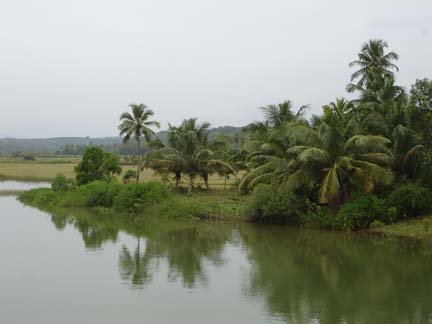
A Coastal estuary

A Coastal estuary
Holegadde near Honavar,Uttara Kannada dist, Karnataka

Copy? Right - but kindly remember to acknowledge!

Creative Commons License
This work is licensed under a Creative Commons Attribution 3.0 License.

" tulu-research.blogspot." ತುಳು ರಿಸರ್ಚ್. ಬ್ಲಾಗ್‌ಸ್ಪಾಟ್‌. ಇನ್

" tulu-research.blogspot."  ತುಳು  ರಿಸರ್ಚ್.  ಬ್ಲಾಗ್‌ಸ್ಪಾಟ್‌. ಇನ್
Have a nice day !