Showing posts with label Tamil. Show all posts

Thursday, August 30, 2012

304. Tulu-Dravida Relations


Tulu has been classified as a Southern Dravidian language, like Tamil, Kannada and Malayalam, all of which are considered to have been originated from a Proto-South Dravidian base. Linguists consider that from a branch of Proto-South Dravidian Tulu and Koraga languages evolved or developed.
Pre-Dravidian Languages
However, available data and studies suggest that Koraga (and other similar tribal) languages and cultures prevailed in the Karavali and in parts of southern India well before the advent of Dravidian languages proper, such as Tulu, Tamil and Kannada, even though they (the former) were subsequently modified and evolved after absorbing some of the features of Dravidian languages in the due course. Thus it is possible that Koraga and other similar tribal languages in their original form represent an earlier generation of languages that prevailed in this land. However in the race of evolution many of the tribal languages have receded in their prominence or have been weakened and erased ultimately.
South Dravidian Languages
The inter-relationship among the South Dravidian languages is interesting. All the three South Dravidian languages could have evolved simultaneously and contemporaneously, mainly through oral literature, even though Tamil has been regarded generally as the oldest because of the presence of ample ancient literatures dating back to the Sangam period. Tulu also had   its own contemporaneous Sangam period as evidenced by the presence of oral literature like the legends of Siri, preserved by the oral form of pāDdana   genre. Early Kannada also probably had similar oral forms which unfortunately may not have been preserved or documented after the introduction of written formats.
Tulu and Kannada have an intimate relationship evidently since the early centuries of Common Era. Tulu chieftains   and soldiers   migrated and found occupation with Kannada Kings in hey days. Thus old Kannada and medieval Kannada shared cultural aspects with common words, grammar and script.
Tamil and Tulu apparently had limited lingual interactions after the passage of Early Sangam period, after fourth or fifth century CE. However, they were closer to each other culturally in the early centuries of CE and period before that. Tamil Sangam literatures have documented appreciation of the merits of contemporaneous Tulu Kings and soldiers. Tulu has retained some of the old Dravidian words it shared with Tamils without alteration even after its hegemony with Kannada. Let us take for example the Tulu word kanDani.
Kandani =husband
Tulu (kanDani) shares the key word for husband with the Tamil (kanDan) which differs from the Kannada (ganDa) equivalent. [ D pronounced  as in Dog]. Check the equivalent versions in some of the southern Indian languages:
Tulu  = kanDani, kanDane           
Tamil =kanDan.
Kannada = ganDa.
Kota = ganDa.
Telugu = ganDa
**
Koraga  =( kor), koraga

It can be seen that Tamil and Tulu shared the common word ‘kanDan’ during the history. The original kanDan in Tulu modified into ’kanDani’, ‘kanDāni’ or ‘kanDane’ etc. The equivalent Kannada, Kodagu, Telugu, (also Kota, Havyaka) version is ‘ganDa’ [or ‘ganDu’=male.] which is a case of transition of consonants ka.>ga. This ka.>ga. replacement could have been a general regional variation in the pronunciation of the words or an evolutionary feature. In case this was a regional variant then it may suggest the pattern of movement and migration routes of the early Dravidian tribes (Fig 304).

 The -an suffix for masculine indicative tag prevalent in Tamil was also common in early Tulu as well as in Kannada. In Tulu it has been retained as a vestige in lineage names like Anchan, Kanchan, Maindan, Salian, etc. In some cases, the early –an became –anna as in Bangeranna, Kuberanna, Taburanna, Sundaranna etc. The lineage tag in Tulu –annāya ( for example, Saliannaya, Bangerannaya, etc) and –āya (for example, Pejattāya, Kukkillāya etc) was also evolved from the early –an suffix.

Tulu-Koraga: Dravida relations
Historical reconstructions and indirect evidences from the study of ethnonyms suggest that Koraga and other tribes had inhabited the Karavali well before the arrival of Tulu immigrants. In other words, the Koraga and other tribal languages predated the Tulu language proper. In such a situation effect of transition of predominantly prevailing language in the region to the newly introduced (and eventually dominated) language has to be visualized and understood. Thus Tulu language appears to have evolved and grown by adopting some of the words and features of the tribal languages that existed previously in the terrain. Similarly the original content and structure of the pre-existing languages, such as Koraga were apparently modified eventually as a consequence of invasion of the new Tulu language in the area. This event could have happened somewhere around  ca.700-500 BC or later.( This kind of give and take of amalgamation and transition of languages appears to have happened all over southern India especially in the case of Tamil Kannada, Telugu etc..)
It is interesting that Koraga do not have equivalent of the word kanDan or kanDani .In Koraga language the term ‘Koraga’ itself represents a man or husband.(This is the general case with many of the tribal languages wherein the name of the tribe means either man or human being or husband.). The Koraga tribes now are prevalent only in parts of the Karavali, but earlier these tribes or their equivalents pervaded all over southern India. Note that another word for husband in Tamil is ‘koruntan’. Wherein the prefix ‘kor’  clearly appears to have been borrowed during the early Tamil phase from the precursor language of Kor, Koraga or its equivalent.

Tulu-Tamil sharing
Tulu shares many words with Early Tamil like, for example, ill (=house), bākil (=door), unakal (=dried), oode (=place), okkel (=farming), kaTTa (=difficulty), tārage(=star), tingol=(moon), tirey (=wave), parel (=piece), pugar (=praise), puncha(=group), poli (=light) etc.

Sunday, March 13, 2011

271. Nanda Kings and Kongas in Sangam.


We have discussed some rudimentary data on the Nanda Kings of ancient Tulunadu in Post.268. Tamil Sangam literatures allude to Nannan, Konga and Punnata Kings who were conspicuous by their presence during the Sangam period.
One interesting analytical work in Kannada on the status and features of Kannada Nādu during Tamil Sangam period based on the analysis of Tamil Sangam literature by Professor Sh. Shettar throws some light on these obscure ancient Kings of western Karnataka and Tulunadu.
Tamils of Sangam period referred to ‘neDumoLi’(=people with imperfect Tamil) and ‘tiruvmoLi’(= people with impure Tamil) etc in their works to designate neighbours with imperfect command in Tamil language.
Tolkappiyam
Tolkappiyam (ca. 1 century CE) has been considered as one of the earliest Tamil Sangam literature dealing essentially with aspects of Tamil grammar. The title of the work, Tolkappiyam has been explained as ancient composition, wherein, Tol=ancient; kāppiyam=composition. One of the possibility is that the word ‘kāppiyam’ is influenced from the Sanskrit word ‘kāvya’ for poetry or vice versa. Similarly, one wonders if the word ‘tol’ was Tamil analogous of the word ‘Tulu’.
During the Sangam period it is said that derivation of Tamil words from Sanskrit did take place. One example given is the transformation of the word ‘Rājan’ (=king, Sanksrit).
 Rājan.(Sanskrit) >a+rajan.>arasan (Tamil).
According to Tolkappiyam the Tamil kingdoms of the Sangam period extended from ‘Kumari’ (Kanyakumari) in the south to ‘Vengadam’ (Venkatadri or Tirupati) in the north. The western or northwestern borders of the ancint Tamilgam have not been mentioned. However, Tolkappiyam mentions ‘Vadugar’(=northern people),’Vadamol’ or ‘Vadasol ‘ (=northern language; Sanskrit ? ) etc.
Erumai-nādu, Mysore.
These ‘Vadugar’ are distinguished from people of ‘Erumai-nādu’ (ancient Mysore area).The word ‘Erumai’ (=buffalo) is notable as it indicates that, like in Tulu and Tamil, the original word in old Kannada for buffalo was ‘erumai’ which transformed into ‘emme’ in later Kannada. In the later period, the ancient ‘Erumai-nadu’ or ‘Erumai-nalnadu’ under the influence of Sanskrit was renamed as ‘Mahisha-mandala’. Mahisha-mandala later became ‘Mahishur’ and ‘Mysore’ with passage of time.
Ashoka and Satiyaputo
It is opined that the Prakrit and Pali languages were apparently known in southern India because of spread of Buddhism and Jainism in the south, since ca. 3rd century BC. Pali written in Brahmi script was prevalent in ancient Srilanka (Tāmraparni) also.
Ashoka in his rock edicts, written in Pali language with Brahmi script, cites the three kings (muvendra) of south namely (Chola, Chera and Pandya) besides ‘Satiyoputo’. He does not mention any of the Erumai, Punnata, Konga, Tulu, Katumba (Kadamba), Mohur and Kosar rulers of the south. Prof Shettar suggests that these rulers were left out in the edicts because they did not comply with Ashokas religious principles or political directives.
Nan(d)an
The King Nannan (Nandan?) cited by more than twenty Sangam poets including Mamulnar, appears to be one of the Nanda Kings of the southern Karavali and Kodagu. Nannan has been depicted as king of Konga tribes in Sangam literature. He has been described as king of Konkan hill area (Eliyal hill) in Purananur. There is also reference to an area reknown for gold deposits. It could be that one of the Nannan (Nanda) King extended his kigdom upto Kolar known for substantial gold deposits. Incidentally there is a place near Kolar is called Nandagudi.
When a Chola King confronted Nannan Udayan (Nandaraya Udaya) near Karur in a war ,the latter made combined alliance with Arai, Ganga (Kangan), Punnata Kings and beheaded the Chola Commander so that Chola King had to rush to the warfield personally to take guide the army.
 Agananur cites that Nannan subjugated Pindan in the Eliyal hill and that he drove off Kosars from Tulunadu.It appears that Nannan was ruling over Tulu Konkan regions located to the northwest of Tamilgam.He was said to have had  a five layered fortress in Eliyal hill. He had another fort with high walls separated by deep trenches in Agappa hill to the north of Umablkad (= forest of elephants).
There are references to ‘Eliyal hill’, the abode of Nanda Kings, in Sangam literature. There are several possible Eliyal hills in Tulunadu or in northern Kerala.The word Eli has created confusion as it also means a rat. Elu means number seven. Otherwise ‘Eliya’ were an ancient tribe that inhabited these coastal regions.In Kerala Elimalai or Ezhimalai is a coastal hill where at present a naval academy is being built. Keralites believe that Elimali is the Eliyal hill referred to in Sangam literature.
One Eliyar padavu is located south of Mangalore near Amblamogaru village.Sangam poets refer to ‘Umblakadu’. Was this a place close to Amblamogaru? Besides, there is an Elimale in Sullia taluk. There is also one Elinje near Kinnigoli. Anyway possibly there is an interesting link between the Nanda Kings and the abode of Eliyar tribes.
There were skirmishes between Nannan and Chera Kings. In one of the wars, Noormadi Cheral surrendered his crown and necklace to Nannan. In one of the wars, Chera and Pasum Pandya (along with his subordinate Neduman Anji)combined themselves and fought against the valiant Nannan; In that skirmish Atiyaras lost his head to the pleasure of jubilant Kongas carrying shining swords.
The King Nannan cited in Tamil Sangam ultimately died in the warfield near Wagai, Tamilanadu, when fighting against a Chera King.
Konga
Shilappadigaram has described Konga tribes hailing from Kodagu area. Accordging to Sangam ‘Paditrupattu’, at one period Kongas ruled Karur in Tamilnadu and Chola Kings struggled to defeat them. The word ‘Konga’ in Tamil means honey apart from the name of the tribe.Possibly Konga tribes could have been a honey collecting tribes in the beginning. Some believe that Konga were the rulers later known   as ‘Ganga’ dynasty in Talakad, in Mysore region.
Where there Kongas in Tulunadu?
Yes, we have described in the older posts several signature villages of ancient Kom tribes in Tulunadu such as Kompadavu, Komdodi, Konchadi etc. It appears that the Kom were subsequently known as ‘Konga’. (Like Kor were subsequently known as Koraga.) The suffix –ga in these names indicates person or the group.
Kom+ga=Konga.
Kor+ga=Koraga.
At places ‘Kom’ were also known as ‘Komcha’ (as in place name ‘Konchadi’, northern Mangalore) wherein  the suffix   ‘–cha’ refers to tribes or people.
The word Konkan that refers to part of West Coast also might have had origin from Kong tribes. Such as Kong+an=Konkan.
It appears that subsequently the Kom or Kong tribes pervaded many areas of southern India. Kongas lived in areas endowed with ‘kadiru-mani’ (ruby corundum) according to Purananur. Regions to the east of Sullia, Subrahmanya, Kodagu ,Arakalagud in Hassan, Kabini  and southern Mysore are the areas known to have good deposits of ruby corundum. Konga tribes were fond of decorating themselves with rubies and yellow flowers known as ‘Kongilavam’.
There is a Komara beedu in Mysore city. Kannada people of Mysore region usually use the word ‘Kongaru’ for the Tamil people.Parts of Coimbatore and Salem districts of Tamilnadu were known as Kongu-desha in history.
Kong tribes were valiant fighters. According to Paditrupattu they employed lever based machinery (probably wooden) to throw large stones at the opponents. There were also Konga rajas during the history in Kerala. Probably a group of Kongas were later known to have formed the Ganga dynasty.One of the founders of the Ganga dynasty was known as Konguni Varma.

Assimilation
The ancient Nanda (Nandara, Nandarannaya lineages), Kom (Kommatti lineage) and Konga (Kongaru or Kongarannaya lineages) tribes have at least partly been assimilated with the Bunt-Nadava diaspora community during the progress of the Tulu history. The corresponding lineage names have survived as genetic testimonies to this observation.
*

References:
Sh. Shettar (2010). ‘Shangam Tamilagam mattu Kannada Naadu-Nudi’.  (In Kannada). Abhinava, Bangalore, p.261.
Murkot Ramunny (1993)   Ezhimala: the abode of the Naval Academy, p 104.Google books.
 
®

Sunday, December 26, 2010

264. Genetic Assimilations: Ashoka Period

Before Ashoka period Paisachi languages were in vogue in southern peninsular India, known as ‘Bekinata’ during Vedic period (ca.1700-1500BC). Paisachi language apparently became obsolete in southern India, during the period ca 200-100BC as a result of replacement by Prakrit language as well as introduction of Dravidian languages. Influx of white immigrants (ca 500-400BC) was apparently one of the reasons for downfall of pre-existing language (Paisachi) and culture (Munda) in southern India.By Ashoka period (ca.250) the Bellar/Boller/Vellala white tribes not only admixed and assimilated with dark skinned aborigines consisting of early immigrants (60,000-10,000 BC) from Africa as well as early Munda tribes of Austro-Asiatic origin, but also superseded the aborigines in terms of socio-political advantages.
The Bellar immigrants introduced proto- Dravidian languages that evolved on a basement of Paisachi language, in southern India. The Dravidian languages Tamil, Kannada, Telugu, Tulu and Malayalam gradually evolved in different regions of the southern India. The languages developed individual identities depending on regional features and the nature of basement language.
King Ashoka (ca.304BC -232 BC) of Mauryan dynasty employed Brahmi script for engraving rock edicts (inscriptions) in Prakrit, the main administrative language of that period in India.Prakrit flourished along with Buddhism in parts of southern India probably till 400CE. Prakrit was influenced by evolving Sanskrit and vice-versa.
After 400 CE, Sanskrit and later Early Kannada replaced Prakrit as administrative language, especially in northern Karnataka.
Immigrant Bellar tribes (Vellala, Boller)
All over southern India, immigration of white (fair) skinned tribes into the peninsula has been distinctly marked out in place names.Karavali Tulu aborigines called them ‘Boller’ (=white people), Kannada aborigines designated them as ‘Bellar’(=white people), Tamils and Telugus noted them as Vellals(white persons).It is possible that in northern India these white immigrants were known as ‘deva’s (or Gods). Sanskrit Vedic texts and Puranas described wars between Deva and Asurs. Asur is the name of the subtribe of Munda aboriginal tribes of India. Who are these ‘Gods’ referred to by texts?
King Ashoka has described himself as ‘devanam priya’ or ‘devanām priyadarshi.’ ie One who is beloved (favourite) of Gods.  By the term ‘deva’ (or Gods), Ashoka meant fair skinned people who were abundant in his kingdom that spanned all over the north India and extended upto present Afghanistan.Following Alexander’s Indian expedition, Greek and other Mediterranean people were frequenting northern India before and during the time of Ashoka.
Considering the explanation given by King Ashoka, the major period of immigration of these white skinned people into southern India probably corresponded with ca. 500-400 BC. However faired skinned tribes were evidently present in north-western Indian subcontinent as early as 1700 BC, the period of compilation of Rigveda.
Evolution of Indian Languages with passage of time.

Assimilation with Bellar ‘Gods’
In the Koppala Gavimata inscription (Koppal district, Karnataka) and in Brahmagiri inscriptions King Ashoka describes that people of the ‘Jambudwipa’ (ie south Indian peninsula), who were not mixing earlier with Devas (=Gods’), are now mixing with them (‘Gods’).
In the edicts Ashoka points out that earlier (before ca.250 BC) the southern Indians were not mixing with each other, but at the time of erecting the edicts Ashoka found that then devas and south Indians were widely mixing.
Thus epigraphs of Ashoka document a major period of genetic assimilation of white immigrants with dark skinned aborigines in southern India.
®

Tuesday, October 9, 2007

41. Origin of the word Tulu -I

Origin and meaning of the word Tulu has been disputed in literary circles since pre-Independance days. Dr. Palthadi Ramakrishna Achar(1999) has compiled the available historical information on the word ‘Tulu’ in his book ‘TuLu naaDu- nuDi’. Most of the appraisals, as remarked by Dr Achar, have been made considering Tulu as a character of the territory or the people rather than the language.

1.In ‘Rajatha Peethapura Mahatme’(1913) it is described that a chieftain of Udupi called Ramabhoja offered Tulābhāra to the deity, to amend for the sin of killing a serpent. Tulābhāra is the offering of gold or other material (according to the status of the worshipper) equivalent to ones body weight. Thus the word Tulu has been suggested to have been derived from the Tulābhāra. The theory has not been accepted by experts since Rama bhoja appears to be an imaginary ruler unsubstantiated in the actual history of the land.
2.Another similar legend in ‘Keralotpatti’, an ancient work that originated from Kerala, describes the rule of one ‘Tuluban Perumal’ from Koteswara, Kundapaura area, who gave the name Tulunad for the area.This is again a figment of fertile imagination since there is documented evidence of any Tuluban Perumal ruling Tulunad.
3. Dr B. A. Salettur derived the word ‘Tulu’ from the Kannada root ‘tooL’ which means to attack. Dr. Gururaja Bhat had discounted this suggestion since Tulu people were never attacked anyone nor had any expansionist ideals.
4. Manjeswara Govinda Pai proposed that the word Tulu has been considered to have derived from the Tamil word ‘Tulai’ which means to row or play with water.
5. Kudkadi Viswanatha Rai (cited in Dr Achar,1999) suggested that the Tulu has been derived from the phrase ‘Tullal naadu’, wherein ‘tullal’ means to wriggle or to dance. Native Mera or Muger tribes describe their marriage ceremony as 'tullal'.
6. Dr. Gururaja Bhat proposed that the word Tulu is modified form of the term ‘turu’ that refers to cattle. Cattle herding and grazing is considered to be one of the earliest known professions in India. Cow-herders of Gujarat, also known as Yadavas are considered to be one of the early settlers in Tulunad. Haritha of Yadava clan was said to have ruled in Tulunad according to Harivamsha. However there are no solid evidences in favour of turu>tulu word conversion .
7. ‘Tolahars’ were a royal clan that ruled a part of Tulunad. Tola>Tulu conversion has been thought of by some workers.
8. J.Sturrock in his South Canara Manual ( Vol.I ) inferred that word Tulu possibly refers to the ‘soft’ nature of the local people, since the adjective “tuluve” is applied to the soft pulpy variety of jack fruit. However, this argument has not been accepted by experts like Dr. Gururaja Bhat.

9. Sediyapu Krishna Bhat has pointed out that the word ‘Tulu’ is connected with water. ‘Tuluve’(jack fruit) also means ‘watery’ and that should be considered instead of the ‘soft’ implication. The other water related words in Tulu are talipu, teli, teLi, teLpu, tuLipu, tulavu, tamel and additionally in Kannada are tuLuku and toLe. In Tamil tuli means water drop and tulli means the same in Malayalam.

Interestingly, earlier Manjeswar Govinda Pai also had suggested that the term Tulu is derived from the Tamil word tulai which means to row, dive or play in water.
Thus it can be concluded that the word Tulu implies ‘related to water’.

10. The term ‘Tulu’ was also used as a clan name, as recorded in the Honnali inscription of Shimoga district, dated 1203AD. Dr. Gururaja Bhat has cited several personal names with Tulu as affixes like Tuluveswara, Tuluva Chandiga, Tulu Senabova, Tuluvi Setti, Tuluvakka Heggadati,Tulu Alva, Tulai Amma etc. as have been recorded in the inscriptions. In the Basrur (in Kundapur taluk) inscription dated 1401 AD, mentions a Tuluvi Setti donating land to maintain the routine expenditures of the Tuluveswara temple of Basrur. Besides, Krishnadevaraya, the famous emperor of Vijayanagar was said to be hailing from the ‘Tuluva’ dynasty.
Thus we can conclude that the word ‘Tulu’ means ‘that connected with water’ and it is also name of a clan or group.
However the word Tulu is more global than we ordinarily imagine!

(..to be continued)

Wednesday, August 15, 2007

29.The Rice: Vrihi and Arih

The relics of rice grains recovered from the archeological sites of Pirak area, Baluchistan suggest that the area was known for rice cultivation around 1700 BC. The mixed civilization at that time period composed of Vedic scholars and proto-Tulu, proto- Tamil and Dravidian communites at Pirak, as has been dealt in earlier posts here before.
Origin of the Sanskrit word ‘Vrihi’ that means rice (Oriza sativa) and sometimes other cereals like wheat and barley, has been discussed by Indological experts like Asko Purpola. The word is generally said to be not directly influenced by or related to the Dravidian words ‘arih’ (Tulu) and ‘arisi’ (Tamil) that represent the rice. On the other hand it has been fairly accepted that the Tamil word ‘arisi’ was adopted by Greek, Latin and also English as ‘rice’.
Sankaran Nair (2003) suggested that ‘Vrihi’ is a modified form of the word ‘varahi’. He cited that there are several varieties of rice designated as Graishmic, Hemanti, Varshic, Sharada, Salini etc described in ancient Sanskrit texts. Varahi is the female form of mythological Varaha, the boar incarnation of Lord Vishnu. (Varahi, is also the name of a river in Western Karnataka).
The word ‘Varahi’ has further ramifications. First connotation is that the Varaha was worshipped at that time by communities and cultures prevalent then at Pirak area. Spirits worshipped by the Tulu communities, even to date, include ‘Panjurli’ which is the Tulu form of Varaha. Appaently, the Panjurli or the Varaha was worshipped more widely at that time. The Varaha concept, later in the history, was absorbed as one of the ten incarnations of Lord Vishnu.
Thus the word ‘vrihi’ might have brought into Sanskrit usage as rice was predominantly grown and consumed by those who worshipped the Varaha or Panjurli. Besides, there is certain degree of similarity in pronunciation of the words ‘vrihi’ and ‘arih’.

ß

Monday, June 4, 2007

27. The Sweet Potato

The sweet potato (botanical name: Ipomea batatas) was a humble food of the masses since early historical days. Rama, the dark skinned prince of Ayodhya, during the early part of Indian history, went to live in the forest for fourteen years along with his wife Sita and brother Laxmana, only to honour the promise made by his father Dasharatha to his wife (Rama’s step mother Kaikei). Rama and others had to consume roots and tubers like sweet potatoes and wild fruits in the forest. Sweet potato is a common root that can be consumed in raw as well as cooked form.
Reports said that sweet potato (see, Manjunath) was also brought to India by the Portuguese some five centuries ago along with chilies, beans, potato, cassava, breadfruit, sunflower, groundnut, pineapple, guava, sapota, passion fruit, cashew, tobacco, onion, garlic and so on. Sweet potato is reported to be native to the American continents since 5000 years. Archeological evidences suggest that it was cultivated ca.2400 BC in South America; and Columbus is said to have discovered it in the Caribbean region during AD1502.
Balasubramanian, a reader commenting on Manjunath’s cited posting on imported vegetables, elucidated an interesting custom of using native vegetables and materials in shraddha ceremonies of Tamil Brahmins. Sweet potatoes are one of the acceptable tubers used in the preparation of ceremonial food, indicating that sweet potato has attained nativity to our land since long time. They use bitter gourd, raw bananas, banana stem, colocasia, snake gourd, cluster beans, local cucumber, sweet potato, ginger, raw mango and black pepper. Similar ceremonies in Tulu households make use of specified vegetables and allied materials for the preparation of meal on the uttarakriya day. Raw bananas, ash gourds and inner part of plantain (banana) stem constitute the essential vegetables for obituary ceremonies in Tulu families, though modernization has tacitly replaced some of the traditionally accepted items with currently prevalent ‘desi’ items (like chillies for black pepper) in the menu. These obituary traditions appears to be quite ancient and some research is desirable on the nature and evolution of our traditional ceremonies.
Balasubramanian distinguishes between ‘valli kizhangu’(=sweet potato) and ‘mara kizhangu’(=cassava). Even in Tulu, cassava (tapioca) is called ‘mara kireng’, wherein ‘mara’(= tree )refers to the shrub of cassava. However the Tamil word sarkarai valli kizhangu is a clear translation of sweet ‘vine tuber’ inspired by the imported name of sweet potato.
Apart from its emphasized nativity to American continents, the sweet potato is being grown in diverse lands such as Polynesia, New Zealand and China. In Polynesia, New Zealand and Peru, it is called ‘Kumara’. The similarity of the word Kumara to the Sanskrit word may be coincidence. However, according to linguistics like Michael Witzel, the word ‘Kumara’ in Rigveda, composed in Indo-Aryan language (early Sanskrit) has been considered an extraneous word borrowed from uncertain language. How the sweet potato traveled into different continents is still an unsolved mystery.
The Tulu and Tamil words for the sweet potato are interesting. In Tulu it is ‘kireng’ (also, ‘kileng’ and other variants) and in Tamil it is ‘kilang’ (or with slightly different but allied pronunciation like kizhangu). Both the words mean the same: keeL or keer =the lower or underground; ang=part. The nomenclature is quite original and not an adopted word from the imported name of sweet potato. Most of the imported vegetables and fruits have names similar to or derived from their foreign names. The Malayalam word ‘kiraNNu’ is related to Tulu and Tamil words. However, Kannada and Telugu have the word ‘genasu’ for the sweet potato. In Tulu there are several related species of sweet potatoes cited in Tulu Nighantu (=dictionary) such as: Tuppe kireng, koLLi kireng, guddoli kireng, toonNa kireng, pottel kireng, muLLu kireng, apart from the kempu kireng (=red sweet potato), boldu kireng (=white sweet potato) and mara kireng(=cassava). I have seen tuppe kireng, a short variety of tuber named after tuppa, the butter. MuLLu(=spines) kireng refers to one with spines. Other species may still be surviving in our rural areas and our botanists should look into these research aspects. All these tubers, some of them rare and vanishing species, could not have been brought by the Portuguese. Tribals in India still consume several variety of tubers. Many of these tubers are possibly native to our land since ages.
Similarity of Tulu and Tamil words for sweet potato (or allied tuber) suggest certain antiquity to the said tuber. Available evidences indicate that proto-Tulu and proto-Tamil tribes coexisted in early Vedic times (ca. 1500 to 500BC) as suggested by borrowing of Tulu/Tamil words in Rigveda. (See, previous postings, No.26).The reference to edible tubers in the Ramayana (ca. 500-200 BC) only confirms this postulation.
Similar problems exist for other agricultural crops also. For example, peanut (groundnut) is also considered a native of Americas, but it is reported to be cultivated in China since 1500 BC. The antiquity of agricultural crops suggests that many of these are as old as our civilization, if not more. For example, how to fix the nativity of a now ubiquitous plant like coconut? Coconut (Cocos nucifera) is found on the earth since Miocene age ca. 20 million years ago, i.e. long before man appeared on this planet.

South American nativity of sweet potatoes and several other agricultural crops has been asserted based on the extensive archeological and paleo-botanical studies carried out in the Americas. Similar studies in Indian context are highly desirable for better understanding of our past.

Sunday, June 3, 2007

25. Pala and Antiquity of Tulu words

Strange it may seem,that the Jack fruit was the first edible fruit in use in antiquity in the Indian subcontinent. The nature of the word Pala, Phala or Pela to represent the Jack fruit even today suggests that the word (Pala / Pela/ Phala) was originally or since beginning was used to denote the common Jack fruit, arguably a native fruit of Indian subcontinent.
The basic word ‘phala’ stands for ‘fruit’ in Sanskrit. The presently commonplace word has been absorbed by most of the Indian languages, like phala (Kannada), phalam (Malayalam), etc. 
Michael Witzel (1999) while analyzing words found in the Vedas concluded that some words in Rigveda (early part of Rigveda were estimated be ca.1700-1500 BC old) are not original Indo-Aryan (or early Sanskrit) words. He has given a list of words borrowed into middle compositions of Rigveda (ca.1500 BC or younger) which includes phala, mayur etc. These extraneous words must have been borrowed from contemporaneous languages that existed in the proximity of Vedic scholars and their settlements. He has stated that phalam is derived from the Tamil word ‘palam’ meaning ripe fruit.
Incidentally, apart from the word ‘palam’(=ripe fruit), the word ‘pala’ also means jackfruit in Tamil according to Dravidian Etymological Dictionary by T. Burrow, M. B. Emeneau. Similarly, in Tulu language word ‘pela’(>pelakai) or ‘pila’ (>pilakai) represents the jack tree/fruit. Earlier, in Tulu also the ‘pala’ version might have existed; since the wooden planks derived from the jack tree are called ‘palai’. However, presently the word palai in Tulu represents any wooden plank.
It seems that during the early historical period of composition of Rigveda, the proto-Tulu/Tamil word pala represented the jack fruit. Possibly, it was the most popular or common fruit at that time. It can be visualized that the Vedic scholars considered the pala (or pela or pila), the jack fruit, at that time of history as an important and popular edible fruit and adopted it in the form of ‘phala’. The word ‘phala’ incorporated into Sanskrit subsequently stood to represent the fruits. Maybe the mango, the king of Indian fruits, was not properly recognized at that time.
Thus, subsequently the word pala (>phala) represented any ripe fruit.
The jack fruit/trees may not have been common trees in Pirak region or Vedic scholars were initially not familiar with the Pala /Pela tree. Therefore it appears that the Vedic scholars picked up the word from proto-Tulu/Tamil tribes.
Similar words exist in Malayalam. The equivalent word for jack fruit in early Kannada was ‘palas’. Telugu equivalent word for jack is ‘panasa’.
The existence of similar words in Tulu and Tamil suggest (a) either their derivation from a common proto language or (b) coexistence of proto-Tulu and proto-Tamil tribes at a certain point of history dating back to the period of compilation of the Vedas. In other words, this coexistence or common heritage of Tulu-Tamil languages and exchange of words among these communities imply that some members of these tribes were living in the vicinity of Vedic tribes at the period of compilation of Vedas.
However, the Tulu tribes do not commonly use the word ‘pala’ or ‘phala’ to represent fruits in general. They employ the term “parn′d” to mean fruit. [The symbol ′ here represents the time delay in pronunciation; d as unaspirated th in English ‘the’]. The Tulu word “parn′d” also means ripe banana; alternately, it also means any ripe fruit. It is interesting to note that when Vedics adopted the ‘pala’, the jack, to represent edible fruits, Tulu tribes preferred the word ‘parn′d’, the banana, to signify fruits!
Apart from the intriguing pala/ pela in Vedas, Michael Witzel lists three extraneous words which he considers as words of uncertain origin in the early part of Rigveda. These are ukha(=hip), phalgu (=minute weak) and aaNi (=lynch pin). These words exist in Tulu and may be that Vedics borrowed them from proto-Tulu neighbours.
Ukha means hip in Tulu. Okka noolu in Tulu refers to ‘loin string’ or the thread tied around the hip in olden days. Phalgu has similarity to ‘palku’ in Tulu; palkuni (verb) in Tulu means becoming soft, like a ripe fruit. And aaNi in Tulu means nail. Another word of interest is mayUra (=peacock), which is also considered as an extraneous word in Rigveda. In Tulu ‘maira’ exists since olden days; the ‘Maire’(=peahen, the female pea fowl) was a favourite name kept for women among Tulu tribes in earlier days.
The existence of Tulu words in Rigveda, indicates the antiquity of Tulu language. It may also mean that proto-Tulu speaking people were living in the area where Vedas were composed.

Footnote on Pela and Peja
The English word ‘jack fruit’ was derived from the Malayalam word ‘chakku palam’. In an earlier note (24) I erroneously suggested that word came from ‘jakku palam’, based on a random reading. I must have misread it. Manjunath pointed out to me that he has not heard any ‘jakku palam’ in Malayalam. So I googled on this howler and found some interesting information provided by Julia F Morton (1987).
Jack fruit or Jakfruit or Jak or Jaca (botanical name: Artocarpus heterophyllum) is considered native to Western Ghats of India. The trees thrive well in rainy, tropical-subtropical regions and are commonly found distributed in Ceylon, Burma, Thailand, Malaya, Indonesia, Philipines, Mauritius, Uganda, Kenya, Zanjibar, and parts of Himalaya and southern China, apart from being distributed in most parts of India.
Morton classified Kerala jack fruits into (1) Kooja chakku and (2) Kooja phazam (barke or Varika). The ‘kooja chakku’ is the jack fruit with soft, puply carpels, called ‘tuluve’ in Tulu. So we find the word ‘chakku’ here that became ‘jack’.
The Malayalam word ‘kooja’ is related to the Tulu word ‘gujje’, the jack fruit. The Tulu word ‘barke’ denoting soft jackfruit that can be opened with hand is found also in Malayalam. ‘Varika’(Malayalam), varukkai(Tamil) and ‘varaka’ (Srilanka) appear to be related to the ‘barke’.
The Sahyadri, Western Ghats and coastal hinterland has another species of Artocarpus genus (A.pubescens?-wild jack ) known as peja or pejakai. The fruit, is of the smaller size of orange with soft spiny exterior and contains smaller carpels of grape size that taste distictly different from jackfruit. Otherwise it is similar in features to jackfruit. This tree is not described elsewhere and hence may not be a common tree in other tropical forests. The village name Pejavara (=peja+avara) means an open ground containing peja trees. Note the similar sounding tree names: pela and peja in Tulu.
Early Kannada (or Old Kannada, ca.400 AD)) bloomed around Banavasi town (presently southeastern Uttara Kannada region), with establishment of the Kadamba dynasty by Mayur Sharma at Banavasi. The similarity of Tulu ‘pela/pala’ and Kannada ‘palas’ words, in the two languages that grew up in close proximity is significant.

Blog Archive

Books for Reference

  • A Comparative Study of Tulu Dialects By Dr. Padmanabha Kekunnaya. Govinda Pai Reserach Centre, UDupi. 1994
  • Koti Chennaya: Janapadiya Adhyayana. By Dr. Vamana Nandavar. Hemanshu Prakashana ,Mangalore.2001.
  • Male kudiyaru. Dr B. A.Viveka Rai and D.Yadupathi Gowda, Mangalore University,1996.
  • Mogaveera Samskriti By Venkataraja Punimchattaya. Karnataka Sahitya Academy.1993.
  • Mugeraru:Jananga Janapada Adhyayana. By Dr Abhaya Kumar Kaukradi.Kannada & Culture Directorate,Bangalore & Karnataka Tulu Academy, Mangalore,1997.
  • Puttubalakeya Pad-danagalu. Ed: Dr B.A.Viveka Rai,Yadupati Gowda and Rajashri, Sri Dharmasthala Manjunatheswara Tulu Peeta. Mangalore University.2004
  • Se'erige. Ed:Dr K.Chinnapa Gowda.Madipu Prakashana,Mangalagangotri,2000.
  • Studies in Tuluva History and Culture.by Dr P Gururaja Bhat (1975).Milagres College,Kallinapur,Udupi.
  • Taulava Sanskriti by Dr.B.A.Viveka Rai, Sahyadri Prakashana,Mysore 1977
  • TuLu naaDu-nuDi By Dr.PalthaDi Ramakrishna Achar, Puttur.
  • TuLu NighanTu. (Editor in Chief: Dr U.P.Upadhyaya, Govinda Pai Research Centre,Udupi. Six volumes. 1988 to 1997
  • Tulu Patero-A Philology & Grammar of Tulu Language by Budhananda Shivalli.2004.Mandira Prakashana Mangalore. p.317. (The book is in Tulu Language using Kannada script)
  • TuLunadina ShasanagaLa Sanskritika Adhyayana. By Shaila T. Verma (2002) Jnanodaya Prakashana,Bangalore, p.304.(Kannada)
  • Tuluvala Baliyendre. Compiled by N.A.Sheenappa Hegde,Polali,Sri Devi Prakashana,Parkala,1929/1999

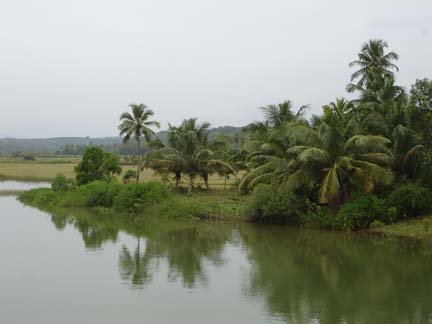
A Coastal estuary

A Coastal estuary
Holegadde near Honavar,Uttara Kannada dist, Karnataka

Copy? Right - but kindly remember to acknowledge!

Creative Commons License
This work is licensed under a Creative Commons Attribution 3.0 License.

" tulu-research.blogspot." ತುಳು ರಿಸರ್ಚ್. ಬ್ಲಾಗ್‌ಸ್ಪಾಟ್‌. ಇನ್

" tulu-research.blogspot."  ತುಳು  ರಿಸರ್ಚ್.  ಬ್ಲಾಗ್‌ಸ್ಪಾಟ್‌. ಇನ್
Have a nice day !