Showing posts with label Malayalam. Show all posts

Sunday, December 26, 2010

264. Genetic Assimilations: Ashoka Period

Before Ashoka period Paisachi languages were in vogue in southern peninsular India, known as ‘Bekinata’ during Vedic period (ca.1700-1500BC). Paisachi language apparently became obsolete in southern India, during the period ca 200-100BC as a result of replacement by Prakrit language as well as introduction of Dravidian languages. Influx of white immigrants (ca 500-400BC) was apparently one of the reasons for downfall of pre-existing language (Paisachi) and culture (Munda) in southern India.By Ashoka period (ca.250) the Bellar/Boller/Vellala white tribes not only admixed and assimilated with dark skinned aborigines consisting of early immigrants (60,000-10,000 BC) from Africa as well as early Munda tribes of Austro-Asiatic origin, but also superseded the aborigines in terms of socio-political advantages.
The Bellar immigrants introduced proto- Dravidian languages that evolved on a basement of Paisachi language, in southern India. The Dravidian languages Tamil, Kannada, Telugu, Tulu and Malayalam gradually evolved in different regions of the southern India. The languages developed individual identities depending on regional features and the nature of basement language.
King Ashoka (ca.304BC -232 BC) of Mauryan dynasty employed Brahmi script for engraving rock edicts (inscriptions) in Prakrit, the main administrative language of that period in India.Prakrit flourished along with Buddhism in parts of southern India probably till 400CE. Prakrit was influenced by evolving Sanskrit and vice-versa.
After 400 CE, Sanskrit and later Early Kannada replaced Prakrit as administrative language, especially in northern Karnataka.
Immigrant Bellar tribes (Vellala, Boller)
All over southern India, immigration of white (fair) skinned tribes into the peninsula has been distinctly marked out in place names.Karavali Tulu aborigines called them ‘Boller’ (=white people), Kannada aborigines designated them as ‘Bellar’(=white people), Tamils and Telugus noted them as Vellals(white persons).It is possible that in northern India these white immigrants were known as ‘deva’s (or Gods). Sanskrit Vedic texts and Puranas described wars between Deva and Asurs. Asur is the name of the subtribe of Munda aboriginal tribes of India. Who are these ‘Gods’ referred to by texts?
King Ashoka has described himself as ‘devanam priya’ or ‘devanām priyadarshi.’ ie One who is beloved (favourite) of Gods.  By the term ‘deva’ (or Gods), Ashoka meant fair skinned people who were abundant in his kingdom that spanned all over the north India and extended upto present Afghanistan.Following Alexander’s Indian expedition, Greek and other Mediterranean people were frequenting northern India before and during the time of Ashoka.
Considering the explanation given by King Ashoka, the major period of immigration of these white skinned people into southern India probably corresponded with ca. 500-400 BC. However faired skinned tribes were evidently present in north-western Indian subcontinent as early as 1700 BC, the period of compilation of Rigveda.
Evolution of Indian Languages with passage of time.

Assimilation with Bellar ‘Gods’
In the Koppala Gavimata inscription (Koppal district, Karnataka) and in Brahmagiri inscriptions King Ashoka describes that people of the ‘Jambudwipa’ (ie south Indian peninsula), who were not mixing earlier with Devas (=Gods’), are now mixing with them (‘Gods’).
In the edicts Ashoka points out that earlier (before ca.250 BC) the southern Indians were not mixing with each other, but at the time of erecting the edicts Ashoka found that then devas and south Indians were widely mixing.
Thus epigraphs of Ashoka document a major period of genetic assimilation of white immigrants with dark skinned aborigines in southern India.
®

Friday, April 6, 2007

13. The Tulu Script: Origin and Revival


Hosabettu Viswanath, a resident of Pune and a well wisher impressed with my fathers book, ‘Tulu Patero’, has kindly sent me a copy of the article written by Ramchander Baikampadi published in ‘Mogaveera’, a Kannada monthly published from Mumbai.
The Kannada article entitled “Malayalam bhashege lipi neeDidavaru naavu tuluvaru” (=Script to Malayalam language was given by we Tuluvas) discusses the adoption of the Tulu script by the Raja of Travancore (Kerala), for writing in Malayalam during 12th century AD.
For a long time during the last century, our people lamented that Tulu did not had any script. But later a large number of taalegari - palmyra leaf- manuscripts written in Tulu script were unraveled and presently more than 2000 of these are in the collection of Dharmasthala Cultural Research Trust. Many of these are reported to be about 800 year old. Venkataraja Punimchattaya (2001) brought out a booklet on Tulu script. Karnataka Tulu Sahitya Academy is at present popularizing the Tulu script. Neria Harish Hebbar (2003) has published the details of the Tulu script in his internet articles in www.boloji.com/places.
Mayura Sharma, during 5th century AD, revolted against the Pallava kings and established the earliest known Kannada kingdom of Kadamba dynasty with capital at Banavasi (now in Uttara Kannada district). It appears that Tulunad and parts of Kerala which were ruled by smaller chieftains was under the suzerainty of the Kannada king Mayura Varma (Mayura Sharma became Mayura Varma after assuming the title of kingship).
The southern India was under the strong influence of Shaivism, with several Shiva temples built in various parts of Tamilnadu. Mayura Varma and his lieutenants installed new Shiva temples in Tulunad. Mayura Varma brought Brahmins from Ahichatra (a place on the banks of River Godavari), to conduct rituals (Puja ceremonies) in the temples of his territory as per the records in the epigraphs of his time. It appears he also sent some Brahmins to Kerala for conducting the temple rituals.
The relationship between Tulunad and Kerala was harmonious even in those time and Tulu Brahmins were traveling to Kerala for further studies in agama shastras or for conducting rituals in temples. The Tulu Brahmins used to write down the slokas on palmyra leaves (taalegari), which were used then for writing, in a curvy, floral style of script. Earlier it was considered as a variant of Malayalam script. But recent studies showed that this was the script used by the Brahmin scholars and later was adopted by the Kerala kings in their land.
It is well known that Malayalam had no independent script till 12th century AD. The present Malayalam script came into usage only after the 12th century. Thus the Tulu script used by the Tulu scholars for writing in Kerala at that time evolved into the present Malayalam script. Additional new information provided by Ramachander Baikampadi that Tulu script was adopted by the King of Travancore during the 12th century AD, for writing in Malayalam, further asserts the antiquity of the Tulu script.
Origin of Tulu script
Now, where did the Tulu scholars found the script? The Tulu script was not a newly invented script. It was adapted from the alphabets that were in usage in that region at that time in the history. Variants of Brahmi and Grantha scripts were in usage in southern India at that time. It is said that Mayura Sharma himself went to Kanchi for education.It is possible that Mayura Sharma was using a version of Grantha script that was prevalent in southern India.
Since Kadamba period Kannada script was gradually evolving. It was developed based on earlier scripts like brahmi. We call the Kannada of that early period as Hale-Kannada (=Old Kannada). But then the Old Kannada apparently was not standardized yet. Halmidi epigraph (5th century AD) is the oldest Kannada inscription found so far.
The Tulu scholars had knowledge of Devanagari as well as the state language (old) Kannada. I use the term State language because Tulu people were under the rule of Kannada kings, like Kadambas and Chalukyas, even in those times.
Thus Tulu scholars were using scripts which were mixtures of Devanagari and early Kannada. Besides, the Tulu and the old Kannada were quite similar languages, more like the dialectical variants of the same language at that time. (Kannada language evolved differently during the subsequent historical period.)
Thus the Tulu script has some of the alphabets comparable  to that of Sanskrit and others are analogous to the Old Kannada and Grantha alphabets prevalent that time. The initial ‘ah’ and ‘aah’ alphabets of the Tulu script are distinctly the smoothened, curvy variants of the Sanskrit ‘ah’ and ‘aah’. The ‘cha’ ,‘zha’, ‘jna’, ‘ya’, ‘la’ are similar to that of the old Kannada script. Several other Tulu alphabets are similar to those of Grantha script.
Thus, clearly the Tulu script was the general script used by scholars at that time, in Tulunad region, say between 5th and 12th century AD. It is possible that at that time there might have been local variations in Kannada script within various parts of the Kannada state mainly because of absence of standardization and paucity of scholars.
Thus, in view of the importance of study of the historical evolution of Kannada and Tulu scripts, it is necessary that the original taalegari Tulu scripts should be thoroughly studied evaluated scientifically. First, these palmyra leaves can be carbon dated to ascertain their age. Secondly, the variants in the script should be critically analysed with reference to the epigraphs of different times and regions and the chronological evolution of the script in Tulunad can be delineated. These studies are likely to have far-reaching bearing on the evolution of not only Tulu, but other south Indian scripts like Kannada, Telugu and Malayalam.
It is pertinent to mention here that the Telugu script was developed based on the Kannada script of the Chalukya period of 7th to 8th century AD. During that period, the Chalukya kings ruled part of Andhra Pradesh and they introduced the Old Kannada script for writing in Telugu.
Now, we are witnessing a general awareness regarding towards revival of the old Tulu script. I use the term old Tulu script, just to signify that the Tulu language has also grown and evolved with time. We are already using the modern Kannada script for writing in Tulu. Our old Tulu script was based on old Kannada; similarly it is but natural that modern Tulu script should be based on modern Kannada script. After all, all languages have grown by borrowing from other neighboring languages and we should not feel embarrassed about using modern Kannada script.
Instead of enforcing the forgotten old script afresh on old and new learners of the language alike, is it not wise that we should continue to adapt the modern Kannada script for Tulu? We can modify the modern Kannada script to suit and accommodate the special nuances of the Tulu language.
*

Blog Archive

Books for Reference

  • A Comparative Study of Tulu Dialects By Dr. Padmanabha Kekunnaya. Govinda Pai Reserach Centre, UDupi. 1994
  • Koti Chennaya: Janapadiya Adhyayana. By Dr. Vamana Nandavar. Hemanshu Prakashana ,Mangalore.2001.
  • Male kudiyaru. Dr B. A.Viveka Rai and D.Yadupathi Gowda, Mangalore University,1996.
  • Mogaveera Samskriti By Venkataraja Punimchattaya. Karnataka Sahitya Academy.1993.
  • Mugeraru:Jananga Janapada Adhyayana. By Dr Abhaya Kumar Kaukradi.Kannada & Culture Directorate,Bangalore & Karnataka Tulu Academy, Mangalore,1997.
  • Puttubalakeya Pad-danagalu. Ed: Dr B.A.Viveka Rai,Yadupati Gowda and Rajashri, Sri Dharmasthala Manjunatheswara Tulu Peeta. Mangalore University.2004
  • Se'erige. Ed:Dr K.Chinnapa Gowda.Madipu Prakashana,Mangalagangotri,2000.
  • Studies in Tuluva History and Culture.by Dr P Gururaja Bhat (1975).Milagres College,Kallinapur,Udupi.
  • Taulava Sanskriti by Dr.B.A.Viveka Rai, Sahyadri Prakashana,Mysore 1977
  • TuLu naaDu-nuDi By Dr.PalthaDi Ramakrishna Achar, Puttur.
  • TuLu NighanTu. (Editor in Chief: Dr U.P.Upadhyaya, Govinda Pai Research Centre,Udupi. Six volumes. 1988 to 1997
  • Tulu Patero-A Philology & Grammar of Tulu Language by Budhananda Shivalli.2004.Mandira Prakashana Mangalore. p.317. (The book is in Tulu Language using Kannada script)
  • TuLunadina ShasanagaLa Sanskritika Adhyayana. By Shaila T. Verma (2002) Jnanodaya Prakashana,Bangalore, p.304.(Kannada)
  • Tuluvala Baliyendre. Compiled by N.A.Sheenappa Hegde,Polali,Sri Devi Prakashana,Parkala,1929/1999

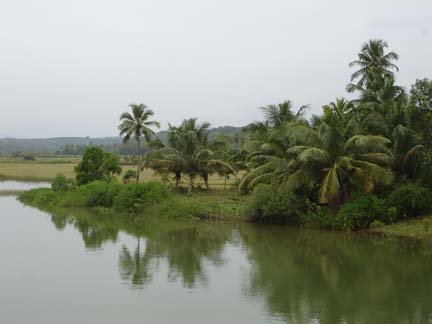
A Coastal estuary

A Coastal estuary
Holegadde near Honavar,Uttara Kannada dist, Karnataka

Copy? Right - but kindly remember to acknowledge!

Creative Commons License
This work is licensed under a Creative Commons Attribution 3.0 License.

" tulu-research.blogspot." ತುಳು ರಿಸರ್ಚ್. ಬ್ಲಾಗ್‌ಸ್ಪಾಟ್‌. ಇನ್

" tulu-research.blogspot."  ತುಳು  ರಿಸರ್ಚ್.  ಬ್ಲಾಗ್‌ಸ್ಪಾಟ್‌. ಇನ್
Have a nice day !