Kota is an urbanized coastal village near Kundapura. And Kotiyan is an important lineage (bari) among certain Tulu communities. Kota and Kotiyan: Are these two words mutually related in space and time in terms of Karavali and overall Indian anthropological evolution?
Let me present some perspective data on these two words so that you can decide for yourself.
KOTA
Kota is small town near Kundapur, known as the home town of Jnana Peeta awarded late Dr. Kota Shivaram Karanth. Kota village is also known as the base or original settlement of ‘Kota’ Brahmins of Karavali. However the place name Kota that sounds like a deformed version of ‘Kote’ (= the fort) is not unique to Karavali. There are several towns spread across India that bear the name Kota. Some of the other Kota towns and district places are:
Kota town in Kota district Rajasthan; Kota in Sonbhadra district, Uttara Pradesh; Kota in Nellore district, Andhra Pradesh; Kota in Bilaspur, Chattisgarh and Kotagiri district in Tamilnadu. (‘Kota-giri’ means ‘the mountain of the Kotas’). Besides, there are numerous villages that carry the prefix ‘Kota’-(or modified to ‘Koti’) in various parts of the peninsula. The widespread occurrence of the place-names Kota across India leads us to visualize that these represent ancient settlements of the Kota tribes who were spread out in different parts of India.
Kota tribes
Kota or Kotar tribes at present speak Kota language and live in Niligiri area of Tamilnadu. At present they are known as traditional artisans and experts in pottery and terracotta. In Niligiri region, they are associated with another tribal community, the Toda tribes, who are the traditional agriculturists in the Niligiri ranges.
The Kota tribes of Niligiri region have a peculiar custom of smearing the face of pubescent boys with blue paints. They believe that the transition of boyhood to manhood is like a death and rebirth and the ritual of painting the face represents symbolic death before rebirth! The Kota tribes wear impressive costumes.
Cow-herders and potters
The ‘Kota’ tribal name is said to be derived from the root “ko” which means cow. The Kota people believe that their forefathers were cows. A place they live in is called a “kokkal”, meaning resting place of the cows. This leads us to assume that Kota tribes were originally cow-herders who later adapted to the profession of pottery. The tribes of Cow-herders were once extensively spread in India. They were known as Yadava, Jadon, Jadeja etc. in the northern parts of India and Idaiya(r), Yadia etc in southern India.
The Kota tribes traditionally consume buffalo and other meats but do not eat cow. This custom throws light on the antiquity and origin of the specific Indian tradition of worshipping cows.
Kota language
The distribution of ancient Kota settlements all over India and the present seclusion of Kota tribes to Niligiri hills imply the effect of time and tides on the evolution of these tribes. Once widespread tribes have been reduced in number. On the other hand this aspect also connotes widespread assimilation of these ancient tribes into other existing communities of India during the course of evolution.
The present Kota language is considered to be a member of Dravidian languages. The present Kota tribes are living in Tamil/Dravida area and hence it is natural to expect the influence of surrounding languages on the language of the Kota tribes. Or in other words, the present language of the Kota tribes has been modified and evolved in tune with changing times.
Tribes like Gadaba have two regional variants of their languages: one of (pre-Dravida) Munda heritage and another of superposed Dravida succession. Similar variants can be expected in the language of Kota tribes. It is also possible that the older version of the Kota language has been obsolete or assimilated into other Indian languages during the course of cultural evolution and assimilation.
KOTIYAN
The word Kotiyan appears to be a variant of the ancient tribe Kota. The Kotiyans existed as a group during early centuries of the CE as we find reference to them in Tamil Sangam literature. They were performers in the courts of Tamil Kings. The comparative Dravida dictionary describes the word ‘Kotiyan’ as (a) a fierce young man (b) a glutton or one who hankers for food. The descriptions derived from ancient Tamil texts possibly imply that these Kotiyans were originally a strong but poor (and hungry) tribal community with special talents in performing arts. Or rather they were compelled to perform before the Kings for the sake of their livelihood.
Lineage Kotiyan
Like many other tribes Kotiyans were spread in different parts of southern India including Tulunadu during the early centuries of the Common Era. Obviously they had cultural-matrimonial relations with the Tulu tribes that led to cultural-genetic assimilations. This is confirmed by the existence of a distinct lineage in the name of Kotiyan that came into being before the division of ancient Tulu tribes into various communities.
KOTESVARA
Kotesvara is a well known temple town along the Karavali coast located between Kota and Kundapura. The place name Kotesvara has significant hidden clues in terms of the evolution of the Kota tribes that apparently proceeded in several lines. That they were a significant or socio-politically dominant group in the Kota - Kundapura area, is further confirmed by the place name Kotesvara. The Kota tribal groups introduced the concept of Kotesvara, which has become the dominant form of Lord Shiva in that region.
It was a general practice in the early centuries of Common Era to name the God Iswara (Shiva) according to the preferences of rulers or dominant groups of the land. Alupa Pandya Kings had the God Isvara named after their dynasty as Pandesvara. There are t two places named Pandesvara in Karavali.(One in Mangalore city another near Parampalli-Kota).
The inference on the concept of Kotesvara suggests that Kota tribes were either rulers or a socially dominant affluent group in that region during the history
®

A heritage blog by: Ravindra Mundkur & Hosabettu Vishwanatha
Showing posts with label Yadava. Show all posts
Showing posts with label Yadava. Show all posts
Tuesday, June 24, 2008


Saturday, June 14, 2008
118. Iddya to Yedapadavu
Some places along the Karavali have names that sound odd, if not meaningless! Iddya near Surathkal is one of such place-names. Hosabettu Viswanath opined that it represents ‘an elevated place’. Topographically, the Iddya, now part of Surathkal urban accretions, is an elevated plateau .But it is possible to relate the word Iddya to one of the ancient tribes of south India. The tribal angle also answers the origin of mysterious place names such as Yeda-padavu , Yeda-mangala etc.
Iddya
The place name Iddya has been cited in inscriptions dating back to Vijayanagar period as Yedeya. The stone inscription in the courtyard of the Kadire temple dated ca.1386 CE mentions place name Yedeya, along with Nambur (Panambur), Turithakal (Suratkal), Kollia (Kulai) and Chitrapura (Gururaja Bhat, 1974.).
Idaiyar, Idaivar
Tamil Sangam literature mentions tribes called Idaivar or Idaiyar. Descendants of these tribes do exist in different parts of peninsular India as can be verified from the list of castes and tribes. Apparently there are no representatives of Idaivar or Idaiyar community in present Tulunadu, even though the place name Iddya (pronounced as ‘yiDya’) or Iddeya near Surathkal provides mute evidence of the existence of Idaiya(r) tribes during the early centuries of the Common Era. These Iddaiya tribes might have been culturally assimilated in the Tulunadu with passage of time.Idaiyar of Tamilnadu are classified under Yadava or Golla communities
Ideya -Yediyur
The pronunciation of Iddya or Ideya as Yedeya during Kannada –Vijayanagar –period throws further light on similar sounding place names in Karnataka like Yediyur. The Idaiya tribes were apparently known as Yedia (pronounced yeDiya) in Kannada areas after whom places like Yediyur have been named. The word Yedia bears close resemblance to the community name Yadava.Idaiyars of Tamilnadu form part of Yadava group.
Incidentally the present Chief Minister of Karnataka bears the name Yediyurappa.
Yedapadavu Yedamangala
There are some more villages where the original prefix in the name ‘Idaiya’ has been corrupted into Yeda- or Eda- during lingual evolution. Examples are: Yeda-padavu, Yeda-mangala, Yeda-mavinahole, Yeda-padi, Yeda-thadi etc. The surname ‘Yedapadithaya’ also can be cited.
The prefix ‘Yeda’ or ‘Eda’ in Kannada actually means ‘left side’ .But if you apply this Kannada meaning to the said villages and look for the corresponding ‘right side’ villages, there are none!
Therefore, ‘Yeda+padavu’ originally must have been meant ‘the plateau of Idaiya tribes’. And ‘Yeda+Mangala’ referred to ‘the war camping ground or fort of the Idaiya tribes’.
Edavolal
Edavolal town has been mentioned in inscriptions of Banavasi Kadamba period. Eda+volal must have been a colony of 'Ideya' or 'Edeya' people, the 'volal',being the equivalent of (p.>v. transition) 'polal',the town.
Similarly,the places like Yelandur (Mysore district) and Yelaniru/Yedaniru may have been associated with 'Yeda(v)' tribes.
As usual, if you have better alternate explanations for the origin of place names such as Iddya and Yedapadavu, or if you feel that my explanation is hard to digest, feel free to shoot your comments.
®
Iddya
The place name Iddya has been cited in inscriptions dating back to Vijayanagar period as Yedeya. The stone inscription in the courtyard of the Kadire temple dated ca.1386 CE mentions place name Yedeya, along with Nambur (Panambur), Turithakal (Suratkal), Kollia (Kulai) and Chitrapura (Gururaja Bhat, 1974.).
Idaiyar, Idaivar
Tamil Sangam literature mentions tribes called Idaivar or Idaiyar. Descendants of these tribes do exist in different parts of peninsular India as can be verified from the list of castes and tribes. Apparently there are no representatives of Idaivar or Idaiyar community in present Tulunadu, even though the place name Iddya (pronounced as ‘yiDya’) or Iddeya near Surathkal provides mute evidence of the existence of Idaiya(r) tribes during the early centuries of the Common Era. These Iddaiya tribes might have been culturally assimilated in the Tulunadu with passage of time.Idaiyar of Tamilnadu are classified under Yadava or Golla communities
Ideya -Yediyur
The pronunciation of Iddya or Ideya as Yedeya during Kannada –Vijayanagar –period throws further light on similar sounding place names in Karnataka like Yediyur. The Idaiya tribes were apparently known as Yedia (pronounced yeDiya) in Kannada areas after whom places like Yediyur have been named. The word Yedia bears close resemblance to the community name Yadava.Idaiyars of Tamilnadu form part of Yadava group.
Incidentally the present Chief Minister of Karnataka bears the name Yediyurappa.
Yedapadavu Yedamangala
There are some more villages where the original prefix in the name ‘Idaiya’ has been corrupted into Yeda- or Eda- during lingual evolution. Examples are: Yeda-padavu, Yeda-mangala, Yeda-mavinahole, Yeda-padi, Yeda-thadi etc. The surname ‘Yedapadithaya’ also can be cited.
The prefix ‘Yeda’ or ‘Eda’ in Kannada actually means ‘left side’ .But if you apply this Kannada meaning to the said villages and look for the corresponding ‘right side’ villages, there are none!
Therefore, ‘Yeda+padavu’ originally must have been meant ‘the plateau of Idaiya tribes’. And ‘Yeda+Mangala’ referred to ‘the war camping ground or fort of the Idaiya tribes’.
Edavolal
Edavolal town has been mentioned in inscriptions of Banavasi Kadamba period. Eda+volal must have been a colony of 'Ideya' or 'Edeya' people, the 'volal',being the equivalent of (p.>v. transition) 'polal',the town.
Similarly,the places like Yelandur (Mysore district) and Yelaniru/Yedaniru may have been associated with 'Yeda(v)' tribes.
As usual, if you have better alternate explanations for the origin of place names such as Iddya and Yedapadavu, or if you feel that my explanation is hard to digest, feel free to shoot your comments.
®
Tuesday, October 9, 2007
41. Origin of the word Tulu -I
Origin and meaning of the word Tulu has been disputed in literary circles since pre-Independance days. Dr. Palthadi Ramakrishna Achar(1999) has compiled the available historical information on the word ‘Tulu’ in his book ‘TuLu naaDu- nuDi’. Most of the appraisals, as remarked by Dr Achar, have been made considering Tulu as a character of the territory or the people rather than the language.
1.In ‘Rajatha Peethapura Mahatme’(1913) it is described that a chieftain of Udupi called Ramabhoja offered Tulābhāra to the deity, to amend for the sin of killing a serpent. Tulābhāra is the offering of gold or other material (according to the status of the worshipper) equivalent to ones body weight. Thus the word Tulu has been suggested to have been derived from the Tulābhāra. The theory has not been accepted by experts since Rama bhoja appears to be an imaginary ruler unsubstantiated in the actual history of the land.
2.Another similar legend in ‘Keralotpatti’, an ancient work that originated from Kerala, describes the rule of one ‘Tuluban Perumal’ from Koteswara, Kundapaura area, who gave the name Tulunad for the area.This is again a figment of fertile imagination since there is documented evidence of any Tuluban Perumal ruling Tulunad.
3. Dr B. A. Salettur derived the word ‘Tulu’ from the Kannada root ‘tooL’ which means to attack. Dr. Gururaja Bhat had discounted this suggestion since Tulu people were never attacked anyone nor had any expansionist ideals.
4. Manjeswara Govinda Pai proposed that the word Tulu has been considered to have derived from the Tamil word ‘Tulai’ which means to row or play with water.
5. Kudkadi Viswanatha Rai (cited in Dr Achar,1999) suggested that the Tulu has been derived from the phrase ‘Tullal naadu’, wherein ‘tullal’ means to wriggle or to dance. Native Mera or Muger tribes describe their marriage ceremony as 'tullal'.
6. Dr. Gururaja Bhat proposed that the word Tulu is modified form of the term ‘turu’ that refers to cattle. Cattle herding and grazing is considered to be one of the earliest known professions in India. Cow-herders of Gujarat, also known as Yadavas are considered to be one of the early settlers in Tulunad. Haritha of Yadava clan was said to have ruled in Tulunad according to Harivamsha. However there are no solid evidences in favour of turu>tulu word conversion .
7. ‘Tolahars’ were a royal clan that ruled a part of Tulunad. Tola>Tulu conversion has been thought of by some workers.
8. J.Sturrock in his South Canara Manual ( Vol.I ) inferred that word Tulu possibly refers to the ‘soft’ nature of the local people, since the adjective “tuluve” is applied to the soft pulpy variety of jack fruit. However, this argument has not been accepted by experts like Dr. Gururaja Bhat.
9. Sediyapu Krishna Bhat has pointed out that the word ‘Tulu’ is connected with water. ‘Tuluve’(jack fruit) also means ‘watery’ and that should be considered instead of the ‘soft’ implication. The other water related words in Tulu are talipu, teli, teLi, teLpu, tuLipu, tulavu, tamel and additionally in Kannada are tuLuku and toLe. In Tamil tuli means water drop and tulli means the same in Malayalam.
Interestingly, earlier Manjeswar Govinda Pai also had suggested that the term Tulu is derived from the Tamil word tulai which means to row, dive or play in water.
Thus it can be concluded that the word Tulu implies ‘related to water’.
10. The term ‘Tulu’ was also used as a clan name, as recorded in the Honnali inscription of Shimoga district, dated 1203AD. Dr. Gururaja Bhat has cited several personal names with Tulu as affixes like Tuluveswara, Tuluva Chandiga, Tulu Senabova, Tuluvi Setti, Tuluvakka Heggadati,Tulu Alva, Tulai Amma etc. as have been recorded in the inscriptions. In the Basrur (in Kundapur taluk) inscription dated 1401 AD, mentions a Tuluvi Setti donating land to maintain the routine expenditures of the Tuluveswara temple of Basrur. Besides, Krishnadevaraya, the famous emperor of Vijayanagar was said to be hailing from the ‘Tuluva’ dynasty.
Thus we can conclude that the word ‘Tulu’ means ‘that connected with water’ and it is also name of a clan or group.
However the word Tulu is more global than we ordinarily imagine!
(..to be continued)
1.In ‘Rajatha Peethapura Mahatme’(1913) it is described that a chieftain of Udupi called Ramabhoja offered Tulābhāra to the deity, to amend for the sin of killing a serpent. Tulābhāra is the offering of gold or other material (according to the status of the worshipper) equivalent to ones body weight. Thus the word Tulu has been suggested to have been derived from the Tulābhāra. The theory has not been accepted by experts since Rama bhoja appears to be an imaginary ruler unsubstantiated in the actual history of the land.
2.Another similar legend in ‘Keralotpatti’, an ancient work that originated from Kerala, describes the rule of one ‘Tuluban Perumal’ from Koteswara, Kundapaura area, who gave the name Tulunad for the area.This is again a figment of fertile imagination since there is documented evidence of any Tuluban Perumal ruling Tulunad.
3. Dr B. A. Salettur derived the word ‘Tulu’ from the Kannada root ‘tooL’ which means to attack. Dr. Gururaja Bhat had discounted this suggestion since Tulu people were never attacked anyone nor had any expansionist ideals.
4. Manjeswara Govinda Pai proposed that the word Tulu has been considered to have derived from the Tamil word ‘Tulai’ which means to row or play with water.
5. Kudkadi Viswanatha Rai (cited in Dr Achar,1999) suggested that the Tulu has been derived from the phrase ‘Tullal naadu’, wherein ‘tullal’ means to wriggle or to dance. Native Mera or Muger tribes describe their marriage ceremony as 'tullal'.
6. Dr. Gururaja Bhat proposed that the word Tulu is modified form of the term ‘turu’ that refers to cattle. Cattle herding and grazing is considered to be one of the earliest known professions in India. Cow-herders of Gujarat, also known as Yadavas are considered to be one of the early settlers in Tulunad. Haritha of Yadava clan was said to have ruled in Tulunad according to Harivamsha. However there are no solid evidences in favour of turu>tulu word conversion .
7. ‘Tolahars’ were a royal clan that ruled a part of Tulunad. Tola>Tulu conversion has been thought of by some workers.
8. J.Sturrock in his South Canara Manual ( Vol.I ) inferred that word Tulu possibly refers to the ‘soft’ nature of the local people, since the adjective “tuluve” is applied to the soft pulpy variety of jack fruit. However, this argument has not been accepted by experts like Dr. Gururaja Bhat.
9. Sediyapu Krishna Bhat has pointed out that the word ‘Tulu’ is connected with water. ‘Tuluve’(jack fruit) also means ‘watery’ and that should be considered instead of the ‘soft’ implication. The other water related words in Tulu are talipu, teli, teLi, teLpu, tuLipu, tulavu, tamel and additionally in Kannada are tuLuku and toLe. In Tamil tuli means water drop and tulli means the same in Malayalam.
Interestingly, earlier Manjeswar Govinda Pai also had suggested that the term Tulu is derived from the Tamil word tulai which means to row, dive or play in water.
Thus it can be concluded that the word Tulu implies ‘related to water’.
10. The term ‘Tulu’ was also used as a clan name, as recorded in the Honnali inscription of Shimoga district, dated 1203AD. Dr. Gururaja Bhat has cited several personal names with Tulu as affixes like Tuluveswara, Tuluva Chandiga, Tulu Senabova, Tuluvi Setti, Tuluvakka Heggadati,Tulu Alva, Tulai Amma etc. as have been recorded in the inscriptions. In the Basrur (in Kundapur taluk) inscription dated 1401 AD, mentions a Tuluvi Setti donating land to maintain the routine expenditures of the Tuluveswara temple of Basrur. Besides, Krishnadevaraya, the famous emperor of Vijayanagar was said to be hailing from the ‘Tuluva’ dynasty.
Thus we can conclude that the word ‘Tulu’ means ‘that connected with water’ and it is also name of a clan or group.
However the word Tulu is more global than we ordinarily imagine!
(..to be continued)
Subscribe to:
Posts (Atom)
A Coastal estuary
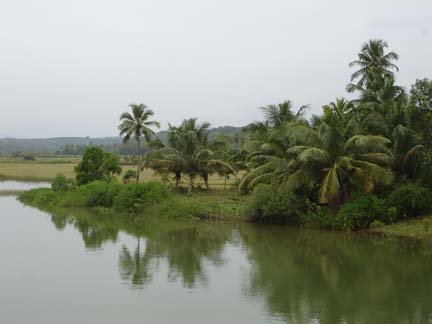
Holegadde near Honavar,Uttara Kannada dist, Karnataka
Copy? Right - but kindly remember to acknowledge!

" tulu-research.blogspot." ತುಳು ರಿಸರ್ಚ್. ಬ್ಲಾಗ್ಸ್ಪಾಟ್. ಇನ್

Have a nice day !