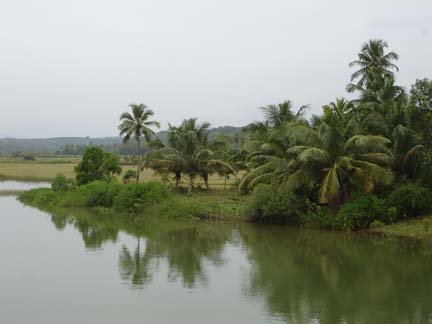
The charming place name Kāntāvara was derived from the name of a tribal woman. The legend describes the origin of the place-name from a tribal proper name, apart from explaining the prevalence of Shiva cult in the antiquity among the native tribes.
Kāntāra
According to the legends prevalent among the people of Kāntāvara, located near Mudabidri in Karkal Taluk, a tribal woman called Kāntāra was severing bushes and gathering fodder for the cattle in the sub-rural wild environs of the village. Her sickle touched against a rock amidst green bushes and reportedly blood oozed from the wounded rock. Apparently, she heard a faint cry from the hurt rock: ‘Oh,maga Kāntāra !'
The tribal woman Kāntāra saw that her sickle inadvertantly touched a holy rock, a natural Linga stone hidden under the foliage of bushes in the wilderness. She was pious and promptly arranged to carry the Linga stone to a safer place and build a shrine for the Lord Shiva, who subsequently became popular in the region under the name Kāntesvara.
Thus the place was named Kāntāra in Tulu after her name. Subsequently, the place-name was restyled into 'Kāntāvara' under the influence of Kannada rulers.
®
Kanajār
Kanajār village in Udupi taluk is another illustration for ancient place-names based on the proper names of the tribal people that inhabited these areas. Narayana Shetty has pointed out that Kanajar has a Shiva temple and has a legend of wounded Linga stone similar to that prevailing in Kāntāvara village.Note that the tribal woman's wail ‘Oh maga Kanaja’(=Oh, child Kanaja) is a replication of ‘Oh maga Kantara’ theme.
The village-name Kanajār (Kanaja + ār) has been developed on the proper name of a tribal ‘Kanaja’. The suffix –ar represents a habitation.
Madaru : Madhur
It seems many temples in Karavali-Kerala have similar anecdotes describing the discovery of idols by the tribals.Manjunath reports that the famous Madhur Ganesha idol was said to be the discovery of a tribal woman called Madaru.
®
The two photographs in this post depict the scenic splendour of Kantāvara