Friday, April 20, 2012

298. Talambu and Mogaveeras


The Nature is a great teacher to mankind from primitive stage. Barks of certain trees and fibres of certain non-wood plants were used for spinning and weaving, and also for writing, since hoary past.  Mogaveeras being one of the early inhabitants of Tulunadu were self-reliant in respect of making  threads used in variety of fish-catching nets.  They grew Sunn hemp (Talambu = ತಲಂಬು in Tulu, Sanabu - ಸಣಬು in Kannada) for fibres to spin yarn long before the advent of modern spinning mills. They continued to make threads from natural fibres even after modern mills began manufacturing natural and synthetic fibres.  Below is an outline of sunn hemp cultivation and harvesting by Mogaveeras.
SUNN HEMP
The Sunn hemp (also written as sun; botanical name ‘Crotalaria Juncea Linn’) is an Asian, tropical to sub-tropical fibrous plant of Legume Family, having seed bearing pods. The genus is named ‘Crotalaria’, meaning rattling sound. It indicates noise made by   seeds shaken in ripe pods. The species name was given by Linnaeus because the plant’s green, rush-like, scantily leaved branches resemble Spartium junceaum L., the Spanish broom of the Mediterranean region.
 It is a native of India, Pakistan, Bangladesh and Australia. It belongs to a large family of legume. Many varieties of sunn hemp are grown in all tropical regions of the world.  It is known by different names in different languages in India and abroad, such as : Tulu (Talambu);Kannada (Sanabu);Malayalam (Wuckoo);Tamil (Sanal, Sannappu); Telugu (Janumu); Hindi (kharif, sannai sunn);Sanskrit (Sana);Oriya (Soin); ­­Bengali (Shonpat, shon, ghore sun); English (brown hemp, sunn hemp, sun hemp, Bengal hemp, Bombay hemp, Madras hemp, Benares hemp, Indian hemp, Jubbalpore hemp); Filipino (karaykagay, putokputukan); French (chenvre indien);Indonesian (orok-orok lembut); Khmer (kâk’tung);Lao (Sino-Tibetan)(thwax chu:b,po: th’üang);Thai (po-tuang);Vietnamese (luc lac,suc sat)
The Sunn hemp or Crotalaria juncea is an erect, herbaceous, laxly branched annual plant, 1 to3.5 m tall. The stems are cylindrical and ribbed, pubescent, up to 2 cm in diameter; vegetative parts covered with short, downy hairs. Long, strong taproot, well-developed lateral roots, and multi-branched and lobed nodules, up to 2.5 cm in length. Leaves simple with minute, pointed stipules; petiole entire, short, about 5mm long with pulvinus blade, linear elliptic to oblong, 4-12 x 0.5-3, bright green. Inflorescence a lax, terminal raceme, up to 25 cm long; flowers conspicuous, small with 5 hairy sepals, shortly united at base, lobes pointed, with 3 lower sepals united at tips, separating in fruit; petals deep yellow, standard erect, about 2.5 cm in diameter, rounded,  sometimes streaked purple on dorsal surface, wings shorter and keel twisted. The Pods are cylindrical, 3-6 x 1-2 cm in size, tomentose, light brown, containing about 6 seeds in each pod. The dark brown to black seeds up to 6 mm long are heart-shaped, with narrow end strongly incurved.


 It is worthwhile to note that one of the natural products traded through Arab traders was sunn hemp fibres from Western Indian ports (including Mangalore).  It reached Europe and England through Mediterranian region. Prior to introduction of sunn hemp cultivation in Europe, European traders too traded this item from 15th/16th Century onwards.

It was an important commercial crop in Europe. In South Asia, it was cultivated more for its narcotic properties than for fibres.  In 1841, William Robinson documented that ‘Cannabis sativa’ (true hemp) was used mainly for drug by hill tribes of Assam whereas it has been used as fibre (from the skin or rind of plant) for spinning elsewhere.  Hemp products are confusing because the word ‘hemp’ is used for many fibre-bearing plants.  Indian hemp comes from a species called ‘Hibiscus cannabines’, ramie or rhea from the plant ‘Boehmeria nivea’ and sunn hemp from ‘Crotalaria Juncea’. This hemp was used for various purposes from fishing nets to textiles, cordage and paper.  Chinese first developed hemp varieties to make paper.  Chinese official documents are made of hemp because it is water-resistant and tough. In North India, Khazgis, i.e. Muslim paper makers, use a variety of materials to make papers, including sunn hemp.
The word ‘canvas’ comes from the word ‘cannabis’. This reflects the use of hemp throughout history as a fibre crop for textiles, rope and paper.  Sail- cloth, sacking and ropes were some of the important hemp products.
In 1941, Henry Ford made a trial car body using 70% hemp, wheat straw and sisal and 30% hemp resin binder with a steel frame.  The car weighed one-third times lesser than conventional cars of that period.
The Sunn hemp plant, with insets showing flowers, leaves and seeds.


MOGAVEERAS and SUNN HEMP
It is a lean, straight and long plant with yellow flowers. Seeds are stored and sown on barren land of private land-owners with red soil as summer monsoon sets in (June) and plants are harvested in September.   Both ends of plants are cut, cleaned, threshed for separating pods and dried in sun-shine. During harvesting, separating leaves and pods, the cleaner has to face the menace of skin irritation from large caterpillars of various colours. Note: Moths and other garden insects are enemies of this plant.
It is then soaked in fresh water of pond/pools or other water-bodies, such as ‘patla kanda’, i.e. water-logged low agriculture fields, for a fortnight or so.  This soaking process is known as ‘retting’. After taking out the bundle of stalks, it is again sun-dried till stalks get golden colour.  After completion of drying, stalks are ready for removal of fibres. Empty stalks are used as fuel (Note: Elsewhere these empty stalks are used in paper making and wrapping cigarettes. Stalks being hollow, children play with it for smoking and puffing smokes as is done with a cigarette.)
Collected fibres are kept aside for spinning threads of various thicknesses in leisure time (mostly during rainy season). Women take lead role in smoothening fibres and spinning in groups. This is sort of indoor pastime during summer monsoon when they cut jokes, exchange village news and tell folk tales when it is raining in cats and dogs. Male members entwine these threads for getting twine of particular thickness for weaving particular type of net.
Sunn hemp fibre is stronger when wet.  It is fairly resistant to mildew, moisture and microorganisms in salt water. To make it still stronger, fishing nets are soaked in a decoction of ‘Banpu’ tree barks.  The Banpu (Panpu; Botanical name ‘Terminalia comentosa’ ; ಕರಿ ಅತ್ತಿಮರ, ಬನಪು) is a large tree. The fisher-folk used to dye their shirts with this decoction for long life of the clothing. However,such a practice is now a thing of the past).
We can deduce that prior to migration of professional weavers to Tulunadu, Salian, Saliannaya or Talianna clan (found mostly among Billavas, Mogaveeras and Bunts) might have been the pioneers in spinning and weaving in the Coast.  With the availability of choice of modern threads, fisher-folk have nearly discarded sunn hemp fibre and its cultivation.
Sunn Hemp – a cover crop
Sunn Hemp originated in India and apparently is in cultivation since the dawn of agriculture.  US Department of Agriculture gives information that as a summer crop, sunn hemp can produce over 5000 pounds of biomass and 100 pounds of nitrogen per acre.  It can produce this amount within 60 to 90 days.  Thus, as a cover crop, hemp improves soil properties, reduce soil erosion, conserve soil water and recycle plant nutrients as green manure.  It is used as fodder for livestock and as a non-wood fibre crop. A notable point is that sunn hemp destroys weeds.  This explains why fallow-land owners allow Mogaveeras to cultivate and harvest hemp crop during summer monsoon.
CONCLUSION
As Alfred Tennyson says, “Old order changeth yielding place to new”, there is a sea-change in the life of Mogaveeras with mechanized fishing.   As closely watched during my growing up days in native place and with personal experience, I am able to give a true picture of activities connected with sunn hemp.  As I understand, nowadays the cultivation and harvesting of the crop for fibres is very much neglected.  Considering the commercial value, Mogaveeras may develop this line of business with help of Government Agriculture Department.
-H. Vishwanath (Pune)

Friday, April 6, 2012

297. Weavers of Civilization


In early morning twilight, chipping at the serenity of the day-break is the monotonous thumping sound of a weaver’s loom  mingled with morning chorus song of birds. The harping looms continue until dusk, adding to the splendour of sunset when birds return to their nests smitten with   gleeful chirping and chattering. This harmonious sound of music from dawn to dusk was heard in the bye-lanes of every civilized villages and towns, where once thrived the colony of weavers.
Civilization in this world set in when the early men and women felt the need to dress themselves up to cover private parts, to protect the body from the vagaries of climate as well as to be fashionable in front of others. Early humans dating back to period 60,000 to 10,000 years ago clad themselves in leaf aprons to begin with and further graduated into loin cloths fashioned out of animal hides. The most popular Indian God Shiva is usually depicted with loin cloth made out of deer skin, suggesting that the concept and cult of divine Shiva originated and spread during pre-fabric tribal days in India.
Early humans grew long hairs on their head and in an effort to organize the long hairs had devised ingenious methods of making plaits out of long hairs. Braided or plaited hairs, hair weaving, and wigs have been recorded from period as old as 3400 BC in parts of Egypt and Africa. Weaving of the cloths could have further evolved from rope making and from observing the structure of plant leaves.  Weaving cloths fashioned out of threads fashioned out of fibres derived from cotton, flax, silk cotton or silk cocoons   may be as old as agriculture in the world. An indistinct textile impression found at Pavlov, Moravia, indicates that weaving was known in Palaeolithic Era.
In a Neolithic site at Anatolia, Near East, archaeologists have found fabrics, used for wrapping the dead.  It is carbonised in a fire and radiocarbon date is ca 6000-5000 BCE.  There is evidence of Flax (a slender erect tree with blue flowers) cultivation from 8000 BCE but the breeding of sheep with a woolly fleece rather than hair is seen much later in and around ca. 3000 BCE. Flax fibre was mainly used in Egypt around 3600 BCE.  Turkey has made a claim of earliest known linen cloth (woven in about 7000 BCE) and draped around an antler, i.e. horn of animal of deer family. 
In India, inhabitants of the Indus Valley civilization used cotton for clothing as early as 3300 to 2600 BC as evidenced from cotton cloth pieces found in excavated sites.  Cotton is mentioned in Rig Veda (dating ca. 1700-1500 BCE). “Cotton textiles were woven in India with matchless skill and their use spread to Mediterranean countries…” (Columbia Encyclopaedia).  Fine cotton muslins were exported to the Greeks and the Romans. The Roman historian Pliny lamented on the drain of Roman gold to India owing to mad love for Indian fabrics.  Marco Polo observed (in 13th Century) that brocading art of Gujarat weavers is par excellent. Muslins from Dhaka (now in Bangladesh) were prized collections.  Sham.Bha.Joshi (Shankar Bhaskar Joshi) tells the story of cotton (ಹತ್ತಿಯ ಕತೆ) in his Book “Karnata Poorva Sankriti, Vol.2”.  Westerners believed that cotton wool was coming from ‘Sheep-tree’ (ಕುರಿ ಮರ).  The Greek Historian, Herodotus described (in 5th Century BC) that the Indians wore clothing made from the wool, borne by wool-trees. He further wrote that this wool was more superior in beauty and quality than the wool of a sheep. It is only in circa 1600AD, European explorers found out that cotton plants are also grown in Americas. The Flax,  or the linseed is known by different  vernacular names:   Alsi (Hindi, Gujarathi & Punjabi), Ali Vidai (Tamil), Jawas, alashi and linseed (Marathi), Tishi (Bengali), Pesi (Oriya),Avise ginzalu (Telugu), Cheruchana vithu (Malayalam) and Agasi (Kannada and Tulu ?).  It is cultivated and harvested since prehistoric times in parts of Africa (Ethiopia & ancient Egypt) for nutrients and fibres.
In China, the earliest evidence of silk production was found at the sites of Yangshao culture in Xia, Shanxi, where a cocoon of ‘bombyx mori’, the domesticated silkworm, cut in a half by a sharp knife, is dated between 5000 & 3000 BCE.  The trade route, known as silk route had begun in 114 BCE during the reign of Han dynasty connecting East and West.  This 5000-mile route on land and sea linked traders, merchants, pilgrims, monks, soldiers and urban people from China to the Mediterrean Sea region.  This route was instrumental in developing great Civilizations of China, Indian sub-continent, Egypt, Mesopotamia, Persia (Iran) and Rome. Sericulture is introduced outside China around 2nd Century. Legend is that a Chinese Princess, when she married a prince of Khotan of Central Asia, carried hidden the silk cocoons to be reared in her country of adoption.
Weaving
Weaving is a general method of fabric or cloth production, require two distinct sets of yarns or threads:  Longitudinal threads are called Warp (ಹಾಸು) and the lateral threads are called Weft (ಹೊಕ್ಕು).  Weft is an old English word, meaning ‘that which is woven’. In a weaving Loom  the longitudinal warp threads in held in tight position while the weft thread, winds in between at right angles to the former.  Method of interlacing the threads decides the pattern of the cloth.  That is why a harmonious living in a society is compared poetically to agreeableness of warp and weft in cloth weaving where woof>weft or pick is propelled across the loom by a shuttle.
Thus, there seems to be uniformity in cultural beliefs, thinking and living patterns among traditional (pre-industrial) weavers.  This unity of form and substance is seen in weaving communities of the world in spite of geographical barriers. 
Spider
Spider being the symbol or totem of weaving, world literature abounds with interesting stories. Spider silk is collected, rearing thousands of Madagascar Golden Spiders, toughened scientifically and dresses are made in America, UK and France, just for record purpose.  News about making of a ‘waistcoat’ out of spider fiber has recently appeared in a print media. Though it is tested that tensile strength of spider silk is greater than steel, it is proved that it is not possible to rear spiders, as silk-worms.  Instinctively, spider eats one another’s head when herded together in close quarters. Collecting spider silk is not feasible unless this insect is immobilised.
Weaving communities
Weaving communities constitute an important segment of the Indian social fabric.  They belong to different ethno-lingual groups with varying religious-social practices. With the discovery of cotton and silk fabrics, they played an important role in trade and commerce – internal and external.
Their population prospered at sea ports where erstwhile merchant guilds (Nagar or Nakhar, say Trade Posts) concentrated. This merchant class had soldiers (sarthavahas) from their own group for protection from thieves on land and pirates in sea.  Leader of their caravan was called as ‘Maha Sarthavaha’.
Regional Caste-names
In Tulunadu a specific ‘Salian’ lineage prevails among most of the Tulu communities. The Salian bari refers to salia or taliya, the spider. It is not clear whether the Salian lineage is based exclusively on totem spider or it refers to group of early weavers in southern India.
However in the medieval and later ages, Shettigars migrated and settled in parts of Tulunadu. Characteristically they have introduced the worship of Veerabhadra in Tulunadu. The title Shettigar derived from Settikar (merchant) is akin to ‘Chettiar’ of Tamilandu. Some of these groups designate themselves as Padmashalis, originating from Andhra areas. Devanga is a popular weavers group in Kannada and Telugu areas.
Weavers have been grouped in Vaishya category of Chaturvarna. Though having Brahminical characteristics, they are both vegetarian and non-vegetarian.  In Karnataka, there are 30/32 groups of castes of weavers. Padmashalis profess that they are independent of other groups as their cultural practices are based on Vedic codes of conduct.
The OBC List-115 of Central Government contains the following weavers communities: (1) Padmashali, (2) Devanga, (3) Jaandra, (4) Thogata, (5) Thogata Veerakashtriya, (6) Pattakaru, (7) Karmi Bhakthula, (8) Karakala Bhakkula, (9) Swakula Saali, (10) Neela Sali, (11) Nala Kandhi, Nessi, (13) Kurni, (14) Kurmi Setti, Saali, (15) Karikaala, (16) Kaikolan, (17) Senguwaakan, (18) Pattusali, (19) Shettigar .
Weavers as a profession take different caste names regionally:
Padmashalis (Andhra Pradesh – Telugu). They trace their origin to Goddess Padmavathi, consort of Lord Shrinivasa of Tirupati.
Devanga (Karnataka/Andhra – Kannada & Telugu).  Pure cotton cloth weavers.
Saliyar/Padmasaliyar, Chettiyar (Tamil Nadu & Andhra Pradesh – Tamil & Telugu).
Noted for coarse cloth weaving.  Pattu Sales among them are weavers of silk and super-fine clothes. They do not wear sacred threads.
Pattarya (Kerala – Malayalam).  Malayali weavers are also known as Chaliyan and Saliya/Saali/Saale. They are identified by their household names.
S(h)ettigar (Karnataka – Tulu & Kannada).
Caste Names Sale/Saliya, Salvi, Padmashali and Devanga are used severally.  Sometimes, they are used interchangeably.  However, Kannada and Telugu Salis differ from Malayalee Salis in many cultural aspects.  Former are mainly patriarchal, following Brahminical customs.
(In line with Padmasali the  Mulya (Kulal or Kumbara =earthen pot-makers) have coined  group name ‘Chakrashali’ )

Weavers communities
Devangas: They are one of the oldest communities in the caste system.  They trace their origin to Devala Rishi. According to legends Lord Shiva at the bequest of Brahma, created a man and called him Devala for providing clothing to Gods, who were naked in the Pre-ages.  Hence he is popularly known as Devanga, or the one who clothed the Gods.  It is said that Devanga took seven incarnations in four Yugas (Celestial Epochs). In Age of Krita he was known as Devala, in Treta as Devanga, Dwapara as Vidhyadhara, Pushpadanta and Betala, and in Kali as Varruchi, Chitrayogi, Devasthali, Devadasa and Devanga.  In each Avatar he manufactured the thread and clothes for Gods and men.
 Three-stranded Sacred Thread (Yajnopaveeta) of cotton fibre was reported to have been introduced by him. This tradition of wearing Yajnopaveeta was started by him and is adhered by Brahmins, Kshatriyas and Vaishyas. He was King of Amodanagar and taught to his followers and propagated Devanga Religion and philosophy.
They are spread in endogamous linguistic divisions as Sivacharya (Lingayat), Telugu, Kannada and Hatagars (Non-lingayat and Lingayats). Hatagars are Lingayats in Karnataka. In Maharashtra, Hatagars comes in Dhangar community. Edgar Thurston’s ‘Caste & Tribes of Southern India (Vol.2) says Hatagars is a sub-caste of Devangas, who are also called as Kodekal Hatagaru.
Koli:  Koli means a spider, one who spins a web or one who weaves a net.  It also means a fisherman, presumably because he makes and uses a net to catch his prey as a spider its web. Cultural and occupational identities can be traced to weaver’s communities in Rajasthan, Himachal Pradesh, Gujarat, Uttar Pradesh, Haryana, Bengal, Orissa, Maharshtra, Karnataka, Andhra Pradesh and Tamil Nadu. (It is interesting to note that ‘Kol’ is used as Prefix or Suffix in many Place-names all over India).
Koshti:   They trace their origin to Markandeya Rishi of Bhrigu clan.  They served as soldiers under Shivaji and Peshwas and Tippu Sultan.  They believe that they are descendant of Rajhans, king of Devagiri (Berar).  They speak Marathi, Kannada and variant of Hindi.
Salvi:  Salvi silk weavers’ community migrated to Patan (Gujarat around 12th Century from Karnataka and Maharashtra under the patronage of Solanki Rajput King Kumarapala and rich merchants. ‘Shal or Sal’ means loom in Gujarathi (Note: Sal or Sala is also a tree, having scientific name of Shorea robusta. In Indian temple sculptures, it is used for ‘Salabhanjika’, a feminine figure breaking the sala branch of a tree).  Patan Patola silk sarees are very famous for their colour and geometrical designs.  It has become a status symbol of women as ‘Sridhan’.  Weavers in Zoroastrian Parsis migrated to Saurashtra (Gujarat) brought the knowhow of Sassanian motifs and brocade technique to India.  It explains why Parsee ladies are fond of wearing Silk saris with flower motifs and brocades (as seen in Mumbai).     
Patnuli/Khatri: It is a dialect of Gujarathi Patnulikarans, settled in Madurai. They are immigrants from Saurashtra (Gujarat).  They came to South on the invitation of the Nayaka Kings of Madurai.  They speak ‘Sourashtri’, which is Indo-Aryan language.  Though its origin is in North India, it is now widely spoken in South India, especially Tamil Nadu.  It is a mixture of Gujarathi, Kannada, Telugu and many secret technical terms and bits of slangs, peculiar to the community.  It is a minority language and Sahitya Akademi has recognized it as an independent language and not a dialect of Gujarathi and honoured two Sourashtric scholars by giving Bhasha Sanmana Award.
Sengunthar or Kaikolars:  Their community is found in Tamil Nadu, Karnataka, Kerala, Andhra Pradesh and Sri Lanka.  They put ‘Mudaliar’ after their names as a Title, which is supposed to be a variant of ‘Moodley’ title of weavers of South Africa. Etymological meaning is ‘Kai (hands) + Kol (Shuttle used in looming).  Kol also means iron/metal and spear.  They are known as ‘Men with daggers with strong arm’.  They are warriors with red dagger. They enjoyed special rights as Temple Trustees.  ‘Devadasa’ system is said to have originated by them. They were ‘Khaikula’ weavers in the beginning and were militarized during Chola Empire in Circa 800 AD.  After 13th Century they became full time weavers on the decline of Cholas.  Being specialized in export and transportation, they were associated with ‘Ayyavole 500’ and were responsible for transporting goods manufactured right from Vindhya Mountain region, Godavari basin to Sri Lanka.  In this way, they settled in all major ports, including Mangalore and Malabar areas.  Their skill in handling export goods is proverbial in Malabar. 
Acchuvaru:
 Though reported in Madras Census-1901 as ‘grain carrying Oriya people’, they are attached to Devanga weavers and receive their name from the fact that they do acchupani, i.e. thread the long comb-like structures of the handloom. They correspond to Jatipillais of the Kaikolan weavers, who do acchuvelai.
Talye/Talyer aka Settigars
‘Talye or Talyer’ is a weaving community of Tulu Nadu (undivided South Kanara). Talye means spider in Tulu. ’Ta’ (ತ) generally interchanges to ‘sa’ (ಸ). So Talye and Salye are synonyms. In Government records they are known as S(h)ettigars, which originally stands for a Title in the Organizational set-up of Devangas.  They are known as ‘Sale, Sali or Saliga/Saliya’ in Kannada and Malayalam. Gujarat weavers are also known as ‘Saliya’.
They speak a mixture of corrupt Tamil, Malayalam, Kannada and Tulu, as they are supposed to have come to Tulunadu from interior Karnataka to East Coast (Andhra Pradesh, Pandya Maduradesha of Tamil Nadu) and then West Coast through Kerala.  There were also called as ‘Billimagga’ (qv Billmagga 240-242 in ‘Castes and Tribes of Southern India-Vol.1’, by Edgar Thurston) as they were weaving only white cloths. “White cloths are required for certain Gods “..and Bhutas (erroneously mentioned as ‘devils’)..” on occasions of festivals, and these are usually obtained from Billimaggas”.
“The Bilimaggas follow the makkala Santana law of inheritance (from father to son).  They are said to have seven Gotras, and those of the Mangalore, Kundapur and Udupi Taluks are stated to belong respectively to the 800, 700 and 500 nagaras.  The caste deities are Virabhadra, Brahmalinga and Ammnoru.
For the whole community, there is a chief headman called Paththukku Solra Settigar, or the Setti who advises the ten, and for every village there is an ordinary headman, styled Gurikara.  The chief headman is usually the manager of some temple, and the gurikara has to collect the dues from the members of the community.  Every married couple has to pay an annual tax (of twelve annals) and every unmarried male over twelve years of age of six annas towards temple fund…….” (Edgar Thurston)
Ayakattu/Kattemane – A social set-up
 As ‘Mahasabha’ is to Andhra Devangas, Kattemane/Ayakattu is to Kannada Devangas.  Mahasabha or Kattemane has a jurisdiction over a limited area. This organization has the following hierarchical set-up:
Yejamana: It is not a hereditary post but is from identified families on the basis of good conduct and character.   He is compared to a king, guided by Settigar.
Settigars:  Similarly, post is not strictly hereditary. He is compared as Advisor or Minister, enjoying position next to Yejamana. They are selected locality-wise these days, as streets where Devangas live are reduced.
Saasarajus: They are assistants to Settigars in social matters and to priests in religious matters.  They work as go-between members of the Mahasabha / Kattemane and the Yejamana (President) as messengers of disputes through Settigars and carry back decisions of the Settigar/Yejamana/Mahasabha to complainants.  They are paid by Devanga families annually and hold the Post till their death.
Karanika: He maintains the accounts of Mahasabha under Yejamana and Settigars
Archakas:  They are appointed and paid Priests in Community temples
Gurus: They are local Swamy (Pontifs) for Devangas, assisted by their Disciples, known Jangalu.  They are well-versed in religious and ritual matters and their words are supreme. 
Singamu/Singamvallu: Mendicants, helping in funeral matters. They are taken care of by community members.
Revival of Guru Peetha
In May1990, Kannada Devangas have installed at Hemakuta Gayatri Peeth, Hampi Devanga Mutt (District Bellary), Sri Sri Sri Dayananda Puri Maharaja as Jagadguru of all Devangas to revive the Guru Peeth. This Guru Peeth was established during Vijayanagara Empire but was defunct for historical reasons unknown. Sri Muddusangaswamy was the then Jagadguru.
Settigars – a breakaway group!
Historically, it appears that Settigars, basically a Title under the Community’s Social Organizational System, are a breakaway group of Devangas /Padmasales of Karnataka and Andhra Pradesh. Compelling economical considerations, like demand of dowries, etc., forced Settigars to move away from the mainstream.  They were loyal Chiefs under Vijayanagara Empire, particularly during Tuluva Dynasty rule.  
There is an old adage in Tulu: “ಸಾಲ್ಯೆ ಪ್ರತ್ಯೇಕಾದು ಹಾಳಾಯೆ, ಸೆಟ್ಟಿ ಪ್ರತ್ಯೇಕ ಆವಂದೆ ಹಾಳಾಯೆ” {Downfall of a Salye, i.e. weaver, is certain if he forsakes family or community. Shetty (agro-merchant class) is ruined by remaining undivided}. Weavers as a class live in clusters in lanes and bye-lanes of villages or towns.  Such a communal locality is called ‘Keri’ (ಕೇರಿ) in Kannada/Tulu and ‘Teru’ in Malayalam and Tamil. Weaving being a family-based profession a child learns the trade by watching and when he crosses teenage he learns all tricks of the trade.
Similarity of clan names (Bari) among weavers and other castes in Tulunadu and Malabar signifies the division of labour within the communities in initial stages of evolution. (See the Post on ‘Baris’.)
Edanga-Balanga (Left & Right Hand)
It is a vertical power division within the caste in Southern India. It is a distinction of higher (right hand) and lower (left hand) position based on Purity and Pollution irrespective of belonging to polarized Sects of Shaivas   (worshipping Shiva, Vinayaka and Veerabhadra and Goddess Maariamma/Bhagavathi)   and Vaishnavs (worshipping Vishnu incarnations and Padmavathi).   Devangas and Kaikolars are considered as Left-hand castes whereas Padmashalis of Andhra consider themselves as Right-hand class. Weavers migrated to Malabar and South Kanara Coasts from Karnataka-Andhra via Tamil-coast are normally left-hand ones. However,   switch over is also observed from Left-hand to Right-hand and vice versa. Conflicting stories are woven to describe a fall from Balanga to Edanga.
Miscegenation
A caste follows different professions and followers of these professions are again sub-grouped and are known by different caste names.  It is a fact, which we see in Census Reports of Colonial Era. Strife of royal dynasties for supremacy and upholding their faith has been a cause of migration, cross fertilization and conversion.  There has been a trend of coalescing on basis of traditional professions
There has been breaking, assimilating, and breaking and coalescing at different points of time.  We will find this when we read ‘Bunts, Mogaveeras, Billavas, Kapus, Komatis, Mudirajas, Balijas, Kavars, Kavarai, etc. in Thurston-Rangachari’s Book on Castes & Tribes.  In spite of these, we observe a linguistic connection, shaping the unity.  Language acts as a binding tool.
The generalization made above also applies to weavers of South India.  It is a welcome sign that they are forging themselves to a unified group as ‘Padmashalis’ these days.
They thrived under feudal system but lost their dominant position in colonial era. Spinning and weaving is considered as ‘a wheel of progress’ and hence spinning wheel is rightly adopted by Mahatma Gandhi during freedom struggle, to uphold cottage industry. With growth of Power-looms and modern textile mills, weaving by traditional weavers is limited to certain brands of specialized weaving, which are known by regional names.
- Hosabettu Vishwanath (Pune)  

Thursday, March 1, 2012

296. Ancient port of Basarur


The ancient port town of Basarur (or Basaruru, Basrur, Basroor), is one of the oldest known ports  in the Karavali (West Coast) Karnataka that played far reaching cultural, commercial and religious roles in the historical perspective. Portuguese merchants had preferred this port during 17th Century for importing initially rice and later pepper to Europe.
Basarur
Basarur is a village presently located about 4 km east of the   coastal town of Kundapur in the district of Udupi. It is located on the southern bank of River Varahi. The present Basarur town about four square kilometers in extent boasts of heritage of of some 7 colonies (‘kEri’), 7 water ponds (‘kere’), 27 temples, 40 spirit shrines, 4 garodis, 2 agraharas,2 mutts, 2 mosques and 2 churches, besides ruins of ancient fort walls enclosing remnants of a former twin city structure.
Location map of Basarur, Kundapura Taluk, Udupi district,Karnataka.

The seven colonies are named as follows: Mandi keri (=market colony), Vilasa keri (=pleasure colony), Basadi keri (=Jain colony), Raut keri (= horse riders colony), Gudigar keri (=artists’ colony), Mel keri(=upper colony) or Saler keri(= weavers colony) and Mudu keri (=Eastern colony). The names of colonies are suggestive of evolved city with emphasis on commerce (Mandi), defence (Rauts), culture(Gudigar), fashion(Saler) and pleasure(Vilasa) in the ancient port town.
Basarur Magane traditionally consisted of adjacent villages of Anagalli, Hatti-kuduru, Balkur, Japti and Kandavara. Hattiangadi village is located on the northern bank of Varahi River and to the north of Basarur town.
Basarur: colorful history
The ancient port town of Basarur is generally considered to have been named after king ‘Vasu’ who is thought to have ruled the region in the remote antiquity. However available historical records do not throw light on the legendary king Vasu who is also considered to have constructed Kotilingeshwara temple at Koteshwara in the neighborhood of Basarur. Others consider that the town was named after ‘Basuri’ (Ficus virens), a kind of tree related to the family of banyan tree. The place name Basarur has been mentioned as ‘Vasupura’ in ‘Keladi Nripa Vijaya’ (compiled in Kannada during Nayak rule, 18th Century CE). Dr Gururaja Bhat considered that the name Vasupura has not been cited in older documents and it is a Sanskritized version of the name of the Basarur.
Village map of Basarur showing relics of old fort along with island of Hatti kuduru within River Varahi

It is possible that the name Basurur came from the name of immigrant Basu tribes. The Basu (Bashu or Bose) people were a Kayastha clan of Kshatriyas (warrior class) from Kannauj area of Uttar Pradesh who migrated to various regions. The surname Basu is widespread now in Bengal region. It is possible that the place name Basarur was derived after the ‘Basar(u)’ (the Basa or Basu people; suffix’ –ar(u)’ is a  Kannada/Tulu honorific signifying people) migrant tribes settled in the area under study.In Tulu Siri folklore(paDdana), Basarur has been recorded as 'Basalur', suggesting that it was  based on Basa-lu tribes,as in Tulu 'lu' suffix is indicative of plurals.
 In fact, the common male proper name ‘Basava’ could have originated from the ancient ‘Basa’ or ‘Basava’ people. The proper name Basu can also be found in Africa where it means brilliant. A renowned poet ‘Bhasa’ was living in medieval period in northern India.
Historical data suggests that Konkan coast was ruled by Bhargavas during early centuries of the Common Era. The Bhargavas with iron axes were generally credited with the conversion of forest lands into organized villages by cutting the densely grown trees. The legendary Parasurama (also known as Bhargava) could have been one those early heroes who actively propagated the process of converting forests into open fields suitable for inhabitation and cultivation.
The port town was under the rule of Kadambas based at Banavasi, after 4th century CE. The Kadambas were also merchants to begin with and were considered as sea pirates in some reports. It appears that the river flowing by the town of Basarur was named  Varahi, after the female form of Panjurli Spirit, now also known as ’Varte’(derived from <.’Varahiti’) during the Kadamba rule. Ancient Legends concerning the power of Panjurli are dominant in this region. Legends of Parasurama were also codified into Puranas under the Kadambas who were instrumental in reactivation of Hinduism.
Apart from the Basu settlers from the North suggested in the place name, there are evidences of visits of people to Basarur from northern India like monks of Natha cult (also known as Jogis) from Nepal and Bengal.  Signature of Kol tribes in a pond (‘kere’) named after them as ‘Kolkere’ in Basarur. Similarly, Uppara , BattaDa and other tribes resided in Basarur.
The administration and affairs of the port of Basarur was apparently controlled by Nakhara and Hanjuman merchant guilds. The Halas and Settis domicile in the town were also influential in the administration. Disputes and legal matters were resolved in the presence of these power groups as suggested in some inscriptions.
The Alupas originally from Mangalore ruled this area at Hattiangadi with capital at Barkur between 8th and 11th century CE. The Alupa Kings were also sea-faring merchants by tradition. It was followed by representatives of Vijayanagara rulers who encouraged revival of Hinduism under Natha monks. Telugara hitlu (colony) in Basarur for example documents the existence of Telugu speaking settlers possibly during Vijayanagara realm. Further, after the fall of Vijayanagara, Keladi Nayak Kings [1554-1641CE] controlled the administration of Basarur. Characteristically, the Shiva/ Mahadeva/Ishwara temples were renamed as ‘Mahalingeshwara’ Temples under the Veerashaiva Kings of Keladi.
Portuguese [1510-1646] and Dutch [1662-1748] merchants had sway over the commerce of this port. Maratha King Shivaji attacked Basarur in the year 1665 (February 8th] to strangle the foods supply chain to the Portuguese who had occupied Goa. By the time of Hyder Ali the port of Basarur lost its eminence as it turned to be an interior port, silted up with poor navigation facilities.  It is said that Hyder Ali unsuccessfully tried to repair and update the port with the help of Dutch technicians. Influence of Tippu Sultan [1784-1799] over Basarur has also been recorded.
The ‘Gudigars’, artisan experts in Temple arts (‘guDi’) and art of icon making, were considered to have been migrated here from northern parts of India. The presence of Icons of five Chinese women as spirits in an ancient Garadi of Basarur suggests cultural connections between Basarur and China in the antiquity.
Ancient Temples
The Basarur area shows evidences of several religious cults during the evolutionary course of history. It is inferred that Alupa kings initially followed ‘Pashupata’ cult, as suggested in Halmidi inscription. However during their initial reign, Jainism and Buddhism were dominant. Subsequently Bhagavati and Natha cults dominated. The Bhagavati cult culminated into Mother Goddess, Shakti (or Durga) cult, whereas the Natha cult revived Shaivism. Stamps of Janardhana as well as ’Shankara-Narayana’ (‘Harihara’ or fusion of Shiva and Vishnu concepts) cults can be seen in parts of Kundapur Taluk, where one of the villages is named after Shankaranarayana.
One of the temples in ruins at Basarur is known as Tuluveshwara Temple, which is considered to be ( PS Narasimha Murthy,1997) is older than 1400 CE. However, the original Tuluveshwara temple could be as old as 5th to 6 Century CE. The Tuluveshwara tag is quite interesting and suggestive of prevalence of Tuluva tribes in this region in the antiquity. It is possible that this region ruled also by Alupa Kings from Mangalore was earlier inhabited by Tulu speaking people, till the advent of Vijayanagara rulers who apparently encouraged Kannada in Barkur State.
Adinatheshwara Temple in Murukeri colony has been dated to 11th Century CE. Basarur region inclusive of Hattiangadi was under the sovereignty of Barkur State, ruled at that time period by Alupas (up to the end of 12th Century CE). Adinatha being the earliest Guru of Natha cult popularized by Macchendra Nath and Gorakanath represents transition from Buddhism to Natha cult in the region. Macchendra Nath and Goarkanath duo from Bengal and Nepal are also credited with the establishment of the Kadri Manjunatha Temple at Kadri, Mangalore.
Legends suggest that sometime during 13th or 14th Century CE, a Linga icon from the pond of Kadri Manjunatha temple was carried to Kuduma in Belthangadi Taluk by Annappa (who is since then revered as Spirit Annappa Panjurli) and the new temple there was renamed as ‘Dharmastala’. Similarly, during the period a new temple was consecrated at Basarur and the locality was named ‘Dharmapatna’. Somehow the latter temple did not achieve fame comparable to that of Dharmastala, but the local legends consider that it was due to skipping the exact auspicious ‘muhurta’ (initiation) time, the temple failed to reach the pinnacle of glory. Thus  in records Basarur is also known as ‘Dharmapatna’.
Another famous temple in this town is Nakareshwara Temple dedicated to Mahadeva (Shiva) which contains inscriptions of the period of Alupa King Kavi Alupendra dating back to 1154 and 1176 CE. There is a Mahisha Mardini icon in the temple, considered to be of 9th to 10th Century CE by PS Narasimha Murthy. The name Nakareshwara suggests that it was built by the Nakara (=merchant) community of Basarur.
Hanjuman referred to the association of Moslem traders of Arabic origin who entered West Coast from Kerala during 6th Century CE and were present in many of the Karavali Ports in the successive period. Thus, some of the oldest Mosques could be dated back to 8th and 9th Century CE in the Karavali Port towns.
The Keladi Nayak Kings were followers of Veera Shaiva cult who patronized the temples during 16th and 17th Centuries, changed the name of Nakareshwara temple to Mahalingeshwara Temple.
Under the Portuguese rule of Goa, Gowda Saraswats fled Goa, migrated south and settled in Karavali places like Basarur. They built Tirumala Venkateshwara, Santeri Kamakshi, Mahalsa Narayani etc Temples in Basarur. Similarly immigrant Chitpavan Brahmins established temples dedicated to Ramachandra.
With Goa falling under the rule of Portuguese ca 1571, Christianity was propagated and Roman Catholic Churches were built in Basarur as early as 1574. It is said that in the year 1783, Tippu Sultan who was under the impression that Christians would support the British destroyed several churches in Basarur.
Hattiangadi
The Hattiangadi (Pron: haTTianagdi) village is located to the north of Basarur on the opposite bank of Varahi. The Hatti (pron: haTTI; =cottage, shed)  is ancient place name suggesting antiquity of the settlement. An ‘angaDi’ refer to an open field, mostly bazaar or ‘sante’ type rural market, where commodities were sold on daily or weekly basis. The word ‘angaDi’(=open field,> bazaar,> shop) has evolved with time and presently it means a shop. Therefore it can be presumed that the original ‘Hatti’ village was renamed as ‘Hattiangadi’ after the rural bazaars were used to be held there. The ‘Hatti’ name has also been given to an island (‘kuduru’) on River Varahi, located close to Hatti-angadi. It appears that the ‘kuduru’ was part of main land, attached to Hatti village till about 1450 and subsequently separated from the Hatti mainland due to drastic changes in river channel morphology, as interpreted from geological data and from Alupa inscriptions.
Hattianagdi village, formerly ruled by Alupa Kings, has an ancient temple dedicated to Lokanatha. The Natha suffix indicates that the temple dates back to the period of dominance of Natha cult that flourished under Alupa and Vijayanagar regimes. The ‘Lokanadu’ referred to in Siri paDdana appears to a place around Lokanatha Temple in Hattiangadi. The attributed place name ‘Lokanadu’ also signifies the traces of cult of Buddhism (Lokeshwara, Avalokiteshwara forms of Buddha). (cf: Kadire).
Basarur and Barkur
It has been pointed out that the town plans of Basarur and Barkur are similar in style suggesting their inter-relationship during the evolutionary history. Basarur was called Hosa-pattana (=New town) because it was rebuilt during 12th Century CE. The position of the Port suggests that it was originally developed much earlier (probably 1000 BC or so) when the   original Basarur was located on the coastline.
 However, it seems based on geomorphic analysis that Barkur was a later developed port town than Basarur.   The old port of Barkur could have been converted into a capital (ca 10 Century CE?) after receding of the Western Sea coast and Kalianpur was the Port.
Siri paddana
Oral Songs of Siri (Siri paDdana) composed in Tulu language describe the ordeals of a brave legendary woman called ’ Siri’ and her fight for justice. The Siri paDdana has been considered as the Tulu Sangam orature (oral literature) contemporary to the traditions of Tamil Sangam. It is interesting that Basarur forms a major landmark in the story of Siri.
 The Siri was a charming, golden colored daughter of Berma Alva of ‘Satyanapura’ or ‘Satyandara’ mansion, in Majalottu, Bola village (Karkal Taluk). Berma Alva married Sommakka Devi of Basarur. After her death during child birth, as suggested by Berma Alva along with servants goes to Lokanadu, near Basarur and repairs and updated ancient shrines dedicated to various spirits worshipped by their families. After  this Birma returns to Majalottu and magically finds a charming female child in his house, who is named as  Siri and brought up by love and affection.
The Siri was married to one Kanthu Poonja, son of Shankaru Poonjedi from the mansion (‘guttu’) of Basarur. However Kanthu had ongoing illicit affair with a prostitute called Siddu (or Kinnega) in Basarur. Frustrated with deviant Kanthu, Siri divorces him and leaves Basarur with her child Kumara and servant Dāru.
Parasurama
In the west Coast of India people believe that legendary heroic sage Parasurama, endowed with divine powers, wielded his axe towards the Sea demanding that the Sea withdraw itself till the point marked by his axe. And it is believed that the Sea actually withdrew itself accordingly leaving a wide stretch of uncovered land. The legend traceable to Skanda Purana, appears to have been composed under the patronship of Kadamba Kings who were ruling the Malnad and Karavali regions [ 4th to 7th century CE]. Apart from the legendary record, there are geological evidences to suggest that a natural event of regression of Sea occurred sometime between ca 400 to 100 BC in the West Coast.
Old Port town of Basarur
It is interpreted that the port of Barace or Barcelore mentioned in Greek historical documents compiled by Ptolemy during 2nd century CE refer to Basarur. In that case it would be the old town of Basarur that was later destroyed (ca 750 CE) due drastic northward shifting of the flow channel of River Varahi.
The Basarur town was reconstructed in 12th century CE as it has been recorded as new town [‘Hosapattana’] in inscriptions dated 1154 CE [kg Vasantha Madhava1997]. This information combined with geological data suggests that that the old port town of Basarur was destroyed by natural factors between the period 8th and 11th Century CE necessitating relocation and reconstruction of the town.
Geological features of the area and the interpreted data reveals that two major events affected the region during and after the Megalithic period (ca.1000 - 400 BC).
Parasurama legend of land creation (retrieval of land from Sea) and Changes in shoreline near Basarur .0 submerged area under sea (ca 1000-200BC).1.Shoreline ca.1000 BC.2. Shoreline at present. 3.Old estuary of River Varahi ca.200 BC. 4. Present estuary of River Varahi. 5.Old estuary of Varahi  and Old Port of Basarur,ca.1000 BC. 6.Rebuilt new port of Basarur  (1150 CE).7. Old course of River Varahi  ca.700 CE.

It is interpreted that the original Basarur port was established on the estuary of river Varahi (also known as Haladi River) around 1000 BC or before when Basarur was on the   Western Sea coast and it was about 4 to 6 km inland as compared to present situation of coastline. The sea coast appears to have been receded westwards due to natural reasons during the period ca. 400-200 BC. In the legends this natural event of regression of sea has been attributed to the divine powers of legendary sage-hero Parasurama. After the regression of the Sea from the point of Basarur estuary, the port of Basarur was rendered geographically into an inland port.
Further it is interpreted (here) that the original Basarur port was destroyed around 750 CE due to migration and shifting of river Varahi and a new town was built on the southern bank of Varahi in the new place around 1150 CE. It is possible that River Varahi was unstable and shifting gradually northwards between the period 750 to 1100 CE.
Similarly due to further changes in river morphology, river bed silting and formation of river islands Basarur lost its significance after 1700 CE. According to Portuguese records, around the year 1740, major floods in the River Varahi destroyed the Basarur port and parts of the town including the fort and adjoin areas of Anagalli and Baragundi.
At present it has been reduced into a minor village due to drastic changes in historical coastal geomorphology and attendant   geopolitical circumstances.
(1) Regression of the Sea, attributed in legends to the myths of Parasurama. People were made to believe that Varuna (the Arabian Sea) receded back obediently in response to the wielding of Parasurama’s axe. The Position of Ancient Port of Basarur implies that originally it was established before the regression of the Sea attributed to Parasurama. The regression event probably occurred between  400 BC to 200 BC.
(2) The coastal rivers like Varahi (Haladi) shifted laterally towards North, possibly between the period Eighth to Eleventh Century CE due to Neo-tectonic activities in the west Coast. As a consequence of migration of Rivers, the Old Basarur was destroyed. Since the new Port town was built during 12th Century CE as per inscriptions of Alupa Kings, it can be surmised that the migration of Rivers and destruction of the old Port occurred somewhere between 8th and 11th Century CE.
It can be recalled that between 7th and 8th Century River Netravati  also suffered drastic natural disasters in terms of shifting and migration of rivers in the Mangalore region also. And it forced Alupa Kings to abandon their Mangalore port base at Pandeshwara and shift to Udyavara.

Ò
References
“Hesarāda pattana Basarūr; Ondu adhyayana” ( Renowned town Basarur: A study) - [in Kannada], Compiled and Published by Sharada College Trust, Basarur-576211,Udupi District, 1997, p.255+14.
Ashoka Alva, K, Dr. (Ed) ( 2009) 'Siri Kavya Loka': ( A text of Tulu epic sung by Smt Kargi Shedthi of Nalkur, Belthangadi Taluk, Dakshina Kannada district, Karnataka. Karnataka) Janapada Ranga Kalegala Adhyayana Kendra, MGM College Udupi. p.608+90.


Note: The interpreted dates in this post for transgression (ca 1000 BC) and regression events of the Arabian Sea (ca 400-200 BC) attributed to ‘Parasurama’ may be refined further with availability of new data in future.
**

Wednesday, February 1, 2012

295. Sankesha: the Conch colony


There are numerous ancient localities all over peninsular India named as Sankesha. People in general have forgotten the word Sankesha as it is not in general usage. On first impression, you may feel that it is something to do with hairs (‘kesha’) or a hairy person. Or you may think it as another name of Lord Shankara, the Easha.
 The Sankesha is a widely used ancient Indian word and the Tulu Nighantu (dictionary) describes it as a residence or colony of houses. There are several houses, places and hamlets in Tulunadu as well as outside Karavali known as Sankesha. A few Sankesha hamlets located within Karavali villages have been enlisted here: 1.Near Kottara, Mangalore, 2. Markanja, Sullia Taluk, 3. Doddathota, Sullia Taluk, 4. Koila, Puttur Taluk.5, Punacha, Bantval Taluk.
However, the Sankesha is not exclusive to Tulunadu. This place name can be found all over southern and eastern India. An area and nalla named as Sankesha can be found in Rayagad district of Orissa. Usage of Sankesha name can be found in Tamilnadu and Andhra Pradesh.
Sankeshwar(a)
Sankeshwara, near Belgaum (Karnataka) and another Sankeshwara in Gujarat are the place names modified after the original hamlets of Sankesha. During the period of ascent of Shaiva cult in India, ca 4 to 7 century CE, many of the villages were converted into place names ending with the suffix of –eshwar, such as Rameshwar (from Rama), Pandeshwar (from Pandi), Murudeshwar (from Murud), Mahabaleshwar (from Mahabali), Neeleshwar  (from Neela), Sankeshwar( from Sankesha) etc.
 Sankesha
The word Sankesha can be analysed as Sanka+sha. The suffix’ sa or sha’ is a spatial attribute as found in ancient Coastal place names like Belshe (Kumta Taluk, Uttara Kannada District), Amashe (-bail), Kundapura Taluk, Avarshe,( Udupi Taluk,District), Kervashe (Karkal Taluk, Udupi District), Anshi,( Belgaum district) , Shimsha( Mandya district). etc.
Thus the place name and the word  ‘Sankesha’ basically means a colony of conches, wherein the conch represents a protective home.
Sanka: protective home
The prefix Sanka (Shanka) basically refers to conch, the sea shells of Gastropoda group of organisms. The shell of Conch has deep rooted cultural and religious significance, revered as an auspicious item since antiquity. The ancient religiousness of the conches is well defined in the visualization of Hindu Gods who sport Shanka (Conch) in one hand and Chakra (Wheel) on the other. Some of the cultural ramifications based on the concept of conch during the course of evolution can be traced.
Sanka: Conches, conch flags ,cowries and Saligrama

 The blowing the conch at the initiation of ceremonies was a traditional practice during Mahabharata period. Lord Krishna carried conch (sanka) and wheel (chakra) in his hands. The Travancore (Tiruvanantapura) Kings had conch emblem in their royal flag.
The convoluted shape of a conch shell symbolized protectiveness, and the early dwelling houses that protected people from the vagaries of nature were likened to conch shells. Thus the ‘sanka’ represented a protective dwelling house to the early cultures and the usage ‘shanku stāpane’ meant laying foundation for a dwelling house. The ‘shanku kamba’ (Tulu Nighantu, p.) in the houses represented a symbolic Vāstu structure.
 Sanka:a mystery
The convoluted covered shape of conch also meant mystery or hiding the secret. It was a symbol of secretiveness, therefore ‘sanke’ (Tulu, Kannada) also meant doubt or suspicion. Thus the Tulu word ‘sankalpu’ means suspicion. The Sanskrit word 'Sankalpa' (= resolution) has also a similar shade of meaning which hints at a secretive plan or determination.
Saligrama
The ‘Saligrama’ revered and worshipped in many Hindu religious circles as symbol of divinity is a fossil shell of an organism known as Ammonites. During Paleozoic to Cretaceous periods of Geological history, before 60 Million years, the Ammonites, a genus of Cephalopod Group of marine organisms,comparable to Squid and Octopus,and characterized by circular,coiled shell forms were surviving in the Earth. In fact, the name Ammonite for the fossils was adapted from the name of Egyptian God Ammon, who is depicted with coiled horns in the head.There is an  analogy between Ammon's horns and Ammonites in Mid-East and the divinity attributed to Saligrama  fossils in India. 
Sanka: the name
People were named after the Sanka (conch) in olden days. Sankappa, Sankaru, Sankanne etc. in Tulunadu and   elsewhere. A ‘ Sankaru poonjedi’ was the mother in law of Tulunada  Siri. However the ancient name Sanka is not exclusive to Tulunadu or southern India. Traces of personal name Sanka can be found in Africa, Jamaica and Brazil suggesting the trail of human migrations during the course of evolution and also the antiquity of the word. Similarly a nomadic  tribe in Japan are known as Sanka. In ancient Sanskrit literature, Egypt was referred to as 'Sanka Dwipa' or conch island.
Cowries
 Smaller Gastropoda shells like cowries (‘kavaDe’) were used as coins in ancient Africa, India and China. Cowries were also used for counting as well for finding numerological and astrological answers to mundane problems (also known as conch divining ) was prevalent almost all over the world. Conch divining was   in practice since antiquity in parts of Africa, Brazil, India etc.
Sankhe, Sanketa
 Thus conch represented symbols (sanketa) to begin with and since cowries were used for counting   the words ‘Sankhe’ or ‘Sankhya’ (number) were possibly derived from the ancient word Sanka.
Maruvayi
 Shells derived from a kind of Mollusc  known as Maruvayi  are used for calcium oxide production (used for whitewashing and traditional dye prepration for printing on cloths).  'Kesa maruvayi' ( a large mollusk variety) is put in 'saraneda adde' (ground rice preparation - sweet and pungent - poured through a sieve) by coastal people of earlier days. Snails from land, available in plenty in rainy season, are also used in such a preparation.
 Sanka2: bridge
The word Sanka2 in Tulu has another meaning of bridge across a river or streamlet. The sanka2 is possibly a word originated from another ancient tribal culture and language that eventually merged with Tulu linguistic groups.
Sanka3pāla: serpent
There is a third possible meaning for the word Sanka3. The Tulu word ‘sankapāla’ refers to a serpent, usually the cobra type. Similarly the Tulu word ‘sanka-pāshaNa’ refers to deeply potent poison, possibly the venom of a cobra. These analogies indicate that the word Sanka3 refer to a serpent or cobra, that was intensively revered and worshipped in ancient cultures and the practice of serpent worship (Nāgaradhane) continues even today. It can be mentioned that the conical shape of cobra hood resembles the overall shape of a conch or sanka.
Tanka: guts
Last but not the least we cite here, the Tulu word ‘tanka’ which means the guts or the essential inner part of the body like, heart or the liver. The word tanka is cited here because, in some dialectical variants of Tulu, the consonants ‘ta’ and ‘sa’ are exchanged intermittently and ‘sanka’ becomes ‘tanka’ in those dialectical forms.
*
There are a few place names related to Sankesha : for example Sankala(kariya) and Sankolige.
Sankala kariya on the Kateel-Belman Road on the bank of Shambavi River refers to a kariya(ferry). Sankala can be analysed as Sanka+ala ie houses/colony (Sanka) on the bank of a river('ala') .Similarly Sankolige (Sanka+olige) refers to a housing colony.

**
Additional inputs: Hosabettu Vishwanath
Ò

Friday, January 20, 2012

294. Mystery of Ekkār.


It is well known that the Tulu language shares many of its basic words with its sister languages like Kannada, Tamil, Malayalam and Telugu. Some of the ancient words might have become extinct in some of these languages because of various factors during the course of evolution, but preserved somehow in other languages that serve as a reminder to the past heritage.
Let us examine the case of the word Ekkār. The Ekkar (or Yekkar) is a well-known place name in Mangalore Taluk. However, meaning of the word ‘Ekkar’ has not been enlisted in Tulu Lexicon, indirectly suggesting that the original meaning of word might have been forgotten, in Tulunadu, with passage of time due to lingua-cultural changes. The Dravidian Etymological dictionary(DED) contains the word Ekkar (or Ekkal or Ekkali),  which broadly means  Sand dunes or beach sands (ie Sand heaped up by waves, or the sand caste ashore by rivers etc) in Tamil, Malayalam and Telugu languages. The lost meaning of Ekkar is significant as it throws light on the heretofore undocumented geomorphological past of the Karavali Karnataka.

Ekkār!
The DED Entry # 770  reveals that in Tamil, ‘ekkar’ or ‘ekkal’ means a sandy area or sand heaped up (as by waves)or  sand-hill. ‘Ekku/Ekki’ has the meaning of ‘to be heaped up’ (as sand on the shore). Similarly, in Telugu, ‘Ekkali’ means sand washed down by a river (DED 657)and in Malayalam, ‘Ekkal/Ekka’ means sand cast ashore by rivers.

Yekkar
Ekkar ( usually written as, Yekkar) is a large composite village in Mangalore Taluk, located about six kms East of the present Sea coast (as crow flies), presently divided into northern ‘Badaga Yekkar’ and southern ‘Tenka Yekkār’ administrative villages. [‘Badaga’=northern;’ Tenka’=southern]. The west flowing River Pāvanje (alternately known as Nandini or Kateel stream) traverses  through these village. The holy shrine of Kateel (dedicated to Goddess Jaladurga or Durga Parameshwari) is located on an island within this river. Yekkar villages are also known for the native Jarandaya and Kodamanittaya spirit shrines and the villages were in news recently for the vehement protest against the acquisition of the region for the second phase expansion of Special economic Zone (SEZ).
Kateel
The place name Kateel (or Katil) is also interesting. There are some strange interpretations for this word wherein the word ‘kati’ has been interpreted as hip or waist (of the Goddess). However, if you accept it as a simple Tulu word, then the Tulu term  ‘Kateel’ represents a built house [kaTee + illu ]. Traditionally, it is a common practice in Tulunadu to refer to houses as Posalla (new house), Paddayill (Western house), Mittill (upper house), Kedill (house beside lake) etc. Therefore, Katil in this series, simply means a later constructed house in contrast with ancient traditional house. Thus basically the place name Katil  refers to a landmark house.
 The famous temple of Kateel Durga Parameshwari  is located on a minor rocky island [made of dolerite] between the braided river of Nandini/Pavanje. The river island abode earns the epithet of ’Jaladurga’ to the Goddess.

Alternate Possibilities
There are several other possible  meanings for the forgotten word Ekkar, which we shall discuss briefly before arriving at conclusion:
1. Ekk, ekka
The word Ekkār could be split in possible either ways: (1) Ekk+ār or (2) Ek(k)+kār. It is clear that in Tulu language, both ār and kār   do exist as spatial suffixes in place names as discussed in several older posts herein. The suffix   ār means an open ground or field (for example Bayar, Bolar, Mangar etc), whereas the kār means a forest or wooded area (for example, Ajekar, Kadekar, Kajekar, Alankar etc) in general.
The prefix ‘Ekka’ survives in place names such as Ekkar, Ekkundi and Ekkadka. The Ekka could have been short for the Ekkamāle, a rustic herbal flowering plant which is also known as Ekka (in Kannada).
The root ‘ekk’ has several shades of meaning possibly suggesting sequential evolution under diverse cultural environments and subsequent admixture of sub-cultures in the antiquity. Check up the following shades of meanings offered by the word: ekk.
Ekk 1 represents wide, vast stretch or spacious as in the Tulu usage Ekka-samudra (=Vast ocean). Therfore,  Ekkar could be a spacious open field (for example like a beach).
Ekk 2 (verb) = to stretch (for example, ekkal or ekkol toopini= to  stretch ones neck in order to observe) or to reach or touch (for example, to reach or touch a distant object by stretching the hand).
Ekk 3    = (a) breath. (b) breathlessness, or choked breath (as in ekk kaTTuni). (c) to become weak (as in ekku paaruni). (d) hiccup (as in ekkude). (e)breath in  or draw the stomach in (as if in hunger).(f) decline, etc.
Ekk 4  =   specific time in the recent past; at that time; a while ago (as in ekaD or ekaT).
Ekk  5  (a) = to gin or clear the cotton.  (b) Ekka-sakka  means haphazardly or disorderly.
2. Ekkala
Besides the above usages covered by the Tulu Nighantu, there are some more  similar sounding analogous words  like:
 Ekkala = wild hog, porcupine; Ekkale =cockroach; Ekka=  A tribe called Ekka or Yaksha. Derived from’ Yaksha.’ (The term Ekkalagāna was used for Yakshagāna in medieval Kannada literature).
 In Tamil, Ekkaru also means 'a strong desire'. It is 'Ekkanale' in Tulu (a gluttonous and greedy person). 
Badaga & Tenka Yekkar Villages: Ancient beach line (ca 500 BC) and Regression of Sea.

(Y)ekkar: a place name
There are several places in southern India, Srilanka, Thailand and Mali that carry the name of Ekkar, suggesting the ancient distribution of common ancient words as well as shared tribal cultures attributable to human migrations. For example, in Changkam diction (Sangam Tamil usage), ‘vaal ekkar’ in Srilanka means white sand dunes or sandy stretches (Refer the Etymology   section of Tamilnet). Since diverse regions in southern India share similar historical place names we can conclude that Ekkar in coastal Mangalore Taluk originally referred to a sandy stretch of land.

Receded beach-line
After overall analysis and correlation with available geological data we would like to conclude that the word/place name Ekkar (Yekkar) originally referred to a sand stretch of ancient beach that existed in the area sometime around 400 to 800 BC. It appears that the Ekkar village represents a former beach front that receded with passage of time. The Sea-fronts and the Beaches all over the world are known to change their playing grounds during different periods of history, depending upon the fluctuating regional climatic conditions and ambient geological events.
On-going geological research and indirect historical evidences provides ample scope for such a proposal. The surrealistic scheme also conforms to the legend of Lord Parasurama prevalent in the West Coast of India.

 Parasurama Shristi!
  According to legends,  a valiant sage known by the name of Parasurama ( A Rama with an axe; parasu=axe) requested Varuna, the Lord of Arabian Sea to recede back  up to the mark delimited by the axe thrown by Parasurama into the Sea. The Puranic 'fairy' tale appears to have been actually based on a geological event of regression of Sea that occurred in the (geologically) recent past probably around 200-100 BC.

We shall discuss more details of this  regression event of the Arabian Sea in a later post.

Ò
-Ravi .&.  Vishwanath.

Tuesday, January 10, 2012

293. Peenya, Bangalore


Some   of the newcomers to the Karavali coast, used to express that there are a large number of odd sounding place names in Tulunadu. The Place names sound odd when we find it difficult to understand their meaning in the currently prevalent   language in usage in that area. Odd sounding place names are not exclusive to Karavali; you can find them all over India.
The Bangalore city, the capital of Karnataka, contains several such place names. Peenya is one such place name, of which most of have to struggle to understand the meaning of the word.
Peenya
Peenya is a industrial hub in the NW part of Bangalore city, now under burgeoning under fast paced  flyovers and metro developmental works.
The place name’ Peenya’ (peeN+iya) is interesting. The global suffix ‘–iya’ represents a land or region as we see in diverse place names such as Asia, Libya, Arabia, Tunisia, Australia on one hand and Sullia, Iddya, Sampya, Murulia;  Purulia, etc.
Then what is ‘piN’ or ‘peeN’? The word Peen was a tribal name. Persons were named Peena, Peenanna etc in the past. One Ajila jain chieftain   who ruled Venur region in the Karavali in the pre-British era was known as Pinnāna Ajila (1490-1515). The personal name Pinnāna could have been a modification of Pinnanna (the Pinna brother), the suffix ‘anna’ being an honorific south Indian appendage meaning an elder brother. Or as per the pronunciation it could be Pinna +aaN, ( a male named Pinna). The ‘Pinna’ or Peena could be a regional  variant of the name of Puna(r)  or Pnar tribes.
Punar, Pnar tribes
Punar tribes were widespread in southern India and their domain was known as Punnata in ancient Karnataka.
Equivalents of southern Punars known as Pnar tribes live in Khasia-Jaintia hills region Meghalaya in NE India. The Pnars are also known as Jaintia or Synteng tribes and are matrilineal. In Jaintia hill district Meghalaya, (NE region of India) they traditionally speak Pnar dialect and their religion is known as ‘Niamtre’. The Pnars are considered to be of Austro-Asiatic ( Munda)in  origin.
Place names such as Peenya remind us about some of the forgotten pages in the history and the natural spread of ancient tribes in different parts of India in the antiquity.
Ò

Blog Archive

Books for Reference

  • A Comparative Study of Tulu Dialects By Dr. Padmanabha Kekunnaya. Govinda Pai Reserach Centre, UDupi. 1994
  • Koti Chennaya: Janapadiya Adhyayana. By Dr. Vamana Nandavar. Hemanshu Prakashana ,Mangalore.2001.
  • Male kudiyaru. Dr B. A.Viveka Rai and D.Yadupathi Gowda, Mangalore University,1996.
  • Mogaveera Samskriti By Venkataraja Punimchattaya. Karnataka Sahitya Academy.1993.
  • Mugeraru:Jananga Janapada Adhyayana. By Dr Abhaya Kumar Kaukradi.Kannada & Culture Directorate,Bangalore & Karnataka Tulu Academy, Mangalore,1997.
  • Puttubalakeya Pad-danagalu. Ed: Dr B.A.Viveka Rai,Yadupati Gowda and Rajashri, Sri Dharmasthala Manjunatheswara Tulu Peeta. Mangalore University.2004
  • Se'erige. Ed:Dr K.Chinnapa Gowda.Madipu Prakashana,Mangalagangotri,2000.
  • Studies in Tuluva History and Culture.by Dr P Gururaja Bhat (1975).Milagres College,Kallinapur,Udupi.
  • Taulava Sanskriti by Dr.B.A.Viveka Rai, Sahyadri Prakashana,Mysore 1977
  • TuLu naaDu-nuDi By Dr.PalthaDi Ramakrishna Achar, Puttur.
  • TuLu NighanTu. (Editor in Chief: Dr U.P.Upadhyaya, Govinda Pai Research Centre,Udupi. Six volumes. 1988 to 1997
  • Tulu Patero-A Philology & Grammar of Tulu Language by Budhananda Shivalli.2004.Mandira Prakashana Mangalore. p.317. (The book is in Tulu Language using Kannada script)
  • TuLunadina ShasanagaLa Sanskritika Adhyayana. By Shaila T. Verma (2002) Jnanodaya Prakashana,Bangalore, p.304.(Kannada)
  • Tuluvala Baliyendre. Compiled by N.A.Sheenappa Hegde,Polali,Sri Devi Prakashana,Parkala,1929/1999

A Coastal estuary

A Coastal estuary
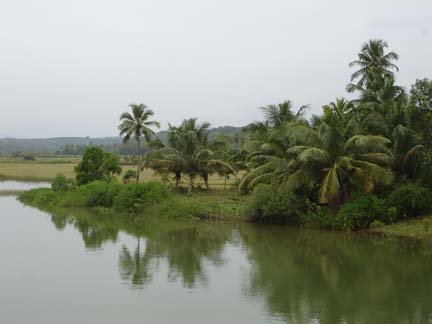
Holegadde near Honavar,Uttara Kannada dist, Karnataka

Copy? Right - but kindly remember to acknowledge!

Creative Commons License
This work is licensed under a Creative Commons Attribution 3.0 License.

" tulu-research.blogspot." ತುಳು ರಿಸರ್ಚ್. ಬ್ಲಾಗ್‌ಸ್ಪಾಟ್‌. ಇನ್

" tulu-research.blogspot."  ತುಳು  ರಿಸರ್ಚ್.  ಬ್ಲಾಗ್‌ಸ್ಪಾಟ್‌. ಇನ್
Have a nice day !