Showing posts with label Austro-Asiatic. Show all posts

Friday, January 31, 2014

330. Manki: Village names in India

There is a place known as ‘Manki stand’ near Mangaladevi Temple in Mangalore. The place acquired the epithet of ‘stand’ since it was used as station for ‘Jataka’ (Horse carriage) during the British administration period in Mangalore. I used to think that the name was Monkey till I found that place names like Manki exist in other places for example near Honnavar in Uttara Kannada District, Karnataka. Similarly there is a village known as Permanki near Gurupur and Ulaibettu.

Etymology
Manki is a term connected with Munda tribes of Austro-Asiatic origin who were spread in diverse parts of India in the pre-Dravidian antiquity but presently restricted to parts of Bihar, Chattisgad, Orissa and Bengal. The term Manki represents a village or a habitation.
Thus the village name Permanki means a large village since pera means large in Dravidian languages also.

Manki Villages in India
Bihar: Manki, Mankidih, Mankiman
Chattisgarh: Manki
Jharkhand: Mankidih, Manki Bazar,
Karnataka:  Manki, Permanki,
Madhya Pradesh: Manki, Manki Salaiya, Mankiyai, Mankisar,Manki Ryt
Maharastra; Manki, Mankivalli
Meghalaya: Mankingiri
Orissa: Mankiria,Mankididihi, Mankidia, Mankidi
Punjab: Manki, Mankinvalli,
Rajastan: Manki, Mankiyas
Uttar Pradesh: Manki, Mankikhurd, Mankikalan, Mankiari.

Austro-Asiatic Munda tribes
The wide distribution of place names containing the term Manki and other place names containing Munda as prefix or suffix suggest that  habitations of Munda tribes were distributed all over India once upon a time probably before the advent and dominance of Dravidians in Southern India .


®

Tuesday, January 10, 2012

293. Peenya, Bangalore


Some   of the newcomers to the Karavali coast, used to express that there are a large number of odd sounding place names in Tulunadu. The Place names sound odd when we find it difficult to understand their meaning in the currently prevalent   language in usage in that area. Odd sounding place names are not exclusive to Karavali; you can find them all over India.
The Bangalore city, the capital of Karnataka, contains several such place names. Peenya is one such place name, of which most of have to struggle to understand the meaning of the word.
Peenya
Peenya is a industrial hub in the NW part of Bangalore city, now under burgeoning under fast paced  flyovers and metro developmental works.
The place name’ Peenya’ (peeN+iya) is interesting. The global suffix ‘–iya’ represents a land or region as we see in diverse place names such as Asia, Libya, Arabia, Tunisia, Australia on one hand and Sullia, Iddya, Sampya, Murulia;  Purulia, etc.
Then what is ‘piN’ or ‘peeN’? The word Peen was a tribal name. Persons were named Peena, Peenanna etc in the past. One Ajila jain chieftain   who ruled Venur region in the Karavali in the pre-British era was known as Pinnāna Ajila (1490-1515). The personal name Pinnāna could have been a modification of Pinnanna (the Pinna brother), the suffix ‘anna’ being an honorific south Indian appendage meaning an elder brother. Or as per the pronunciation it could be Pinna +aaN, ( a male named Pinna). The ‘Pinna’ or Peena could be a regional  variant of the name of Puna(r)  or Pnar tribes.
Punar, Pnar tribes
Punar tribes were widespread in southern India and their domain was known as Punnata in ancient Karnataka.
Equivalents of southern Punars known as Pnar tribes live in Khasia-Jaintia hills region Meghalaya in NE India. The Pnars are also known as Jaintia or Synteng tribes and are matrilineal. In Jaintia hill district Meghalaya, (NE region of India) they traditionally speak Pnar dialect and their religion is known as ‘Niamtre’. The Pnars are considered to be of Austro-Asiatic ( Munda)in  origin.
Place names such as Peenya remind us about some of the forgotten pages in the history and the natural spread of ancient tribes in different parts of India in the antiquity.
Ò

Thursday, September 27, 2007

38.Earliest Indian Tribes

The oldest known human fossils of homo sapiens, designated Omo I and Omo II, were discovered from the Omo river valley in Ethiopia by Richard Leakey and were dated to be 195,000 years old. The journey of mankind from 165,000 to 8000 years before present, coinciding with the pre-agricultural hunter-gatherer nomadic phase of human evolution, inferred based on the genetic studies of mtDNA and Y- chromosomes, reveals that almost entire globe was populated by the mankind before 8000 years as result of incessant migrations during the last 150,000 years. With such extensive migratory trends it can assumed that mankind almost evolved and perfected verbal/lingual communications in this huge period. The factors of time, distance, environment and tribes have introduced so many variations in the languages of the world that simple genetic connections between languages can be hardly deciphered.
The data in the compilation of journey of mankind suggests that:
1). 85,000-75,000 years ago.
The first phase (batch) of human migration from Africa to India. The earliest Indian settlers.
2). 74,000 years ago.
The massive volcanic eruption documented at Mt. Toba in Sumatra. It was followed by heavy dust storms that led to nuclear winter in the entire south Asian region with volcanic dust dissipations spreading up to India for six years. Volcanic activity was followed by a millennium of ice age. Widespread devastation of the human beings, animals and plants possibly occurred in most of the southern Asia.
3). 74,000-65,000 years ago. A group of tribal people entered India from the north east Assam and Bengal from the Borneo side.
4).65,000 -52,000 years ago.
Two way coastal migrations into India have been visualized:
(a).One branch from NW India migrating along the West Coast. This is second phase of migration from Africa, possibly more evolved anatomically than the first batch.
(b).Other branch from Bengal side migrating via East coast. This is the first batch returning from the tour of South-east Asia and Australia. Possibly this branch represents the advent of Austro-Asiatic (Munda) tribes into India.
5) 10,000 years ago. The global Ice Age also called the Last Glacial Maximum(LGM).
The Glaciation caused lowering of sea levels to the tune of about 100m.This facilitated human migrations across the continents and land masses as many of the land bridges were exposed and people were able to cross the sea routes through the exposed land bridges.
The sea had retreated exposing wider land coastal mass and the land bridge between India and Srilanka (‘Ram Sethu’ or the Adams bridge) was more accessible for human migrations across the sea from India to Srilanka and vice versa. These geological-geographic aspects have ramifications that inspired some of the famous folklores of India.

Blog Archive

Books for Reference

  • A Comparative Study of Tulu Dialects By Dr. Padmanabha Kekunnaya. Govinda Pai Reserach Centre, UDupi. 1994
  • Koti Chennaya: Janapadiya Adhyayana. By Dr. Vamana Nandavar. Hemanshu Prakashana ,Mangalore.2001.
  • Male kudiyaru. Dr B. A.Viveka Rai and D.Yadupathi Gowda, Mangalore University,1996.
  • Mogaveera Samskriti By Venkataraja Punimchattaya. Karnataka Sahitya Academy.1993.
  • Mugeraru:Jananga Janapada Adhyayana. By Dr Abhaya Kumar Kaukradi.Kannada & Culture Directorate,Bangalore & Karnataka Tulu Academy, Mangalore,1997.
  • Puttubalakeya Pad-danagalu. Ed: Dr B.A.Viveka Rai,Yadupati Gowda and Rajashri, Sri Dharmasthala Manjunatheswara Tulu Peeta. Mangalore University.2004
  • Se'erige. Ed:Dr K.Chinnapa Gowda.Madipu Prakashana,Mangalagangotri,2000.
  • Studies in Tuluva History and Culture.by Dr P Gururaja Bhat (1975).Milagres College,Kallinapur,Udupi.
  • Taulava Sanskriti by Dr.B.A.Viveka Rai, Sahyadri Prakashana,Mysore 1977
  • TuLu naaDu-nuDi By Dr.PalthaDi Ramakrishna Achar, Puttur.
  • TuLu NighanTu. (Editor in Chief: Dr U.P.Upadhyaya, Govinda Pai Research Centre,Udupi. Six volumes. 1988 to 1997
  • Tulu Patero-A Philology & Grammar of Tulu Language by Budhananda Shivalli.2004.Mandira Prakashana Mangalore. p.317. (The book is in Tulu Language using Kannada script)
  • TuLunadina ShasanagaLa Sanskritika Adhyayana. By Shaila T. Verma (2002) Jnanodaya Prakashana,Bangalore, p.304.(Kannada)
  • Tuluvala Baliyendre. Compiled by N.A.Sheenappa Hegde,Polali,Sri Devi Prakashana,Parkala,1929/1999

A Coastal estuary

A Coastal estuary
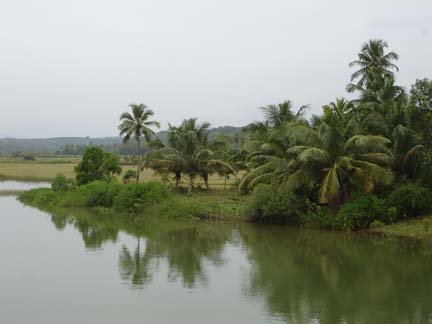
Holegadde near Honavar,Uttara Kannada dist, Karnataka

Copy? Right - but kindly remember to acknowledge!

Creative Commons License
This work is licensed under a Creative Commons Attribution 3.0 License.

" tulu-research.blogspot." ತುಳು ರಿಸರ್ಚ್. ಬ್ಲಾಗ್‌ಸ್ಪಾಟ್‌. ಇನ್

" tulu-research.blogspot."  ತುಳು  ರಿಸರ್ಚ್.  ಬ್ಲಾಗ್‌ಸ್ಪಾಟ್‌. ಇನ್
Have a nice day !