Tuesday, April 30, 2013

313. Mooltāna Alades in Tulunadu


The recent Kannada book  on Tulu culture by Dr. Indira Hegde, entitled Tuluvara mooltāna Adi Alade Paramrapare mattu Parivartane (Tuluvas Original Abode ‘Adi Alade’: Tradition and Transformation) [Navakaranataka,Bangalore,2012,p.408] is a welcome addition to the basic resources for understanding Tulu culture and traditions in better perspective. It focuses on the nature and status of ancient settlements known as Mooltana (or moolastāna) and Alade and the pattern of ancient religious beliefs that have been persisted in Tulunadu. She has compiled voluminous data based on extensive field works and interviews with people documenting currently available information on the subject.
 Dr Indira Hegde considers that Nagabanas and Alades are the original abodes (mooltanas) of Tuluvas. Thus she opines that the Mooltana  and Adi Alade are conceptually equivalents. Each community group has its independent Mooltana in Tulunadu. For example, Bakuda community of Kasargodu who call themselves Bhumiputras have 18 bari or bedagus with 18 mooltanas. Most of the communities living in the Tulunadu, including Stanika Brahmins, Achāris, and Gaud Saraswaths have their own independent mooltanas, however these have been kept out of the scope of book for convenience.   Traditional centres of worship ,the Alades as found during her extensive field studies,  generally consist of a cluster of five shrines dedicated to Spirit Deities, namely Bermer, Rekkesiri, Maisandaya, Nandigona and Naga. The Alades containing above mentioned Spirits are known as Brahma Alade or Brahmastana.
An idol of a five headed bison (Nandigona/ Mahishandaya). ( Dr Indira Hegde,2012)

The ancient Alades are mostly located near forests. Traditionally, the places of Naga (serpent) worship are located in areas with dense growth of trees known as Nagabana. However, under the guise of renovation and aesthetic modification, most of the forest trees around ancient Nagabana are being destroyed, and being replaced by modern concrete structures, with tacit approval from Astamangala oracles, laments Dr. Indira Hegde.
 Huttina Chitteri
Dr. Indira Hegde reports interesting data on Chitteris of Kundapur Taluk. A Chitteri refers to tomb structures comparable to Buddhist structures known as Chaitya. The Chitteri  or  Chittarige are also known alternately as Mudinja, stoopa or doope in Tulunadu. The obituary structures associated with Tuluva death ceremonies, traditionally known as Nir-nirel (water-shade) and pajji madal gunda (green frond dome) are similar to these chitteris. The Chitteris were also used as centres for birth ceremonies and thus acquired the name as Huttina Chitteris (Huttina [Kannada]= related to birth). The Place names like Chitrabail, Chitrakoota, (Chitrapu, Chitrapura ) etc apparently refer to village associated with such ancient tomb structures.( The equivalent term for Chitteri in Mangalore area is Gori.For example Gori gudda.)
Nāga
The cult of Nāga (serpent) worship has wielded powerful influence on Tulu culture. The Nāgabanas in Tulunadu were the parts of forests traditionally reserved and dedicated abodes of the holy serpents. Dr. Indira cites Devarakādu as equivalents of Nāgabana in Kodagu and other parts of Karnataka. In Tulunadu, various celebratory forms of Nāga worship ceremonies are known as Dakke Bali, Nāgamandala, Pānarāta and Kādyanāta.etc.
Tulu folklores (paDdanas) visualized that mating between the Narayana God and Deyyaru Mangude (Mongoose -female) produced numerous eggs which hatched to generate serpent families. Dr Indira has compiled 13 variations of the said folk lore widely prevalent in different regions of Tulunadu.
The term Mari in Tulu also represents the Nāga or the Serpent. Thus Marikāpu means Nāgabana and Marikal means the Naga stone. The term Kādya also means serpent and the Kādyanāta represents a form of Nagamandala.
Bermer
The Bermer (or Birmer or Bermeru) is a native cult according to Dr. Indira Hegde. She explains that the derivation of the term Bermer as a relative of the word perme, which means important or great one. The shrines dedicated to the Bermer are traditionally located in structures known as ‘gunda’, which is a modified pyramidal tomb structure like Mudinja or Chitteri or stoopa or dhoope. Dr. Indira Hegde reports several variants of Bermer deity prevalent in different parts of Tulunadu such as Lingaroopi (phallic form) Bermer, Ubhayalingi (bisexual) Bermer, Half-man and half serpent Bermer, Yaksha Brahma, KIrāta (Hunter) Bermer, Tingolu (Moon) Bermer, Uri (wild) Bermer, Chaturmukha (four headed)Brahma, Naga Bermer, Brihma-Lingeshwara (Bermer with phallic god)  etc. Interestingly, the Bakuda tribes of Kasargodu(Kerala) consider and worship Naga-Bermer in the form of two serpent brothers namely, Elyanner (Younger Brother) and Nelyanner(Elder brother).
An old photograph of Bermere Gunda that has been renovated now (Indira Hegde,2012).

 The Bermer in Vandse Chitteri is a stone idol of horse mounted Bermer. Horse mounted Bermer idols also can be found in many Garodis of Tulunadu  where traditionally the principal Spirit or Deity is the  Bermer. It is also observed that inside many Bermer gundas there are no idols, suggesting also  prevalence  of amorphous or formless deity worship in ancient Tulunadu.
Dr. Indira, on the basis of presently dominant and popular Nāga-Bermer cult, concurs with the opinion of certain Spirit dancers and infers that Bermer is another alternate form of Nāga.
Kadya/Kalasha
The earthen pot or the Kadya has special significance in traditional Spirit worship in Tulunadu. The Muri, Kalasha or Kumbha (ie earthen pot) filled with water usually also known as Murli or kadya or kandel has been used symbolically in Spirit shrines to represent sacred entities like Siri,  Bermer or other Spirits.
 Kambla: Fertility rites
Dr Indira Hegde provides interesting information on the tantric styled ancient practice in some places of Kambla (or Kambula, the Buffalo race) celebrations in Tulunadu, [cited earlier by Purushottama Bilimale] . Traditionally the Kambala was a fertility rite performed in dedication to Bermer and the attendant Deities. On the previous night of Kambala, native Koraga tribes perform a ceremony known as Pani kullunu. The Pani kullunu means sitting under the dew. On the appointed night, Koraga men women and children flock around the campfire in the open field. Koraga men under the leadership of their headman, called Mukhari, begin to dance to the beat of drums around the campfire. The tempo of the dance increases as they consume toddy and  kandelda adde ( a dish made from rice batter, fermented with toddy and baked within an earthen pot ).
Dr Indira points out that the Kandel or the earthen pot is a symbol of womb. As the tempo of the dance steps up, sexual motifs unfold among the dancers pulling at each others’ cloths, such that most of them are nearly naked. The dancers, mostly men, masturbate and wash their semen in the field, with water drawn from the Kambla field. The ceremony describes a primitive fertility rite, where the tribes traditionally visualized that insemination of the agricultural field improves the chances of bumper crops and prosperity. It is believed the crop   grown in the Kambla field is divine crop that ushers prosperity to the organizers.
Pookare poles (female decorated and male plain) in Kamble fields. (Courtesy: Indira Hegde,2012).

The symbolic poles planted in the Kambla field are known as Pookare pole. Usually there will be a pair of poles, one plain pole designated as male and the other decorated pole as female. The female pookare pole is decorated with flowers and flags as if a girl, whereas male pole is left as a simple pole of areca tree.
Pookare poles in Tulu traditional  Obituary ceremonies.(Courtesy: Indira Hegde,2012)

It is interesting to note that similar Pookare poles (decorated and/or plain) are also used in traditional death ceremonies in Tulu families.
Documentation
Dr Indira Hegde’s work on Mooltana and Alades is replete with extensive documentation of data gathered at field and folk level. Though, She has not deeper into analytical aspects from the angle of evolution of cults and concepts, the compiled data shall be of immense help to researchers pursuing  further detailed studies on evolution, growth and spread of various religious cults in Tulunadu.
®

Sunday, April 7, 2013

312. Thiyya -Belchada community : A conspectus


One of the communities that played significant role in the cultural evolution of Kerala and Tulunadu is of Belchadas or the Thiyyas.  Nowadays, the members of these communities have socio-economically progressive in the society. The community of Belchada (or Belchade) is more popular in Tulunadu, whereas they are known as Thiyyas (Tiyya) in Southern part of Dakshina Kannada.   According to Anthropologist L.A.K. Iyer   they are known as Tiyyas in North Malabar up to Calicut ; Ezhava or Izhava or Tandans in South Malabar ; and Chovas and Izhavas in Cochin and Travancore. The Izhuvans are also known as Iluvars.
They are considered to be equivalents to the Billavas of Dakshina Kannada district and also to the Tamil speaking Shanars of the Tinnalvelly District, Tamilnadu. Elsewhere theri equivalents include Halepaiks of Uttara Kannada district, and Ediga of Shimoga and Chikmagaluru district, Karnataka. They are also called Velans and Uralis, in some areas.  In Kerala the two castes of Thiyya and Ezhavas merged into one Community of Ezhavas sometime during the end of 19th century or beginning of 20th century, though  some were not comfortable with this sort of equation. 

Thiyya
 It is commonly supposed that the Thiyyans and Izhuvans originally came from Ceylon. The Thiyyans were noted as Izhavan in documents concerning land, in which the Zamorin or some Brahman or Nayar grandee appears as landlord.  Legends prevailing in Malabar tradition tells us that some of these Dravidians migrated again from Iram or Ceylon northwards to Travancore and other parts of the West coast of India, bringing with them coconut or Southern tree (tengina mara= coconut palm) and being known as Tivars or Deevaru (=islanders, in Kannada) or Iravars, which names  have since been altered to Thiyyars & Ilavars. The Arabic word ‘nu tiyya’ is sailor, where nu or nau is boat. Possibly this suggests that the Thiyya were also professional sailors.
Dr Shyamalan opines that there is an identity crisis among the Thiyyas of Malabar who are being categorized with the Ezhava community in Kerala. He says that his DNA testing revealed that it matches with the Indo-Aryan race that came all the way from South Africa through Kyrgyzstan and the origin of the race goes back to 300 BC. According to him the name of the community Thiyya was derived from the Tien Shan Mountains in Kyrgyzstan.

“Thiyyan, Malayal Thiyyan or Tivan (pl. Thiyyar or Tivar): The name what may be called the third caste (in rank) of Malabar.  The word signifies ‘islander’ (from Mal. Tivu, Skt. Dvipa, an island); and the people have supposed to have come from Ceylon” (Hobson-Jobson Dictionary-1903, Henry Yule & A.C. Burnell, p. 924).

According Mr. F. Fawcett, (as quoted by Thurston) Thiyyans of Malabar “…. have been summed up as the middle class of the West Coast, who cultivate the ground, take service as domestics, and follow trades and professions anything but soldiering, of which they have an utter abhorrence……” (Castes & Tribes of Southern India, Vol. 7, e-book, pp. 3-9, # 37-115).

Toddy Tapping 
According to legends, the Thiyya tribes introduced the coconut palm in to West Coast and the art of toddy tapping. Extracting intoxicating liquids from plants and fruits, was a common practice by human beings right from hunting and food gathering stage of human evolution.  Such potable liquids or decoctions like ‘Soma rasa’ gained acceptance even in Vedic and other religious rituals.
Since antiquity, the Toddy is being offered to Divine Spirits and manes in rituals all over the world. The toddy tappers are considered to have been the natives of SriLanka.  During the historical past they appear to have migrated to coastal South India as toddy tappers and archers  possibly via Laccadives (Lakshadwipa) islands.  There are evidences of their migration to South India and back to Sri Lanka. Tapping Toddy mainly from Palmyra palm or the toddy palm in the West Coast,  is a profession carried on traditionally also by Biruvas (.> Billavas, the ‘archers’) in Tulunadu, and Edigas in Malnad Karnataka, which probably was inherited from the  Thiyyas and Ezhavas who are also known as. Maleyāli Billavas.
According to Sadasivan, the Ezhavas and Thiyyas were the original aborigines of Kerala who followed Buddhism. Subsequently after the influx of Nambuthiris and Nairs into Kerala the tenets of  Buddhism were destroyed and the roots of Hinduism were revived. 

The the special knife used by a traditional  toddy extractor for scarifying the palm trees is known as ‘Tier Cutti’ in Malayalam (Hobson-Jobson Dictionary, 1903, p. 919), and  ‘Tarkatti’ (ತರ್ಕತ್ತಿ) in Tulu (in coastal Kannada).  Tarkatti is a curved sickle used by toddy tappers. The etymology of the term ‘Tier Cutti’ and Tarkatti’ could be, Tar(i)= to chop, katti = sickle in curved shape.

 V. Ananda suggests  the origin of the word ‘Thiyyar’ as ‘Thi (=fire) + eyer (one who throws) .  Thus the term "Thiyyar" may also represent  skilled archers, with arrow-tips specially fitted with combustible (fire-producing) elements.

Spirit dancing: 
  The Belchada or the Thiyya were also the traditional Spirit dancers, authorized to participate in the mass possession rituals of Spirits such as Vishnumoorthy Kola (Tulu Lexicon, p.2382). The Tulu  term ‘Bhuta’ (Spirit) is known as ‘Teyyam’ in Malayalam. The Dravidian Etymological Dictionary (p. 506; # 5544) describes Belchada as a devil dancer, possessed with Kāli. The Kannada words ‘deyya’ or ‘devva’ (=devil) apparently is synonym of the Malayalam usage Teyyam.
The Belchada were the conventional spirit dancers’, possessed with divine primordial energy, which is referred to by names like Durgā, Kāli, Bhagavati, Vishnu Moorthy, etc, in tune with event-specific incarnations. Walking on a bed of cinders has been an attendant ritual common in the annual celebrations of some Divine Spirits.
Traditionally, the Thiyyas have worshiped Goddess Bhagavati in small shrines known as kāvu. It contained a ‘māda’ or kalimāda, a sacred seat to keep the masks, swords and other objects of Spirit worship.

They are also known as ‘Belchappade or Belchapaade’ and Velicappatan in Malayalam. Its archaic usage is ‘Belchampade’, who were the ordained Pātri (priest) of Bhagavati Temples with ritualistic wearing of ‘kai bale or kadaga’ (bracelets) - as is in vogue with spirit impersonators.  They have to observe some ‘dos’ and don’ts for maintaining cleanliness and purity. [It is proverbial in Tulunadu when elders often rebuke youngsters for their refusing a work as: ‘Are you wearing a holy bracelet’?].

Mannanars: 
According to L.A.K. Iyer, the Thiyyas of Malabar are the offspring of Chirakkal Mannar Raja, who was the son of ex-communicated Nambuthiri lady from the Royal family of Chirakkal. ‘Mannan’ means ‘a king’. It is a title for a subordinate king in Malayalam. It corresponds to ‘Manneyaru or Manya> Mane in Kannada.
It is recorded in legends that a Thiyya Mannan (chieftain) took care of certain ostracized Nambuthiri women by either marrying them or treating them as sisters. As a gesture of appreciation, King of Chirakkal donated him land.

Ezhavas and  Tandan:
The members of the Ezhava and Tandan community are generally nestled in the natural environs, being traditionally  engaged in toddy tapping and agriculture.  In olden days some 'high' caste Hindus used to treat them as untouchables and were denied of modern education and employment.  The leader of the Ezhava community in a village was known as a tandan. (We can compare the word "tandan" with Tulu word "tandela" the leader of a group of Mogaveer community.
Thus under the erstwhile system of feudal lords and landed gentry, they were land-tenants or bonded laborers  working in agricultural fields.
However, some of them were well-versed in the traditional knowledge of application of medicinal plants for curing various ailments and were designated as Baida (or Vaidya ). The ancient knowledge of application of curative herbs and plants has with passage of time evolved into  the   Ayurvedic system of medicines.
Further, under a liberal Buddhism, they were open to Sanskrit learning.  This was initiated by Vagbhata, a Buddhist Teacher (6th-7th C.) from Sindh, who migrated to South when Buddhism lost its sheen in Northern India upon the decline of Mauryan Empire.
Thus, the Ezhavas were Buddhists to begin with but later joined mainstream Hinduism. In the earlier days, narrow minded concepts of certain high classes tended to consider these tribes as Scheduled Castes especially in Kerala.  

Etymology of Belchada
1. ‘ Bel’  in Tulu/Kannada/Malayalam appears to be an action word.  It gives a concrete meaning as ‘to offer into fire or with fire as ghee, animals, etc.
Beluve:  Oblation with fire, burnt offering;
Belamba: Destruction of human life in fire.
Velvi/Vezvi means ‘sacrifice’ in Malayalam.
Cetu (ಚೆಟು) = chip; Chekke/chakku (Tulu/Kannada) = cut pieces, trim or reduce by cutting away edge.
Chettuka (M) = Pare, curve.  Chettukaran = Toddy rapper. Cheytha (Adj) = made by.  Chey (V) = to do, make, create, cause.
In Telugu: Velucu = to put or throw on sacrificial fire; Vel(u)pu = God or Goddess, Deity, Divinity, a celestial, Demi-God;  Velpudu = worship. ( DED-5544).

‘Bel’ is also a qualifying word. It means ‘white’, speckless, spic and clean or virtuous. One who is without blemish in speech and deed is treated as ‘belia’, i.e. ‘Big or Great (person)’.  ‘Ecchi’ means ‘trance or possession’.  When a Divine Spirit possesses medium or impersonator, it is called ‘ecchidu barpuni’. Divine Spirit shows his/her identity or form through the medium.  The medium should be man of good character, to be called a ‘bel or belia’. The event of possession is called ‘belicchapadu’.  Impersonator becomes ‘Belicchapad’ or ‘Belchade’, commanding honour and respect.  The appellation ‘Belchade’ is gradually applied to whole community in general as ‘Poojari’ is to ‘Billava’.  Migrant Thiyyas imbibed the Tulu culture but to differentiate with Billavas, they preferred to identify themselves as ‘Belchada/Belchade’.

2. Other angle is to identify ‘Bel or Bol’ as a tribe or group.  It is a prefix in place names, as explained elsewhere in our Posts.  Dr. P. Gururaja Bhat made passing remarks in his Book ‘Tulu Nadu’, hinting at tribal signature.  Prefix ‘Bel/Bol’ in place names may not apply to the settlement of Belchades as a tribe or caste. Nevertheless, they are found in villages, having ‘Bel’ or ‘Bol’ as suffix in place-names (eg. Bolar, Bolnad, etc.  It is worth considering Bolinj locality in  West Virar, Maharashtra). Whether they are Bellas or Velalas is a matter of further studies.

3. The ethnonym, Belchada can also be analyzed as Bel+ch+Da, where ‘bel’ means white, which possibly represents the immigrant white skinned tribes.
To begin with, the prehistoric India was dominated exclusively by dark skinned tribes. In the course of progressive human evolution, people with white or fair skin were evolved during a specific phase due to certain genetic aberrations from the original dark pigmented skin. During a specific historical period, influx of white skinned tribes into India created wide spread awareness in the natives and the colonies of immigrants were denoted as ‘white’ villages and settlements, like: Bellara, Bellari, Belgaum, Belman, Belgumba, Belavadi, Belkunja(> Balkunje), Bellipadi, Belur, Bola, Bolar, Bolur, Bolman, etc. Similarly the white immigrant tribes were named Belchada, Bellara, Vellal, Bellala(>Ballal) etc.

Therefore,  the term 'Belchada' possibly meant one of the immigrant ‘bel’ (white skinned) tribes. The morpheme ‘cha’ is a pre-Dravidian Prakrit-Pali agglutinative meaning of or relevant to. (As in Paichār, Punacha, KomchāDi etc). The suffix Da means  area, tribe, etc. Thus, in overall analysis the term Belchada possibly represents a specific white skinned immigrant tribe who settled in Tulunadu and amalgamated with natives with passage of time.

Thiyyas of Kerala
 It is said that they were first brought to Tamil Nadu by Karaikala Chola when he conquered Sri Lanka.  He brought many families of soldiers and engaged them as security guards and bonded laborers at earthen-bunds/dams, constructed during his reign for agricultural purposes.  Unable to tolerate the excesses of King’s personal guards, they fled to hills and forests of Wayanad.  Being adept archers, they could overcome the menace of wild animals.  They led a life of hunters and toddy tappers.  Seeking greener pastures on plains and they started migrating to coastline in groups.  First they found a place in Kolattanadu (now Kannur).  Thence they started moving Northwards to Kasaragod and from there spread to fertile land of Tulu Nadu in plains and sea shores.  The early migrant Thiyyas joined Feudal Chieftains armies as archers and sacrificed their lives for enlarging the borders of their lords.  They spread from Kasaragod to Kalyanapura of Tulu Nadu, bordered by Seeta River on the North and Payaswini (Chandragiri) river on the South.

Wherever they went and settled, they did not forget their culture and customs.  They bought their Deity ‘Wayanada Kulavan’ (also known as ‘Thondachchamaran’).  The Periplus of ca. 1 st Century CE does not mention coconuts or its derivatives as an exportable item of Malabar. But coconut produce is mentioned in the Cosmas indicopleustes in 520-550 AD. It is also stated that in the copper plate grants that the Tiyyars were an organized guild of coconut plantation professional farmers.

Bari –Illam system
Thiyyas distinguish eight groups of ‘bari’ or ‘illam’ (equivalent of gotra).  The original house of the family is called a ‘Taravad’, (or ancestral house). The term Taravad appear to have been a relic of Buddhist period in the coastal history, being derived from Prakrit - Pali lingos. According to the matrilineal system followed in Tulu Nadu, similar to Tulu communities, each Thiyya Bari  in Tulunadu has its own Moolasthana

The eight clan names prevailing among the Thiyya communities (with  equivalents Tulu bari ) are: (1) NellikaThiyya (equal to Tulu Bari ‘Kunder’), (2) BaThiyya (=’Bangera’), (3) Padam kudiya (=’Kotian’), (4) Pullamchutti/PullamchiThiyya (=’Suvarna’), (5) KarakaThiyya (=’Karkera’), (6) Then kudiya/ Thenkudi Thiyya (=’Salian’/’Palan’), (7) Paimba kuriya / Paimba Thiyya (=’Kukyan’,’Uppiyan’) and (8) Nangudiya/Kuttiporatha (= ‘Amin/Gujaran’).

The present generation  of Belchadas prefer to put surnames of Tulu equivalents. These Clans are associated with four Taravads in Mangalore region, namely at (a) Kodialabailu, (b) Bolar near Ferry, (c) Jappu-Kudupadi and (d) Kadri-Kannabettu.
Ordained ‘Gurikaras’ (community leaders) guide the socio-religious activities of members of Taravads. The Gurikara system among the Thiyyas is similar to the one prevailing in communities of Tulu Nadu.

Language & Customs
Religious rituals and customs from birth to death are more or less the same as native Tulu people. They speak a corrupt Malayalam with more words of Tulu and Kannada. Their Malayalam dialect is different from the ‘Byāri Bhāse’ vogue in Tulunadu. They also speak in Tulu and Kannada fluently like others in the region.

Goddess Bhagavati
Thiyyas have inseparable connection to Goddess Bhagavati. Eighteen pilgrimage centres of Goddess Bhagavati are sacred to all Thiyyas.  Each Taravada member  offers oblations annually to Bhagavati temple.  Goddess Bhagavati is worshipped in all her various manifested forms with all her attendant Divine Spirits, Village Deities and also of Gods of Hindu pantheon.  So it is a complex centre of worship for Thiyyas and all other communities. These Sri Bhagavati Kshetra complexes are located at:  (1) Eriyakota,Kavugoli Chowki, P.O. Kudlu-671124 (Kasargod), (2) Patla, Kudlu, P.O. Patla-671124 (Kasargod), (3) Padi (Pullikaringali), Meethelepadikkal, Via Chengala, PO Edaneer-671541, (4) Mogral, PO Shiribagilu, Via Kudlu-671124, (5)Talangara, Kasargod-671121, (6) Kumbadaje PO, via Perdala-671551 (Styled: Sri Cheerumba Bhagavati Kshetra), (7) Padikaladka, Adoor Post Via Urdoor-671543 (Styled: Adoor Sri Aivvar Mahavishnu Thambarati Kshetra), (8) Kuttikkal PO, Via Chengala-671541 (Styled: Kuttikol Sri Thamburatti Bhagavati Kshetra), (9) PO Muliyar-671542 (Kasargod) (Styled: Kodavanji Sri Pullikaringali Bhagavati Kshetra), (10)Arikkadi, PO Kumbla-671321 (Pare Sri Padangara Bhagavati Alichamundi Kshetra), (11) Adka, Mangalpady, Kasargod-671324, (12) Uppala-671322, Kasargod, (13) Pattathoor, Ballangudelu. PO Majibail, Via Manjeshwara-671323, (Styled Sri Padangara Bhagavati Kshetra) (14) Kanila, B. Manjeshwar, Manjeshwara-671323, (15) Ullal, Dakshina Kannada-574159 (Styled: Sri Cheerumba Bhagavati Kshetra), (16) Kodialabail, Mangalore-575003 (Styled: Kudroli Sri Bhagavati Kshetra*), (17) Sasihitlu, Haleangadi PO-574146, and (18) Pullikunnu, Kasargod (Styled: Pulikunnu Sri Aivvar Bhagavati Kshetra).

Thiyyas of Mangalore
  Thiyyas further settled at the ancient port towns of Mangalore and Mulki. During British India, Mangalore was the District Head-quarters of South Canara, which included Kasargod and North Malabar, until States Reorganisation. 
 Initially, the Bhagavati Temple at Mangalore was located at Bokkapatna sea shore, Kudroli, which was the location of Ancient Mangalore Port during Vijayanagar Period.  Due to migration estuary and  sea erosion, it was shifted to Kodialabailu at a place, donated by Manjanna Nayaka, who was landed gentry of Kodialabailu. It was around 450 years ago.  The issueless land-lord was bestowed with a son thereafter, as was promised by the Deity in his dream.  The Temple is still called as Sri Kudroli Bhagavati Kshetra and popularly as ‘Guttyamma Kshetra’. The name Guttyamma might have been derived from the word Guttu or it might have been named after the Goddess of Chandrgutti,(Shimoga District) traditionally worshipped by Nayaka Chieftains. Land transfer registration is now made in the name of the Deity by Raghurama Rao couple, a scion of Manjanna Nayaka.

Legend of Goddess Bhagavati
According to Bhagavati Purana, Lord Shiva ordered Cheerumba Bhagavati and her attendants to remain on earth to protect the innocent people and punish cruel people.  First she appeared at Kodangallur, Thrissur (Kerala). Then proceeded northwards to Talangara (now Tallisseri, Kasargod) and then up to Mulki-Hejamadi and established Temples through Thiyya community at her will. The Bhagavati and her retinue returned to Kudroli and shown her presence as embodiment of other thirteen primordial energy manifestations, consisting of four manifestations of Sri Cheerumba Bhagavati (Sankritised as Sri Kuru Amba), five of Sri Padangare and another five of Sri Pulluraali.  It is, therefore, called ‘Kootakkala’ of Shakti, a complex of fourteen Deities enshrined in three Temples.  It happened at the beginning of Thirteenth Century, more than 800 years ago. (Source: Kootakkala Souvenir, 2005, Kudroli Sri Bhagavati Kshetra).

According to Bhagavati Purana, Darigasura (Darika+Asura) was a wicked Asura King of Darikapura in Pātāla (Nether world, supposed to be West Coast).  He became powerful with Lord Shiva’s boon on his doing a penance.  He became invincible in all three Worlds. Suffering defeat and disgrace and ill treatment, the celestials and sages complained to Shiva for redressing their problem. Swayed by pity on the plight of the people, tears trickled down from Shiva’s eyes.  He became angry and at the same time, a Divine Lady sprang out from a drop of tear.  The Lady was called Goddess Bhagavati (aka Cheerumba). (It may be noted that in ‘Bappanadu Sri Kshetra Mahime’, it was Lord Vishnu who created Sapta Matrikas/Durgas, i.e. Seven Divine Mothers, from his tears, which fell down on the earth).
Shri.Cheerumba Bhagavati (Courtesy: Kootakkala Souvenir)
The Goddess Bhagavati, sitting on the shoulder of her attendant Aadimela (aka Guliga), went to the kingdom of Darigasura.  Darigasura was then on his way to the river for taking bath as a routine before offering prayers to Shiva.  The Divine Lady in the guise of an old woman, begged for a meal.  He advised her to ask his wife at the palace.  On reaching the palace, the Goddess asked for his magic weapons given by Lord Shiva (Note that according to the other version, it is Lord Vishnu). Logically thinking, his wife refused to give the demanded weapons and called out her husband for clarification.  The King, as he was already late, got irritated on getting delayed.  So he shouted at the queen and told her to give whatever the old lady would ask.  On returning to Prayer Room, he could not find his weapons and other materials used for prayers.  He realized his mistake and was furious.  Sri Bhagavati appeared before the King in her real form, along with her other manifestations.  In the fierce battle, Bhagavati killed the tyrant and maintained peace and happiness on the earth. Shiva (or Vishnu) ordered her to settle down on the earth with her other manifestations to ensure peace and prosperity to her devotees. 

Goddess Bhagavati then set sail to the Earth in a Sandal wood boat and crossed Kasargod, Kumble, Uppala, Pattathur, Manjeshwara, Udyavara (South of Mangalore), Ullala and Kudroli.  The retinue halted at Sasihitlu near the estuary of Nandini and Shambhavi Rivers.  Taking offence on Bhagavati (elder sister) accepting tender coconut from a Thiyya, then considered as lower caste, other sisters left her behind at Sasihitlu.  Elder sister then settled down at Sasihitlu.  Durga Parameshwari emerged at the confluence of Nandini and Shambhavi and manifested formless to Bappa Byari, a marine trader, and settled down in Bappanadu in the form of a Linga, consecrated by Vedic rites in a Temple built by Bappa Byari with the help of local Samantha Chieftain.  Remaining retinue returned to Kudroli where the other elder Bhagavati with thirteen other incarnations, settled down to be worshipped by Thiyyas and other communities.

Brahmashri Guru Narayana Swami
Today, various sects of toddy tappers worship and follow the principles advocated by Brahmashri Guru Narayana Swami (1856-1928).  He was a great social reformer who declared equality of all human beings. He was a refined spiritual Guru,  born in a family of traditional Ezhava Ayruvedic Pandits.  He spearheaded movement of social justice for the down-trodden of Kerala.  He was respected and venerated by high and low and people from far and near.  He preached ‘oneness of Humanity under one Supreme God’, rejecting compartmentalization on the basis of castes and religions.  His thoughts are contained in his Sanskrit work ‘Advaita Deepika’. Guru Narayana built temples at Calicut, Tellicherry and Cannanore.
He is responsible for the inauguration of exclusive temple of Billawas in Mangaluru dedicated to Lord Shiva under the name of  Gokarnanatha, now renovated into a beautiful temple which has become a popular piligrimage and tourist destination. There is a commemorative idol of Guru Narayana at the  Gokarnanath Temple, located at Kudroli, Mangaluru.

Evolutionary trends
The Thiyya are widely considered to have immigrated to Kerala from an island like Srilanka or Lakshadweep in the remote past. Similarly, Ezhava are considered to have come from Iram or Srilanka. The members of the Thiyya, Ezhava and other related communities traditionally practiced the art of toddy tapping contemporaneously, along with Spirit dancing, teaching Kalari form of ancient Indian martial arts besides propagating the application of plant based Ayurvedic medicines. Some of them were also archers, soldiers and farmers.

The existence of independent bari or illam patterns among these different communities suggest independent origin and evolution of tribes even though they adapted similar professions in the due course. The language also played an important role in unifying or separating these tribes.

The Thiyya, Ezhava and other related communities followed Spirit worship and Buddhism that was prevalent in the Tulunadu-Kerala region in the early centuries of the Common Era. With the advent of Vedic Hinduism in the region, the cult of Goddess Bhagavati, came into prominence, imbibing the essence of Spirit cult combined with Vedic concept of Goddesses, in the background of dominant matrilineal system. The progressive outlook and the reforms preached and practiced by Guru Narayana (1856-1928) are responsible for progress in the status and outlook of these communities.

Genetic haplotype studies of 104 Ezhava samples by Parvathy Seema Nair (2011) showed pronounced genetic heterogeneity and also indicated European paternal derivation having similarity of genotypes with Jat-Sikhs and Turks. Similarly Dr. Nelliatt Shyamalan also suggested European (specifically Kyrgyzstan) genetic origin for Thiyyas based on limited DNA studies.

The genetic heterogeneity concluded by Seema Nair reiterates the antiquity of the tribes as well as extensive interbreeding among the contemporaneous tribes. More genetic studies would be essential to trace detailed evolution of various tribes that shaped our cultures and customs along the time line.

®

*Notes:  “Ecological niche is ‘a way in which a species utilizes the resources of its environment’ and its relation to other species in a biological community in terms of a symbiosis or competition, predation or parasitism.  In a biological community, no two co-existing species share the same niche.  Similarly, no two castes have same traditional niche in rural India…” (Ecological Journey by Madhav Gadgil).

Tulu Proverb: ‘Tarkatti taarigu, parkatti keyiku’, which means,  Curved sickle for palm trees, sickle with teeth for paddy harvesting (Tulu Lexicon, p.1426) , signifies usage of different tools for different works.

Acknowledgement:  I am grateful to my friend and colleague Mr. B. Anand (Bajpe), Pune for providing me a copy of Souvenir-2005 on Kudroli Kootakkala brought out on the eve of Punar-Pratishta Brahmakalashotsava  of Kudroli Shri Bhagavati Kshetra, popularly known as ‘Kootakkala’.

References:
-Hosabettu Vishwanath, Pune
 With inputs from Ravi Mundkur


Wednesday, January 30, 2013

311. Reflections on a Tulu proverb: ‘On falling of a tree..!’

A Proverb (ಗಾದೆ:  Gāde in Tulu) is a simple, straight and concrete wise saying, popularly known and repeated in conversations.  “ಗಾದೆಟು ಗಂಟು ಇಜ್ಜಿ, ನೀರುಡು ಅಂಟು ಇಜ್ಜಿ” (Gaadetu gantu ijji, neerudu antu ijji) means that there is no knot in proverbs as is water without stickiness. That is to say, flow of meaning is easy to understand as is the flow of water, which is pure. It is a plain expression of truth, based on commonsense or experience of humanity.    Wolfgang Mieder, an American proverb scholar, puts it as “a short, generally known sentences of the folk, which contain wisdom, truth, morals, and traditional views in a metaphorical, fixed and memorable form and which is handed down from generation to generation.”  They are also called Maxims (Subhashtia = ಸುಭಾಷಿತ) wherein they teach the basic rules of conduct.  They are universal in nature, appealing to human mind.  All proverbs may not have the universal appeal at all times to come.  Characteristics, toned by place and period, and culture, influenced by beliefs and customs, of people of a region are well defined in its regional language. Ethnography and language are linked together when a proverb is based on ’Context of speech event.’  So a proverb gives an insight into a Society’s outlook as regards to values and beliefs.
Tulu Paremiology
Folk knowledge, permeating down the ages, has crystallized to a specific meaning over a period of time. Paremiology, i.e. Study of Proverbs, has not developed in Tulu to the standards as in other languages.  Collection of Proverbs (Paremiography) of Tulu is available in book form here and there, giving basic meanings.  There is no such book, which gives a critical analysis.   There is no dearth of proverbs in Tulu language.  Many of the Proverbs are encapsulated in the Tulu Lexicon (TL) while highlighting usage of certain words.
ಮರ ಬೂರುಂಡು, ಪಕ್ಕಿ ಪಾರುಂಡು
The above Tulu proverb (TL page 2520: transliterated herein:  ‘Mara Burundu, pakki parundu’) has been engaging my mind for a long time. On word to word translation, it means: “Tree fell; birds flew”.
 This is a natural phenomenon.
From Cause to Effect (A-priori)
It is a general knowledge that birds fly when a tree falls.  We are not concerned about how a tree has fallen but from the cause of a tree-fall, we can come to instance of birds flying.  It is a valid statement, independently of observation.
From Effect to Cause (A-posteriori)
Birds flew. It is a particular instance to a general principle of law.  It is based on actual observation.  When and why birds fly?  From the evidence, a theory or a general principle is drawn.  They fly either in search of food or when they are chased or deprived of their shelter. How they are deprived of their nest?  It could be that the tree has fallen naturally or is felled by human intervention – rightly or wrongly.
True Propositions
Falling and flying are two propositions.  Falling of tree, for various reasons, is true.  Flying is also true, subject to circumstances. On the event of a falling tree, we can envisage harmful repercussions from environmental and economic angles.
Allusion
This Proverb evinces allusion or comparison.  In a village setting of Tulu Nadu, guided by matrilineal system, this natural event is alluded to death of a husband when his wife leaves her in-laws house and returns to her maternal home with her children, to be taken care of. Matrilineal system is prevalent in Tulu Nadu. In the extant system, she has no rights of properties of her husband’s ancestral properties (barring husband’s self-acquired properties and the present legal laws of the country).
Bhutala Pandya’s Kattu-Kattalegalu (Injunctions)
The Tulu proverb, under study, has universal appeal, even though it applies to Tuluva Culture.  The custom is one of the injunctions of Bhutala Pandya (as codified in Bhutala Pandya’s Kattu Kattalegalu, i.e. Codes of Conduct).  It safeguards the economic security of women in Tulu Nadu. In patriarchal society, family-line continuity is ensured by male child.  Women’s economic security is suffering here under male dominance.
During British regime, Courts of erstwhile Madras State refer to Bhutala Pandya’s Law of Aliya Santana to answer disputes of right of property and succession in extended South Kanara of those days. Female members are heirs and are bound to be maintained irrespective of the fact that eldest male looks after the administration of ancestral properties for all practical purposes (even though there have been breaches of trust). A girl is taken to family fold even in cases when she is going astray.
Many books are available on Bhutala Pandya in Kannada for the story of heir-ship ordained to be given to Deva Pandya’s sister’s son instead of his own sons.  Translation (by B. Ramaswamy Naidu, 1872, of original books), is available in Google e-Book (though there are omissions/garbling at places).
Social Codes of Conduct
In pre-societies, woman was both a bread-winner and a householder and caretaker.  Her position is a predominant one and she takes part in all activities of a household.  This system has landed down from the early hunting stage to the present day in various societies. Woman takes part in farming and other ancestral trades or professions, besides rearing her children. It is very much prevalent in Tulu Nadu even today.   Rahul Sanskritayana tells a story of such a system in his Story Book: ‘Volga to Ganga’ (Note: There is a Kannada translation of this Book).  Elsewhere, a woman is considered as a ‘housewife’ and man as a ‘bread-winner/earner’, even in industrially developed countries some years ago.
Economically Conditioned
The present-day woman is doubly burdened in spite of economical independence. Besides having primary responsibility of house-stead chores, she works outside in schools, hospitals, offices, factories, scientific and social organizations, etc.  Generally, she is exploited, while competing with male dominated socio-economic spheres and has to content with low-paid jobs (barring certain exceptions).
This is valid even in industrially developed countries. She has to be a ‘housewife first’ and then a ‘wage-earner’.  These days Internet based matrimonies, seek ‘homely brides’ but in the end hunt for working girls with transferable jobs, preferably with heavy purse.
When the Last Tree is cut…!
Environmental Disaster: When I was thinking of writing on the subject, I came across a letter to ‘Quote Investigator’ in the Net seeking whether the originator of the following Proverb is Alanis Obomsawin, Prophecy of the Cree Indians, Osage saying, Sakokwenonkwas, Greenpeace, Anonymous, Apocryphal or not:
“When the last tree has been cut down, the last fish caught, the last river poisoned, only then will we realize that one cannot eat money”
The disaster is conceivable.
ELF: There was film ‘If a tree falls’.  It is story of Earth Liberation Cell (USA) - its rise and fall.
Falling Tree & Human Stress Syndrome Effect
“Even though plants do not show any change to the naked (or lensed) eyes, when a human is in their presence, systematic biological changes have been discovered that have grave effects on plant life when a person is within 300 metres.  This effect is Human Stress Syndrome.” (q.v. www: getodd.com)
When a tree is about to fall and if a human is around, cell walls of the tree get brittle because of Human Stress Syndrome and it falls with a familiar sound.  If a tree falls in a forest without the proximity of human, it does not make a sound. The sound is due to Ultraviolet gas emitted by human stressed trees. Lumber without human stress effect is spongy and hence not very strong, thereby rendering it unfit for building.
Summing up
In India, there are many laws now on women’s liberty, empowerment, domestic violence, dowry deaths, molestation, etc.  A girl is not safe irrespective of these laws.   The economic freedom of women is prevailing even today in Tulu Nadu in spite of demerits of the decree of Bhutala Pandya.  A woman is taken care of by her husband after marriage and is helped by her maternal family when in need.

-Hosabettu Vishwanath (Pune)

Thursday, January 24, 2013

310. A treatise on Kanaka dasa’s ’Hari bhakti sāra’

 It was a pleasant surprise when Narayana A. Bangera (NAB) called me up when he landed at Chinchwad Railway Station on the evening of 4th January from Mumbai and gave me a complimentary copy of his Kannada Book: ‘Kanakadasara Haribhaktisara Vyakhyana Male’.  He was on his way to Brahmasthana at Nigdi, Pune, where Mata Amritanandamayi, popularly known as ‘Amma’ (Mother) was scheduled to give audience to her devotees on 4th and 5th.
NAB’s exposition of ‘Haribhaktisara’ is being serially published from October 2009 in ‘Mogaveera’, the oldest Kannada Monthly from Mumbai. These articles are also published in ‘Bantaravani’ and ‘Amulya’ in Mumbai.
My introduction to ‘Haribhaktisara’ goes back to 1950’s when I was in 5th Standard at Iddya Vidyadayinee Higher Elementary School (Suratkal).  Subbanna Rao (popularly called ‘Subbanna Master’) was in charge of Stationery Shop of the School in a separate Hall (Building). He taught us cotton thread spinning by using ‘Takali’ (Hand spindle, a device with slender rod having circular metal base) and ‘Charaka’ (Spinning wheel) in our Craft periods there. Once he distributed to students unbound printed sheets of Haribhaktisara, which lay discarded in a corner.  Cutting the paginated sheets, I made a palm-size booklet and used to recite these songs, though not fully graspable at that age. Later on, I purchased a printed Book of Haribhaktisara, which also contained other devotional songs of Kanakadasa at Vidyanidhi Book Store at Fort, Mumbai.  I have lost this book some time in 1970 in Pune (when I loaned it to a friend). I memorize often some of the songs (though some stanzas in tidbits) whenever I am in bubbling spirits or am despondent. The stanza, soliciting news of well-being of delicate feet of the Lord, is my favourite one (q.v. Page 137 of this Book).
Prayers
It is true that we get solace and peace by praying God for favours - either materialistic or spiritualistic. His Holiness Sri Swami Shantananda Puri of Vasistha Guha (Himalayas), in his Booklet “Answers to Basic Spiritual Questions of Sadhakas”, says:
“Prayers are in effect talking to God……Those who are constitutionally more emotional and those who find themselves unable to sit in Japa or meditation will find prayers as an easy method to keep the mind engaged in God and to develop concentration.”
Haridasa Tradition
In Srimad Bhagavatam, the Title of ‘Haridasa’ is given to three persons – Uddhava, Yudhishtira and Govardhana Giri (Mountain) (q.v. Uddhava Geet in Shrimadbhagavatam/11th Skandha Part).  They are Bhaktiyogis as opposed to Jnanayogis and Karmayogis. In Bhagvad Gita (Song Celestial) Bhagavan Krishna is both the narrator and the subject himself. He brings out the subtle difference in Jnanayoga, Karmayoga and Bhaktiyoga – the Three Sadhanas (Paths) to Liberation.  One who is detached from actions chooses Jnanamarg (Path of Knowledge); one who is attached to mundane life with desires and activities are entitled to follow Karmayoga. So Lord Krishna taught Karmayoga to Arjuna.  Those who are neither detached fully nor so much attached to activities follow Bhakti Yoga.  In Bhakti Yoga, the aspirant takes delight in Plays (Leelas) of God and surrenders at the altar of service to God by doing virtuous deeds and eschewing bad ones.  Kanakadasa belongs to the Bhaktiyoga Paramapara (Tradition) as his contemporary Purandaradasa.  So also NAB is a devout devotee of Lakshmi Narayana and Amritanandamayi. 
Quintessence of Devotion
“Dig deep to get gold”. This is a simple and popular proverb. Narayana A. Bangera‘s expounding of the poetic work of Kanakadasa:  ‘Haribhaktisara’ (Quintessence of Devotion to Hari, the Protector) is proverbial. He brings out the nuances of each stanza in his own style of discourse.  His deep knowledge is reflected in the lucid exposition of each stanza.  To a layman, the words of praise of the God look similar in meaning but NAB dips deep into mind-ocean of Kanaka to gather shining thought-pearls of varying hues.
A peep into the Book
The Book has 34 Chapters.  This is the forerunner for the remaining Volumes to come. 
Heart Opens from inside:
The Book starts with the Chapter: Kanakana Kindi.  It relates to the event, which took place during his sojourn in Tulu Nadu.  When at Udupi Shri Krishna Temple, Kanaka, being low born, was denied the view of the Deity from the main entrance on the eastern side and chased away.   He prays ardently, singing the glory of Shri Krishna and seeking his compassion, outside the Temple on the western side.  This spontaneous and soulful singing of 108 stanzas is the genesis of ‘Haribhaktisara’.  This fervent prayer – a concentrated mental energy – makes a rupture in the west wall of the temple and moves the idol from east-facing to west-facing.  This wall opening is converted into a window with meshed holes and is immortalized by naming it as ‘Kanakana Kindi (Window of Kanaka).  It is a custom to peep from this window to have a first darshan (view) of the Deity even today.  It is a part of Tulu History, entwined with ‘Madhwa Sampradaya’. 
It reminds me a story ‘Heart Opens from inside’, told by HH Swami Shantananda Puri in his Book:  ‘Stories for Meditation’.  At a certain Haridwar Ashram, a Swamiji entrusted a famous painter with painting a picture based on scriptures on the double doors of the meditation hall.  He painted a human heart on the two doors with Krishna waiting outside playing flute.  On completion of the work, the Swamiji came, with an equally famous foreign painter, to inspect. The visiting painter lauded the painting as ‘excellent’ but pointed out the omission of handles outside to pull the doors.  The Indian painter quipped spiritedly, “Sir, I pity your ignorance.  The human heart opens from inside.  When you open your heart to the Lord by praying and calling Him with real longing and intense devotion, He walks in.”  The Swamiji endorsed the statement by nodding delightedly.
Volalanke > Mulike:
The Book also mentions the sojourn of Kanaka to Shri Venkataramana Temple at Volalanke.  He renames Volalanke as ‘Mulike’, now known as Mulki (Read Post-305/18.10.2012).
Epithets impregnated with Stories
According to the inner meanings of the stanzas, the Chapters are sub-titled aptly.  Each Chapter unveils many parables and stories hidden in Scriptures and Epics – not known or now forgotten.  Tulu Nadu is a land of “Yakshagana’.  So an aspiring Yakshagana artiste can do well by possessing a copy of this Book in his armour (to give witty replies to his opponent).
Sociology
NAB draws parallels to behavioral patterns of the past and the present.  He also points out the digression of present generation (Among other things, see pages 137 to 141).
In the Chapter “Aditya Hridaya, Valakhillaru” (Page 43) NAB narrates the story of ‘birth of Aruna and Garuda’, who became the charioteer of the Sun (Surya) and carrier of Lord Vishnu respectively.  Kadru and Vinata, both the wives of Sage Kashyapa, are sisters.  Their jolousy is highlighted in this Story.   NAB makes a social picture of Tulu Nadu where a sister loves and fondles children of her sister and vice versa still today.
Kulaguru Rama Panji (1844-1908)
The Book is rightly dedicated to Late Kannangar Rama Panji, who was instrumental in starting ‘Shrimadbharata Mandali’ in 1878, a foremost institution of Kannadigas in Mumbai.  It is a religious institution, to inculcate devotion to the God (Shri Lakshminarayana) on the lines of Dasa Paramapara.  It conducts Bhajans (Singing of Devotional songs) and discourses on Scriptures and Religious Epics periodically. NAB is one of the narrators during religious recitals.  Now the Shri Lakshminarayana Temple is located at MVM Educational Complex Road, Off Veera Desai Road, Andheri (West), Mumbai-400 058.
Blessings & Compliments
Prologue by Tonse Vijayakumar Shetty of Kala Jagat Group is informative. Blessings and compliments from Pujya D. Virendra Heggade of Dharmasthala Temple and other dignitaries vouch for the greatness of the Book.
Publisher
The 300-Page Book is published by Mogaveera Yuvaka Sangha (1934), 46, Veera Nariman Road, Islam Building, 2nd Floor, Fort, Mumbai-400 023 (Phone: 022-22880057).  It is priced at Rs.250.  The Book is also available with the writer:   Mr. Narayana A. Bangera, 4, Rajguru CHS, Gupte Road, Gaondevi, Dombivli (West)-421 202/ Dist. Thane/Maharashtra. (Cell: 09819778727, Tel: 0251-2403151)
Brief Sketch of the Writer
Mr. Bangera was born on 10th February, 1939 at Mitrapatna of Mukka-Suratkal, Karnataka. Studied at native place and Mumbai and is a Commerce Graduate.  Became Kannada Pandit under guidance of Suratkal Subbarao and Ramachandra Uchil.  Taught in Kannada Free Night High Schools (of Mogaveera & Kanara Vidyadayini) and was also a Professor of Kannada at M.L. Dahanukar College, Mumbai. Retired from Air India after a meritorious service of 40 years.  Being good orator, he is an interpreter and narrator of holy epics (ಪ್ರವಚನಕಾರ) over 50 years at Shrimadbharata Mandali of 135-year standing.  He contributes regularly articles in Mogaveera Kannada Monthly and other Monthly Magazines. Besides the Book under review, he has written Nelli Tirtha Kshetra Mahatme, Kandevu Kshetra Mahatme (Prose), Shri Satyanarayana Vrata Katha (in Kannada Vardhika Shatpadi).  Tuluvara Maranottara Kriye, ‘Naga Charitre’ is under print (earlier published in Mogaveera serially)
Conclusion
At places, the exposition seems discursive.  Nevertheless, it falls in line when taken in totality.  The Book will be a valuable addition to one’s library.
-Hosabettu Vishwanath (Pune)

Sunday, January 20, 2013

309. In search of Satiyaputo: the Siri Times


The Siri paDdana, possibly the only major remains of the Tulu Sangam literary Era, is one of the important historical accounts useful in tracing antiquity and environs of early Tulunadu. No doubt, the oral genre could naturally have been modified through passage of time as and when transpired from multitudes of ear to mouth deliveries since its first composition. Still the essence of the oral poetry is indispensably useful in establishing several early historical aspects of Tulunadu, especially the extent of coastal lands and cultural centers of those days.
Priyadarshini King Ashoka erected stone epigraphs in borders of his kingdom to spread his benevolent message among his subjects. The text of the epithet is in Prakrit/ Pali language that indirectly suggests that Prakrit and Pali coexisted with early form of Tulu at that time. This also explains the incidence/occurrence of numerous Prakrit words in Tulu.
The epigraph mentions southern Indian city-states of those times among which Satiyaputo has been considered to represent early Tulunadu.

Satiyaputo= Saccherapete
The name of city- state of Satiyaputo mentioned in King Ashokas edict suggests that Pali -Prakrit was the common language in this land at the period ca 300 BC. There are no towns or region in Tulunadu now that is called something like Satiyaputo. However it seems the ‘Satyanapura’ mentioned in Siri paDdana seems to be the modification of the place cited as ‘Satiyaputo’in Ashokas edicts. The Pali word ‘puto’ refers to ‘pura’ in Sanskrit/Prakrit. The common language of the region also might have changed with passage of time and Satiyaputo or Satyapura became Satyanapura.
The Position of  West Coast and the  beach line during the Siri time dating back to about 300 BC

Saccherapete: town of Spirits
In the present day village of Bola there is no evidence of any Satyanapura. However a hamlet on the border of Bola village known as Saccheripete deserves attention. It appears hamlet/town now falling within the limits of Mundkur village is also referred to as Saccherapete or the town of Saccher. The word ‘Saccher’ is plural form of ‘Saccha’. The word Saccha (equivalent of Satya, the truth) is apparently from derived from Prakrit (as we find the usage of ‘saccha’(=truth) in current Hindi also).In Dravidian languages the plural sense (like ‘Saccher’ for ‘Saccha’ is also used as a honorific form or respect to a noble person, soul or divinity. Further, the word 'Eri,' in the place name Saccheri, possibly refers to a ridge, a raised land or a river bank (as in usage 'mogaru'). Thus the overall meaning of the word Saccheri might have been the Ridge of the Dead, like the Sindhi word Mohenjodaro. The Ridge of the Dead probably was named after an incident of calamity where many people could have lost their lives.
It is well known that in Tulu culture the holy Spirits are worshipped devotedly since antiquity and referred to as ‘Satyolu’ (or respectable true beings or everlasting forms) because our ancestors considered that Spirits (or the soul) is indestructible even after death.
2. Alternately, the word Saccheri might have been a corruption of the usage 'chitteri' which refer to ancient Buddhist tombs (Chaitya) from the period of prevalent Buddhism in Tuluandu, where Chitteri housing Bermer and other Spirits/divinities  were worshipped during the period before the evolution of Temple cult.
Some Inferences
In the light of overall discussions, a few significant inferences are feasible:
1. The town of Saccheripete was named after Spirits. The Spirits now commonly designated  as  Satyolu were known as Saccher in earlier parlance..
2. The ancient town of Spirits, Saccheripete was also known as Satiyaputo and Satyanapura at different periods of early history of Tulunadu.
3. In the early history of Tulunadu, Pali and Prakrit words were in prolific use.
4. The earliest version of Siri paDdana folklore could have been a admixture of Pali-Prakrit and early form of Tulu.
5. The original composition of Siri paDdana (ca 200-400 BC) probably marks the transition of culture and language in Tulunadu from the older Munda-Pali-Prakrit milieu to an early form of Tulu-Dravida.
6. The essential meaning of the word Saccheripete has some parallels with the Sindhu cultural place name of ‘Mohenjodaro’ (=the ridge of the dead).
®

Saturday, January 19, 2013

308. Singadana – A Sacred Seat


‘Singadana’ is a word in Bhutaradhana, a traditional ritual of Tulu Nadu.  Its significance is not known to all. As said in Post-250: From Olasari to Varasari, there is a subtle difference between ritual and religion.  Religion is a system specific belief.  Rites rituals are a set of symbolic actions.  Religious rites are religion-centric.  Traditional rituals are landed down from pre-societies, centred around hero-worship.  So Bhutaradhana is a classless ritual.  This explains why Jains, Brahmins and others espoused these reverential rites of Tulu Nadu.
‘Singadana’ rhymes with ‘Simhasana’.  Simhasana, a Sanskrit word, means a throne of king, borne by Simhas (Lion forms).  Singadana is a Dravidian word, meaning a sacred seat made of ‘singas’ (horns). This is comparable to Singapore,  that is a country in the shape of horn. Splitting the word, we get Singa (horn) + da (‘s or of) + ana (raised seat), that is a Horn’s seat at a height.  Dictionary meaning is “A decorated seat of three compartments or steps, set for keeping the idols, masks and other objects of worship in Divine Spirit Ritual (Kola/Nema)” (Tulu Lexicon P-2935).  Thus, it is ‘a sacred seat’.
Dharma Shastara
Narayan A. Bangera of Mitrapatna tells an interesting story surrounding this Singadana (q.v. Mogaveera-May 2012).  The mighty Mahishasura usurps Devendra’s throne in Heaven.  So all the Devas go in hiding but the women are left behind. Voluptuous Mahishasura tries to spoil the chastity of Sachi, the wife of Devendra.  She prays ‘Shastara’, the formless entity of Shrimannarayana.  Spurned by her and afraid of touching the meditating Sachi, he sends his sister Ajamukhi – a woman of giant body with face (mukha) resembling ‘Aja’ (Goat) with horns. Ajamukhi approaches Sachi as a beautiful lady and persuades Sachi to marry Mahishasura.  Sachi soon realizes the true nature of Ajamukhi and appeals to the formless God to appear and save her.  God appears in the form of ‘Dharma Shastara’ (Strict and Stern Disciplinarian, upholding Dharma, i.e. Justice).  He kills Ajamukhi by breaking her two horns where her soft and secret point of life is located.  He sits in a meditating posture on the structure made of horns (Singada Mantapa) with his back leaning against the body of Ajamukhi.
Babbarya
N.A. Bangera told this story to his son-in-law Yashodhara on the eve of annual Babbarya Nema at Mitrapatna (05.04.2012), while explaining the decorated 4-compartment structure ‘Singadana’.  It may be noted that Babbarya – Bappa+Arya - (not Bobbarya) is Dharma Shastara of Tulu Nadu, equated to Dharma Shastara of Kerala,  Babbarya is worshipped in every village by all and especially by Mogaveeras in the coastal belt.
(Courtesy: N.A. Bangera)
Hosabettu Vishwanath (Pune)

Wednesday, January 9, 2013

307.‘POOKARE’: A Ritualistic Worship of Paddy Field

There are several customs and rituals practised in agrarian society in India, some resembling to practices in Tulunadu.  There are rituals, which are very specific to Tulunadu, such as Kambala, Pookare, Karangolu, Kangil or Kangilo-Mayilo, etc.  Now-a-days, these ritualistic dances are evolved as performing arts and are staged in theatres by artists in villages and urban areas alike.
Pookare (ಪೂಕರೆ)
Pookare is associated with the buffalo race known as Kambula (Kambala). The Kambala is a religio-social function.  (Post-276; April, 2011).  This article is to give some more insight into the significance of Pookare.
Tulu Lexicon (p.2087) explains the word meaning as “an ornamental post decorated with flower set with specific rituals in some selected paddy fields and fields of buffalo-race to ward off evil spirits”.  This ritual is evolved into a dance form, in which people worship Mother Earth before starting agricultural operations. We may recall that a ‘Pookare’ dance is staged on 11th March, 2011 on the eve of World Kannada Conference held in Belagavi (Belgaum).
Pookare Kanda means a dedicated paddy field where this ornamental ‘Pookare' Post is erected for Kambala event or for remembering the dead of family.
‘Kare’ (ಕರೆ) : ‘Kare’ generally means an edge or border or shore of sea or bank of a river.  It also means a boundary of a paddy field.  In particular, it means a track laid in an agricultural field, earmarking it for annual buffalo-race or planting the Post or Staff.  It is a narrow stretch of low-lying slush field, apportioned with ridges on both sides along the track.
We learn from news in vernacular newspapers, like Udayavani, etc., that college girls of Nalanda College, Perla, Kasargod District, are acquainted with the technique of Paddy Plantation under National Service scheme.  One such event took place recently in Pookare paddy field, owned by Battunni Master at Sheni, Enmakaje Grama Panchayat.  
Paniku Kulluni
Word meaning: ‘Paniku’ (under water drop, i.e. dew) ‘ Kulluni’ (Sitting, i.e. in open field at night when dew falling is common). It is a ritual of guarding of the field designated for buffalo race (Pookare Kanda) on the previous night against evil spirits as well as against evil intentions of miscreants of rival manor houses or other landed gentry. Members of the scheduled community sing, beat drums and dance throughout the night after worshipping their deity in the night, exposing themselves to the mist of night (q.v. Tulu Lexicon P.1923).
Stealing of Pookare
Pookare, the ritualistically decorated and venerated Pole/Staff is planted on the field to declare the consummation of buffalo race. It is considered as a protector against evils and harbinger of prosperity in the form of a good harvest. It is a centre of attraction and hence a coveted piece.  The splurge and pride speaks for it. Envious manor houses used to steal such Posts, making the owners to guard it even after the racing event. (q.v. e-Book of Castes and Tribes of Southern India Vol.1 Page 16 on Bants)
A serious Concern
The area under cultivation is dwindling day by day in Tulu Nadu owing to rapid industrialization and urbanization, thereby affecting Pookare Kandas and also the agricultural related customs and rituals. These days the Kambala Committees are coordinating the Kambalas, which is a welcome sign but the old pomp and pelf is missing.
-H. Vishwanath 

Blog Archive

Books for Reference

  • A Comparative Study of Tulu Dialects By Dr. Padmanabha Kekunnaya. Govinda Pai Reserach Centre, UDupi. 1994
  • Koti Chennaya: Janapadiya Adhyayana. By Dr. Vamana Nandavar. Hemanshu Prakashana ,Mangalore.2001.
  • Male kudiyaru. Dr B. A.Viveka Rai and D.Yadupathi Gowda, Mangalore University,1996.
  • Mogaveera Samskriti By Venkataraja Punimchattaya. Karnataka Sahitya Academy.1993.
  • Mugeraru:Jananga Janapada Adhyayana. By Dr Abhaya Kumar Kaukradi.Kannada & Culture Directorate,Bangalore & Karnataka Tulu Academy, Mangalore,1997.
  • Puttubalakeya Pad-danagalu. Ed: Dr B.A.Viveka Rai,Yadupati Gowda and Rajashri, Sri Dharmasthala Manjunatheswara Tulu Peeta. Mangalore University.2004
  • Se'erige. Ed:Dr K.Chinnapa Gowda.Madipu Prakashana,Mangalagangotri,2000.
  • Studies in Tuluva History and Culture.by Dr P Gururaja Bhat (1975).Milagres College,Kallinapur,Udupi.
  • Taulava Sanskriti by Dr.B.A.Viveka Rai, Sahyadri Prakashana,Mysore 1977
  • TuLu naaDu-nuDi By Dr.PalthaDi Ramakrishna Achar, Puttur.
  • TuLu NighanTu. (Editor in Chief: Dr U.P.Upadhyaya, Govinda Pai Research Centre,Udupi. Six volumes. 1988 to 1997
  • Tulu Patero-A Philology & Grammar of Tulu Language by Budhananda Shivalli.2004.Mandira Prakashana Mangalore. p.317. (The book is in Tulu Language using Kannada script)
  • TuLunadina ShasanagaLa Sanskritika Adhyayana. By Shaila T. Verma (2002) Jnanodaya Prakashana,Bangalore, p.304.(Kannada)
  • Tuluvala Baliyendre. Compiled by N.A.Sheenappa Hegde,Polali,Sri Devi Prakashana,Parkala,1929/1999

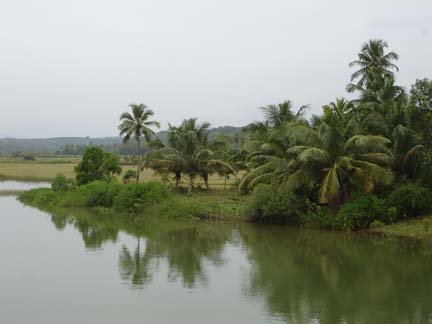
A Coastal estuary

A Coastal estuary
Holegadde near Honavar,Uttara Kannada dist, Karnataka

Copy? Right - but kindly remember to acknowledge!

Creative Commons License
This work is licensed under a Creative Commons Attribution 3.0 License.

" tulu-research.blogspot." ತುಳು ರಿಸರ್ಚ್. ಬ್ಲಾಗ್‌ಸ್ಪಾಟ್‌. ಇನ್

" tulu-research.blogspot."  ತುಳು  ರಿಸರ್ಚ್.  ಬ್ಲಾಗ್‌ಸ್ಪಾಟ್‌. ಇನ್
Have a nice day !