Saturday, October 1, 2016

365. The Mugera Community


Our heritage is simply a summary of continuum of cultural, religious, linguistic and genetic contributions by various tribes inhabited in this land since the beginning of tangible forms of civilization. In spite of explicit evidences of stratification and discrimination, it can be inferred that every Tulu community has borrowed cultural, linguistic and genetic rudiments of heritage from its earlier generations. It is necessary that we should endeavor to appreciate and understand the contributions of various tribes, beyond the general limitations of bigotry that pesters our society in general.
In this post we shall look into the salient information currently available on the Mugera community of Tulunadu.
Mugera
In terms of population, the Mugera is the largest dalit Tulu speaking community in Dakshina Kannada district.  Variants of the word Mugera are Mogera, Muggera and Mera. They are known as Mera in eastern parts of the district. Other dalits groups in the district refer to Mugers by alternate names such as Kalaler (by Koragas), Kaipuder (by Manser), or Poojari (by Nalike).  In parts of Kerala they are known as Mayya or Mayyamar or Māyila.
During the history, the Mugera were hunters, fishers, warriors or agricultural laborers.  Ancient forts known as Mayila kote at places like Madhuru, Kātukukke etc. suggest that they were rulers during the history in parts of Tulunadu and Kerala. They were generally dark in skin color and Tulu was their mother tongue. They were well versed in the use of bows and arrows (known as biru-pagari in Tulu).  They also lived as artisans skilled in basket weaving or   making rain shields (korambu). During the history they worked as security personnel for the Tulu landlords of Guttu and Māgane.
Two scholars from the community, Dr. Abhay Kumar Kaukradi (1997) and   Dr. Koira N Balepuni (2005) have brought out two independent sociological studies on the Mugera community. The essential field data in this post has been gathered from these two excellent research works.
The Mugerlu: Mudda and Kalala
The Mugeras worship Spirits of martyred twin heroes from the community known as Mudda and Kalala or simply as “Mugerlu”(=the mugeras) who were considered to have been killed in their youth by deceit..  They appear to have been the contemporaries of and served under the renowned Billava twin heroes Koti and Chennayya. In some areas, another pair of heroes Yenmura Deyyu and Kelata Perne take the place of  the “Mugerlu” twins.
 Tanni Māni
 Anecdotes describe the legend of Tanni Māni, brave sister of Mugera heroes Mudda and Kalala made use of her drape( sāri)  as a rope and helped in the release of Koḍdabbu (Koteda Babbu) an artisan from the Mundala community who was captive and trapped in an sealed open well .
According to legends Kelata Perne was the husband of Tanni Maani.
From the legends of Mudda-Kalala and Koti Chennayya we get the impression that Mugera and Billava youths were serving as soldiers and security personnel for Jain Kings and the legends of these probably date back to later part of 16th Century CE as inferred by Dr Vamana Nandavara (2001).
Mugera Etymology Word origin
In Tulu language the word muger means (1) floodplain or flank of a river and (2) rabbit. However, the term Mugera stands for a community of Muger tribes. Incidentally in Tulu ‘—eru’ is a plural indicator denoting a group of people. In most of the tribal languages, the group name usually means people in their language (For example Koraga, Bantu, Munda etc mean ‘people’ or ‘human beings’ in their respective original languages.) Therefore, if there was a distinctive Mugera language before the prevalence of Tulu then the word Mugera in that language would have meant people by analogy.
Totem of Rabbit
However, on other hand, the rabbit (‘Muger’ in Tulu)   was an ancient totem found in many parts of the ancient tribal world. Therefore it is possible that originally  the core of Mugera community is a representation of ancient totem of rabbit in Tulunadu. During trans-continental migration of early human tribes of into coastal India, the ancient tribes may have carried their totemic cultural traits to West Coast along with them. The totem theory is proven by existence of other ancient totem groups in Tulunadu like Sanil /Chanil (=squirrel) and Salian<.Talya  (=spider),  Bāge (=Tiger) etc.


Mugera names

Some of the male proper names of Mugera people are Mangura, Pijina, Kukka, Kumbe, Kalanja etc.
Kāpaḍa
The village level community leader gurikara, among the Mugera tribes is known as Kāpaḍa, Kāpa or Oorudāye. The community leadership of a Kāpaḍa is passed on to his son as a hereditary feature.
There was a custom of erecting banana plant in the middle of large agricultural paddy fields after ploughing the field in the West Coast. This was known as bare paaduni (= installing banana plant). This duty in the village was traditionally carried out by Kāpada of the Mugera community.
Similarly, the honor of installing the ceremonial flowery post (“Pookare”) in the Kambula (traditional buffalo race) wet field was also being allotted to the leader of the Mugera community, the Kāpada.

Pārtana, Sandhi and Kabita
They refer to traditional ballads and songs as Pārtana instead of Pāḍdana as in other Tulu communities. (Note that the Mugera word Pārtana is akin to Sanskrit Prārthana). The type of ballad known as Sandhi refers to recitation of traditional viewpoint of history of the specific Spirit. The song type known as kabita refers to popular ballads sung during traditional planting of saplings (neji) in paddy fields.

Spirit worship pattern
Mugera tribes are known for worshiping spirits of “Mugerlu” as Kola or Nema festival on a village level. The periodic spirit worship, celebrated on monthly basis, at family level on the day of Sankranti, is known as  Manja; and the offering is known as Aghel.   Generally, there are no specific idols  and the traditional symbols of worship consist of bow and arrows (biru-pagari), sword (suria) and  in some cases  the crown or headgear (chapparambu).

Dudi drum
The traditional drum used by Mugera tribes is known as duḍi.  The Duḍi is a kind of horizontally aligned, double conical or hour glass shaped drum, usually carved out of wood with constricted passage in the middle portion and the opposite circular open heads covered  with animal hide (see figure).  Usually animal skins of monkeys and lizards were used to cover the drum head. The drum head is beaten with a curved stick and simultaneously the rope tied round the constricted central part of the duḍi  is pulled to elicit required pattern of percussion sound.
Variants of Dui drums

A few varied forms of duḍi are also popular among other tribes such as Kodava, Irava (Yerava), Mansa, Mayila and others. Some of the Kodava  duḍis’ are made out of metal bronze unlike other wooden models popular with other tribes.
The tribes perform a number of types of traditional dances in tune with the beats of the duḍi drums.
Damaruga and Shiva
We can see that the dudi drum is similar in shape to the damaruga drum held by Lord Shiva in our legends, even though the duḍi is larger in size compared to the ḍamaruga.
Apart from the common shape of duḍi and ḍamaruga, the connection of Mugeras (and other tribes) with Shiva and linga are also evident in folk-lores connected with many of the ancient Shiva/Linga temples of Tulunadu. Anecdotes suggest that a tribal woman while gathering fodder or forage stumbles upon a piece of stone which exudes blood; and further the local people build a temple and worship that stone as Shiva- linga.
Types of  Mugera dances
The Mugera tribes traditionally perform a number of dance types as a part of specific seasonal celebrations or for the purpose of entertainment in the community. Salient seasonal celebratory dance forms include: (a) Karamgolu (b) Chennu (c) Aati Kalanja and (d) Pili panji. Besides, there are a number of types of dances performed for entertainment or during marriage (Darilo; Oddunalike) or public festivities at temples(like at Ubara makhe) or at buffaloe race( or Kambula).
A few of the significant seasonal dance celebrations are discussed here under:
(a) Karamgolu
The Karamgolu is seasonal a group dance performed by male dancers along with recitation of pertinent folk ballads accompanied to the beat of duḍi drums specifically in the Tulu month of Māyi (roughly February to March) especially on the full moon day.  The term “Karamgolu”, as implied in folklores, represents a special type of seed used for sowing crops, according to Dr Amrita Someshwara. In other words, the “Karamgolu” signifies the sanctity of “karam” (karma= physical   labor; agricultural activity) and sowing  of seed (golu). In some legends, a specific type of paddy seed known as Atikāri (a rice variety) is referred to as Karamgolu.
The seasonal dance of Karamgolu appears to be not exclusive to the Mugeras, as it is also played by other tribal communities of the region. However, Karamgolu is commonly played by Mugeras in parts  of Bantwal Taluk in Dakshina Kannada.
Ancient tribes gave sanctity and importance to essential agricultural practices which included selection of proper seeds. The Karamgolu dance is headed by a senior man referred to as “Angara Bakuda”, who represents the leader of the community in the dance.
(b) Chennu
The Chennu (means a beautiful woman) represents the folk ballad of a woman with child and is relevant to aspects of maternity. It is performed for a month from the full moon of Māyi (February/March) to the full moon of Suggi (March/April). The role of Chennu is portrayed by men dressed like woman and the child is symbolic in the form of a doll. She presents pictures of maternal care and love along with aspirations for welfare of the humanity in spite of the abject poverty experienced by the her family and community.
The celebration of   the seasonal dance of Chennu is said to be exclusive feature of the Mugera community.
(c) Aati Kalanja
The word Aați (= Ashaḍa in Kannada areas) refers to a Tulu month, characterized by intense rainfall, falling between July and August. And Kalanja is name of the young man, who is supposed to be a representative of the ancient Spirit divinity known as Bermer. He is also known as Kodanje in some areas.The Birmer (or Bermer) is the ancient Spirit deity of Tulunadu worshiped by various tribes. He visits the rural households chanting ballads for blessing them  for getting rid of ailments and (food) scarcity that usually pester the rural people during the peak rainy season. Thus, the Aati Kalanja is also known alternately, as Birmere Māni, Kalenja Bermer, Birmer etc. The performance is celebrated on the Full moon day and its eve during the month of Aati. The yellow powder of turmeric (Curcuma longa), which has known insecticidal and antibiotic properties, is usually sprinkled around the houses visited by Kalanja.
The Aati Kalanja is an ancient representative of divinity in vogue since early historical days. He carries a “tatra” or palm leaf umbrella symbolic of power, authority and divinity. He sings the ballad accompanied by the beating of dudi drum. The peak month of rainy season since antiquity is also a period of diseases and shortage of food grains. The aim and intention of the Aati Kalanja celebration is to wipe out the diseases and restoration of health.
(d). Pili panji
Pili panji means a tiger and a hog (pig). It is a hunters dance pattern symbolizing hunting wild animals like tigers(=‘pili’) and hog,  or wild pig (=‘ panji’) and the like. It commonly performed by the Mugeras of Beltangadi and Puttur Taluks which are closer to dense forest areas.
Kasaraka tree
The Mugera tribes traditionally held Kasaraka tree (Kayer or Kaveri tree) in high esteem. Whenever there is a child birth in the house it was customary to place four twigs of Kasaraka tree in the four corners of the roof of the house apparently  for the protection of the newborn baby from evil eyes.
Vāstu rudiments
The Mugera have a specific pattern of Vāstu for construction of dwelling houses, according to Dr. Abhaya Kumar (1997). Generally, the houses are simple in design with entrance of their houses face Eastern direction.  North facing entrances are taboo among them.
Obituary
The dead bodies are normally buried, without aligning the body to any of the specific directions.
Stratification in Tribal Society
The members of the Mugera community generally consider themselves superior to other dalit groups such as  Mundala, Bākuda, Godda, Mansa and Māyila. These are generally considered as the first ranking dalits in Tulunadu (Abhaya Kumar, 1997).  Spirit dancers such as Nalike, Panara, Pambada and Kopala are considered as second ranking tribes.   The  spirit dancers  came from outside, probably from Tamilnadu, according to Abhaya Kumar. The Koraga tribes appear to belong to older/earlier generation of tribes that inhabited coastal Karnataka.
Bari lineages
In the Mugera community there are 18 bari lineage sects according to Dr. Abhaya Kumar (1997) but he gives a list of total 22 baris’, the additional ones being added in later years. Among these the Koormer is said to be the most respected or preferred bari during forging matrimonial alliances.

Bari lineage groups among the Mugera
The list of Bari lineages provided by Dr. Abhaya Kumar Kaukradi (1997) is provided below:
A1. Koormer,
A2. Bangera,
A3. Salian,
A4. Kundadanna,
A5. Manjadanna,
A6. Yeradanna,
A7. Beemardanna,
A8. Kumerdanna,
A9. Mattedanna,
A10. Poovadanna,
A11. Arpudanna,
A12. Uppenna,
A13. Māradanna,
A14. Bhadradanna,
A15. Kanappanna,
A16. Pulletanna,
A17. Marder etc.
A18. Wagetanna
A19. Karamber
A20.Bāge
A21.Bidranna
A22.Kesardanna
However, according to Dr Koira (2010) there are 16 baris’ plus a few additional baris’ which he considers as regional variants or koodu baris’.  He states that it is difficult to separate original 16 baris’ from koodu baris’. His list is as follows, .
The Bari lineage list provided by Dr. Koira N. Balepuni (2010):
K1. Chalianna (=K17);
K2. Kundachanna (=K18, K19),
K3 . Bangaradanna.
K4. Kumerdanna (=K20), *
K5. Kinnyadanna, (=K21, K22),
K6. Ponnedanna,
K7. Mardaranna (=K23, K24, K25 , K26),
 K8. Pernedanna.
K9. Bolle Aitanna.
K10. Parikadanna.
K11. Uppianna.
K12. Poovedanna.
K 13.  Sonadanna.
K14. Mottedanna,
K15. Karkadanna,
K16.  Nadaranna.
Additional bari s’ regional variants or koodu bari s’ (Dr Koira)
(K17. Sāmedanna / Sāmanidanna)
(K18.Chanilanna)
(K19.Mundaidanna)
(K20.Koormer),
(K21.Kinyarde)
 (K22. Kinnigere),
(K23.Manjadanna)
(K24.Madmaranna)
(K25. Yerderanna ),
(K26 Oderanna),
K27. Kesardanna
K28. Bojjaranna
K29. Gunderanna
K30. Kaalikoranna
K31. Perbanna ……etc.
 (* Asterisks show numbers of equivalent baris enlisted suggested by Dr Koira. Bari names of serial numbers beginning with A are from Dr Abhaya Kumar (1997) and those   beginning with K are from Dr Koira (2010). Common Baris falling in both the lists are shown in bold letters. The suffix –anna   implies a man or person. Kundacha means Sanil or squirrel).
The Koteda Babbu was from the Parikedanna bari  and Tanni Māni, sister of Mugera heroes Mudda and Kalala was said to be from the lineage of Muncheridanna. This particular bari does not exist at present according to Dr. Koira.

INFERENCES
Antiquity of Mugeras: Origin and antiquity of the tribal community bearing the totem name of “muggear” (rabbit) may go back to early days of civilization.  In ancient tribal communities that lived together in the form of a collective habitation, each habitation had its own insignia that was symbolically represented on a pole at the entrance to the habitation. Totems of rabbit, squirrel, spider, serpent and other animals were the insignia of specific tribal communities in the antiquity. The totem of rabbit was commonly found in ancient tribes of Africa and other parts of ancient world.
Totem and Bari evidences: Of the totems and bari lineages, it is difficult to decide which was older. However, since the term “bari” means a 'house' in ancient Indian languages like Munda/Prakrit, we can deduce that the bari system chronologically followed the system of totems (tribal insignia) during the early days of civilization as recognition and registration of the genetic identity of  individuals in the ancient society .
A large number of bari lineage groups existing among the Mugera community suggests the amalgamation of several “ bari” groups during different historical stages into the fold of community, presently designated as Mugeras. It can be noted that some of the bari types existing among the Mugeras are also common in other communities in Tulunadu, suggesting clearly that the common evolution of the communities took place, before segregating into “castes” in the due course of time
Mogaveera: For example, a part of the Tulu fisher community was known as “Mogera” in parts of Tulunadu before adoption of the name of “Mogaveera” during beginning of the 20th century.  There is an argument that ‘Mugera’ and “Mogera” are different, the latter being suggestive of  ‘mugear ’ which is the floodplain of a river. However, it seems on alternate view that the fishers Mogera actually could have been an ancient offshoot of the totemic Mugera tribes under discussion.
Stratification: The Mugera were considered to be inferior to Billavas at  a point in the history may be around 16th century, as we can understand from the legends of Billava twin heroes Koti and Chennayya and their contemporary Mugera twins Mudda and Kalala. However, it is explained in the references cited that the Mugeras also considered other tribal communities such as Koraga, Mansa, Mundala etc as inferior to them in social status. This point reveals that social stratification was prevailing among the ancient Tulu communities probably as a result of sheer rivalry or as per the theory of survival of the fittest.
It is evident that migrations and settling of tribes took place in episodes. And  every batch of new settlers tried to impose the superiority of  their  acquired cultural progress over the older batch of settled 'backward' tribes. (Thus the social stratification in the land is not exclusively due to the division of castes or ‘ Varnashrama’ theory as commonly assumed)
Evolution of Tulu Language: The presence of numerous antique words exclusive to Tulu and absent in other Dravidian sister languages, suggests existence of words derived from the ancient tribal communities that settled in this land.
There are clear indications that early tribes had their own distinct language(s) which was/were different from Tulu and other Dravidian languages. During the course of evolution, probably after 2nd century CE,  Tulu language occupied a dominant position in the coastal region and the descendants of the ancient tribes were forced to forget their original language and gradually switch over to the dominant language of Tulu. In the process of cultural amalgamation and assimilation, the Tulu has liberally has acquired and adopted words from earlier languages. This explains the conclusion of the linguists who have inferred that Tulu language shows combination of South central and Southern Dravidian linguistic features.
Bari: One small and fine example is the adoption of the word “bari” in Tulu. The word ‘bari’ in ancient Indian languages meant ‘house’. In ancient days it was used to identify the person from the address of the house he originated. Thus ‘bari’ system of tagging the name of an individual’s house as a mark of his identity came into being. (Compare with Aadhar system of present day).
The pre-Tulu system of Bari lineage identities was adopted by the speakers of Tulu language as a matter of convenience. However, Tulu language had another word ‘bari’ which meant a side.  Thus nowadays Tulu people believe that the word ‘bari’ means a side. In Kannada, they have modified “bari” into “bali”. Some Kannada people have changed the word “bali” (= a side) to “balli” which means a creeper! This should serve as an example of the unintended changes to the meaning conveyed by the same words during the protracted course of evolution.
Ancient words: There are several ancient words which appear unique to dalit communities of Tulunadu, such as, for example: tullel (=marriage), chapparambu (=seven hooded crown; (worn as headgear by Mugerlu Spirit impersonators),  partana (= ballad, song; pari+tana; compare with pad+tana.), Kāpaḍa (=community leader) etc.


REFERENCES
Abhaya Kumar Kaukradi Dr. (1997) Mugeraru: Jananga Janapada Adhyayana (Kannada). Kannada and Culture Directorate, Bengaluru and Karnataka Tulu Sahitya Academi, Mangaluru.  320 p.
Koira N. Balepuni Dr.(2010) Mugerara Dudi kunitagalu: Svaroopa mattu Sanskriti. (Kannada) Dudi Prakashana. Balepuni,Bantwala Taluk, Dakshina Kannada. Xii+8+246 p.
Vamana Nandavara, Dr. (2001) Koti Chennaya. Janapadiya Adhyayana (Folkloristic study) (Kannada). Hemanshu  Prakashana.  Mangaluru. 420 p.

*  *


Tailpiece

 The proper name or surname of "Mugera" is commonly found in some African countries. Incidentally, “Mugera” in Lulogooli Bantu language (Kenya, Africa) means  a river. Compare the cited African word and its meaning with that in Tulu, where the “muger” means a floodplain or flank of a river.

R


Saturday, September 10, 2016

364. ‘Kināra’ origin of ‘Canara’


The coastal districts of Karnataka were popularly known as “Canara districts” during Portuguese and British administrations in the region. The original Canara district was bifurcated into North Canara and South Canara. During the British regime, the North Canara was part of the Bombay Province and South Canara of Madras Province. The term Canara has been quite favourite with many locals as you can still come across name plate like Canara Motor Service, Canara Transport, Canara College, Canara Coffee or Canara Book shop etc.

Some of the people did not appreciate the term, “Canara” beginning with a foreign sounding C. They introduced the term “Kanara” that made “South Kanara” and “North Kanara” which were often abbreviated to “SK” and “DK” respectively. In the due course of time, nativity lovers, preferred to translate the terms “North Kanara” and “South Kanara” into chaste Kannada words such as “Uttara Kannada” and “Dakshina Kannada”respectively. With passage of time some administrators felt that Dakshina Kannada district is too large to handle and they carved out a separate Udupi district out of the former Dakshina Kannada district.
This is all are part of our history and heritage which most of are aware.
Now how the term Canara came into being?

Kināra districts
Many of us tend to believe that the term “Canara” means “Kanara” or “Kannada” because of the transformation of words along the passage of time. The general opinion is that Portuguese and the British because of their faulty pronunciation of Indian words and eventually corrupted the native words by introducing terms like Canara. While this opinion is partly true it has been found that the origin of Canara was not Kannada but less known Kināra.

Perooru Jāru
Tulu language activist and writer,    Perooru Jāru in his   booklet,    “Tulunaadu, notes that while Mysore Tiger Tippu Sultan annexed   the coastal districts to his kingdom, (during later part of 18th Century CE) he referred   to the coastal region as the Kināra. The term Kināra in Hindi and Urdu means the coast.
However, the Portuguese contenders who were vying for capturing the coastal region were not comfortable with the pronunciation of the word Kinara which unfortunately was corrupted to stylish,   “ Canara”! 

Canarese
The Kannada language was printed in the form of a news paper and also as a dictionary for the first time by Basel Mission Press in the 'Canara' region at Mangaluru and accordingly it seems that the Britishers preferred the name of 'Canarese' for the Kannada language !

On the whole, this case should serve as an recent example of how place names and regional names change their original form, content and meaning as a result of cultural transitions as well as unintentional mistakes during the course of time.

** **
Kināra: a word analysis

The word ‘kināra’ is composed of two ancient root word units or morphemes. The prefix ki is an ancient   spatial indicative affix, denoting an area. Nāra is another ancient word which means water. Therefore, kināra is sea beach or river bank; in other words, an area by the side of a water body. The ancient word exists in many of the languages.

R


Friday, September 9, 2016

363. Deciphering Tulu-nadu place names


The readers would observe that many of the Tulu Place names may not convey, on the face of it, any specific meaning or apparent meanings in the current language of the area.  This situation is true to all nations of the World.  Original meanings may either undergo changes or are lost completely. However, there are efforts worldwide to compile data on place names and arrange them in the form of dictionary. “Onomasticon” (fashioned after the word ‘Lexicon’) means a Dictionary of Place names.
Odd sounding names
A visitor to country-side may be fascinated perforce by the odd sounding place names but he may not be aroused to know the exact meanings or the origin of the name, unless the interpreted meanings are readily available.  Only a genuine interest to explore the mystery of such place names could go a long way in deciphering the meanings.  Survey Maps show names of all these geographical regions.  But surveyors or Government revenue officials are least interested in knowing the origin of these place names.  Borders and lines change and also with names, befitting the exigency.  Apparently, their interest is limited to allotting Cadastral Survey Numbers.
Toponymical Processes
Gradual changes taking place in place names are called toponymical processes, which affect the meanings.  The processes, by which place names change, include abbreviation, conflation, i.e. fusing together two things, convergence, development in the parent language (but static in place names) and replacement of the parent language.   The latter can, in particular, result in dramatic shifts in place names since the original meaning (and often sounds) are not conveyed in the new language.  The place name thus shifts to a new form, considered convenient for pronunciation in the new language (Testimony:  Changes in place names effected by colonial rulers of India. One can observe some names, corrupted by Portuguese rulers, are still current in Goa). 
Interpretation Problem
Problems in deciphering meanings of place names are many.  Wikipedia lists following seven problems:
(1) Language (e.g. Periodic change over from old to new and political influence of other languages). (2) Element Order in compound word (i.e. reversing of word elements.)
(3) Translation (e.g. In case of Tulu, rendering words into Kannada – eg: Posodi to Hosabettu, Karyodi to Karkala - or Sanskrit - eg. Odipu to Udupi).
(4) False analogy (e.g. Anglicization of Tulu names for easy pronunciation.  This is very well seen in British and Portuguese colonies).
(5) Lost Region (eg. Kudar  to Malpe, when original locations are lost to sea). 
(6) Confusion between elements (e.g. Pairs of original elements can produce the elements in modern names – Mangala+uru > Mangalore > Mangaluru.
 (7) Multiple meanings (Some word stems or elements may have many meanings – e.g. ‘Kar’ in Tulu).
Identity Marker
Life of settlers of an area is a history - whether recorded or not.  This can be analysed by studying the socio-political situation, conditioned by geography.  Changes - affected by languages, borders, political forces, social order resulting from faith and assimilation - are the handiwork of events and geography.  Genealogy becomes an admixture in the conundrum of social, political and natural upheavals.  Occupations change with human movements and/or climatic conditions.  Religion of one region may thrive in another area, conditioning it to the geography and environment of that area.  Toponym assumes the role of an identity marker, thereby enriching occupational vocabulary of language of that area.

Reference:


-Hosabettu Vishwanath (Pune)

Monday, August 29, 2016

362. Morphemes in Tulu place names

We have seen many a minimum meaningful linguistic units (morphemes) in Tulu place names. As has been explained elsewhere earlier, a place name is a compound word in majority of cases.  It contains specific and generic stems or elements, used either as a suffix or prefix.  Readers might have read such stems analysed in our previous Posts. We give below some of them for ready reference:
Ad, Ade, Adka, Adya, Agal, Al/ala, Ar/are, Ang/angal(a),/Angali/angana/angar, Anje/Anji/inje/unje, Bar/bari, Ban+ja/Ban+je, ba/va/ve, Er, Ja/je/Jar, Ga/gaum/gi, Goli, Had/hadi/pad/padi, Har, Ka/ki, Kanja, Kunja, Kodi/ Kodu/ Godi, Kar, Kuda, Kura, Kula/ Kola/ Kolambe, Kheta/ Kheda, Kal, Kona/Kone, Manja, Mal/Mala, Mad, Mi, Na/Ne, Nanja, Od/odi/oli, Ur/oor, Pally/halli/valli, Pad+pu, Pada+vu, Pu/pur, Sar/se, Ya and so on.

We have noted such place name cognates all over India and so also, abroad.  Apparently, this feature  is not a coincidence. (q.v. Post-209/12.10.2009: Dravidian place name cognates). 
Besides the strange names pointed out in our Post-123 (2nd July 2008), we have come across mysterious place names with morphemes such as ne, ji, nu, yi and ila.  These are found in place names such as: Nooyi, Nuji, Nej/Nejar, Laila and Koila.  Pending a deep study, we may tentatively explore these names briefly.
Nooyi: 
Nu/Noo denotes a place around, above or near water body.  ‘Yi” stands for a ‘place/area’ as is ‘ya’. Nooyi is a hamlet/locality of Gurpura Panchayat in Dakshina Kannada District.  One may recall the name of world famous career woman Indra K. Nooyi, born in Madras (now Chennai).  She is married to Krishnamurthy Nooyi of Karnataka.  We think that the surname ‘Nooyi’ is the birth place of Krishnamurthy.  Both are naturalized citizens of the USA now.

Nuji/Nooji:
Meaning of Nu/Noo is same as given above. “Ji/ja/je’ stands for ‘place/area’. It is a hamlet under Korgi Panchayat in Kundapur Taluka of Udupi District.  There is also a village ‘Nujibalthila in Puttur Taluk.

 Nejar/Nej(a):
Morpheme ‘Ne’means high or above and ‘jar’, a hanging or sloping place on hill side. Nejar is a hamlet, coming under Tonse East Panchayat of Kalianpur of Udupi Dist.  We have come across similar village names in some other places of Karnataka and other States:

Karnataka: Nej (Belgaum), Nejjur (Uttara Kannada) and Nejanthi (Tumkur).
Maharashtra: Nej (Kolhapur)
Gujarat: Neja (Anand)
Rajasthan: Nejpur (Dungarpur)
Uttar Pradesh: Nejabhari (Lucknow), Nejabhar (Bahraich)
West Bengal: Nejani (Birbhum)

'Neji' in Tulu means 'paddy seedlings'.  'Neji kanda' (=field earmarked for raising nursery plants of paddy) is essentially at a corner of field, where water is available for irrigation.  These nursery plants are used for transplantation in tilled farm land at appropriate time.

Laila: 
We can split the word as La+ila.  ‘La’ is universally known as ‘water’ (q.v. our Post on ‘Al/Ala’). ‘Ila’ = House or Settlement. Laila is a village in Belthangadi (See our Post-220 on Vasudeva Laila).

Koila:  Koi+la=Agricultural settlement around water bodies.  It may also mean a settlement of ‘Koi’ people.  However, it may be noted that   Kovil  in Tamil means a temple.

Conclusion
The influence of language and culture of earlier ancient tribes, who made their home in the land, now known as ‘Tulu Nadu’, some time in the past – pre-diluvial or post-diluvial era- is running under-current.  Though their civilization is lost and assimilated, the vestige of their existence is preserved in place names, which are hard to crack now. In this direction we here make an attempt to decipher and understand these odd place names.


Hosabettu Vishwanath (Pune)

Wednesday, August 17, 2016

361.ದತ್ತಿ ಲೆಕ್ಕೊನೆ ಬಿತ್ತೊಡು


ತುಳುಟು ಒಂಜಿ ಪಾತೆರ ಉಂಡು: “ದತ್ತಿ ಲೆಕ್ಕೊನೆ ಬಿತ್ತೊಂದು ಪೊಪೆ.” ಇಂದೆನು ಶಬ್ದ-ಶಬ್ದ  ಅರ್ಥ ಮಾಳ್ಪನಗ: “(ಆಯಿ ಕಂಡ) ದತ್ತೊಂದುಪ್ಪನಗನೆ ಬೀಜಲಾ ಬಿತ್ತಿಯೆ” ಇಂದುದು ಆಪುನು. ಉಂದು ರೈತೆರ್ನ ಬಳಕೆದ ಪಾತೆರ.  ಇಂದೊಂಜಿ ಒಗಟು ಪಾತೆರ. ನೆತ್ತ ಉತ್ತರ: ಬರೆಪಿನಿ.  ಇಂಚಿತ್ತಿನ ಏತೊ ಗಾದೆನುಲಾ, ಒಗಟು ಪಾತೆರಲಾ ತುಳು ನಿಘಂಟುಡು, ಶಬ್ದ ಪ್ರಯೋಗದ ಉದಾರ್ಣೆ ಕೊರುನಗ ಆಯಾಯ ಶಬ್ದದ ಅಡಿಟ್ ಸೇರ್ಸಾದೆರು.
ಬರೆಪಿನಿ ಪನ್ಪಿನ ಉತ್ತರೊಗು ರೈತೆರ್ನ ದಪ್ಪುನ ಕೆಲಸದ ಉದಾರ್ಣೆ ದಾಯೆಗು ಕೊರ್ತೆರು?  ಇಂದೆತ ಪಿರವುದ  ಮಲ್ಲ ಕಾರಣ ದಾನೆ? ನೆಲನು ಮೆದು ಮಾಳ್ಪೆರಾದು ದಪ್ಪುವೆರು, ಪನ್ನಗ ನಾಯೆರ್ಡು ಗೀರು ಪಾಡುವೆರು. ಅದಗ ನೀರು ಬೊಕ್ಕ ಗಾಳಿ ನೆಲತ ಉಳಾಯಿ ಪೋವರೆ ಸುಲಭ ಆಪುನು.  ದತ್ತಿ ಬೊಕ್ಕ ದಿಂಜ ದಿನ ಬುಡುಂಡ ನೆಲ ಗಟ್ಟಿ ಆಪುನು, ಪಜೀರು ಬುಳುವೆನು. ನಡ್ತಿನನೇಜಿ ಸರಿಯಾದು ಬೇರ್ ಪತ್ತಂದು.  ರಡ್ಡ್ ಸರ್ತಿ ದಪ್ಪುನ ಕೆಲಸಲಾ  ಕಷ್ಟದ ಕೆಲಸ.
ನಮ್ಮ ಬೊಂಡು (ಮೆದುಳು) ಕಂಡ ಆಂಡ, ಅವೆನು ದಪ್ಪುನು, ಹದ  ಮಾಳ್ಪುಣು ನಮ ಕಲ್ತಿನ ಬರವು-ಸರವು, ಬೊಕ್ಕ ವಿಚಾರ ಶಕ್ತಿ.  ನಮ ಮಾತೆರ್ಲಾ ಜೀವನೊಡು  ಒಂಜಿ ಉದ್ದೇಶ ದೀವೊಂದುಲ್ಲಾ.  ಈ ಲೋಕೊಡು, ನಮ ನೆನೆತಿನ ಪೂರ್ಣ ವ್ಯಕ್ತಿ ವಿಕಸನನೇ ನಮ್ಮ ಬದುಕು.  ದಾಯೆಗು ಬದುಕುವ ಪನ್ಪಿನ ಪ್ರಶ್ನೆಗುಲಾ ಉತ್ತರ.
ಈ ಉದಾರ್ಣೆನು  ನಮ ಓದುನೆಕ್ಕುಲಾ ಜೋಡಿಸರಾಪುನು.  ಓದಿನಂಚನೆ ಬರೆದು ದೇತ್ತೋನ್ಡ ನಮಕು ಮದತ್ ಪೋಪುಜಿ.  ಓದುದು ಗೊತ್ತಾಯಿನ ಇಸಯೊಡು ಬೇತ ಬರಾವುಲಾ ಬರೆವೊಲಿ.  ಆಯಕಾತ್ರ, ಶಾಲೆಗು ಪೊಪಿನ ಜೋಕುಲೆಗುಲಾ ಜಾಸ್ತಿ ಬರೆಪಿನ  ಅಭ್ಯಾಸ  ಮಾಳ್ಪವೊಡು.  ಅಪಗ ಕಲ್ತಿನ ಪೂರಾ ಮದತು ಪೋವಂದು. 
ಇಂಚೊಡು, ನಮ ಒಂಜ ಇಂಗ್ಲಿಷ್ಡು ಘೋಷ ವಾಕ್ಯೊನ್ ಕೇಣೊದುಲ್ಲಾ. “ಇನ್ಫಾರ್ಮ್ (ತೆರಿ), ಪರ್ಫೊರ್ಮ್ (ಮಾಳ್ಪು), ಅನ್ದ್ (ಬೊಕ್ಕ) ಟ್ರಾನ್ಸ್ಫೊರ್ಮ್ (ಪರಿವರ್ತನೆ ಮಾಳ್ಪು).  ನಮಕು ನಮನೆ ತೆರಿಪಾವೊಣುಡು. ಆಯಿಕ್ ಓದುಡು, ಬೇತೆ ಜನಕುಳೆಡ ಬೆರೆವೊಡು, ಬೊಕ್ಕ ತೆರಿಯೊಡು. ತೆರಿನಂಚನೆ ಅವೆನು ಕಾರ್ಯರೂಪೊಗು ತರೋಡು, ತೋಜಪಾವೊಡು,ಬೊಕ್ಕ ನಮ್ಮ ಸ್ವಂತ ಜೀವನೊಡು ಅತ್ತಾವಂದೆ ಸಮಾಜೋಡುಲ ಬದಲಾವಣೆನು ಕನೋಡು.
ಬೂಕುಲೆನ್ ಓದುನೆಟ್ಟು ನಾನಲ ಒಂಜಿ ಎಡ್ಡ ಉಂಡು. ಓದನಗ ತಿಕ್ಕುನ ಒವ್ವೊ ಒಂಜಿ ಸಬುದ ಯಾ ಒಂಜಿ ವಿಷಯ ನಮ್ಮ ಮನಸ್ಗು ತಟ್ಟುನು.  ಆ ಪದ ವಾ ವಿಷಯ ನಮ್ಮ ಚಿಂತನೆಗ್ ಚಾಲನೆ ಕೊರ್ಪುನು.  ಆ ಭಾವ ಸ್ಪಂದನೊಡು ಉಂಡಾಯಿನ ಭಾವನೆನು ಅಪಗಪಗನೆ ಬರೆದು ದೀಂಡ, ಕಾಲ ಕೂಡ್ಡು ಬನ್ನಗ ನಮಲಾ ಒಂಜಿ ಸಾಹಿತ್ಯ ಪ್ರಕಾರದ ಬುಲೆ ಮಲ್ಪೆರ ಸಾಧ್ಯ ಆವು.
ಇತ್ತೆತ್ತ, ಮೂಲ್ಕಿ ಬಪ್ಪನಾಡು ದೇವಸ್ಥಾನದ ಎದುರು ಬಯಲಿಡು ರಡ್ಡ್ ದಿನತ ತುಳು ಸಮ್ಮೇಳನ ಮುಗಿದಿನು (ಆಗಸ್ಟ್ 13 ಬೊಕ್ಕ 14).  ತುಳುಟು ಸಾಹಿತ್ಯದ ಬುಲೆ ದಿಂಜ ಆತಿಜಿ ಪನ್ಪಿ ಕಾರಣ ಕೇಂದ್ರ ಸಾಹಿತ್ಯ ಆಕೆಡೆಮಿದಕುಳ್ ತೋಜಾವೆರು. ಅಂಚಾದು ತುಳು ಶಾಸ್ಟ್ರೀಯಭಾಷಾ ವರ್ಗ 8ನೆಡು (ಕ್ಲಾಸಿಕಲ್ ಲ್ಯಾನ್ಗ್ವೇಜಸ್ ಷೆಡ್ಯೂಲ್ 8) ಸೇರ್ಪಡೆ ಆತಿಜಿ.  ಆಗಸ್ಟ್ ಪದಿನೇಳೆಡ್ ಬೊಕ್ಕ  ತುಳು ಪ್ರತಿನಿಧಿ ಮಂಡಳಿನು ನನ್ನೊಂಜಿ ಸರ್ತಿ ದೆಹಲಿಗು ಕಡಪುರ್ನ ಪಾತೆರ ಧರ್ಮಸ್ಥಳ ಧರ್ಮಾಧಿಕಾರಿ ಡಾಕ್ಟರ್ ವೀರೇಂದ್ರ ಹೆಗ್ಗೆಡೇರು ಆರೆನ ಭಾಷಣೆಡ್ ಪಣ್ತೇರ್. ತುಳು ಬರವುಡು ಸಾಹಿತ್ಯಿಕ  ಬುಳೆಚ್ಚಿಲು ಬುಳೆವೊಡಿಂದು ನಮ ಮಾತೆರ್ಲಾ ದತ್ತಿ ಲೆಕ್ಕೊನೆ ಬಿತ್ತುಗುನ!
ತುಳುವೆರೆಗಾತ್ರ:
ಬರೆತಿನಾರ್: ಹೊಸಬೆಟ್ಟು ವಿಶ್ವನಾಥ್, ಪುಣೆ.

16.08.2016

Saturday, August 13, 2016

360. Origin of words: Bari and Kepulo

Ancient words in any language are like fossils and can be useful in understanding the mysteries of antiquity. Ancient words in Tulu language similarly provide us useful hints that enlighten factors relating to the origin and evolution.
Linguists have traced dual features of south central and southern Dravidian trends of evolution in Tulu language ( ref:) though there has not been clear explanation of this duality. Earlier posts in this blog have identified and explored explicit evidences of an Austro-Asiatic base of Munda group of language under the Dravidian linguistic heritage in the evolution of Tulu language.
Ancient words like paggu (=first month in Tulu calendar), tude (=river), tāri (=toddy palm), urdu(=black gram)……. etc apart from numerous place names in Tulunadu that still carry  a prefix of Munda- or manki or related words –are all suggestive of an explicit undercurrent of an older layer of Adi-Dravida or pre-Dravida traditions in this land, before the onset of  Dravidian phase of socio-cultural and linguistic evolution.
Relicts of ancient Austro-Asiatic Munda culture and language still exist in Eastern and North eastern India. Bengalis and Odiyas sport such ancient words as Desi in their languages.
Let us discuss two of such ancient desi words, surviving in Bengali language, struck me because of their significance in the evolution of Tulu language and culture here below:
Bari
Bari is a very common word in Tulu language representing genetic lineage of person. It was used traditionally to identify a person and distinguish him or her from persons of other lineages especially in matrimonial proposals.  Persons from the same bari were considered traditionally to be blood relatives among whom marriage was a taboo. Bari is alternately known as bali, gotra, bedagu or illam in other socio-cultural groups. The origin of bari or gotra system predates the introduction of caste based communities as we discussed in an older post.
The analogy between the words bari (Tulu) and bali (Kannada) earlier led us to suggest that bari was an alternate form of the word bali (balli) which usually meant a plant creeper. The Tulu word bari at present means a side or margin. The meaning was adopted by some since it approximately conveys the connotation of a lineage.
However, the understanding that bari is a desi word of Austro-Asiatic origin existing in Bengali suggests fresh dimension of origin and meaning to the Tulu word bari.  The word bari of Austro-Asiatic origin means home in Bengali.
 Thus it is possible that the heritage word bari in existing in Tulu language means the name of the home or the original house of person. In ancient cultures a person was identified by the name of his home. In this way it appears synonymous with the term illam (=home) used by Malayalis or gotra (name of cowshed) used by cowherds in northern India during the ancient history   for lineage.
Pulo
In the same vein we can see that the word pulo means a flower in Bengali. We can compare pulo with phool in Hindi.
Kepulo
A red colored wild flower (usually occurring as a bunch of flowers or inflorescence) commonly seen in rural settings is known as kepulo or kepula.  We can understand the origin of the name of this wild red flower as it is ke+pulo,  where ke represents red and pulo means  flower.
We also may understand that with passage of time, the original pulo has been reduced to poo (= flower) and the original ke has become kempu (=red).


Significance

Tulu language has absorbed words from Austro-Asiatic and other pre-existing   languages during the prolonged course of evolution.  Many of these words are pre-Dravidian in nature, and the presence of such ancient words in contemporary Tulu suggests partial or selective socio-cultural assimilation of ancient tribes with Dravidians during the history. This explains the basic reason for the exposition of dual South-central and Southern Dravidian   linguistic trends in the evolution of Tulu language.

R

Sunday, May 1, 2016

359. Āyana, Nema & Kola – II


The pattern of different rituals offered for different Divine Spirits as a part of Spirit worship (Daivaradhane) are distinct from one deity to another. The essential differences are  brought out below.
We summarized the general comments, made by Narayana A. Bangera (NAB) during our conversations on our Post-350: Kāle & Kāle Kola, in our Post-352/31.10.2015: Kola & Nema: The Distinction.
Subsequently, we received a brief Note in Kannada in November. Though this writer wanted bringing it to the knowledge of our readers, he lost himself in a stupor on being engrossed on subject of ‘Dhoomavati’. We now give a gist of the written note of NAB as a dilation of the earlier Post-352.
Manifested God-forms
Annual celebrations of God- manifestations are called as Jaatre or Aayana.  They are performed on specific days as pre-fixed.  Designated performers are from Parava caste. 
Aayana Highlights: Flag hoisting (kodi mara eruni). Pulling of cart (bandi)  with deity on board. No circumambulation with ‘badikara (an earthen pot containing auspicious things) and ‘bolgode/bolkode’ (white umbrella). There was a custom of circumambulating of the deity in a palanquin, on āne (elephant) or Nandi (bullock) around temple.

Wearing:  Spades of   arecanut to legs, girders for the waist, crown or head-dress to head.
Wearing not included: Gaggara (Jingling anklets). Siri (coconut palm fronds) and muga (mask).
Offerings: No animal sacrifice. Sacrificial food is vegetarian in the form of broiled or puffed up paddy/rice with jaggery, along with tender coconuts.  This offering is accepted by impersonator of the divine spirit. So these things are the ‘Barne’ (food for eating) for the impersonators as a token of offering to respective deities.

·       Ullaya:  He is the manifestation of Lord Eeshwara.  Fixed days are: Beshada (May-June) Sankranti (Vrishabha Sankramana).  It falls on either 14th or 15th of May.  This year it falls on 14th May.  (See our Post-292/30.12.2011: Fishing Rituals at Kandevu).
·       Nalkaitaya: Manifestation of Vishnu.  Annual celebration is on Mayida Punname (Full moon day of  Feb-March).
·       Bermer:  Manifestation of Brahma.  Annual celebration is on ‘Bontyoluda pattu popinani’, i.e. on 10th day of Tulu month of ‘Bontyolu’ (Oct.-Nov).   The Brahma temple at Palli, near Udupi, Karnataka is very famous.  It was renovated and consecrated on 14th May, 2009.
Nemas for Rajan Daivas
Nemas are performed on specific days, prefixed. It may be noted that divine spirit impersonators are from ‘Pambada’ class of dancers. Annual celebration is with all customary rituals, siri shringara, wearing gaggara, and Muga/Moga (= mask of the deity). ‘Badikara’ and ‘Bolgode’ Balis (= circumambulations) are very much part of the celebration. Animal sacrifice is allowed.
1. Jarandaya & Kodamandaya: They are deified souls of  Jain Kings. Eru Kodi (Flag-hoisting) and ‘Oipu Bandi’ (Circumambulation on carts pulled by devotees) are highlights of the Annual Nema.
2. Jimaadi: She manifested herself as a boon bestowed upon Jaabaali Rishi on his rigorous penance.NAB says that ‘Jumaadi’ and ‘Dhoomavati’ are wrong nomenclatures. It should be ‘Jimaadi’, a shortened version of Jeeva (rashi’s) Aadi, i.e. the Supreme Soul of Divine Mother and the lord of individual (egoistic) souls of all creatures of this world (supposed to be 84 lacs Jivikotis of various categories or classes).  She has a male’s face with woman’s body.  She is known by different names after her famous devotees.  She is known as ‘Sarala Jimaadi’ in the household of Saralantaya, Kanteri Jimaadi in Kantu Rai’s House and Maarla Jimaadi at Aithu Maarla.
Sometimes, Kola celebration is performed at Gadupadu or Gaduvadu places on fixing a day with all rituals (of wearing deity’s mask, siri shringra, gaggara, etc)but without Kodi (Flag-hoisting) and Bandi (Cart-circumambulating) rituals.
Note: As a popular belief, Jimaadi or Dhoomavati is equated to Parvati.  Our preconception was that She is ‘Ardhanarishwara’.  We may come out with a new Post on Dhoomavati after further study.
3. Babbarya
It is not ‘Bobbarya’.  The correct name is ‘Babbarya (Bappa+Aarya). Supposed to be the reincarnation of Ayyappa Shastara, he comes to the rescue of women under distress as Vishwadeva Shastara protected Sachi, the Spouse of Lord Indra, from the cluches of Ajamukhi, sister of Mahishasura. He is not Byari (Muslim) as is believed in Kasaragod side (For better understanding readers may read NAB’s article ‘Babbana Babbarya’, published in Mogaveera Monthly, Mumbai, of January to March 2009). Non-vegetarian food is not offered to the Deity. Vegetarian food is made of rice flour, sweetened by jaggery, and baked on-the-spot on cinders at the place of worship.  Offering is called as ‘Dāne’ or ‘Dhanya’ (Read our Post-198/11.07.2009: Bridge on mud-crack). 
Please note: ‘Nema’ is observed on pre-fixed days at the Babbarya Temple (= Gunda, a round-shaped rock structure).  No flag-hoisting, no circumambulation on a ‘bandi’ (wooden cart).  The divine spirit impersonator does not wear ‘Siri’ (Split coconut leaf fronds).  He wears silken cloth around loin but does not wear muga/moga (mask) nor   ‘sirimudi (= head gear).
4.Other Divine Spirits
There is no pre-decided day for celebration in the form of Kola to other divine spirits, including Panjurli (NAB opines that, ‘Panjirli’ is the correct version), Kalkude, Kordabbu, Gulle, Raavu, Koragajja, Mayandal, etc.  There is no Kodi or Bandi.  The stages of invocation, like Siri ecchi,  gaggarada ecchi, etc. are there.

Glossary
Bārane leppuni (ಬಾರನೆ ಲೆಪ್ಪುನಿ) = Seeking permission to accept food offered. It is a ritual of addressing the organizers of the Bhūta festival and blessing them by Bhūta impersonator before accepting the food offered.
For other related words, please see our Posts:
No.250/20.08.2010: From Ola Savari, Olasari to Varasari.
No.233/20.03.2010: Panjurli
No.306/13.12.2012: Mayandal and other Posts on Divine Spirits

Acknowledgement:
This post is based on the information provided by Vidwan Shri. Narayana  A. Bangera, for which  we are immensely thankful.
*****

Narayana A Bangera:  A profile
A Commerce Graduate and retired as Manager in Air-India, NAB is a prolific writer, poet, kirtankar, discourser on Shani Mahatmya, Shri Satya Narayana Vrita Katha, and Puranas. Besides, he was a teacher in Night High Schools, Kannada Professor in College and is a well-known celebrity   in Mumbai.  On completion of 75 years of his fruitful life, he was felicitated by a group of admirers and Associations of Tulu-Kannada diaspora of Mumbai on 2nd April, 2016 at Karnataka Sangha’s Dr. Vishwesharayya Smaraka Sabhagriha, Matunga (West), Mumbai-400016. To mark the occasion, an Abhinandana Grantha entitled “Krishnarpana”.has been brought out. 


-Hosabettu Vishwanath, Pune

Blog Archive

Books for Reference

  • A Comparative Study of Tulu Dialects By Dr. Padmanabha Kekunnaya. Govinda Pai Reserach Centre, UDupi. 1994
  • Koti Chennaya: Janapadiya Adhyayana. By Dr. Vamana Nandavar. Hemanshu Prakashana ,Mangalore.2001.
  • Male kudiyaru. Dr B. A.Viveka Rai and D.Yadupathi Gowda, Mangalore University,1996.
  • Mogaveera Samskriti By Venkataraja Punimchattaya. Karnataka Sahitya Academy.1993.
  • Mugeraru:Jananga Janapada Adhyayana. By Dr Abhaya Kumar Kaukradi.Kannada & Culture Directorate,Bangalore & Karnataka Tulu Academy, Mangalore,1997.
  • Puttubalakeya Pad-danagalu. Ed: Dr B.A.Viveka Rai,Yadupati Gowda and Rajashri, Sri Dharmasthala Manjunatheswara Tulu Peeta. Mangalore University.2004
  • Se'erige. Ed:Dr K.Chinnapa Gowda.Madipu Prakashana,Mangalagangotri,2000.
  • Studies in Tuluva History and Culture.by Dr P Gururaja Bhat (1975).Milagres College,Kallinapur,Udupi.
  • Taulava Sanskriti by Dr.B.A.Viveka Rai, Sahyadri Prakashana,Mysore 1977
  • TuLu naaDu-nuDi By Dr.PalthaDi Ramakrishna Achar, Puttur.
  • TuLu NighanTu. (Editor in Chief: Dr U.P.Upadhyaya, Govinda Pai Research Centre,Udupi. Six volumes. 1988 to 1997
  • Tulu Patero-A Philology & Grammar of Tulu Language by Budhananda Shivalli.2004.Mandira Prakashana Mangalore. p.317. (The book is in Tulu Language using Kannada script)
  • TuLunadina ShasanagaLa Sanskritika Adhyayana. By Shaila T. Verma (2002) Jnanodaya Prakashana,Bangalore, p.304.(Kannada)
  • Tuluvala Baliyendre. Compiled by N.A.Sheenappa Hegde,Polali,Sri Devi Prakashana,Parkala,1929/1999

A Coastal estuary

A Coastal estuary
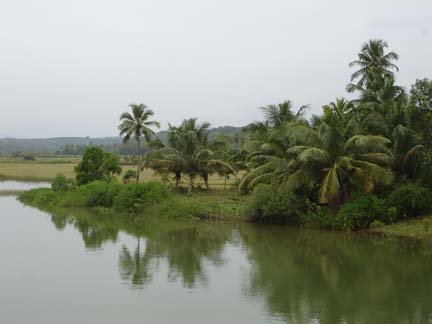
Holegadde near Honavar,Uttara Kannada dist, Karnataka

Copy? Right - but kindly remember to acknowledge!

Creative Commons License
This work is licensed under a Creative Commons Attribution 3.0 License.

" tulu-research.blogspot." ತುಳು ರಿಸರ್ಚ್. ಬ್ಲಾಗ್‌ಸ್ಪಾಟ್‌. ಇನ್

" tulu-research.blogspot."  ತುಳು  ರಿಸರ್ಚ್.  ಬ್ಲಾಗ್‌ಸ್ಪಾಟ್‌. ಇನ್
Have a nice day !