Saturday, December 10, 2016

372. The Pickle in Tulu: UppaD


Making pickles has been considered as one of the oldest methods of preservation of essential foods in the world designed especially for seasons of scarcity. Pickles of different types are quite popular all over the world since ancient days.  Archeologists have suggested that the ancient Mesopotamians pickled as early as 2400 BC. It has been considered that around the year 2030 BC, cucumbers were brought from India and were pickled in the Tigris Valley. The event fostered   a tradition and technique of pickling in Mid-East which gradually spread to Europe and eventually to the West.
There are reports that United States of America alone consumes some 5.2 million pounds (about 235 Tonnes) of pickle per year. Pickles of cucumber are quite popular now in Europe and the West. Marinated pickles of gherkin (a variety of dwarf cucumber) are popular in the list of exports from India.
However in India pickles of raw Mango are most popular followed by lemon, chilly and many other varieties of vegetables and greens. Pickled raw mango with chilly-mustard-spice paste is quite popular in India. The pickle is known as “Achar” in Hindi areas. We find similar and related word “Achat” in South East Asian countries. In India currently, spicy pickles made of chilly, spices, mustard and oil are quite popular. In Karnataka the pickle is known as Uppinakāyi and in coastal Tulu areas it is known as Uppad (‘d’ pronounced as in dog). Other varieties like Avakai in Andhra Pradesh, Tokku in Tamilnadu,
Incidentally, the English word “pickle” was derived from the Dutch word ‘pekel ‘ or northern German “pókel,” meaning salt (or brine). The salt or the brine (salt solution) is an important component   in the pickling process. Hence, the pickling or the process of preserving perishable items (vegetables, fish etc) appear to have been invented in coastal areas that are proximity with sea which contains rich repository of  the brine solution. Further popularity of pickles also led to the use of vinegar (Acetic acid) and other sour solutions for the preservation instead of plain brine (Sodium chloride) solution.
Origin   and evolution of  UppaD
It can be visualized that in the ancient days in Tulunadu, the pickles were originally made in a solution of sea water (brine) and as the time progressed the common salt dissolved in water was used as a medium of pickling. It was and is known as UppaD ( D pronounced as in English word dog).
In ancient India, only the pepper was a common ingredient to make dishes ‘hot’ (“khara” as we call in native languages) in taste.  (It is unfortunate that the English language does not have an equivalent word exactly to convey the “khara” taste !) It is an interesting to note that the green and red chillies which are quite ubiquitous in our Indian dishes were introduced and imported into India only after 15th Century CE after the advent of Portuguese. Thus the “khara” version of Uppad which we are familiar now is among us only since last five centuries.
Ancient versions of Uppad
 The Tulu language has preserved specific ancient words for older version of pickles without chilly. The traditional words existing in rural Tulunadu such as “UppaD-(p)acchir” and “NeeruppaD” clearly identifies the ancient varieties of pickles in Tulunadu and other regions in the country.
Uppad-achhir (normally marinated pickle of jack fruit avrils/lobes) and Neer-uppad (watery pickle) of raw mango and a  variety of vegetables were quite popular in rural areas. The Jack fruit   (Artocarpus heterophyllus Lam.) considered to be the worlds’ largest edible compound fruit, was a favorite ancient fruit in India.
UppaDacchir
The “Uppadacchir” is a pickle of unripe or moderately ripe jack fruits in brine solution (normally without the addition of   chilly and spices). The suffix “acchir” in this usage   is the short form of   “pacchir” which stands for the avrils (individual fruity lobes) inside the of jack fruit.
Etymology of Tulu Uppad
In Tulu language “Uppađ” (đ as in English word ‘dog’) is the equivalent world for the pickle. It would be interesting to explore the possible origin of the word Uppad especially for the sake of linguistic entertainment. The term Uppad can be analysed in two ways: (1) Uppu + ad (2) Uppu + pad.
In the first case ‘ad’ is a known morpheme of Dravidian heritage, which essentially means to cook or a dish. In the second case ‘pad’ is clearly a word of South East Asian origin or usage which again means a kind of dish. Since in Southern India (including coastal Karnataka) there are tangible evidences for imprints of ancient influence of both Dravidian and Austro-Asiatic cultures it is difficult to conclude at the outset whether it was Upp-ad or Upp-pad.
Morphemes ad and pād
The word   upp+ad   signifies a dish (‘ađ’) made of salt (‘uppu’). The Dravidian morpheme “ad” means to cook, as we find   ”adpini” (Tulu) for to cook ; adpil for kitchen; “ad-til” ( atil)  for cooking; adya or adde for cooked dish.  Similarly,  in Kannada “aduge” or “adige” for cookery etc. On the basis of sheer preponderance of words containing ad as a component, we can conclude that the etymology of Uppad is : Upp(u)+ad.
However there is another possible take in this word: Upp+pad. The ‘d’ again means a dish in South East Asian languages.  For example Pad Thai is a popular dish of Thailand which is a sort of stir fried rice with eggs shrimp etc. Similarly, “Nasi padang” is a rice dish of Western Sumatra, wherein the native word   “nasi “means the rice and “padang” a dish.
In Tulu Nighantu (Tulu Lexicon) we can find at least five shades of meaning for the word d. Such as (1)to keep or put (2) to sing or song (3) a state or condition (4) equality or impartiality and (5) the time interval between the arrival of two successive  waves in the beach.
Tulu being an ancient language it has absorbed words from different tribal languages during the course of its evolution. As a result of this absorption process phonetically similar sounding words but with different meanings, originally from different languages have survived and remained in Tulu.
Pāda
Incidentally, there is a Tulu word known as da which means an oil bearing vessel. This particular usage apparently has some relation to the Thai word pad which means a stir fried dish. The process of stir frying basically needs oil.
Pādya
 There is special word possibly connected with this discussion. The Padya refers to the first day of the lunar fortnight or the day following   a new moon or a full moon day. However, the etymology or origin of this particular word is not clear.
The day of Padya is normally associated with celebration or festivity as can be seen in the idiom padya parba. (For example: Bali-padya). Thus we can assume that pādya traditionally has been a designated day for preparing special dishes on account of recurring festivities.

R

Sunday, November 20, 2016

371. The Manser Community

The Manser community is one of the lesser understood, unfortunately   downtrodden set of ancient people. Nevertheless, the studies on the aspects of socio-cultural evolution of the community are significant in understanding the overall pattern of human evolution and heritage in the coastal Karnataka and the Tulunadu. 
The members of the Mansa community are distributed mainly in the coastal Karnataka especially in the districts of Dakshina Kannada, Udupi, and Kasargodu (Kerala). There may be distribution of members in Hassan, Kodagu and Chikamgaluru districts and elsewhere also. Because of the downtrodden stigma attached, now they prefer to be known as members of Adi-dravida , which means Early Dravidians. And some of them have embraced Buddhism.

 The term “Manser” is the plural form (in Tulu language) of the singular noun “Mansa”. It appears that the etymology of the word Mansa in their original language –now lost- of the Mansa language means the human being.  In this regard it is interesting to note that the ancient term Mansa has been adopted as the basic and essential term in most of the Indian languages to represent the human beings, the “Manush” or the “Manusha”.  These terms are conventionally considered to have been introduced after King Manu who, as described in our traditional legends, is considered to have repopulated the Earth/Bharathavarsha after a great deluge. In any case, the adoption of the ethnic word in Indian languages signifies the antiquity and significance of these ancient   tribes in our land.

Bari system in Tulunadu
Most of the tribes and communities in Tulunadu follow a genetic lineage system known as the “bari” system. In fact this recognition of genetic family lineages is characteristic of all ancient Indian communities and known as gotra or bali or bedagu or other terms in different languages and regions of India.  The members   of a particular bari lineage are considered blood relatives. And it was an ancient taboo to select and marry a person from the same “bari” lineage group.  And the custom of prevention marriage within relatives is also endorsed by modern geneticists in view of the fact that cross breeding would reduce the chances of recurrence of genetic defects in the off-springs.  The bari type of lineage systems prevailed in ancient societies before the formation of castes and communities. (For additional details peruse older posts in this blog).  Thus the antiquity of the bari system imparts special significance in the study of our evolution and culture.

Bari system in Manser
 Presently we could collect a list of 17 bari groups existing in the Mansa community of Tulunadu. The information has been provided by   Shri. Mohan R. Bodhi,   a member of the Mansa community through   the consistent efforts of my friend Shri Dinesh Salian Mulki. (Any of the readers having additional information may kindly add here through comment section or email)
1. Kannada-dān
2. Koḍyāḍ-dān
3. Kolambu-dān
4. Heena-dān
5. Māja-dān
6. Parike-dān
7. Bakuda-dān
8. Miyār-dān
9.  Kumer-dān
10. Angāra-dān
11. Bolya-dān
12. Pāle-dān
13. Ballad- dān
14. Vallad- dān
15. Kelinja -dān
16. Kallar- dān
17. Kandannāya

Basically, the list of bari groups in Manser reveals the nature of amalgamation of individual ancient tribes into the community of Manser. In other words, each bari represents an ancient tribes which   probably have lost their individual entities in the subsequent period of time.
(This is a common feature that has happened in the case of all traditional communities in the Tulunadu. Or, this may be a common evolutionary characteristic feature that occurred all over India. With influx of additional details, we can discuss more about the individual tribal units in later blogs.)
Maori tribes
Dr. Kota Shivaram Karanth, the well known multi-talented Kannada writer, has referred to these people as “Māri Mansa” in his writings. It is understandable that he has used an expression that was vogue in the society. In fact the preservation of the tag word “Māri” hints at an forgotten historical link in the origin and evolution of the community of these tribes.
 We have pointed out in older posts in this blog, several lines of evidence to prove that ancient African and Austro-Asiatic tribes immigrated to coastal Karnataka (and naturally other parts of India) and settled here in the antiquity. Essentially, the presence of significant number of   fossil words of African and Austro-Asiatic origin, amalgamated or still surviving as such in our languages and culture proves this theory.
In this light, it may be mentioned   that   the “Māri” in the epithet “Māri Mansa” is a corrupt form of the “Maori Mansa”. The Maori is a Polynesian tribe of New Zealand. There is an island of Manus near New Zealand. Therefore an ancient episode of immigration of Maori Manus tribes that settled in our coasts can be envisaged.   In the Maori language, the word Maori means normal or ordinary; thus the tribe Maori Mansa stands for normal human beings. Besides, one of the Austronesian tribes of Papua New Guinea is known as Mansa tribe.
"Mansa" is also a proper name in African countries like Mali. The term "Mansa" means a king in Mande language of Africa.
There may be several hints in our land and culture to prove this theory of ancient episode of migration and settling of Maori tribes in this land. One of the evidence is existence of “Maori Teertha” in Tulunadu.
Maori Teertha
In the Tulu pāDdana of Mugera Sandhi we find references to an open well/pond water source known as “Maori teertha”, located somewhere in Puttur or adjacent part of Beltangadi Taluk. The term “teertha” refers to an open source of water. (In case any of the reader is aware of the exact location of this open well/lake, it may be informed). The word Maori has no other meaning in the Tulu language, hence it should have been an ethnic fossil word brought by the ancient Maori   tribes. In other words the Maori teertha located in Tulunadu and cited in one of the traditional the pāDdana refers to a water source divined or conventionally used by the Maori people.
* *
Acknowledgement
The cooperation and help of Shri M.R. Bodhi, Mudabidri and Shri Dinesh Salian, Mulki in compiling the list of bari groups among the Manser community are gratefully acknowledged.
Appeal
Readers conversant with Manser culture and traditions are welcome to contribute additional information to this post.  
It is earnestly hoped that understanding the evolution of our culture and heritage would dissolve or at least decrease the pain and burden of down trodden and neglected sentiments among  some of our communities. It is aspired that the studies and consequent understanding the facets of social evolution would pave ways for an egalitarian and truly democratic society.


R

Wednesday, November 9, 2016

370. Tulasi- Venkataramana in Ankola


The different patterns of worshipping divine forces of the nature can be seen in different parts of the world. Traditionally the herb basil or Tulasi, which has excellent medicinal properties as recognised by our ancestors, has been the divine symbol of health, sanitation and prosperity for Hindus and we can see pedestal structures in front of houses wherein the herb of holy basil (tulasi)   is devotedly planted for regular nurture and worship. 
The holy basil is utilised by members of all communities, irrespective of religions, in the coast for the beneficial medicinal properties. 
The conventional pedestal erected for the implant of Tulasi herb in front of the Hindu houses is known as Tulasi katte in Kannada as well as in Tulu. In south Indian devout  houses the Tulasi is being worshipped on regular basis and annually special pooja are offered on the designated day of Tulasi pooje that follows  twelve nights after the joyful festival of lights, the Deepavali.


Tulasi pedestal with image of Venkataramana  in  Hichkad Village, Ankola, Uttara Kannada. 
Tulasi worship in Ankola
In Uttara Kannada district especially around Ankola we can see the modification of the Tualsi pedestal structures in front of the traditional houses into a small shrines  structure comparable  to the Spirit (‘boota’) shrines of Tulunadu. These shrines in front of the traditional joint family houses are commonly known as the “Tulasi”.  Normally one joint family shall have a common Tulasi which shall have adesignated member of the family to look after routine pooja rituals for the Tulasi shrine. 

It is interesting to note that the Tulasi shrines especially in Ankola region have been modifed to accommodate images of  Lord Venkataramana (usually along with other village deities or spirits). Thus we can see the vestiges of ancient spirit worship as well well the worship of Venkataramana fused into the worship and legends of the holy herb Tulasi. Probably this amalgamation occurred in this region about five to six centuries ago when a few Nadava families migrated  from the Kundapura region and settled in Ankola -Gokarna- Kumta region in coastal Uttara Kannada.
A wooden plaque containing sculptures of Venkataramana -and other wooden dolls probably representing village deities - are placed in front of the Tulasi pedestal which is housed inside a small shrine like structure. Routine rituals connected with Tulasi with Venkataramana (with other minor deities)are conventionally conducted by a designated senior member of the joint family.
Such Tulasi-Venkataramana shrines are not newly constructed in newly built houses these days. Only the older composite Tulasi shrine structures belonging to the particular joint families of the yester years are being renovated and maintained.
Tulasi marriage
In Karavali West Coast on the twelfth night (“dwadashi”), traditionally people celebrate a festive night known as “Tulasi parba”. The Tulasi festival conducted with lamps lighted up around the decorated pedestal of Tulasi in front of the house is traditionally considered to be the annual celebration of the ancient  event of marriage of the Lady Tulasi with Lord Vishnu.


R

Monday, October 31, 2016

369. Paradox of Parkala

The modern interpretation of many of the ancient place names may not always be considered as perfect or final, because of the inherent uncertainties involved.  Basically the toponym interpreter should take cognizance of the, environment, language and culture that prevailed during the time period of adopting a particular toponym. The uncertainties arise basically due to the obscure nature of our understanding the history, language and environment and the timeslot of adoption of such a kind of nomenclature.
Parkala
Let us consider the example of a place name like Parkala. The village of Parkala, as many are aware, is a small rural place near the famed town of Manipal in Udupi. Since there are no major ancient temples in the village there may not be existence of mythological pattern of history (sthala purāna) associated with the village of Parkala.
Tulu Parkala
If you consider the toponym to be a basic Tulu word then the word analysis would be para+kala,  where para usually means the old and the word kala represents a quadrangle, plot or enclosure,  that may be used for meeting, judgment, entertainment, worship or combat.
But note: the toponym is Parkala and not Parakala! It may be difficult immediately to decide whether Parkala means same as Parakala.

Other possible source of meanings
 In case 'par 'in Parkala does not mean 'old' then, some of the  other possible explanations for the originally intended meaning by our ancestors for the place name “Parkala” could be one of the following:

1. Parkala (parapu = to flow; stream).  Tulu word 'parap(p)u'' means bathing ghat in the riverside (cf.Tulu Nighantu). The River Swarna flows by the side of this village located near Manipal. ( Thus, possibly “Parkala”= A  quadrangle by the side of river.). This choice appears valid as the Kannada translation of the place name matches with the interpretation. The Kannada translated name 'Harekala' incidentally contains 'hari' which also means to flow.

2. Para (=respectable; supernatural) + Kala (=place, quadrangle).  A revered place or shrine.

3. Para (= Outside people; immigrant) + Kala (Assembling Place).  It could have been a colony for immigrants, like ‘Agrahara’ for Brahmins. (Compare with another similar place name, like “Parampalli”.) 

4. Par (ಪರ್) + kala (ಕಲ/ಕಳ):  (par = to drink.)  Thus, Parkala could have been an area earmarked for consuming liquor or intoxicant drinks.  Like, an ancient army camping place, where ‘Chakan’ is an indispensable place for food and drinks (See our Post on Chakan).

5. Parkala  ( Bengali/ Munda)= glass, lens, mirror.


6. Parkala ( Hindi) = (i ) staircase ( सीडि ) ; veranda, square or threshold ( चौकट). (ii) piece of glass; (iii) cinder (अंगार/ चिंगारी).

Many Parkalas’
If you go beyond the limits of ancient Tulunadu you shall find there are quite a many Parkala villages other than the one we started with. The census of India data for 2011 will enlighten you on the presence of villages named as Parkala in Telangana as well as in Jharkhand. In Chattisgarh you can find a Parkal kasba. There may be many more hamlets carrying the same name in other parts of India.
Pa to Ha transition
In coastal Tulunadu, the transition of administrative languages from Tulu to Kannada has been evident in place names probably coinciding with the suzerainty of Vijayanagara empire, which extended up to the West Coast.
Thus, we find transition of place names like Perur to Herur, Perga to Herga and so on especially in the region of Udupi and Kundapur that centered on the Barkur State of Vijayanagara administration.
In the same vein, we find Harekala (in southern part of Mangaluru) which probably was the translation of older name Parkala.
Ambiguities
But the interesting thing here is that Harekala is not an exclusive Kannada word as we find the toponym Harkala also in West Bengal.
Thus, it should be noted that the pa- to ha- transition is not exclusive to Kannada. The distribution of the word in a wider region beyond the general limits of Dravidian languages renders that the actual meaning of the term par/para/har/hare in the toponym Parkala  remains to be concluded.
One of the famous religious center (Mutt) in Mysore is known as Parakala Mutta. It is not clear whether the Parkala and Parakala are related and mutually relevant words. Similarly a high grade calico cloth produced at Sonargaon, West Bengal during 17th Century was also known as Parkala.


Meaning of Parkala?

If we think that Parkala has been translated into Harekala, then it may be noted that the meaning assigned to para (=old) in Parkala has not been translated to hale (=old) in Kannada. Again, we are led into confusion of accepting hare as alternate form of hale or a word of unknown or uncertain meaning. (Some may even argue that hare is a version of arey which means rock).
However, choosing from the list of other possible meanings, it seems the term par or hare/hari which means  'to flow', representing a flowing river appears to be more closer to the originally intended meaningThis seems apt as the the place Parkala is located on the bank of River SwarnaThus the original meaning of the place Parkala would be a quadrangle or enclosure by the riverside.

Beyond limits of Tulunadu
 As we have reported in many older posts in this blog, the Tulunadu and parts of Karnataka, share many of the presently odd sounding place names with Eastern coast especially Andhra, Orissa West Bengal, Jharkhand and Chattisgarh. Therefore one cannot argue that the pattern of toponym analogy as mere coincidence.

Deciphering the ancient tracts of migration as evident in the distribution of toponyms which reflect the   exchange of language, words and culture would be useful links in understanding our roots. Besides it may be hoped that the proper and realistic understanding of our roots and the history would go a long way in forging national integration.


Tailpiece: On Pareeka

‘Pareeka’ is a locale near Parkala, notable for a Naturopathy Hospital. Incidentally, the term   Parik or Pareek also refers to an ethno-linguist group of Brahmins from Rajasthan and Gujarath. ‘Parikh’ in Gujarathi means ‘assayer or examiner’ (of diamonds) from Vanik (= Merchant )class. The people of the community usually profess descent from the legendary sage Parashara.

RV

Tuesday, October 25, 2016

368. Bari lineage groups in Koraga Community


The study of the evolution of bari lineage system in Tulu communities is an interesting subject given its importance in the overall evolution of the heritage, language and culture in the region. The Koraga community being one of the earliest settlers and inhabitants of this land bear clues to the early evolution of our heritage. A popular spirit deity from the Koraga community known as Koragajja, has been considered a powerful spirit and is being believed and worshipped by many devout people.
However, the community in general has been ignored and remained backward and poor for many years. The situation is being remedied in the recent years as a result of encouragement and support from the governments well as welfare agencies and it is hoped the community shall get better employment opportunities and live with natural justice and pride on par with rest of the members of the society.
Agave fibers for clothing
Traditionally, fibers derived from “daddel” shrub (Agave) are offered symbolically along with “aghel” (offering) to the dead along with food offerings in the posthumous ceremonies among the Koraga community. The usage of agave fibers as symbol of cloths among the Koragas,   is a vestige of ancient practice of offering clothing material to the dead along with food.  Bālarāj suggests that the fibers of agave were used for fashioning cloths in the early days of civilization among the community.
Bari system
The Koraga community follows the bari   system of genetic lineages like other Tulu communities. Probably, for the first time, we present information on the bari   lineages existing in Koraga community.
Naḍusāl bari lineages
Traditional Tulunadu region has been conventionally divided into northern part, central part and southern part for convenience of reference. The central part (from Pavanje River upto Brahmavara ) is commonly referred to as “naḍu-sāl” among the tribes. 
Five baris in the nadu-sāl Korags:
 1 Tadpennār
2. Pāddyanār
3. Tirgenār
4. Mookenār
5. Kundaranna
Among the Koragas of the “baḍakāyi sāl” (northern part)   and” tenkayi sāl” (southern part) may have different bari lineages. (Data to be collected).
Equivalent baris
It is interesting to note that the five baris have equivalent baris existing in other Tulu communities. The Taḍpenār is considered equal to Tālianna or Salian bari. The Pāḍḍyanār is considered equal to Bangera or Bangeranna    lineage among other communities. The Tirgenāar Is considered to  be equal of Shriyaan lineage and Mookenār has been considered to be equivalent of Muncharianna and Kotian baris.

Analysis and implications
It is interesting to note that at least three of the above cited five baris are apparently unique to the Koraga community and probably not repeated among other communities. The Mookenār and Kundaranna appear to have been present in other Tulu   communities.  
It appears the three basic baris-  Taḍpennār, Pāddyanār and  Tirgenār indicate three types of early professions followed by these tribes in the early civilized society. Based upon simple word analysis of the bari names, we can infer that Taḍpenār originally represented   a set  of tribal artisans specialized in basket weaving and “ taḍpe” making. A taḍpe is a traditional woven hand crafted plate designed from tender pieces of bamboo stalks or other similar type of tender plant material and utilized in cleaning rice and other grains.  The Pāḍḍyanār, possibly represented tribal artists  devoted to singing ballads, the pāḍ/pāḍḍya being referred to songs. In the same lines the Tirgenār bari probably represented the group of wanderers who conducted the marketing of the handicraft products among the civilized society. The word “tirgu” means to wander, spin or rotate”. However, Shri Balaraj suggests that the Tirgenār is the person who is able to divert the decisions in tribal panchayat meetings.
The origin and meaning of the lineage sects Mookenar, Muncherianna and Kundaranna are not clear at present: It is probable that these baris represent ancient tribal groups/subgroups that merged with the community.
Recognition of equivalent baris has certain important implications. One, it suggests that those baris considered  equal to the basic Koraga baris possibly represent parallel tribal groups that settled,  inhabited and probably partially assimilated with the community in the antiquity. Two, it suggests that in the early historical period, the degree of communal discrimination was insignificant among the tribal communities. such that members of the Koraga tribal community could openly consider equivalents among the newly invaded and settled tribes in the land. In other words all the tribes were relatively poor and shared common problems of livelihood. And the discrimination in the tribal society probably was set in later as a consequence of recognition of socio-economical   rich- poor dichotomy among the various tribal groups.

Acknowledgements
The essential information is gathered from Shri Palli Gokuldas (80 years) and Shri Bālarāj Kodikal, two leaders of Koraga Community in   Mangaluru. The interview was arranged on 15-09-2016 with the help of Shri Dinesh Salian,   Mulki and Shri Peroor Jāru. The blogger is indebted to these gentlemen for kindly providing the information and sparing their time and efforts for him.
.R

Friday, October 21, 2016

367. A wild spice: Jummana /Kavunte kāyi

Jummina (or Jummana) is a wild thorny tree common to rainy areas of Malnād and Karāvali  It is known as Zanthoxylum rhetsa in botanical circles.. The thorny tree with moderately large leaves bears pungent tasting bunch of berries known as Jummina kāyi in Uttara Kannada.  
 
Jummana  (Kavunte) with berries
In coastal cuisine the dried outer skin of the Jummina (Kavunte) berries are used as spices for imparting a special taste to fish curries, especially Bangude. People consider that the wild spice has anti-flatulant characteristics to ward of possible ill effects of indigestion especially associated with fishes like BangudeThe Indian tree is considered to be a cousin of Szechuan pepper (Zanthoxylum piperitum) a popular spice in Chinese and Thai cooking.
In the villages of Tulunadu, the berries of the tree are commonly known as Kavunte kāyi or Petala kāyikāyi = berry of the plant), which is used by rural children for playing as toy bullets.  The children while playing make piston like structures in the form of tubular structures from selected plant stalks, inside which rod like plant parts, are used to drive out the berry bullets forcibly such that berries explode with a thud sound.
 The “Jummina” term might have been adopted because of the stunning “jumm” kind of pungent feeling you get while tasting the outer cover of the berry. Our Konkani and Marathi friends call the tree by the name of   Teppal or Tirphal.
The tree bears fat thorns on the stem that are used by children to make rubber stamps. The thorns of Jummina tree are also used in the Yakshagana costumes, especially for designing the thorn like shoulder ornaments (known as “bhujakeerti”).

R

Friday, October 14, 2016

366. Mystery of Gokarna and Havyaka

Many of the place names that appear simple on the face may in fact be more complex in reality because of the obscurity in the historical evolution of our land.   It is necessary that care should be taken, while deciphering the original meaning intended and attributed to the place name, by our ancestors who gave the particular name at a remote point in the past history.     Similarly it would be wise to discard the apparent  but untrue meanings that may be attached to  the  name because  of      limitations  in  our  understanding the history and meaning of  the original word. Let us analyze the place name Gokarna and its relation to ethnic words Ha(v)iga and Havyaka.
Legends of Gokarna
Gokarna is a well known place in West Coast of Karnataka, located on the flank of Aghanāshini River in Kumta Taluk, Uttara Kannada district.  The Gokarna is a renowned tourist spot famous for Hindu religious ceremonies especially in the celebration of traditional posthumous rites apart from attractive beaches like Om beach, Kudle beach and main Gokarna beach.
Legends related to the epic Ramayana describe the Gokarna as the place where Asura King Rāvana, while carrying Ātma-linga requested Lord Ganapati (Ganesha) to hold the Ātma-linga for a short while as he wanted a brief respite from the burden. But legends envisage that   the Lord Ganapati tactfully or rather playfully placed the Linga on the coastal sand which was installed permanently. The Rāvana who returned to the site was perplexed to find that the Linga could not be moved from the place in spite his best physical efforts. Ultimately, Rāvana had to leave the Ātma-linga entrenched in that place which later became famous shrine of the Lord Shiva in the name of Mahābaleshwara.
Toponym : Gokarna
The analysis of the toponym (place-name) Gokarna appears quite simple at the outset as it apparently contains two rudimentary Sanskrit words:  Go (=cow) and karna (=ear).  Therefore Gokarna=Cow’s ear. There are legends supporting the hypothesis of Cows ear stating that the Ātma-linga came out a cow’s ear.
However, if you are a serious   student of Indian place names, you may feel that it is unusual that a place should be named after the ear of a cow (in spite of our respect for the holy cow).
The basic reasons for dissent are:
(1) The place names coined by our ancestors reflect the words selected from the language existing at that time in that region.
(2)  Most of our place names are desi words which may have been modified in the due course of time. (The term desi usually reflects the words derived from Prakrit, Munda or Dravida languages.)
(3)  Most of our ancient place names end with characteristic spatial indicator suffixes or morphemes like –na, -ka, -ga, -sa, -ba, -va,-ma, -la,-ala, etc (or their variants and modifications.).  (You may peruse previous/older posts in this blog dealing with toponymic analyses).
(4)  If you apply such a kind of logical place name analysis, then, the origin of the word would be: Gokarna = gokar + Na.
Many Gokarnas' !
It may surprise you to know that there are many places in India,  known by the name of Gokarna. The census of India 2011 database reveals that that are several villages distributed in different states of India, carrying the name “Gokarna” with or without additional modifier suffixes. A few places named exactly as "Gokarna" also exist in Gujarat and West Bengal besides Karnataka.
This may lead to controversy  as to which was the actual Gokarna referred to in the epic Ramayana.  Note that there is a village by the name of “Gokarni” in West Bengal. In Uttar Pradesh, there are "Gokhar" as well as "Gokhari" villages. In Uttara-khand, "Gokhuri"  and in Rajastan, "Gokhri" named villages are found.  Besides, there are many villages bearing  varying names such as: "Gokhara", "Gokharpada", "Gokarnapur", "Gokarnabinda", "Gokarneshwar", "Gokarnakhal", "Gokarnameri" and "Gokharkuda" especially in the State of Odissa. There is village known as "Gokhar Bedi" in Madhya Pradesh.  In Gujarat, "Gokharva" and "Gokharwala", villages are found. In Andhra Pradesh, apart from villages named as “Gokarnapuram” you will also find “Gokarnapalle” and “Gokaram”. In Bangalore District near Devanahalli there is a “Gokare” village. You can also find villages named “Gokhar” in Uttar Pradesh and Nepal.

Gokhar: the Nāga cult
Gokhar (or Gokar) means Nāga, cobra or serpent in Prakrit and its derived languages like Odissi.  Therefore, places known as Gok(h)arna  were ancient villages, originally were named after the  cult of Nāga, which was a holy deity for the native tribes.   The prevalence of ancient cult of Nāga worship  has been well known in different parts of ancient India.
Thus, the Gokarna and its derivative toponyms are suggestive of ancient areas dedicated to the cult of Nāga worship in the antiquity. These place names also indicate that in these regions Austro-Asiatic Munda and/or Prakrit languages prevailed during a specific period in the past history.
That the toponym Gokarna originally meant place of serpent cult can also be proven by the existing alternate historical name for the Uttara Kannada (region around Gokarna) by the name of  “Haiga” ( or Haviga).

Haiga, Haviga = Gokarna
The analysis of the place name "Gokarna" (= village of Nāga ) throws light further on another disputed term in the Indian history : Haiga or Havika. The Kannada dialect in Uttara Kannada district is generally pronounced little bit faster ,such that some of the words unintentionally get mutilated or distorted in the spoken language. Thus the term "Haviga" is generally pronounced as "Haiga" in the local dialect of Gokarna and surrounding areas. We can see that 
the word “Haviga” [Hāv+(i)+ga] in Kannada is equivalent of  Prakrit word "Gokarna," as hāvu means Nāga or serpent in Kannada and –ga is an ancient suffix indicative of a settlement, habitation or village. Thus Haviga (also Havika or Haiga) is the Kannada eqivalent of the Prakrit place name Gokarna.

Lingual transition: Prakrit to Kannada
Thus, the place name Gok(h)arna on translation to Kannada has become Havika or Haviga, where in suffix -ka or -ga is indicative of habitation, similar to the prefix -na in Gokharna. This is suggestive of an important historical fact which documents the change of administrative language in the region from Prakrit to Kannada. The date of lingual transition probably can be assigned as ca.300 CE.

Havyaka
Thus it can be realized that the Brahmins originating from Havika or Haviga (Uttara Kannada district) area of Karnataka are traditionally designated as Havika or Havyaka Brahmins.  The word Gokhar is known as Haavu in Kannada. 

Controversies
However, the origin of the word “Havyaka” has also been disputed in learned circles. Basically,
 so far there are two schools of explanations in vogue with regard to the origin of the word "Havyaka".
(1) It has been suggested that the category of Brahmins traditionally engaged in the rituals of offering Havana (Havya) and Homa were considered as Havyaka.
(2) Alternately, the category of Brahmins,  hailing from the region of "Haiga" were known as "Havyaka".

(3) It can be seen that the origin of the word "Haiga" ( or Haviga) is itself has been somewhat controversial, as there is  a school of thought suggesting that the word "Haiga" might have been derived from the term "
Pashuka". There has been a suggestion that Haviga came from "aavu" which means cow in Old Kannada.


Of all the hypotheses discussed above, it appears that the word "Haviga" (shortened to Haiga as it is customary in the dialectical version of Kannada of Uttara Kannada) gave rise to the word Havyaka - one related to the region of Havika/Haviga.  Clearly, the term "Havika/Haviga" is the Kannada translation of the Prakrit place name word "Gokarna". 
Thus, the Gokarna region of Uttara Kannada,   has been known as “Haiga” (or “Haviga”) in historical documents probably after 3rd Century  CE. The native (Kannada) word ”Haiga” was the deformed version of the Kannada word Hāviga.  

Ucchila(=Gokarna, Haviga)
In this context, we can study a similar meaning, analogous place name from Tulunadu. The place name "Ucchila" is equivalent of Gokarna or Haviga as Ucchu+ila means habitation (-ila) of the Serpent (Ucchu). There are at least two coastal villages in Tulunadu (1.Near Kapu, Udupi district and 2.Near Manjeshwar, Kasargodu District, Kerala) bearing the name of Ucchila.

Historical implications
Thus it is concluded that term “Hāviga” or “Haiga “ as employed  in historical inscriptions refer specifically to the region of Gokarna in Uttara Kannada. Corroborative historical data (discussed elsewhere and also in our older posts,) suggests that Prakrit language prevailed as administrative language in Karnataka probably up to ca. 200 or 300 CE.  Further, Kannada language dominated and took the place of regional administrative language, which is also evident by the natural translation of the Prakrit term Gokarna into Hāviga. 
Thus, it can be concluded that "Haiga" was the Kannada term for the "Gokarna" (in Karnataka) and the term Havyaka as applied to the group of people meant the Brahmins of Gokarana (or Haiga) region.  
It is interesting to note that out of the two analogous terms, Gokarna and Haiga (Haviga), the latter has gone out of usage in the long run, whereas the former has remained in active usage. The term Gokarna stayed with the people as favorite, possibly because of its  appeal as a word apparently akin to Sanskrit, the widely respected language, . 
R

Blog Archive

Books for Reference

  • A Comparative Study of Tulu Dialects By Dr. Padmanabha Kekunnaya. Govinda Pai Reserach Centre, UDupi. 1994
  • Koti Chennaya: Janapadiya Adhyayana. By Dr. Vamana Nandavar. Hemanshu Prakashana ,Mangalore.2001.
  • Male kudiyaru. Dr B. A.Viveka Rai and D.Yadupathi Gowda, Mangalore University,1996.
  • Mogaveera Samskriti By Venkataraja Punimchattaya. Karnataka Sahitya Academy.1993.
  • Mugeraru:Jananga Janapada Adhyayana. By Dr Abhaya Kumar Kaukradi.Kannada & Culture Directorate,Bangalore & Karnataka Tulu Academy, Mangalore,1997.
  • Puttubalakeya Pad-danagalu. Ed: Dr B.A.Viveka Rai,Yadupati Gowda and Rajashri, Sri Dharmasthala Manjunatheswara Tulu Peeta. Mangalore University.2004
  • Se'erige. Ed:Dr K.Chinnapa Gowda.Madipu Prakashana,Mangalagangotri,2000.
  • Studies in Tuluva History and Culture.by Dr P Gururaja Bhat (1975).Milagres College,Kallinapur,Udupi.
  • Taulava Sanskriti by Dr.B.A.Viveka Rai, Sahyadri Prakashana,Mysore 1977
  • TuLu naaDu-nuDi By Dr.PalthaDi Ramakrishna Achar, Puttur.
  • TuLu NighanTu. (Editor in Chief: Dr U.P.Upadhyaya, Govinda Pai Research Centre,Udupi. Six volumes. 1988 to 1997
  • Tulu Patero-A Philology & Grammar of Tulu Language by Budhananda Shivalli.2004.Mandira Prakashana Mangalore. p.317. (The book is in Tulu Language using Kannada script)
  • TuLunadina ShasanagaLa Sanskritika Adhyayana. By Shaila T. Verma (2002) Jnanodaya Prakashana,Bangalore, p.304.(Kannada)
  • Tuluvala Baliyendre. Compiled by N.A.Sheenappa Hegde,Polali,Sri Devi Prakashana,Parkala,1929/1999

A Coastal estuary

A Coastal estuary
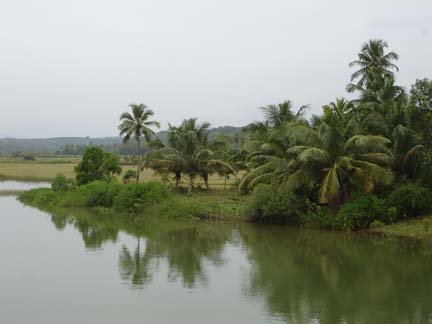
Holegadde near Honavar,Uttara Kannada dist, Karnataka

Copy? Right - but kindly remember to acknowledge!

Creative Commons License
This work is licensed under a Creative Commons Attribution 3.0 License.

" tulu-research.blogspot." ತುಳು ರಿಸರ್ಚ್. ಬ್ಲಾಗ್‌ಸ್ಪಾಟ್‌. ಇನ್

" tulu-research.blogspot."  ತುಳು  ರಿಸರ್ಚ್.  ಬ್ಲಾಗ್‌ಸ್ಪಾಟ್‌. ಇನ್
Have a nice day !