Sunday, September 16, 2018

409. Non-Greek words in Oxyrhynchus papyrus No. 413


In the year 1897, archaeological excavations in a place called Oxyrhynchus in Lower Egypt unearthed a number of ancient papyri documents. A papyrus is a vegetal material prepared from the pithy stem of a watery plant. In ancient Mediterranean areas, before the days of invention of writing paper, the papyri were used for writing, drawing or painting instead of paper. These papyri discovered at Oxyrhynchus were subsequently transcribed and published by British historians Bernard Payne Grenfell and Arther Surridge Hunt in the year 1903 through Oxford University Press. One of the Oxyrhynchus papyri, No 413 (often denoted as P. Oxy 413) on which a Greek farce (drama) has been written, also known as “Charition mime”, dated approximately second century 150 CE, has been found to contain several non-Greek words. Charition was the name of the lead lady character in the farce.

A German Professor, Dr. Eugene Hultzsch, an Indologist, expert in Sanskrit and Dravidian languages, was the first to recognize Dravidian “Kanarese” (Kannada) words in the Charition mime. The English translation of his paper was published in the Journal of Royal Asiatic Society in 1904.

Mysore Archeological Report for the year 1926 -27 carried an article on the said Oxyrhynchus papyrus No 413 and interpreted the non-Greek words to be words of Kannada language. In that, it was interpreted to have been connected with Malpe seashore near Udupi on the West Coast of Karnataka India. Subsequently, S Srikantaiah published a paper on this issue in Quarterly of Mythic Society of Bengaluru and interpreted the non Greek words to be of Tamil language.

Further a number of Kannada experts like R. Shama Shastri (then Director of Archeological researches in Mysore), B.A. Saletore, Hampa Nagarajaiah etc have looked into these strange words and have offered their opinions interpreted as Kannada words. However, some Western authors like L.D Barnett (1926) have expressed their serious doubts regarding the ‘Kanarese’ (Kannada) interpretations.
Manjeshwara Govinda Pai published an analytical review on the topic in the year 1929, which has been reprinted in the commemorative volume (“Govinda Pai Samshodhana Samputa: 1883-1963”). Budhanand Shivalli (1982) in “Tulu Patero” also reviewed the discussions on the said Oxyrhynchus papyrus.
Excerpts of the last two write ups shall be discussed in this post, of course peppered with our analytical observations.

Theme of  Charition mime (Oxyrhynchus papyrus No.413)
A boat carrying a group of Greek tourists consisting of a young lady, Charition and others was wrecked up while sailing in the Indian Ocean and the inmates reached a coastal village apparently, in the West Coast of India. The girl and servants were held captive in a moon temple under the aegis of local King or chieftain. Later her brother came searching for her and found her in the temple and planned to take her home. A wine party was arranged in the village by the brother.  While the chieftain was intoxicated in the party the brother rescued his sister and takes her back   to his homeland by boat.

Greek alphabets
Govinda Pai (1929) has pointed out that the Greek alphabets are basically deficient in aspirates, so as to express Indian words clearly. There are specifically no- cha (), chha (), ja (), jha (), jna(); Ta (), Tha (), Da (),  Dha (), Na (); sha (), shha (), ha (), lha ()  in the Greek alphabets. So interpretations of non Greek words in the mime should necessarily take heed of these absent alphabets.
Indian seashore : Malpe?
The mention of “Indas Pelagos” (=Indian Ocean), “Indas Promoi” (Indian chiefs) and reference to the Paral…[Parolios/Paralion](=seashore) in the Greek farce, suggests that the non-Greek words could be referring to the Indian seashore. Consequently, some of the Kannada experts interpreted the phrase “malpiniak..” in the farce as ‘Malpe Nayaka’ or a chieftain of the port town of Malpe, near Udupi.
However, there are some issues in the Greek farce that do not match with the Malpe setting. Like the reference to “thea Selene” (the moon goddess), popular in Greek mythology. We have not heard of the cult of moon goddess in Karavali coast in records. Similarly, the river Psolichus apparently does not matches with any of the existing rivers around Malpe.
Yet, it has been suggested that such logical discrepancies (or apparent inaccuracies) reveal that the farce composer/writer did not actually visited India but probably heard about these Indian words and milieu  through discussions with sailors or travelers who had traveled Indian ports; and that the words were used in the farce just for fun. Even Greek historians Pliny and Ptolemy are said to have based their descriptions of ancient India based exclusively on the accounts they heard from sailors.

Probable Kannada words
Some samples of the probable Kannada words recognized or interpreted in the Greek farce by various Kannada experts are as follows:
Echousi=ಏ ಕೂಸೆ.
Kraunou=ಕರೆವನೌ, ಕರೆವನೊ
Lalle=ಅಲ್ಲೆ
Laita Lianta lalle=ಐತಾ ಅಂತಾಳಲ್ಲೆ
Laspathia=ಲೇಸು ಪಡೆಯ
Arminthi=ಆರ್ ಮಿಂದೆ?
Alemaka =ಅಲೆ ಎಮ್ಮಕ್ಕ
Minei=ಮೀಣವೆ?
Seo sarachis=ಶಿವ ಸಂರಕ್ಷಿಸು
(S)ouamesare=ಸೋಮೇಶ್ವರ
Apuleuksaar= ಆ ಪುಳೆಯ ಕಸರು.
Etc.

Probable Tulu words
If the place they arrived at was Malpe, the language around the period 150 CE should have been Tulu rather than Kannada. Budhananda Shivalli(1982) transcribed the non-Greek phrase “Malpiniak ourouk oukooubj”   into Tulu language as (“ಮಲ್ಪಿ ನಾಯ್ಕೆ ಒರೊಕು ಓಕೊಮುಜೆ”), the Malpi Nayaka does not respond at once (since he is drunk).
Besides, the transcription of one of the non-Greek word namely, “menai” (“ಮಿಯಾನಾ?”) - appears quite close to the native Tulu version of “Did you take bath?”
Shiva Prasad (1985) and Padmanabha Upadhyaya (1996) have also explored the possibility of Tulu words in the Charition mime.
Malpe or Alupe?
Govinda Pai (1929) noted that in Greek there is a practice of adding ‘m’ to words beginning with vowels ,based on the information he gathered from Liddel and Scott’s Greek English Lexicon ,p.408. (He interpreted the word “martha” in the farce   as “artha” based on this presumption.
If we extend the logic and apply it to the word “Malpiniak” in the farce, it would be:  ”Alpiniak” or Alupe Nayak!

DISCUSSION
The Charition mime in Oxyrhynchus papyrus 413 has been considered as an anonymous adaptation of earlier Greek drama “Iphigenia in Tauris” by Euripides, composed between 414 and 412 BCE. The theme of Charition mime has shades of influence of the drama of Odyssey. The farce may have been composed by an unknown writer under the influence of earlier Greek dramas such as Iphegenia and Odyssey. The writer apparently composed the theme of Charition based on the accounts he heard from sailors to Indian ports.
Thus the reference to the temple of “Thea Selene”, the Mood Goddess whose cult was prevalent in Greek region, appears strange to Indians since we have no record of Moon Goddess here. Some have tried to identify Indian God “Someshwara”, Shiva with moon, but it is not known if the cult of Someshwara existed during 2nd century CE or earlier, as the Shambu kallu Someshwara temple at Udyavara has been estimated to be of about 9th century CE. 
The place of action on the Indian coast has been identified as Malpe (near Udupi) based a phrase containing reference to “malpiniak..” It is possible that it was the name of the chieftain, something like Mallappa Nayka. Alternately, if we consider that the initial m in the phrase “malpiniak” was added customarily, then without initial m, the word would be:  “Alpiniak” or Alupa Nayak.

Alupe
It appears that the Alupe suburb, in eastern part of the present Mangaluru city,  was the coastal port village during the period of composition of Charition mime. The Alupe was the home town of  historically renowned Alupa kings of Tulunadu,

Why not Malpe?
Why the place could not have been Malpe, which is presently a port on the West Coast? Because during the estimated period of composition of the Charition mime (ie. about -or before- first century CE, the Western strip of present West Coast (including Malpe) was under the Sea.(Read our Post No.  On “Parashurama Shristi”).
Note that the Greek travelogues of the same period attributed to Pliny and Ptolemy have recorded port towns of “Oloikhor”a (interpreted as “Aluvakheda” or Alupe , located  in the Eastern part of Mangaluru city) and “Bacelore”  ( interpreted as Basarur, East of Kundapur). There are no mention of Malpe, Mangaluru or Kundapur in these records.
The language involved in these non-Greek words is also disputable. Recent researches (Shettar, 2007 ) suggest that in the early centuries Prakrit was the administrative language in ancient Karnataka rather than old Kannada. The Ashok edicts found in Karnataka are also in Prakrit language (300 BCE) rather than Kannada. Similar lingual situation could be deciphered in coastal regions of ancient Tulunadu.
Though Tulu was the dominant language in Karavali about 4th century CE, before that period the available evidences suggest that either Tulu coexisted with Munda and Prakrit languages  or Prakrit/ Munda were the administrative language, as we find a rich list of place names in Tulunadu suggestive of Munda/Prakrit origin.
 I can give two simple examples to show the influence of Munda words in Tulu language during the early history: (1) The Tulu calendar year stars with the month of “Paggu”. The ‘paggu’ is a word of Munda origin which is the name of a traditional Munda festival. (2) The common word for surname in Tulu is “bari”.  Bari is another word of Munda origin which means a house (Note that word equivalent of Tulu ‘bari’ community-surname,  in our neighboring  Malayalam (Kerala) is “illam”, which also means house.)

In view of the known prevalence of Prakrit and Munda langauges in the peninsular India during the early period of Common Era, experts may need to look into these non-Greek words in the mime from the viewpoint of in Prakrit/Munda angle also.

REFERENCES
Budhananda Shivalli (1982) “Tulu Patero”: A philology and grammar of Tulu language.(in Tulu language). (ed: Dr B M Ravindra), Mandira Prakashana, Mangaluru, Karnataka, 2004, 318.p.
Govinda Pai, M. (1929 ) “Greek prahsanadalli kannaDa mAatugalu.: Oxyrhynchus Papyrus No 413” (in Kannada ). pp.67-76, In: Govinda Pai Samshodhana sampuTa (eds: Heranje Krishna Bhatta & Murulidhara Upadhya Hiriyadaka). Rashtrakavi Govinda Pai Samshodhana Kendra, MGM College, Udupi-576102.Karnataka. 1392 p.
Govinda Pai, M. (1961 ) “Udupi”. (in Kannada ). pp.647-649, In: Govinda Pai Samshodhana Samputa (eds: Heranje Krishna Bhatta & Murulidhara Upadhya Hiriyadaka). Rashtrakavi Govinda Pai Samshodhana Kendra, MGM College, Udupi-576102.Karnataka. 1392 p.
Shettar,Sh (2007) “Shangam tamiLagam mattu Kannada nAdu – nuDi: Aarambha kAlada draviDa sambandada chintane” (in Kannada). 262 p.Abhinava,Bengaluru,Karnataka,2010.
www.en.wikipedia.org/wiki/Charition_mime
www.wikivisually.com/wiki/Papyrus_Oxyrhynchus_413

Sunday, September 9, 2018

408. Temples of Udyavara, Udupi


Ancient Shambhu-kallu Shiva temple. Rear side. Semicircular shaped architecture..
Udyavara (in present-day Udupi District) was an ancient port city, renowned for its flourishing marine trade with Arabs and Romans.  It is also remembered as one of the Capital Cities of famous Alupa Dynasty.   They ruled Tulu Nadu in circa 450 CE to 15th C.  We  get first reference of them in Halmidi Inscription of Hoysalas. The early history of this Dynasty is hidden in the secrets of history. 

There are several temples in and around Udupi, besides the famous Krishna Math Temples complex in Udupi proper. Most of them are known as Shakti-sthalas, being centres of worship of Sapta Matrikas (Seven Mother Goddesses).  Alupa dynasty was ruling erstwhile Tulu Nadu, spanning from Gokarna/Ankola/Baindur to Kasaragod and parts of Malenadu for nearly 1200 years uninterrupted though they became vassals of Kannada Kings at certain points of time in history.  They were Hindus and embraced Jainism after coming in contact with Hoysalas of Belur-Halebeedu.  They patronized both Hindu and Jain temples.  Udyavara witnesses many Hindu temples. Please visit our recent Posts on Mangod Subramanya  and Bramha Lingeshwar Temples at  Kuthpadi.

The uniqueness of temples of Tulu Nadu is the inclusion of ancient divine spirits of original and later inhabitants and Naga shrines, inside the main temple for Vedic Gods.  This article gives glimpses of temples for Shiva and Mother Goddesses in Udyavara, located in between Udyavara Town Bus junction and Shri Dharmasthala Ayurveda College and Hospital (about 1.2 km  SW from Udupi).

Shambhu kallu Kailaseshwar- Temple
Shiva was the family-deity of Alupas at Udyavara as they were traditionally Shaivas.  This temple is built on a rocky hill and hence the popular name Shambhu-kallu Temple, facing east. Alternately, it is known as Ballaya paade. Shambhu-kallu is corrupted to Chambu-kallu, Tembukal, Tembikal, Tembkalin (or even to Sem(b)ikal) in local tongue, Tulu.  The exterior shape of this temple in the rear side   resembles the back of an elephant. ( Readers would do well if they read our Post-112, May 1, 2008: The temples of Karavali – Early Phase.)


In ancient history, it is mentioned as ‘Shambu Shaila’ in Skanda Purana, hence the name Shaileshwara. The sign board at the entrance lane (off main road), leading to the temple on the north side of rocky hill, welcomes devotees with the description “Markandeya Pratisthapita Shri Shambhu Shaileshwara Devasthana & Shri Prasanna Somanatheshwara Devasthana."

Temple complex for Matrikas
On western side of the aforesaid Shiva temple, there lies temple complex for seven deities, including Ganesha,  along the crossing road across the Udyavara Town-Kinnimulki - Udupi main road.  This complex is known as ‘Shambukallu Shri Virbhadra Durgaparameshwari Temple’.
The main temple (facing east) is consecrated for three Mother Goddesses, namely Savitri, Gayatri and Saraswati    The statues are ‘mrinmaya murthis’, being made of earth-soil.  The legend says these murthis were first built by Rishi Markaandeya.


·  The Mother Goddess statues are about 7 ft. height.  They are   beautifully and attractively fashioned out of earthen soil. 
        Right side of these statues, the statue of Virabhadra Swami is standing in fierce mood.  He is the guardian deity of the temple.   The statue is made of red sandal wood in full size.  The statue was remade artistically during renovation of the temple and consecrated in April 2018.

     Coming out from the main temple, we find two more temples:    One for Goddess Mahankali on the east in front of the main temple.  She was given a separate place outside by her sisters, as she is fond of animal blood offerings.     The other for Panjurli, popularly known as Tembikal Panjurli (or Semikal Panjurli) in local parlance, on the north, near Mahankali temple.  Devotees from neighbouring villages come here annually to give their votive offerings, despite having their own sacred ‘mancha’ or shrine for Panjurli at their households.

·        Legend of Markandeya
The legend in Skanda Purana (Sahyadri Khand) says that these murthis were originally built by Rishi Markaandeya, who did penance here in Saraswat-vana, which is on the west of Shambhu Shaila. Shambhu Shaila with a sacred pond on its North, lies three 'yojana's to the West of Sahyadri ranges. Issueless Mrikand Muni of Sage Bhrigu clan along with wife Marudwati  meditated on Lord Shiva for a son.  They are blessed with an intelligent and pious son, destined to live a short span of sixteen years.  Sage Mrikand advises his son to pray Lord Shiva to ward off the God of Death ,Yama.  Pleased by his worship, Shiva advises Markandeya to worship Durga endowed with three qualities Satvika, Rajasa and Tamasa).  Durga (in three forms) chases away God of Death with help of Mahankali (a fierce form of Durga), Veerabhadra, Panjurli and other Shiva Ganas.

The story of Markandeya is well-known.  It is at variance with stories mentioned in other Puranas, Bhagavata and Maha Bharata.  Lord Shiva kills Yama when the noose cast to take away the soul of Markandeya, while in meditation, is entangled to Shiva Linga.  So Shiva gets the name of ‘Kaalantaka’.  There are many Shiva temples in India, connecting it to be the place of penance of Markandeya.  To cite some examples, there are such temples in Kerala, Varanasi, Kurukshetra and Yamunotri.

Perhaps, the mythological story of Durga is taken from Markandeya Purana, supposed to have been written on the Bank of River Narmada.  It is said that the earliest version of it was written around c. 250 CE.  Devi Mahatmya was added to it later on around C. 400-600 CE. 
  There is a Naaga-bana (holy grove for snakes), supposed to be the anthill ('valmika') where Markandeya did penance.   We can see his Padukas (feet), being worshipped at this place. 


Siddhi Vinayaka Temple

Going up further westward on Udyavara Town - Pithrodi Road, there is a famous Ganesha Temple.  It is said, this temple is older than the Shambu-kallu temples. Besides the main Deity, there is a separate shrine on south side, dedicated to Divine Spirit Varte.


Matrilineal System
Alupas were followers of matrilineal system of heritance.  Alupa King Soyideva made his nephew Kulashekhra Bankideva (son of Alupa Princess Chikkayitayi aka Krishnayitayi and Hoysala Veera Ballala III) as successor to the throne.  According to some legends Kulashekhara came to be known as Bhutala Pandya. (There are disputes in this issue regarding the real identity of Bhutala Pandya).  He introduced Aliya Santana Kattu-kattalegalu in Barkur-Mangaluru Hobalies.  His injunctions were honoured even in Courts during colonial rule (Read our Post- 311.Reflections on a Tulu Proverb: On falling of a tree).   The worship of Divine Mother and temples dedicated to her is wide-spread in Tulu Nadu.

-            Hosabettu Vishwanatha

Monday, August 6, 2018

407. Halle (German) vs. Halli (Kannada)


It is obvious that many of the ancient words have travelled to different parts of the world along with human migrants and eventually evolved further in multitudes of patterns during the course of the history. The previous two posts on aspects of dispersion and evolution of basic words in Indo-European group of languages provide clues to the inference.
There may be several more examples, so far not reported or not recognized words, apparently unconnected and spatially disconnected, though in reality, might happen to be analogous scattered words, spread in different parts of the world.
Recently, while walking along the urban streets of Zurich, Switzerland, as a tourist, I chanced to notice a German word on the signboards which bore resemblance to a familiar Kannada word. (In Switzerland, a Swiss variety of   German is the common language in usage). The word that drew my attention was “halle” which bears resemblance to Kannada word “halli”, somewhat also in pronunciation.
The current meaning of the German word “halle”(pronounced as hall or halli in German) as is found in central parts of Europe including Switzerland is, a hall, a lobby, a hangar, a foyer or a vestibule. You can find commercial establishments like recreation halls, auditoria, restaurants and bars variously named as Halle 622, Saalsporthalle, Tonhalle, Kronehalle, etc.  in Zurich or other parts of Switzerland.
However, you can find also a town (formerly a village) known as Halle in Saxony, Germany which suggests that the word was also a traditional place name in the past.
A rural scenario along Zurich to Milan road, Europe

Halli in Kannada
The “halli” in Kannada stands for village. The related Kannada word “halla” means a lake, therefore a habitation developed by the side of a halla came to be known as a halli or village. However, genetically the word hall evolved in medieval Kannada from an older version of the word namely “palli”.  Thus the halli in Kannada is the result of pa > ha transition that was adopted probably around 10th century CE or later.
In Tulu language, the pa>ha literary transitions adopted in medieval Kannada has not made its presence felt, probably due to lack of proper literary works in medieval Tulu. Hence, we do not find any incidence of halli place names in Tulu. However in northern part of Tulunadu, around and north of Barakur, the provincial coastal capital of Vijayanagar rulers, we find village names ending with suffix of halli such as Kukkehalli, Molahalli etc.
However, we can also find some “halli” village names in present day Telugu and Tamil regions probably named during the past history, under the influence of neighboring Kannada people. For example: Muttanahalli, Mukkalnaikanahalli, Molappanahalli etc in Tamilnadu and Baginaikanhalli, Chelimenhalli, Natchahalli etc in Telangana/Andhra Pradesh.
Palli  in Dravidian langauges
The ancient word palli   for village, exists in most of Dravidian languages including Tulu.(For example: Tiruchirapalli, Moranapalli - Tamil; Chintapalli -Telugu, Palli, Bellampalli- Tulu etc). The word palla means a lake , hence a habitation by the side of palla came to be known as a palli. However, during the course of history, in Tulunadu, the word palli was adopted by local Beary Muslims to represent mosques. Probably as result, the usage of the word palli for village was restricted thereafter. Conversely, we can presume that palli place names in Tulunadu are older in age and were named before the advent of Beary community and their adoption of the word palli for mosques.
Palle in Telugu
The palle (instead of palli) is one of the common habitation suffixes found in Telugu language regions. It is interesting to note that the Telugu village name lists sport abundant   number of –palle suffixes. A few examples of Telugu village names:
Anakapale, Bandepale, Kothapalle, Thippepalle, Vangapalle etc.
Palli in Munda/Prakrit
The ancient habitation suffix palli (or its modified version pali ) also exists in Munda and Prakrit language regions of India. W can find adequate village names having palli as suffix or as stand-alone village names  distributed in the north Indian States of  Chhattisgarh, Bihar, Gujarat etc.
Palli in Sanskrit
 The word palli as such also exists in Sanskrit. Thus, the presence of halli/palli in Dravidian and Indo-European Sanskrit suggests that the original root word could be ancient one,  that was also shared by European languages during the past history.
Palle in Italy: Tripalle
It was curious to know whether the pa > ha transition has taken place in Europe also. Casual search in the web suggested the place name of Tripalle, a village in Italy. (There could be many such –palle words: it needs detailed search).
Other Euro African examples
'Tripoli', Libyan capital city can be added to the list of relevant examples.  It was founded by Greek Phoenicians in 7 C. BC, came under the rule of Carthaginians, Romans, Italians  and lastly Turkey Ottomans. 

  In Basque, an analogous spatial term “hel-bide” means an address.  In Hungarian, the word “helly” carries meanings such as: a place, location, address or town. Besides the term 'falu means a village.  
Inferences
The essence of this post is preliminary exploration and reporting of the possibility that   the original habitation/village indicator  words palle (palli)  > halle (halli)  might have been an ancient root word adopted by ancestors of Indo-European and Dravidian communities that eventually dispersed in different regions of the globe during the past history. At this point of time it is difficult to trace the place of origin of this place name (as it would demand further detailed studies).
Similarly, the p>h or pa> ha transition in German and Kannada languages may not be mere coincidence. Whether this transition was an influence of Europe on Kannada or vice versa would be a matter of further detailed linguistic and socio-environmental analysis.
R

Friday, July 6, 2018

406. Ancient lake names: ‘Sandra'/‘Samudra’ (Kannada) and 'See' (German)


 What is common between the English word ‘sea’ and Indian word ‘samudra’ or 'sandra' (Kannada), apart from both represent a large body of saline or marine water? In case you are not aware, both of these words have another shade of meaning: a  fresh water body, a lake or pond especially in land locked regions. Similarly, the German word ‘see’ (related to English word 'sea' in origin) also means a  lake or pond, a land locked fresh water body. We shall discuss implications of these ancient analogous words in spatially remote langauges for lakes located in diverse land locked regions of the world.

The ancient declaration “Vasudaiva kutumbakam” (= the world is one family) clearly connotes that our ancestors were in socio-cultural contact with diverse people from different regions of the world. In other words, people of different region were involved in journeys from their native lands to other regions, apparently for the sheer thrill of exploration or various other reasons including search for better havens, besides basic amenities of food, water, environment, shelter and security. The tribal journeys are described as ‘migrations’ in scientific literature.

Our previous post on the words: Bāhn, bāhana and banḍi (Post No. 405) – [bāhn- German; bāhana-Bengali and banḍi-Dravida] - only documents one of the ways the words have travelled to diverse regions along with ancient people in olden days, acquiring in the process, slight modifications subject to ambient socio-cultural and linguistic environments.

 There is another pattern of dispersion of word based analogous concepts among the ancient people living in diverse regions of the world. We can illustrate this concept, using the meaning and scope of a common word like Sea/Samudra in European and Dravidian languages.
Landlocked fresh water bodies connected to Zurichsee, Switzerland

Scope of meaning of the words: Sea and Samudra
The English word ‘sea’ in general represents a considerably large body of saline water. Similarly the Indian word ‘samudra’ also means the same. In coastal Karnataka, Tulu/Kannada areas, samudra exclusively means the sea like the nearby Arabian sea.
Arabian Sea near St Marys island, off Malpe Udupi coast, Karnataka, India.

However, the English word ‘sea’ also has a meaning of a large body of water like lake or pond. Even though this usage is not prevalent in coastal regions, in mainland Karnataka we can find numerous lakes and ponds designated as ‘samudra’ (or simplified to sandra). Examples like Singa Sandra, Vitta Sandra, Channasandra, Banasandra, Bommasandra, Dwarasamudra etc illustrate this point. (One exceptional usage in coastal region can be found in the name of Rāma-samudra lake at Karkala town, probably named by migrants from Karnataka mainland during the past history.
Strangely enough, the application of the equivalent word representing sea or samudra to lakes is also existing quite commonly in regions of Central Europe. The German equivalent word for sea is ‘see’. In Switzerland we can find numerous lakes called 'see' in German language, like  Zurichsee, Lake Lucerne (Vierwaldstättersee in German language),  Bodensee, Untersee, Zugersee, Rotsee  etc.

Migration of the lingual/word concepts
Unlike in the case of words Bāhn, bāhana and banḍi (discussed in previous post here), in this case, we can find the original scope and meaning of the word representing the sea or samudra has been transferred over distant lands in the past history. Since the meaning of lake for the word sea is also found in old English, it probably means that in olden days these  equivalent synonymous words in different languages (such as: sea, see, samudra etc) were used in different parts of the world, for describing smaller stretches of  fresh water bodies like lakes or ponds, especially in land locked regions, in the past. The similar lingual word connotations, for the land locked fresh water bodies, as in this case, were appear to have been carried to different regions by the ancient people migrating from one region to another.

There could be equivalent words, synonymous with sea, see or samudra in other languages for representing lakes. If you are aware of such words you may kindly share with us in this blog.

**   **
Sagara
 Another related word 'Sagara' is equivalent of the English word ocean. In the modern times, however, the term is also being applied to reservoirs connected with major dams and irrigation projects. For example the Kannambadi reservoir ( KRS near Mysore), is named as Krishnaraja-Sagara. Similarly, we have Nagarjuna-Sagara and Hussain Sagar (Hyderabad) in Telangana/Andhra Pradesh. 
R

Tuesday, June 12, 2018

405. Bahn, bāhana and banḍi

 Haupt Bahnhof (Main Railway Station), entrance,Zurich, Switzerland

Linguists have recognized a number of common words in the apparently diverse language members of the Indo-European language families. These are considered to have been derived from common proto Indo-European root words. The Indo-European language family consists hundreds of languages of which about 445 languages are existing at present.
A few examples for the common root words recognized in the Indo-European languages:
1. Father (English): pitar (Sanskrit)/ pater (Ancient Greek), pater (Latin), fader(Gothic), pitar (Iranian). etc
2. Mother (English): mater (Sanskrit), mater (Latin), meter (Ancient Greek), matar (Iranian), mati/ matir (Slavic).etc
The concept of common derived words in different languages that can be grouped as a family is apparently attributed to Sir William Jones. In an address to the Asiatic Society in the year 1786, Sir William Jones, expressed that:
"The Sanscrit language, whatever be its antiquity, is of a wonderful structure, more perfect than the Greek, more copious than the Latin, and more exquisitely refined than either, yet bearing to both of them a stronger affinity, both in the roots of verbs and the forms of grammar, than could possibly have been produced by accident; so strong indeed, that no philologer could examine them all three, without believing them to have sprung from some common source, which, perhaps, no longer exists. There is a similar reason, though not quite so forcible, for supposing that both the Gothick and the Celtick, though blended with a very different idiom, had the same origin with the Sanscrit, and the old Persian might be added to this family, if this were the place for discussing any question concerning the antiquities of Persia."
(Sir William Jones, "The Third Anniversary Discourse, on the Hindus," Feb. 2, 1786)

Bāhn, bāhana and vāhan
In this post, we shall pursue a common German word bahn and trace its  direct or indirect relatives recognizable in the Indian languages.
Bahnhof  is a commonly used German word, referring to the contemporary railway stations in central Europe. In Germany, Austria  and Switzerland you shall find bahnhofs that facilitate people to travel around comfortably to appointed destinations. The word “bāhn” in the term bahnhof represents a train ( or simply, a vehicle).The German-austrian subway system introduced in 1938 is known as U-bahn (Untergrund bahn) or underground railway.

The nearest relative of the word bāhn in Indian languages appears to the bāhana in Bengali. The bāhana in Bengali means a vehicle. In our Puranic mythology, Indian Gods employ designated animal vehicles: Thus, bull (Nandi) is the vehicle of Lord Shiva. Similarly, lion or tiger is associated with mother goddess Durga,  swan with Saraswathi, eagle (Garuda) with Vishnu, peacock with Shanmukha, rat with Ganesha , crow with Shani and so on. There is a view that most of these  mythology were introduced after 1000 BC. In that case, we can estimate that the term bāhana is not less than about 1000 BC old.
In the study of the tribal cultures, we find tribes divided into various groups, were identified by a specific type of totems. Most of these totems were animal motifs, adapted by the tribes from the surrounding setting of the wilderness.
However, the term was refined to vāhana in Sanskrit, with b>v phonetic transition. The word vāhana has also been adapted  as such in languages like Kannada, Telugu, Malayalam etc. The closer phonetic affinity of the word bāhana with bāhn probably suggests that bāhana  was  the earlier Indian word variant in the relative time-space setting of the evolution of words.  Thus, the word vāhana, appears to be a further refined version of the word, bāhana.


Bāhini- vāhini
The German word bahn though now represents mostly the railway, train or tram, it has other allied shades of meanings such as route, trail, lane or orbit.(Wiktionary). Similar shades of meaning can also be found in the Indian cognates of the word.

The feminine version of the bāhana is bāhini or its equivalent vāhini, represents  something that moves or represents  flow,  stream ,  channel or river, army, procession or in modern times even a television channel.

Banḍi
Surprisingly, the root word bahn has a cousin in Dravidian languages, in the form of word banḍi (wherein, thepronounced as in English word dog). The original derivation of the word banḍi could have been phonetically: bahn+ḍi.  The word banḍi means a cart, a carriage or a vehicle and it does not represents any biological or animal vehicle. Note that suffix ḍi represents spatial or an inanimate entity in Dravidian and allied words, as discussed in our older posts.
However, in the Dravidian languages there are two different words phonetically sounding similar as banḍi:
1. banḍi= stomach, belly
2. banḍi2= vehicle, cart.

Apparently these two diverse meaning Dravidian words have been drawn or adapted  from two different lingual sources, considering the sharp distinction in their implications.

banḍi1
The Dravidian word,  banḍi1  has been modified into  variants in member languages: In Tulu, it is banji. In Tamil and Malayalam, it is panti or  pantam; in Pengo and Manḍa it is panj; in Kui it is panja or panji; in Kuwi it is banḍi and so on ( Dravida Etymological Dictionary).

banḍi2
Tulu, Kannada, Telugu, Kolami etc languages have retained the word banḍi2  for cart or vehicle, as such. Tamil (pandi, vandi) Malayalam (vanti) and other languages have slightly modified equivalents according to their native lingual characters.
From banḍi (the cart), banḍa (the material carted, the goods) has been derived. In Tulu and Kannada, the word banḍasāle, represented   the traditional store or the   storage for the merchandise.


The banḍi2 appears to be known in India since bronze age, as carts have been found associated with buried dead bodies in several ancient burial sites in India. In Tulu culture, during their annual festivities, there is the tradition of the Spirit deities  being carried in procession in  decorated carts (known as banḍi2 utsava or cart festival). The banḍi2 utsavas  later, appears to have been evolved into annual ratha utsavas’  (car or chariot festival) of Hindu Gods Goddesses.
**
The word banḍa  in turn has a distant cousin in Indo-European languages namely the bundle.

R

Sunday, May 27, 2018

404.‘Dara’ in Kundara, Kandara, Dadara, etc – A review

A word can have many meanings as seen in almost all languages of the world. Does our style of understanding is just on the word meanings?
  Yes, it is true as our thoughts are translated into words with specific and mystic meanings.  Expressive words also give description of things clearly.     As seen in comparative etymological dictionaries, some words have the same phonetic sound and meaning, barring some corruption in spellings or pronunciation.  We have given examples of such words in some of our earlier Posts.    Here is a term ‘dara’ (where ‘a’ is a short vowel, as in word ‘Kannada’ = ಕನ್ನಡ), which has been attracting my attention for long. This term ‘dara’ is used as a prefix or suffix in describing a land or place near water bodies.

Mattu Kundara
Mattu Kundara (ಮಟ್ಟು ಕುಂದರ) is a hamlet in Katapadi.  It is on South-West part of Katapadi-Mattu feeder road to sea coast from Highway before traversing the bridge on Pangala Rivulet (which joins the Udyavara River at Mattu.  On the other side of the road is Kote-Katapadi, skirted by ingress of the Udyavara River.  Kundara is akin to ‘Kandara’ (ಕಂದರ), Kandaka (ಕಂದಕ). We firmly believe that it has no connection to Kunda Kunda, a famous Jain Muni, who was meditating at Kundaraadri, a mountain of Sahyadri range around Shimoga. He was famous as a writer on and preacher of Jainism in (erstwhile) Dakshina Kannada.
What is surprising is the ramification of place-name Kundara in coastal belt.  There is a town ‘Kundara’, located on the shores of Kanjiracode Lake, a branch of Astamandi Lake in Kerala.  This is a part of Kollam Metropolitan Area.
‘Kundara’ is a surname in most of the castes and sub-castes of Tulu Nadu.   Does the origin of this surname have any bearing on Kundara, a word describing landscape of an area?  We think so. In the first instance, Kundara/Kundaran must have been used as a surname among fish-mongers to mean ‘a man from Kundara geographical features’. 

Meaning of dara
Action word (verb) is dari (ದರಿ) in Tulu. It means ‘burst, break or spring open’.   Derivatives of ‘dari’ are ‘dara’ and ‘dare’ (ದರೆ = an earthen parapet or compound wall, embankment or earth/land). It was dealt with in our Post-162 of 29th November 2008 in a passing manner.
 Dara has many shades of meaning; some of them are listed below:
1.       A breach or mouth when a river joins sea, as in Bandara (port, harbour), Dadara, Bhayandara, etc.
2.       A hole in the ground, creating ponds and lakes, as in kandara (ಕಂದರ) or kandaka (ಕಂದಕ), meaning a moat, valley, neck, and cave. Mark the word ‘dariya’, in many languages, meaning sea or river (Eg. Dariya Daulat, a palace of Tippu Sultan on the bank of River Kaveri at Shrirangapattana, Dariya Gad in one of the islands in sea at Malpe (Udupi).  
3.       A furrow, trench in the earth made by a spade or picks axe, esp. for growing vegetables.
4.       A dragging sound ‘dara dara’.
5.       Price or rate.
Prakrit was a vibrant language widely spoken and it has influenced many languages.  We think ‘Dara’ has its origin in Prakrit.
{Ref: Tulu Lexicon, p. 1563-64 (TL) and Dravidian Etymological Dictionary (DED)}
Etymology:
Kundara:  It is clear that the place name is made of two words: Kun + dara.  ‘’Kun’ means a bow, stoop, to bend, curve, bent or curved ground, curvature (N), semi-circle, crook-backed, hunchback (goonu), hump, a hollow place where water accumulates.  The meaning of ‘dara’ is explained above. So we deduce that it could be a curvaceous bank of a river with rippling sound during web and wane.
Note the topography of Kaipunjal-Pangala.  The entire stretch right from Kaipunjal (Hamlet of Uliyaragoli) to Mattu is full of ponds or lake-like water bodies.  Some of the water-bodies are being filled up as a sign of development on west-side of Pangala River Bridge on the National Highway No.66.  Would the (gradual) unplanned development augur well to natural environment?  It is a matter of conjecture and clash of interests (Read our Posts on Uliyaragoli to Malpe).

Kandara/Kandaka: It means a precipitous slope, valley, neck, cave, etc. ‘Kan’ or ‘Kani/kuni’ has the meaning of hole, valley, etc.  (Note: As an afterthought, we can apply one of the meanings of ‘Kana’ to ‘Kana’ in Kanakode in our last Post-403/19.03.2018).  When an area is dug, naturally there is presence of water. So ‘dara (= dra)’ here means ‘water’ (as in Dravida). 
Kandarapada is one of the ten hamlets of Dahisar and hence the nomenclature ‘Dahisar’.  In Dahisar (Northen limit of Greater Mumbai Municipal Corporation), there is a rivulet/river Dahisar - now a relict of a river, which is hidden from view because of a bridge.  Thanks for the development!  It joins the Arabian Sea at Kandarapada {Dahisar (ದಹಿಸರ್) West}. It is a part of Manori Creek.
We have also noticed many Villages by name Kandara. To name a few, Kandaragi (Karnataka), Kundarakottai at Cuddalore district (TN), Kandarasingha at Denkanal (Odisha), and Kandara in Kenya (Africa).      
Kandaka has the meaning of trough, dike, ditch, moat, pitfall, trench and so on. There is a Village Kandaka at Narasimharajapura in Chikamagalur.

Dadar:
Dadar was a part of Dadar-Mahim (Mahimapura), which is one of the seven islands.  These islands were joined during Portuguese-British colonial time.  In Marathi, Dadar stands for ladder as it was an important doorway, opening or connection between main Mumbai Island and surrounding islands before joining of seven islands.
Bhayandar:
It is where Ulhas River (Main Branch) debauchs into Arabian Sea.  It was a doorway to Kalyan, which was a famous port for marine trade in olden days.  Ulhas River first branched off at Kalwa before storming into Thane Creek.
Darawade (ದರವಡೆ)
It is a village near Rajgurunagar, Khed Taluk of Pune District of Maharashtra.  It might have been named as such because of Bhima River flowing nearby. 
Darbe
Darbe is a hamlet near Puttur in Dakshina Kannada.
Summing up
Place names have meanings and not definitions, as said in our earlier Posts on Onomasticon. We have made an attempt to unpack the mystery on place names with ‘dara’ element.
 
-Hosabettu Vishwanath, Pune

Blog Archive

Books for Reference

  • A Comparative Study of Tulu Dialects By Dr. Padmanabha Kekunnaya. Govinda Pai Reserach Centre, UDupi. 1994
  • Koti Chennaya: Janapadiya Adhyayana. By Dr. Vamana Nandavar. Hemanshu Prakashana ,Mangalore.2001.
  • Male kudiyaru. Dr B. A.Viveka Rai and D.Yadupathi Gowda, Mangalore University,1996.
  • Mogaveera Samskriti By Venkataraja Punimchattaya. Karnataka Sahitya Academy.1993.
  • Mugeraru:Jananga Janapada Adhyayana. By Dr Abhaya Kumar Kaukradi.Kannada & Culture Directorate,Bangalore & Karnataka Tulu Academy, Mangalore,1997.
  • Puttubalakeya Pad-danagalu. Ed: Dr B.A.Viveka Rai,Yadupati Gowda and Rajashri, Sri Dharmasthala Manjunatheswara Tulu Peeta. Mangalore University.2004
  • Se'erige. Ed:Dr K.Chinnapa Gowda.Madipu Prakashana,Mangalagangotri,2000.
  • Studies in Tuluva History and Culture.by Dr P Gururaja Bhat (1975).Milagres College,Kallinapur,Udupi.
  • Taulava Sanskriti by Dr.B.A.Viveka Rai, Sahyadri Prakashana,Mysore 1977
  • TuLu naaDu-nuDi By Dr.PalthaDi Ramakrishna Achar, Puttur.
  • TuLu NighanTu. (Editor in Chief: Dr U.P.Upadhyaya, Govinda Pai Research Centre,Udupi. Six volumes. 1988 to 1997
  • Tulu Patero-A Philology & Grammar of Tulu Language by Budhananda Shivalli.2004.Mandira Prakashana Mangalore. p.317. (The book is in Tulu Language using Kannada script)
  • TuLunadina ShasanagaLa Sanskritika Adhyayana. By Shaila T. Verma (2002) Jnanodaya Prakashana,Bangalore, p.304.(Kannada)
  • Tuluvala Baliyendre. Compiled by N.A.Sheenappa Hegde,Polali,Sri Devi Prakashana,Parkala,1929/1999

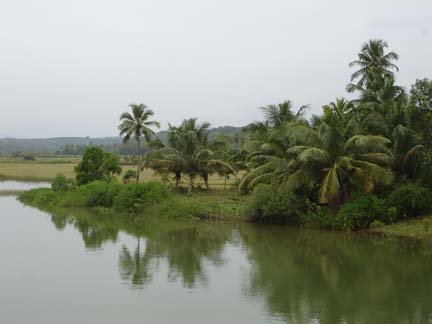
A Coastal estuary

A Coastal estuary
Holegadde near Honavar,Uttara Kannada dist, Karnataka

Copy? Right - but kindly remember to acknowledge!

Creative Commons License
This work is licensed under a Creative Commons Attribution 3.0 License.

" tulu-research.blogspot." ತುಳು ರಿಸರ್ಚ್. ಬ್ಲಾಗ್‌ಸ್ಪಾಟ್‌. ಇನ್

" tulu-research.blogspot."  ತುಳು  ರಿಸರ್ಚ್.  ಬ್ಲಾಗ್‌ಸ್ಪಾಟ್‌. ಇನ್
Have a nice day !