Tuesday, June 26, 2012

Saturday, June 9, 2012

302. Padukone and Koni


Have you ever wondered about the meaning or origin of the place name Padukone? It is likely you thought about it sometime, since the place name has been made popular by the Bollywood actress Deepika Padukone or earlier by her illustrious father ace Badminton champion Prakash Padukone.
Anyway, the village known as ‘Padukone’ is located in Kundapur Taluk, Udupi District, Karnataka. Northern news readers prefer to pronounce it as ‘PaDukON’ whereas the locals of Kundapur call it simply as ‘PaDukONe’.
As such, the term PaDu-kONe in present Kannada means western room! [‘paDu’= West; ‘kONe’ (1) =room]. However the word ‘KoNe’ may also mean: (2) angle or angular corner (‘kona’) or (3) male species of buffalo (kONa).
(4) The term Koni as used in Kerala can also mean a ladders or stretchers made of bamboo and kusa grass or straw which are traditionally used to carry corpses.
Interestingly, the actual and original source of the word ‘KoNe’ in the place name under study may be anything other than the four explained above!
Words are wonderful units as building bricks of languages. At the same time, it is to be pondered that any region has thousands of years of civilization consisting of obscure undocumented history and what is at present the prevalent language in the region (like Kannada or Tulu) could have evolved and replaced what was earlier in usage  in the remote past.
Konni : the tribe and language
African continent widely known in science circles as cradle of human evolution still contain evidences of tribes and languages that migrated from their homeland before multiple millennia. Koni, Kona or Akona tribes and Konni language still prevails in parts of Africa like Ghana. Places named after Koni Like Wacha Koni can be found in African States like Kenya. And also in Mediterranean island countries like Cyprus.
Migration of African tribes in the past, thousands of years ago to parts of southern India and formation of settlements named after them. Settlements of Koni or Akona tribes with passage of time have been modified variously as Koni, Konaje, Konalu, Konandur, Konankunte, Konanhundi, Padukone etc. Besides place names, surnames like’ KonI’ or ‘Goni’ still remain among some of the south Indians. There is a Koni Amman Temple in Coimbatore, Tamilnadu.
Koni villages
Villages named after the ancient Koni (Konni) tribes can be found spread all over India. Check some of the following place names bearing the signature of tribe Koni :
Koni   1 (.Kundapur Taluk, Karnataka)
Konni 2. (Pathanamthitta district, Kerala)
Koni 3 (Near Bilaspur, Madhya Pradesh)
Koni 4.  (Sant Kabir Nagar District, Uttar Pradesh.)
Koni 5 (Ganganagar District, Rajastan).
Koni 6 (Nagpur District, Maharastra)
Koni 7 (Arwal District, Bihar).
Koni 8 (Satna District Madhya Pradesh)
Bada-koni  (Bilaspur, Chattisgarh).
Padu-kone. (Kundapur Taluk)
Kambada-kone. (Kundapur Taluk.)
Konaje. (Mangalore Taluk)
Padu-konaje. (Mangalore Taluk)
Mudu-konaje. (Mangalore Taluk.)
Konalu.(Puttur Taluk)
Konchadi (Mangalore)
Konandur. (Shimoga District)
Konanur .(Hassan District)
Konan-kunte. (Bangalore .)
Kumbha-konam (Tamilnadu)
Koni dena (Andhra Pradesh).
Koni dela (Andhra Pradesh).
Konark. (Orissa).
And so on.
Alternate Names
Kona (or Akona) language and speakers or tribes were also known by alternate names such as ‘Koma’ or ‘Komang’. We have discussed some aspects of ’Kom’ or ‘Koma’ tribes in earlier posts. Kom(a) tribes could have been a variants of the Kona tribes.
Konkana
The northern part of West Coast between Mumbai and Goa is usually known as Konkan. The origin of the word Konkan has been explained variously. It appears that that it could have originally been Kom-kona, a region of Kom(a) sect of  Kona tribes.
Gokarna
By similar analogy the original name of the place now famous as Gokarna in Uttara Kannada district could have been ‘Goy-Kona’ where the words Goy (also known as ‘Koi’) represent another variant of Kona tribes.
Kamangi
Kamangi is a Kannada slang of uncertain origin denoting a silly person. It is possible that the derogatory term originated from the Komang tribes that  inhabitated parts of Deccan, in the past.
Padukone and Koni
After an overall analysis of the place names relevant to Koni, I hope you are convinced about the ethnonym status of these place names. In summary, the Padukone village could have been originally known as ‘KoNi’ which was corrupted into ’KoNe’ in the parlance. The large ‘KoNi’ village was subsequently split into western ‘Padu-KoNi’ and eastern ‘MuDu-KoNi’. This is also the case with PaDu-Konaje and MuDu-Konaje, where Konaje represented an area (-aje or -anje) inhabited by Kona tribes.
Ò
Uם�#� 

Tuesday, May 29, 2012

Birds of Bengre

Birds in search of fish remains on the bank of Bengre spit, Mangalore. (View from the estuary)

Saturday, May 19, 2012

301. Naravi & Sun worship – an overview


Life of settlers of an area is a history - whether recorded or not. What is not recorded buries into quick-sand of time. Toponym assumes the role of an identity marker, thereby enriching occupational vocabulary of language of that area. This can be analysed by studying the socio-political situation, conditioned by geography.  Changes are the handiwork of events and geography. Languages, political forces, borders, and social order resulting from faith and assimilation, are agents of change. Occupations change with human movements and/or climatic conditions.  Religion of one region may thrive in another area, conditioning it to the geography and environment of that area.
Naravi
Naravi (pronounced as nArAvi, ನಾರಾವಿ) is a village in Belthangadi Taluk of District Dakshina Kannada on the foothills of Western Ghats.  It is 20 km from Karkala on Karkala-Dharmasthala Road.  There is a well-known Suryanarayana Temple, dedicated to Surya, the Sun God.
Naravi was also known by its old name ‘Narol’ (ನಾರೋಳ್). The word ‘Narol’ is comparable to ‘Narod’ in Gujarat. 'Nara' means 'water crane' .  It should be read as 'water fowl (mundeyi kori = pelican). Other Tulu equivalent of 'nara' is 'nore'.  These birds live in bushes near water-bodies.  So we can deduce that the locality possibly got the name because of their presence in abundance.

Haunting Name
Word Naravi is both interesting and intriguing by virtue of its indistinct meaning.  It rhymes and compares with Dharavi of Mumbai*, Sharavu (Mangalore), Madaavu (meaning a place by the side of a canal, stream or river in Tulu) and Dharwad (North Karnataka).  All these places are indicative of ‘presence of water’.  But the local legend of Naravi belies this phenomenon. 
(Dharavi, in Mumbai, is a swamp area with mangrove vegetation sandwiched between Bandra-Mahim creek and Sion-Koliwada on West and East sides and erstwhile colony of Koli Fishermen before reclamation. Mithi River on its North debauches to Mahim Creek).
The Legend
There is a legend around the Sun Temple, built in 14th Century.  Sadvi (Pious woman) Ramadevi, belonging to noble gentry of ‘Ramera Guttu’ is instrumental in constructing this Temple.  She was an ardent devotee of Lord Surya Narayana, the Sun God.  She did not partake food without seeing the rising Sun.  Seasonal changes could make it impossible for her to get a glimpse of the Sun, thus making her to starve for days until she had a view of the Sun.  Noticing her unwavering devotion, Lord Surya Narayana instructed her in a dream to install the deity with celestial energy, lying near a River in South Western Part of Naravi, by constructing a temple.
Sun Temple of Naravi through ages.Photos from SuryanarayanaTemple


  The newly found idol of the deity was enshrined in a Temple as per Vedic rites by Brahmin priests.  All devotees experienced the presence of a young priest, exuding tremendous energy, among the priests. It was a miracle.  The young priest uttered ‘Na Ravi, Na Ravi’, i.e. ‘I am the Sun, I am the Sun’. Thereafter the place was known by the name ‘Naravi’.  The legend does not tell what the earlier name for Naravi was.
Sun Temple at Konark (Orissa) is well-known to all Indians and foreigners. Surprisingly, the temple at Naravi is less known
Etymology
Splitting the word, we get Nara + vi where Nara means water or knowledge (as in Narayana, the one whose abode is water or one who is embodiment of knowledge). The suffix ‘vi ‘  (also ‘va’ or ‘ve’ means a place (197.Dravidian spatial suffix ‘Va’).
Sun worship from antiquity
The Nature’s Laws are equal to all.  So the objects or many phenomena in the Nature are held in great awe by all human beings in the world from pre-historic times.  Thinking human mind creates symbols and numbers to forces of intelligence. Concentrating solely on anyone of these forces, individual soul identifies itself with the Divine soul, the primordial energy, power or force (Readers would do well if they read the life story of Ramana Maharshi, who simplified this technique by his own example).  Sun worship is one of the practices found in all civilizations of the globe. The Sun God is known by different names. Some of the Sun symbols are comparable to Indian symbol, especially in Mayan civilization.
India:  Surya or Suryanarayana is the one common name for twelve Suns, called as ‘Adityas’ in Puranas.  In Astrology he takes the central place. Varahamihira (505-587 AD - a mathematician, astronomer and astrologer in the Court of Vikramaditya, Ujjain) tells that only Maga Brahmins are entitled to do rites concerning the Sun.  Puranas say that Maga or Saka Dwipi Brahmins are invited by Lord Krishna of Dwaraka to cure his son Samba from leprosy.  We know from Puranas and Mahabharata that Yadavas dispersed to various places on destruction of ‘Dwaraka Nagari’ by ingression of Arabian Sea. This phenomenon is now proved by archaeological surveys.  We can presume that Maga Brahmins also migrated to coastal South from Gujarat coast, along with Yadavas.
Egypt: Egyptian Sun God is called ‘Ra’.  The winged Sun was an ancient symbol (300 BC) of Horus, identified with Ra, who moves in a Solar Boat.
Celtic Sun has semblance of Nakedness.  He holds a spear in standing posture.
Sumerian: Sumerian Sun holds many weapons, standing in one leg raised.
Akkadian Sun is seen in sitting posture.
Roman Sun stands with legs spread wide and upper portion of the body bent backwards and holds a weapon.
Incas, is a civilization of Mayans (?).  Their Sun God is holding an object, resembling a flower in both hands as is seen in Indian Sun idol with lotus flowers.
The Sun as progenitor
In the Mythology of India and other Asian countries, the Sun is considered as Progenitor of important royal families and/or powerful Tribes. We know about Suryavamshi Kings from the Epic of Ramayana. In Buddhism, the Bodhisattva of the Sun is known as ‘RI Gong RI Guang Pu SA (the Bright Solar Bodhisattva of the Solar Palace).

SUN TEMPLES OF INDIA
The oldest temple, dedicated to the Sun, is at Multan, which is now in Pakistan. There are many Sun Temples in India, which are important pilgrimage centres now.
Naravi: The temple is considered to have been established originally in the year 1486 by Ramaadevi during the regime of ruler Somanatha. The Sun Temple at Naravi was renovated in 2011.  
Maroli, Mangalore: There is an ancient Surya (Sun) Temple dating back to Alupa period of administration in Mangalore. Maroli is a village adjoining Alupe village and in older posts herein we suggested that Alupa Kings hailed originally from the village of Alupe. The Alupe (or Alupa) village was an estuary and a port town at the former mouth of River Netravati before the regression of Arabian Sea (attributed to legendary Lord Parashurama in folklores) and emergence of Pandeshwara Port.

Konark :   Built in 13th C. by King Narasimhadeva (1238-1250 CE) of Eastern Ganga Dynasty, the Temple is known as ‘Black Pagoda’.  The legend is that it was first built by Samba, the son of Lord Krishna by Jambavati. History says that it was built and rebuilt when vandalised by foreign invaders.  Entire complex is designed in the form of a Chariot, drawn by spirited horses. Powerful magnets, inserted in between rock layers, used to disturb merchant ships, by attracting them to shore and grounding them.  It is said that the Portuguese partially destroyed the temple to uphold their trade hegemony.
Modhera: Sun Temple built in 1026 CE by King Bhimdeva of Solanki Dynasty (supposed to be from Suryavamshi clan) lies on the Bank of Pushpavati in Modhera near Mehsana in Gujarat. It is so designed that the first rays of the Sun fall on the idol at the time of equinoxes.  Though it was ruined by foreign forces, it was almost destroyed by Allauddin Khilji.  We can still gauge its grandeur from the remnants of the Temple.
Katarmal:  The Temple, called as ‘Burhaditya or Vraddhaditya’ (the old Sun God) is built by Katarmalla, a Katyuri King in 9th C. When presiding Deity’s idol (of 10th C) was stolen, intricately carved doors and panels are shifted to Delhi National Museum.  It is situated 7 km from Almore (Uttarkand), 70 km away from Nainital.
Dakshinaarka:  The Temple, facing east, is at Gaya, Bihar, with a Surya Kunda (Tank).  Maga Brahmins, seeking a safer place from Lord Brahma, followed the disc thrown by him and settled down in Naimisharanya in Bihar where the disc plunged into the ground. Magadha, the present day Patna, took the name from Maga Brahmins.  The old temple was rebuilt or renovated by King Prataparudra of Warangal in 13th C. Rock pillars of this temple bear images of Shiva, Brahma, Vishnu, Surya and Durga.
There are two more Sun temples (1) Uttararka near Uttaramanas and (2) Gayaditya on the bank of River Phalgu, at Gaya.
(Note:   The Sun idols at Modhera and Gaya adorn Iranian type of belt and boots.)
Bhramaranya Dev:  The temple is at Unao near Jhansi, Madhya Pradesh.  Royal families, such as Peshwas and Datia rulers, were patrons of this temple.
Surya Pahar: Sun Temple at Surya Pahar/Pahad in Assam has images of twelve Adityas, sons of Kashyap Rishi and Aditi.  They are sculpted in a circular tablet.
Kumbhakonam: In Suryanaar temple at Kumbhakonam (Tamil Nadu) main deities are Surya, Vishwanatha, Vishalakshi and remaining eight Navagrahas (Celetial Bodies).
Arasavilli:  The main deity of Arasavilli Suryanarayana temple is known as ‘Padmapani’ – a 5 ft. granite statue. Arasavilli is near Srikakulam in Andhra Pradesh. He has Usha and Chhaya on his sides.  Padma (Lotus) means wisdom and Usha and Chhaya indicate iternity. 
Martand:  Sun Temple at Martand, meaning the (Dead) Sun, in Jammu & Kashmir is of 8th C.  It is in Gandhara style of architecture, which is mixture of Buddhist and Greek styles. There are two more temples on this stretch of Srinagar-Pehelgam Road at Avantipur.  They are dedicated to Avantishwara and are built in 9th C.  All these temples are in ruins, clad with snow but remind us the glory of the Past.
Temples in Tulu Nadu
In hymns to the Sun, He is described as ‘Aadi Deva’ (Primordial Divine entity).  He is Life of Life.  Assimilation of Trinity (Brahma, Vishnu and Maheshwara) is almost clear when we see temples named ‘Mahalingeshwara’ in Tulu Nadu. ‘Linga’ symbol is the manifestation of Shivashakti when the other energies lay hidden in it. Surya is the integral part of Narayana and Shiva.  We find such assimilation in Martanda-Mallari in Jejuri of Maharashtra. Celestial Bodies (Navagrahas) and Nagabrahma (Snake God) are inseparable part of Temples in Tulu Nadu.
-H. VISHWANATH, PUNE  & Ravi

Monday, April 30, 2012

300. Hangarakatta


Hangarkatta is a coastal place on the bank of Seetha River in Kundapur Taluk, Udupi District. It was a marine trading port once upon a time. The place name may evoke several emotions regarding its obscure remote origin without any definitive answers. Because it is one of the familiar but odd sounding place names that have African descent in the remote past. It is peg defining the process of ancient migration of  human tribes from parts of Africa to India.
The place names such as Hangar, Hangalur, Hanga, Hangal etc clearly indicate some common elemental tribal name behind them. And this tribal name can be  traced back up to Africa. And incidentally it summarizes the facts codified under the Evolution and Journey of Man by renowned geneticists.

Hanga tribes
Hanga tribes, speaking a dialect known as Hanga are presently natives of Ghana in Africa. Some of the Hanga variants known as Angbaw are natives of Congo in Africa. The place names in Karavali and other parts of India trace the ancient migration paths of Hanga tribes in this part of the globe. There are no trace of Hanga tribes in Karavali Tulunadu. They have been well absorbed into the folds of coastal and interior communities in the course of time.
Hangarakatte
Thus, Hangarkatta (Hangara+katte, platform of Hanga tribes) is a village square named after the Hanga tribes settled in that area in the remote past. A 'katte' (pron: kaTTe) is a traditional raised platform built around and under the shade of  a large tree. Such 'katte' were used for rural transactions, meetings,courts or tax collection purposes in the antiquity. The Hangara-katte is also known as port town in the history.
Hangalur
Another place named after Hanga tribes lies close to Kundapur and is known as Hangalur  (Hangala+ oor) or the village of Hanga tribes.
Hangal, Hanagal
Film Artiste A.K. Hangal has popularized the place name Hangal in Maharastra. Similarly, Hanagal in Dharwad district could be a place name modified with passage of time from the original name of Hangal.
Hanga
There is a place in Maharastra, simply called Hanga.
Hangara
There is a place called Hangara (also known as  Khangara) in Afghanistan.

®

Friday, April 27, 2012

299. Ata tribes in Tulunadu


We have realized in the older posts herein that many of the ancient place names in Karavali-Tulunadu are paleo-ethnonyms signifying the presence of presently forgotten tribes that made a living in the remote past in this land. To this list of forgotten tribes of Karavali and other parts of India we may add the Ata or Atha tribes. Presently, Ata are one of the Austro-Asiatic tribes living in parts of Phillipines like Mindanao. However, the details of origin and global migration paths of these Ata tribes are not clearly known at present.
Atrādi
Atrādi (Athrādi) is a village in Kundapura taluk of Udupi District. The place name Atrādi can be analysed as Atra+aDi or habitation of the ‘Atra’ people.
Atrabailu
A rural hamlet near Kulur Mangalore is known by the name of ‘Atarabailu’ or ‘Atrabail’. The Atrabail can be recognized as a ‘bayal’( =open field )named after the Ata’ tribes in the remote past.
Attāvara
In earlier posts we explained the place name Attāvara in Mangalore as open field (‘avara’) on the other bank (‘atta’ =that side, in Kannada). Probably the correct explanation would be Ata+avara or the open field named after the Ata tribes.
Atur, Attur
Similarly the place names, Ātur ( suburb near Karkal town known for a famous church) and Attur (near Haleangadi, Mangalore Taluk) are places named after the ancient Ata tribes.
Atrijāl
Atri is a surname derived from Ata tribes. Similarly the place name Atrijal refers to an open field (‘jāl’) named after the Ata , Atar or Atri tribes.
Atharvana Veda
One of the Vedas based on ancient techniques of sorcery known as ‘Atharvana’ Veda is said to have been composed by a sage known as Atharvan or Atarva. It appears that proper name Atharvan bears relationship with the ethnonym Atar or Atharva. The age of composition of Atharvan Veda ca.1000 BC may help decide the period of existence of these tribes in India.
Attar
Attar ( ಅತ್ತರ್)  is one of the clan names of Bunts.  ಅತ್ತಾರ್ರು/ಆತ್ತಾರು is a priest-cum-impersonator in some Bhoota shrines.(p.87-88 of Tulu Lexicon.)
Adamar
Ada and Adi appear to a subsequent variant of Ata tribe. Adamar, Adavani,  etc place names apparently represent these variations.
®
��K

Friday, April 20, 2012

298. Talambu and Mogaveeras


The Nature is a great teacher to mankind from primitive stage. Barks of certain trees and fibres of certain non-wood plants were used for spinning and weaving, and also for writing, since hoary past.  Mogaveeras being one of the early inhabitants of Tulunadu were self-reliant in respect of making  threads used in variety of fish-catching nets.  They grew Sunn hemp (Talambu = ತಲಂಬು in Tulu, Sanabu - ಸಣಬು in Kannada) for fibres to spin yarn long before the advent of modern spinning mills. They continued to make threads from natural fibres even after modern mills began manufacturing natural and synthetic fibres.  Below is an outline of sunn hemp cultivation and harvesting by Mogaveeras.
SUNN HEMP
The Sunn hemp (also written as sun; botanical name ‘Crotalaria Juncea Linn’) is an Asian, tropical to sub-tropical fibrous plant of Legume Family, having seed bearing pods. The genus is named ‘Crotalaria’, meaning rattling sound. It indicates noise made by   seeds shaken in ripe pods. The species name was given by Linnaeus because the plant’s green, rush-like, scantily leaved branches resemble Spartium junceaum L., the Spanish broom of the Mediterranean region.
 It is a native of India, Pakistan, Bangladesh and Australia. It belongs to a large family of legume. Many varieties of sunn hemp are grown in all tropical regions of the world.  It is known by different names in different languages in India and abroad, such as : Tulu (Talambu);Kannada (Sanabu);Malayalam (Wuckoo);Tamil (Sanal, Sannappu); Telugu (Janumu); Hindi (kharif, sannai sunn);Sanskrit (Sana);Oriya (Soin); ­­Bengali (Shonpat, shon, ghore sun); English (brown hemp, sunn hemp, sun hemp, Bengal hemp, Bombay hemp, Madras hemp, Benares hemp, Indian hemp, Jubbalpore hemp); Filipino (karaykagay, putokputukan); French (chenvre indien);Indonesian (orok-orok lembut); Khmer (kâk’tung);Lao (Sino-Tibetan)(thwax chu:b,po: th’üang);Thai (po-tuang);Vietnamese (luc lac,suc sat)
The Sunn hemp or Crotalaria juncea is an erect, herbaceous, laxly branched annual plant, 1 to3.5 m tall. The stems are cylindrical and ribbed, pubescent, up to 2 cm in diameter; vegetative parts covered with short, downy hairs. Long, strong taproot, well-developed lateral roots, and multi-branched and lobed nodules, up to 2.5 cm in length. Leaves simple with minute, pointed stipules; petiole entire, short, about 5mm long with pulvinus blade, linear elliptic to oblong, 4-12 x 0.5-3, bright green. Inflorescence a lax, terminal raceme, up to 25 cm long; flowers conspicuous, small with 5 hairy sepals, shortly united at base, lobes pointed, with 3 lower sepals united at tips, separating in fruit; petals deep yellow, standard erect, about 2.5 cm in diameter, rounded,  sometimes streaked purple on dorsal surface, wings shorter and keel twisted. The Pods are cylindrical, 3-6 x 1-2 cm in size, tomentose, light brown, containing about 6 seeds in each pod. The dark brown to black seeds up to 6 mm long are heart-shaped, with narrow end strongly incurved.


 It is worthwhile to note that one of the natural products traded through Arab traders was sunn hemp fibres from Western Indian ports (including Mangalore).  It reached Europe and England through Mediterranian region. Prior to introduction of sunn hemp cultivation in Europe, European traders too traded this item from 15th/16th Century onwards.

It was an important commercial crop in Europe. In South Asia, it was cultivated more for its narcotic properties than for fibres.  In 1841, William Robinson documented that ‘Cannabis sativa’ (true hemp) was used mainly for drug by hill tribes of Assam whereas it has been used as fibre (from the skin or rind of plant) for spinning elsewhere.  Hemp products are confusing because the word ‘hemp’ is used for many fibre-bearing plants.  Indian hemp comes from a species called ‘Hibiscus cannabines’, ramie or rhea from the plant ‘Boehmeria nivea’ and sunn hemp from ‘Crotalaria Juncea’. This hemp was used for various purposes from fishing nets to textiles, cordage and paper.  Chinese first developed hemp varieties to make paper.  Chinese official documents are made of hemp because it is water-resistant and tough. In North India, Khazgis, i.e. Muslim paper makers, use a variety of materials to make papers, including sunn hemp.
The word ‘canvas’ comes from the word ‘cannabis’. This reflects the use of hemp throughout history as a fibre crop for textiles, rope and paper.  Sail- cloth, sacking and ropes were some of the important hemp products.
In 1941, Henry Ford made a trial car body using 70% hemp, wheat straw and sisal and 30% hemp resin binder with a steel frame.  The car weighed one-third times lesser than conventional cars of that period.
The Sunn hemp plant, with insets showing flowers, leaves and seeds.


MOGAVEERAS and SUNN HEMP
It is a lean, straight and long plant with yellow flowers. Seeds are stored and sown on barren land of private land-owners with red soil as summer monsoon sets in (June) and plants are harvested in September.   Both ends of plants are cut, cleaned, threshed for separating pods and dried in sun-shine. During harvesting, separating leaves and pods, the cleaner has to face the menace of skin irritation from large caterpillars of various colours. Note: Moths and other garden insects are enemies of this plant.
It is then soaked in fresh water of pond/pools or other water-bodies, such as ‘patla kanda’, i.e. water-logged low agriculture fields, for a fortnight or so.  This soaking process is known as ‘retting’. After taking out the bundle of stalks, it is again sun-dried till stalks get golden colour.  After completion of drying, stalks are ready for removal of fibres. Empty stalks are used as fuel (Note: Elsewhere these empty stalks are used in paper making and wrapping cigarettes. Stalks being hollow, children play with it for smoking and puffing smokes as is done with a cigarette.)
Collected fibres are kept aside for spinning threads of various thicknesses in leisure time (mostly during rainy season). Women take lead role in smoothening fibres and spinning in groups. This is sort of indoor pastime during summer monsoon when they cut jokes, exchange village news and tell folk tales when it is raining in cats and dogs. Male members entwine these threads for getting twine of particular thickness for weaving particular type of net.
Sunn hemp fibre is stronger when wet.  It is fairly resistant to mildew, moisture and microorganisms in salt water. To make it still stronger, fishing nets are soaked in a decoction of ‘Banpu’ tree barks.  The Banpu (Panpu; Botanical name ‘Terminalia comentosa’ ; ಕರಿ ಅತ್ತಿಮರ, ಬನಪು) is a large tree. The fisher-folk used to dye their shirts with this decoction for long life of the clothing. However,such a practice is now a thing of the past).
We can deduce that prior to migration of professional weavers to Tulunadu, Salian, Saliannaya or Talianna clan (found mostly among Billavas, Mogaveeras and Bunts) might have been the pioneers in spinning and weaving in the Coast.  With the availability of choice of modern threads, fisher-folk have nearly discarded sunn hemp fibre and its cultivation.
Sunn Hemp – a cover crop
Sunn Hemp originated in India and apparently is in cultivation since the dawn of agriculture.  US Department of Agriculture gives information that as a summer crop, sunn hemp can produce over 5000 pounds of biomass and 100 pounds of nitrogen per acre.  It can produce this amount within 60 to 90 days.  Thus, as a cover crop, hemp improves soil properties, reduce soil erosion, conserve soil water and recycle plant nutrients as green manure.  It is used as fodder for livestock and as a non-wood fibre crop. A notable point is that sunn hemp destroys weeds.  This explains why fallow-land owners allow Mogaveeras to cultivate and harvest hemp crop during summer monsoon.
CONCLUSION
As Alfred Tennyson says, “Old order changeth yielding place to new”, there is a sea-change in the life of Mogaveeras with mechanized fishing.   As closely watched during my growing up days in native place and with personal experience, I am able to give a true picture of activities connected with sunn hemp.  As I understand, nowadays the cultivation and harvesting of the crop for fibres is very much neglected.  Considering the commercial value, Mogaveeras may develop this line of business with help of Government Agriculture Department.
-H. Vishwanath (Pune)

Blog Archive

Books for Reference

  • A Comparative Study of Tulu Dialects By Dr. Padmanabha Kekunnaya. Govinda Pai Reserach Centre, UDupi. 1994
  • Koti Chennaya: Janapadiya Adhyayana. By Dr. Vamana Nandavar. Hemanshu Prakashana ,Mangalore.2001.
  • Male kudiyaru. Dr B. A.Viveka Rai and D.Yadupathi Gowda, Mangalore University,1996.
  • Mogaveera Samskriti By Venkataraja Punimchattaya. Karnataka Sahitya Academy.1993.
  • Mugeraru:Jananga Janapada Adhyayana. By Dr Abhaya Kumar Kaukradi.Kannada & Culture Directorate,Bangalore & Karnataka Tulu Academy, Mangalore,1997.
  • Puttubalakeya Pad-danagalu. Ed: Dr B.A.Viveka Rai,Yadupati Gowda and Rajashri, Sri Dharmasthala Manjunatheswara Tulu Peeta. Mangalore University.2004
  • Se'erige. Ed:Dr K.Chinnapa Gowda.Madipu Prakashana,Mangalagangotri,2000.
  • Studies in Tuluva History and Culture.by Dr P Gururaja Bhat (1975).Milagres College,Kallinapur,Udupi.
  • Taulava Sanskriti by Dr.B.A.Viveka Rai, Sahyadri Prakashana,Mysore 1977
  • TuLu naaDu-nuDi By Dr.PalthaDi Ramakrishna Achar, Puttur.
  • TuLu NighanTu. (Editor in Chief: Dr U.P.Upadhyaya, Govinda Pai Research Centre,Udupi. Six volumes. 1988 to 1997
  • Tulu Patero-A Philology & Grammar of Tulu Language by Budhananda Shivalli.2004.Mandira Prakashana Mangalore. p.317. (The book is in Tulu Language using Kannada script)
  • TuLunadina ShasanagaLa Sanskritika Adhyayana. By Shaila T. Verma (2002) Jnanodaya Prakashana,Bangalore, p.304.(Kannada)
  • Tuluvala Baliyendre. Compiled by N.A.Sheenappa Hegde,Polali,Sri Devi Prakashana,Parkala,1929/1999

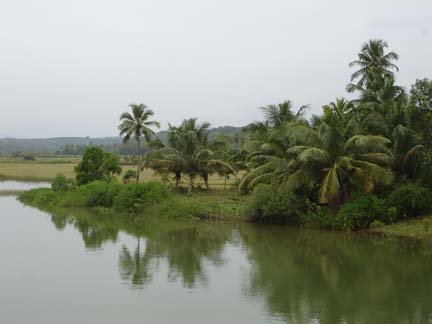
A Coastal estuary

A Coastal estuary
Holegadde near Honavar,Uttara Kannada dist, Karnataka

Copy? Right - but kindly remember to acknowledge!

Creative Commons License
This work is licensed under a Creative Commons Attribution 3.0 License.

" tulu-research.blogspot." ತುಳು ರಿಸರ್ಚ್. ಬ್ಲಾಗ್‌ಸ್ಪಾಟ್‌. ಇನ್

" tulu-research.blogspot."  ತುಳು  ರಿಸರ್ಚ್.  ಬ್ಲಾಗ್‌ಸ್ಪಾಟ್‌. ಇನ್
Have a nice day !