Thursday, April 30, 2015

346. Early Spirit forms: Guliga, Jattiga, Chaundi, Rahu and Ketu


Early human beings, while paddling through multitudes of hardships in the routine course of their primitive life styles, submitted themselves to the Spirit cults evolved out of the necessity of acquiring blessings and moral support of the unseen supernatural elements around them to tide over the difficult phases. Thus, the Spirit worship was one of the earliest forms of worship in the world.
            During the course of human evolution, intellectuals among the ancients felt that the whole universe is governed by divine forces of God. Different groups and sects of human beings, time and again, have invented several cults and faiths, built and created around the concept of omnipotent God(s). Each group during the course of evolutionary history has tried to gather more and more volunteers to follow abide the terms and conditions of their specific faiths or religions. Each group maintains that the cult they adopt and follow is only the right form of realization of God. In some cases the beliefs have unfortunately been taken to extremely intolerant and violent forms.
            However, the essential motive behind every form of worship is the same even though certain people tend to demean rival forms of worship to which they do not subscribe.          In the confused modern world, tragically, the religion has been so compartmentalized that some extreme groups with expansionist theocratic ideas may even prefer to annihilate persons of rival faiths for not subscribing to their religious tenets.
Understanding the evolution of ancient cults may provide some clues to demystify and clarify certain religious confusions prevailing among us.

Early Spirit forms in Karavali /Tulunadu
Tulunadu even in the modern settings continues to host diverse forms of worship patterns ranging from varied forms of Spirit worship to elaborate divine manifestations. This aspect points to the strength and tenacity of of belief system in our people. Tulunadu through the pages of evolutionary history witnessed not only the various pre-Vedic, Vedic and post- Vedic phases of Hinduism, Natha cult, Buddhism and Jainism but also Islam, Judaism and Christianity. The cult of Spirit worship has declined in other areas but it continues to dominate in the Tulunadu region.
Many rationalists have wondered why the cult Spirit Worship exists only in Tulunadu. However, the fact is that in earlier days of history the cult of Spirit Worship existed all over the world may be in different forms. With passage of time, due to advent of other competing cults and beliefs the cult of Spirit worship has either vanished on the way to extinction. In Tulunadu, as is well known that many subsequent forms of religions have coexisted along with primitive cults of Spirit Worship.

Spirit vs. Devil
Many authors have used the term Devil worship for the cult of Bhutāradhane. (Even Dr Gururaja Bhat, a pioneer in systematic Tulu Studies, has employed the term of ‘devil worship’).
The Spirit worship is known as “Bhuta-aradhane” among   the natives.  The Tulu word “Bhuta” has equivalent word in Sanskrit also which means (1) The Past or (2) The metaphysical remains (or memories) of the dead. Aradhane means worship. There fore the appropriate English word for the Bhuta, the metaphysical remains of the dead, would be the Spirit.

However, translating the cult of Bhutāradhane as Devil Worship is unacceptable since the term Devil has negative meanings   especially, that connotes anti-God sentiments.
This is not true of Bhutāradhane. There are no negative intentions or black magic behind the cult of Bhutāradhane or the Spirit worship among the believers.
 It is to be realized and understood clearly that those who worship Bhuta carry the   immense respect,  feelings and sense of divinity toward the Bhuta and it cannot be branded as pro-devil or anti- God. It is not logical to brand a religious system of worship of a specific culture and heritage as anti-God. Because the basic psychology and motifs behind any cult of worship is the same irrespective of the type or form of God one opts for.

Ancient forgotten Spirits
The Karavali has explicitly preserved vestigial evidences on ancient immigrants of African origin and their belief systems in the west Coast.  Vestiges of ancient African Spirits are still preserved in the Karavali. For example in Karavar in Uttara Kannada region of Karavali Karnataka certain tribes continue to worship a Spirit god known as Kepri. The Kepri incidenatally is an insect Spirit God of ancient African origin. In Mangaluru city, there is   an ancient place name Kapri-gudda (=hill of Kapri) preserved near Attavara in the old city area which suggests that vestiges of Kepri (or Kapri) worship was once present, but now forgotten, in Mangaluru also.

Spirits of Guliga family
One interesting legend retold in Bunts page narrates that Guliga, Jattiga, Chaundi and Rahu Guliga were the four siblings that survived among 24 children of a mother.This legend gives us a hint that these four ancient Spirits- Guliga, Jattiga, Chaundi and Rahu were more or less contemporaneous.

Guliga: The Spirit Guliga is worshiped in the form of a small rectangular stone kept under the shade a tree. The simplicity of the symbolic structure representative of the Spirit suggests the antiquity of the Guliga cult. It can be seen that before the advent of symbolic sculptured divine forms and wooden or metal masks, the earliest spirit forms were used to be worshiped in the form of symbolic stones. For example, the Kata, the divine Spirit worshiped by Koraga tribes was also represented in the form of a piece of stone placed under the shade of tree.
During the Guliga Spirit festival (‘Kola’) celebrations   essentially consist of the Guliga character with his face weirdly painted in red, white and black colours and wearing string costume of tender palm leaves, dancing fervently around the burning firewood. A pictorial report in Daijiworld has interesting collection of   a Guliga Kola  celebrations.

Guliga is worshiped as 'Kshetrapala' in the periphery of a Temple of Devi (Primorial Supreme Female Divine Power). He moves with the Goddess during her sojourns.  He is known by different names for his heroics at different places.  Kshetrapala at Marnami Katte is known as 'Hayguliga'. He is worshipped in the form of a stone, specifically consecrated for him. It is believed that being open to sun and rain, he absorbs more energy and becomes more powerful to ward off evil spirits and diseases affecting the 'Gadipadu' (region of authority) under his purview.  He protects his devotees by bearing the brunt of Devi's fury. During 'Kola' ceremonies, he is painted in eerie looking with black and white stripes, depicting a fierce entity. He drinks the blood of sacrificial animal (mostly chicken) and eats it raw.  So he is called as 'Ambara Marle' (Frisking and high-jumping figure around the ceremonial area) and 'Masogou bayasuna sanchari daiva' (the wandering Spirit, wishing for live sacrificial animals). Though he is invoked as a "Kaanada Kadudu, Bhimaraya Thotodu, Kaat Kalludu neleoordina Daiva" (One who has settled down in the forest of Kaana, Garden of Bhimaraya on a rough-hewn stone), there is no reference to his parentage.  Legend says that he being a Shivagana, accompanies Aadi Shakti Parvati to earth.  Overwhelmed by the serene beauty and sacredness of Parashurama Kshetra, she settles down in Tulu Nadu in the form of a 'Linga' and asks him to stay as her guard to protect her devotees.
A fickle minded or half mad person is nicknamed as 'Ambara Marle'; it may be after the frenzied movements of Guliga Bhuta impersonator usually seen in annual Kola rituals.


Jattiga/ Jitiga: Legends suggest that Jattiga was a brother of Guliga. In Kundapura and surrounding areas the ancient Spirit of Jattiga is worshiped in ways similar to Gulthe form of   a symbolic stone like that of Guliga. The Jattiga is known as Jitiga in Ankola and other parts of Uttara Kannada. The Jitiga is represented in the form of crude piece of stone placed permanently in a corner of an agricultural field. The Farmers in Ankola worship this stone on a special day in the year, expecting the blessings of Jitiga in the form of good yield of crops.

Jattiga ( 't' is pronounced jaTTiga or T as  in 'Tea') is a King's name in Shilahara dynasty of Kolhapur region (third division of Shilahara Dynasty) Maharashtra. There were two Jattigas - I and II in this dynasty.  There may be other warriors also by this name who sacrificed their lives in battles for their kings.  Such heroes were immortalised by erection of Hero Stones and later worshiped  as deified divine souls or Spirits

Chaundi: Legends suggest that Chaundi was a sister of Guliga. Chaudi could be an equivalent form of Chaundi. The names such as Chauda, Chaudi, Chavunda, Chaundi, Chavundi, Chamundi etc appears to be old personal name forms among the ancient tribes in Southern India. Researcher Shamba Joshi has tried to trace the term Chaudi to the invention of threads and cloths among early civilization. It can be seen that the terms Chaudi>Chauri refers to hairs of human or other origin. Chavunda Raya was the name of a 10th century Jain minister who arranged for the sculpting and erection of monolithic Gomata in Sravana Belagola.
Ancient personal names like Chauda (>Chawdaiah) still prevail in Mysore area especially among the people of tribal origin. Thus it seems that ancient Spirit cult of Chaundi worship was transformed under the spell of Vedic influence into Chamundi (>Chamundeshwari) cult in Mysore province under Odeyar dynasty.

Rāhu Guliga: Even though Rāhu Guliga has been named as one of the brothers of Guliga, the additional tag of Guliga behind Rahu leads us to conjecture that the cult of Rahu was added to the Guliga group subsequently. Elsewhere in India, the tribal cult of Rāhu had an independent identity that was absorbed into the list of names of celestial bodies in the ancient science of astrology in India. The ancient name Rahu has remained in modern names of Rahul. The Tulu equivalent form of Rāhu was “Rāvu” which has been considered as an evil spell.

Ketu: Ketu was another ancient Spirit which was later absorbed into the list of names of astronomical entities in India. Apparently, Ketu is not a conventional member of Guliga family in Tulunadu. However in other parts of India Rāhu and Ketu are treated together especially in astrology.
The vestiges of ancient Ketu cult are still prevailing in old Mysore area where place names like Keta Mārana halli (>Kyātmarana halli), Keta-samudra (>Kyātasandra) etc have remained in modern days.
Vestiges of ancient spirit cults in astrology
Ketu and Rāhu have been a part of several legends in ancient India.
According to legends, Lord Vishnu severed the head of an Asura named Svarabhānu. After the head of Svarbhānu, an Asura, was cut off by God Vishnu, his head and body were joined together with a snake. Thus 'Ketu', represented a body without a head and ‘Rāhu, represented a head without a body.
According to other legends in Hindu mythology, Ketu belongs to Jaimini Gotra, whereas Rāhu is from Paiteenasa gotra and suggesting that these two are separate entities and not two parts of a common body.
Ketu is generally referred to as a "shadow" planet. It is believed to have a tremendous impact on human lives and also the whole creation. In some special circumstances it helps someone achieve the zenith of fame. Ketu is often depicted with a gem or star on his head signifying a mystery light.
Astronomically, Ketu and Rāhu denote the points of intersection of the paths of the Sun and the Moon as they move on the celestial sphere. Therefore, Rahu and Ketu are respectively called the north and the south lunar nodes. The fact that eclipses occur when the Sun and the Moon are at one of these points gives rise to the understanding of swallowing of the Sun and the Moon by the snake (Rāhu).
In ancient Tamil astrological scripts, Ketu was considered as incarnation of Indra. During a war with Asuras, Indra was defeated and took a passive form and a subtle state as Ketu. Indra spent this time realizing his past mistakes, and failures and that lead to spirituality towards Lord Shiva.
In Hindu astrology Ketu represents karmic collections both good and bad, spirituality and supernatural influences. Ketu is associated with the Meena Avatar (Matsya/Fish Incarnation) of Vishnu. Ketu signifies the spiritual process of the refinement of materialization to spirit and is considered both malefic and benefic, as it causes sorrow and loss, and yet at the same time turns the individual to God. In other words, it causes material loss in order to force a more spiritual outlook in the person. Ketu is a karaka or indicator of intelligence, wisdom, non-attachment, fantasy, penetrating insight, derangement, and psychic abilities. Ketu is believed to bring prosperity to the devotee's family, removes the effects of snakebite and illness arising out of poisons. He grants good health, wealth and cattle to his devotees. Ketu is the lord of three nakshatras or lunar mansions: Ashvini, Magha and Mula.
Ketu is considered responsible for higher metaphysical realization,   the endocrine system and slender physique etc. The people who come under the influence of Ketu are said to achieve great  spiritual heights. According to a legend, Vipracitti begot one hundred and one sons with his wife Siḿhikā, of whom the eldest is Rāhu and the other  one hundred are the Ketus.

Gulika-kāl and Rāhu kāl
The ancient cult of Guliga (Gulika) is not exclusive to Tulunadu as misconceived by some people. In Indian astronomy, the 'Gulika-kaal' (or simply 'Gulik') is a period of approximately 1 hour and 30 minutes duration that repeats every day of the week. This time duration is ruled by 'Shani' (Saturn). This period is considered to be inauspicious to start any important work. However, 'Gulik Kāla' is considered a good period to initiate new projects.  This aspect as well as the black color pattern preferred by Guliga Spirit impersonators lead to us to suggest that the Guliga was later equated to the cult of Shani (Saturn) in parts of India.

- with additional inputs from Vishwanath


®

Monday, December 1, 2014

345. Mysterious History of Mangaluru

The Karnataka Government has finally resolved to officially modify the place name Mangalore to Mangaluru. However, there are voices of dissent as usual, with some preferring the ancient name Kudla. Some even may prefer the exact spelling of Mangalooru to match the appropriate pronunciation in the native languages.  
            The history of the city of Mangaluru has several shades of mystery attached to it. The place was known by different names in the past. Part of the Mangaluru city was under the Arabian Sea until probably 200 CE and the subsequent regression of the Sea,  coupled with recovery of land has been attributed to the mystic powers of Lord Parashurama in our legends. It is interesting to note that the two rivers of Mangaluru, Netravati and Phalguni have mysteriously drifted in the opposite directions across the plains of   Mangaluru though the  ages.The changes in the position of rivers with attendant seismic activities in the form of earth movements with passage of time have played major role in shaping the history and destiny of the city in the past.
           In retrospection, let us glance through the available and the reconstructed data on the history of the city.

Topography of Mangaluru at present

Megalithic and later tribes
The Mangaluru area known by different names was the home for numerous tribes in the past. Megalithic stone burial structures or dolmens, known locally as Kodakkal (=umbrella stone) existed as we find place names of Kodakkal near Padil-Kannur and (modified name of) Kodikkal near Urwa. Similarly, a number of locality names such as  Konchadi (Kom tribes), Yeyyadi, Iddya (Yey or Yedia or Idiya tribe), Maroli, Marakada, Maravur (Marava tribes), Bijai (Bija tribes), Bolar, Bolur, Belma (“Boll” or Bella: white/fair skinned tribes), Derebail, Derlakatte (Dera tribes), Eliyar padavu (Eli tribes), Kannur (Kanna tribes), Panambur (Pani tribes), Maladi, Malemar (Male tribes), Kordel (Kor or Koraga tribes), Kudumbi bittil(Kudubi tribes), Kenjar (Kench or reddish tribes), Nagori(Naga tribes), Kankanadi (Kanka tribes), Gujjarkere (Gujjars), Baikampadi, Baithurli (Bai tribes), Mangar, Mangala (Mang tribes) etc. remind us of the tribes that lived in these habitations in the past.
We can probably classify the settlers into (a) tribes of North Indian origin (b) tribes of African origin, (c) tribes of European origin and (d) tribes of austro Aisatic (Munda) origin.

Early Immigrants    of   African origin
Some of the local place names in Mangaluru are suggestive of settlements of tribals of African origin. Omanjur (Vamanjur) for example, is reminiscent of Om valley of Ethiopia which is considered to be the cradle of civilization and the deduced site of Early Man, Homo Sapien. Similarly Kinya village in the Southern part of Mangaluru Taluk is reminiscent of the region Kenya in Africa. (There is also another Kenya Village in Sullia Taluk). The Kaprigudda (or Keprigudda) near Attavar in Mangaluru reminds devotees of the ancient Egyptian Spirit God Kepri. Inccidentally, the Spirit Kepri is still worshipped in Karwar and parts of coastal Uttar Kannada.Besides, there are placenames suggestive of habitations of immigrant tribes like Derebail, Derlakatte (Dere tribes); Konchadi, Komdodi, Komapadavu (Kom tribes); Koikude (Koi tribes) etc.

Immigrants with fair skin
 Biologists have inferred that the human race initiated with black skin color and the fair or the white skin evolved in due course of time. Early tribes settled in Indian subcontinent were endowed with black colored skin. It seems along the history there was a distinct period when fair skinned tribes arrived into what was a dominion of early settled blacks. This can be surmised based on the existence of words/place names referring to fair skinned tribes/colonies of fair skinned tribes in most of the Indian languages.Thus, when tribes with fair skins arrived on the scene, they were distinguished by their distinct skin color. Bola, Bolla (or Bella in Kannada; Vella in Tamil; Gore in Hindi etc) suggest white skinned people and the settlements inhabited by these whites were termed as Bola, Bolar, Bollur, Bellur, Belman, Belgaum, Goregaon etc. Tribes with white skin were referred to Bellal (later modified to>Ballal ) or in other areas ( Vellal , Vellar). Similarly people with reddish skins (“kencha”) gave terms like Kenjar, Kemral, Kenchanakatte, Kemthur, Kemmannu, Kemminje etc.

Settlers of Austro-Asiatic Orign
Settlements of tribes of Austro-Asiatic origin, generally known as Munda tribes, are known by place names with prefix of Munda. Settlements of other tribes like Mang (Mangar, Mangala, Mangalapadi, Mangalpete), Bai (Baikampadi, Bendur [<.Bayndur], Baithurli, Bekal) etc are also known.

Settlers   of   North Indian origin
Movement of tribes within India are well documented by ethnic place names such as Gujjarkere (Gujjars), Panambur (Pani, Panab), Kannarapadi, Kannur (Kanna), Kankanadi (Kanka), Yeyyadi, Yedapadavu (Yedava, Yeyy, Idava, Yadava) etc.

Mahabharata & Ramayana
Even though several unverified obscure (now obsolete) names for a number of  places in the West Coast have been cited in the ancient Indian epics of Ramayana and Mahabharata, we are not sure what exactly was the  oldest name for  the place now we know as Mangaluru.

Olokhoira
Greek historians in the beginning of Common Era appear to have referred to the place as Olokhoira. Since the Greek travellers concentrated their attention on coastal ports of the day we can assume that Olokhoira was a marine port in those times. ( Some believe that Olokhoira may refer to ancient Udyavara).  Manjeshwara Govinda Pai has suggested that the term Greek term Olokhoira refers to Aluvakheda.
 The Aluva kheda or the Alupa kheda appears to be the present day Alupe valley (kheDa=valley, moat, depression) on the eastern part of Mangaluru city.(However, perceptions differ among the historians and a few tend to believe that Aluva kheda may refer to entire Tulunadu).

Artists impression map of submerged Mangaluru area ca 100 CE.

Legend of Parashurama
Former Alupe estuary is now a dried up river course of a deep valley between Maroli and Alupe. It was right on the West coast earlier and apparently the Greek historians referred to it as Olokhoira during the beginning years of the Common Era.  There was no mention of Mangalūru or even Kudla for the place at the beginning of Common Era! The possible reason for this is that the Arabian Sea transgressed and engulfed parts of the West Coast approximately during ca. 800 BC- 500 BC and receded only during ca. 200-300 CE. The regression of the Arabian Sea (ca. 200-300 CE) has been documented in legendary anecdotes  as a magical feat performed by a superhuman Parashurama, who was able to drive back the Sea by throwing his axe towards the Sea. The Bhargava clan ruled ancient Goa and parts of West Coast during the beginning of the Common Era and it seems that Parashurama apparently was a renowned charismatic sage among the Bhargavas. Later in the history,the  folk legends of the Parashurama appears to have been incorporated in the Sahyadri Khanda of Skanda Purana possibly during the regime of Kadamba King Mayura (ca. 400-500 CE).

Kudala- Kudla-Kodialbail
Now a days native people employ the term Kudla as an alternate local name in Tulu language for the Mangaluru city. However, it seems that originally  the term referred to a specific agricultural habitation located on the bank of a river during the pre-Dravidian days. Probably it dates back to the early agricultural phase in southern India corresponding to the period ca. 1500 BCE to 2800 BCE when horse gram ('kuDu') was one the earliest known  staple cereal grown in this region as well as other parts of the southern India.
The Kudla (Kudala) is normally pronounced with short u which probably decides the nature of the originally intended meaning of the word. The term Kudla appears to have originated as kuD+ala, wherein kuD means an agricultural or farm land and ala means a settlement by the side of river/ surface water body. The related words are Kudupu, Kudpadi, Kudthadka, etc. By analogy, the earliest pulse known to have been grown in South India happens to be known as “kuDu” (=horse gram) in Tulu language. The term "kuDu" (Macrotyloma uniflorum) appears unique to Tulu as the horse gram is known as Huruli (Kannada),Ulava (Telugu),Muthira (Malayalam), Kollu or Kaanam (Tamil), Kulith (Konkani) etc in other sister languages.[Incidentally, it has been reported that the horse gram seeds consists of polyphenols and flavonoids and proteins. Traditionally it was used in the treatment of patients suffering from jaundice and other ailments and recently it has found to contain anti-diabetic and anti-oxidant properties].
Earlier, there was an argument that the place name Kudala is actually Kūdla (or Koodla) which generally means confluence of two rivers. (The earlier proponents of this theme included this blogger also). For example, the Kannada place names Koodala, Koodali and Koodala-Sangama and so on refer to the confluence of rivers. However, Kudla (with short u) apparently has a distinct meaning different from Koodala as discussed in earlier paragraph.
           The term Kudla is at present used as a Tulu equivalent of Mangaluru. However, the exact location of the original Kudla within Mangaluru is difficult to decipher. However, it seems that  Kodial bail and the surroundings were known as Kudla to begin with.
            Regression of Arabian Sea  (ca 200-300 CE) eventually exposed and retrieved a five to six km wide tract of coastal land   buried under the sea till then. At the time of regression, the twin rivers of Mangaluru, namely the (southern) Netravati and the (northern) Phalguni (Gurupur) were flowing westward on the either sides of the (present day)  light house hill. The northern River Phalguni then flowed through the Kudala bail.
Kudala (Kud+ala) was an Ala (=habitation on the river bank) characterized of kuD (=good earth; agricultural field). The Kudala became Kudla and eventually the Kodial or the Kodial-bail, with successive settlements of new invaders with passage of time. Then the Kudla River (presently known as Phalguni) joined the Arabian Sea near Alike, south of   Kudroli temple.

Pandeshwara
The River Netravati flowed in the valley of Attavar and Pandeshwar and joined the Sea near Hoigebazar, Nireshivalaya. The estuary near Nireshivalaya served as old port known as Pandela. (The term Pandela (Pandi+ala) used to mean a boat harbor. Pandi was an old term for the sailing boat).
These evidences suggest that the Shiva temple established near the said Pandela (=Port) by Alupa rulers was designated as Pandeshwara.   The name of the God was extended as a place name that represented the area around the temple.

Mangara -Mangaruth
The area to the South of the river Netravati,the Yemmekere area, around third century onwards,  was known as Mangara. The place name Mangār has also been described in Tulu PaDdanas such as a region where the rule of the King of Mangār ("Mangarda Arasu") has been described. The ancient name Mangār within Mangaluru city still exists in the Western part of Mangaladevi area close to Yemmekere, where a premise with a group of Spirit (bhoota) shrines  continues to carry the name of Mangār compound.
The name Mangār (Mang= a tribe; ār= open field) possibly originated from the Mang tribes that inhabited the area. The Mangs are also known as Matanga in Maharastra, or as Minimadigs in Gujarat-Rajastan Region. .  It appears that whole area around Mangaladevi was earlier known as Mangār prior to the worship of Mangaladevi was introduced.
Similarly we find reference to ‘Mangarda parvata’ (Mountain of Mangar) in the Tulu paDdana (folklores) which probably refers to the present day light house hill located in the heart of the city. Thus it is possible that the light house hill was earlier known as Mangar hills.

Mangarouth
Similar to Mangarada Parvata, the ancient Port (‘Pandela’) of Mangar located near Pandeshwara (ca. 7th Century CE) appears to have been known as Mangarda or Mangarta Pandela. The pronunciation of the word was apparently corrupted in the usage of foreign travelers (Cosmas ca.650 CE) who apparently employed the word Mangarouth to refer to the Port of Mangar.
Incidentally, an area near Mangaladevi Temple is known as Manki. The “Manki stand” was a station used for parking   horse drawn jataka (Tonga) during the British period onwards. The ‘Manki’ is said to be a Munda word signifying the leader of a group of Munda tribal habitations.Thus the ancient name Manki has survived from the settlement of Munda tribes in the area.

Mayikala
The Beary people residing in the Karavali (West Coast) even now refer to the city of Mangaluru as Maikala. The word has been explained variously, some considering that the term Maikala originated from the charcoal market in the ancient town.
However it seems the word dates back to the days of prevalence of  Buddhism  in the West Coast before the rennaisance and ascent of the Hindu cult of Shakti or the Mother Goddess.  Under the spell of prevalent Buddhism, the cult of worshiping Mayi, the mother of Gautama Buddha, in specific divine plots ( kaLa or primitive form of a Temple) was introduced in several places. One of such Mayi-kala (ie Temple of Mother) dedicated to the worship of Māyi, probably existed in the ancient port town of Mangaluru. Thus it seems that the Mayi temple area was referred to as Mayikala by the Arab merchants visiting the ancient Port for trade.

Mangala
The word Mangala has several shades of meaning attached to it. Nowadays the word generally stands for the auspicious aspects of life. The term Mangala also means (1) Goddess Durga, or (2) a fort, or (3) camping ground. Incidentally, the term Durga also stands for a fort. 
However, the term Mangala (like Mangāra) initially could have evolved as Mang+ala ie, ala (=riverside habitation) of Mang tribes. It is interesting to note that Mangara and Mangala coexisted in the proximal area in the past when River Netravati flowed along the ancient path of Attavara-Pandeshwara valley, north of Mangara and Mangala.
The term Mangala also means an end or death. The ‘Mangala’  stands for culminating part (end) of a devotional chanting (bhajane) or even a traditional Yakshagana folk drama play. In the Natha tradition, the ‘Mangala’ is also said to be associated with the ceremony of death.

Mangaluru

Basically, the term Mangaluru stands for mangala+ ooru which simply means auspicious village in the current regional parlance, even though the origin of the name might have been different. The name Mangaluru has been considered to have derived from the temple of Mangaladevi in southern Mangalore. However, according to the available historical sources Shankara Acharya consecrated the pre-existing Bhagavati temple in the area as mother Goddess Mangaladevi.

Pingala shrine at Mangala 
Mangaluru, especially the Kadri, was a well known ancient center of Natha cult especially between 10th and 14th centuries CE. The Natha cult represented the transition of Buddhism to revival of Hinduism in the Southern India. According to historical sources, Queen Pingala of Kerala region was a staunch disciple of Macchendra Nath, the founder of Natha cult. She travelled to Mangaluru along with Goraksha Nath, the principal disciple of Macchendra Nath for taking part in certain celebrations associated with the Natha cult. However, unfortunately she fell ill on the way and eventually died at Mangala. According to the traditions prevalent during those days,after her death she was deified and worshiped as a Spirit or Bhagavati (in the tradition of Buddhist cult) .  Later under the waves of revival of Hinduism, sage Shankaracharya is reported to have transformed many of the former Bhagavati shrines into Temples of Shakti (the Mother Goddess) worship. Thus, the Bhagavati of Pingala was subsequently known  as Devi of Mangala  or the Mangala Devi.
These reconstructed sequence of   historical   events imply that possibly the term"Mangala" was the initial name of place.

Manjarur
One of the unusual names recorded by travelers like Rashiduddin (ca.1300 CE) and Ibn  Batuta (ca 1343 CE) for the ancient Mangaluru is Manjarur. At first it seems that the ancient usage Manjarur was a corrupt form of Mangaluru. On second thoughts, it appears that the city especially the northern part was probably known as Manjaruru under the spell of Natha cult in the city during 10th to 14th Centuries CE. However, now apparently there are no places in Mangaluru that carry relicts of the past place name Manjaruru, except Manjanakatte near Kulur and Manjalapade near Padushedde, both in the northern sector of present Mangaluru. An analysis of the Natha history evolved around Kadri temple suggests that the consecration of Manju -Natha worship was initiated at Kadri under the spell of Natha cult propogated by Macchendra Natha. Macchendra Natha, a sage of Nepal origin is said to have came to Mangaluru from West Bengal and settled in Kadri, Mangaluru. Thus it seems that during the Natha period of the history of Mangaluru, the place was   renamed as Manjaruru in honour of Manju Natha.

Manjārun
The Mangalūru was named as Manjarun in the records of   traveler Ibn Batuta (ca. 1342 CE). The term Manjarun appears to be a corrupt pronunciation of the place name Manjarur.

 Mangalūru
Obviously, the prevalent term Mangalore is an anglicized and stylized version of the place name originally  known as Mangala, Mangalapura or Mangalūru probably since 4th Century CE onwards. The name Mangalūru was popularized by Kings and administrators of   Vijaynagara who ruled over the coastal region from their capital located at Hampi in Bellary District, since 13th Century CE.

Bokkapatna: Vijayanagara Port
The Mangaluru Port during the time of Vijayanagara appears to have been located at Bokkapatna, obviously named after Bokka, one of Kings of Vijayanagara. The term Patna is a common word to represent colony or township of  Mogaveera fishermen. The name Bokkapatna has survived even till today, even though the estuary/port has migrated further south due to a natural disaster and altered its location during the year 1887.
The Port of Bokkapatna was at the ancient estuary of the River Phalguni (= River Gurpur). The Bokkapatna Port and the estuary survived up to 1887 till the river took an abrupt turn and flew  towards south and joined River Netravati, between Bengre and Ullal. It can be seen that the Battery to store war explosives (hence the name: Sultan Battery) was built near Bokkapatna by Tippu Sultan during 1769.The battery was located to counter enemies entering through the Bokkapatna, Mangaluru Port.

Mangaluru vs. Kudla
In fact the name Mangaluru comes from the southern part of present Mangalore especially the area aroud Mangaladevi. The northern part (at present central part of Mangalore) especially the area round Kodialbail was historically known as Kudla. Kudla means


Mangalur & Barkur States/Provinces
Incidentally, the Vijayanagar rulers had two coastal provinces in the Tulunadu sector, namely the (1) Mangalūru and (2) Bārkūru. In traditional ceremonies in Tulunadu until recently the gurikars (community leaders) used to welcome and call out invitees from the Mangalur seeme and Barkur seeme (seeme=territory). Even robbers were traditionally designated as Mangalur Takke   and   Barkur Takke (Takka= cheat) in   Tulu folk tales.

The Vijayanagar rulers selected Mangaluru and Barkur as these were the popular port towns in those days that specialized in exporting the goods  grown in the hinter land.

**   **

Other   Mangalūrus’, outside the Mangalūru.
The place name Mangalūru is not unique in India as there are several other  villages/towns named after Mangaluru especially in different parts of Karnataka and Maharastra. Besides, there is also an airport named "Mangalore" in Australia.
There is also a Chikkamagalur which is sometimes confused as Chikka Mangaluru. The place name Chikka-magala-ur (Chikmagalur) means younger daughters village and there is a matching Hiremagalur or the elder daughter’s   village.
Further, there are villages called “Mangalore”   in Mysore (Nanjangud Taluk), Koppal (Yelburga) and Shimoga (Sorab Taluk) Districts of Karnataka. There is a Mangalore in Cuddalore District (Tuttakudi Taluk)   of   Tamilnadu.  Besides,  Mangalore, there are two Mangaluru villages in Bijapur District (one each in Bijapur and Sindagi Taluks) and One Mangaluru in Bagalkot district (Badami taluk).
Further, there are not less than 27 places known as Mangalapur (~+a/~+am) in   Andhra Pradesh (5), Karnataka (4) Maharastra (2), Orissa (13), Tamilnadu (1), and West  Bengal (2).
**

®  

Monday, September 29, 2014

344. Panoli and Tāri Palm trees


An announcement, on the back side of a Kannada Newspaper clipping (brought during my visit to native place in January-February 2009) drew my attention. It is about Panolibailu Shri Kallurti Daivasthana (Sajipa Mooda, Bantwal Taluk,and Dakshina Kannada) not holding the periodical ‘Agelu and Kola’ as the day is intervening with the Nandavara Jatra Mahotsava, to be held between 9th and 14th February 2009. The word ‘Panolibailu’has been preying on my mind. It is inciting me to knowhow a name of a tree (in Tulu) is instrumental in giving a name to the village linguistically and culturally.Seized with a desire to educate myself and others, this article is written as a compendium on ‘Panoli’ vis-a-vis Taari/Taali Tree, another palm tree variety.

Popular Palms in Tulunadu
Coconut Palm is the most popular and commonly found palm tree in Karavali followed by Palmyra (Tāri in Tulu; TāLe in Kannada) or Toddy Palm. The latter is traditionally used for the manufacture of toddy, neera, and a special variety of flat, round, pan-cake shaped jaggery which is acclaimed for its alleged medicinal values.

TĀRI or PALMYRA PALM
Tāri/Tāli (Borassus flabellifer; Palmyra; Palmyra ತಾರಿ/ತಾಳಿ) Tree is a plant of the Palmae family, having   an unbranched trunk, crowned by large pinnacle or palmate leaves, resembling a fan. Webster English Dictionary defines a Palm tree as “any of tropical and sub-tropical trees with tall branchless trunk and bunch of large (hand-like) leaves.” Palmetto is a small palm tree with fan shaped leaves.
The genus of  Palmyra Palm has  six species, native to tropical regions of Asia, Africa and New Guinea, capable growing up to 30 m height.  Leaves are fan-shaped, 2-3 m in length.  Densely clustered spikes bear small flowers, which grow into large brown roundish fruits.
 Similar to Coconut palm tree, the palmyra palm tree is considered as another ‘Kalpavriksha’, mainly for its economic uses.  It is also called a ‘Trinaraja’ ( King of grass).
They are also cultivated for its economical uses. Borassus flabellifer is an Indian species of Palmyra as against the African species: Borassus aettiopum. So it is a native tree of India and not Africa as is inferred by editors of Hobson-Jobson Dictionary (p.664) based on their references available at that time.
On seeing the cultivated Palm trees from Ganga Valley to Delta in Bengal, the Portuguese exclaimed: ‘par excellence, palmeira’ (quoted in Hobson-Jobson Dictionary).
   In ancient India, Palmyra leaf blades were traditionally used as paper, like papyrus in Egypt. Matured leaves were selected according size, shape and texture and then preserved by boiling in salt water mixed with turmeric powder.  These leaves are then dried, polished with pumice stone and cut to proper size.  A hole is cut in one corner.  The writing is done with stylus and then leaves are tied up as sheaves (bundles).  Old manuscripts of scriptures and literature are written in such Talegari/Taada Patra (Olai chuvadi in Tamil). Besides, these leaves are used for thatching and weaving (mats, baskets, brooms, fans, hats, umbrellas, and capes, i.e. short cloaks, used as rain ware by farmers during monsoon cultivation).
    Panini, the Sanskrit Grammarian (ca.400 BC), wrote his book using Taala Patra (Palm tree leaves).  Likewise, Hindu, Buddhist and Jain scriptures are written on Taala Patra.  The Greek too knew about Palm tree leaf writing through Megasthanese.
The black timber of Palmyra is hard, heavy and durable.  It is highly valuable for construction, such as roof rafters and laths for houses, pilings for wharf.  In Cambodia, it is used for making canoes. Leaf-stalks are used for fencing and for basket making when split.

Indian Names of Palmyra
Tulu: Taarimara, Pongu (Kernel found inside the seed when sprouted).
Kannada: Taalimara, Taatinungumara. Malayalam: Karimpana, Nongu (Kernel), Pana, Talam.  Marathi: Tad, Talat-mad, Tamar.
Hindi: Tar, Tad, Tar-ka-jhar.  Gujarathi: Tad. Oriya: talo, Tando, Trinorajo.  Bengali: Tal, Talgach.  Tamil: Panai, Karumpanei. Nonku (Kernel).  Telugu:  Taadi-chettu, Taati-chettu, Tooti.  Assam: Tal.

Foreign Names of Palmyra
English: Palmyra Palm, Brab tree, toddy palm. French: Roenier. German: Palmyra-Palmira. Dutch: Jagerboom.Portuguese: Palmeira brava, panguera. Italian: Palma di Palmira. Burmese: Tan-bin. Khmer: Thnaot. Lao (Vietnam): Tan. Indonesia: Lontar, Tal (Java), Siwalan (Sumatra), Tala (Sulawesi). Malaysia: Lontar, Tah, Tai. Sinhalese: Tal Gaha, Kelengu (kernel of seedling).

 Diffusion of Palm tree to South East Asian countries is due to Indian Trade routes.When Buddhism spread to Burma, Thailand, Combodia (Angkor) and Viet Nam, Palm tree reached these places from South India and Ceylon.In Cambodia, it is a national symbol.  Angkor Temple is surrounded by palm trees. It is also a cultural symbol in South Sulavesi Province of Indonesia. Thailand landscape is enriched by palm trees as national prestige.
In some civilizations, a leaf of this tree was carried as a symbol of victory.

There are place names having a bearing on Taal and Tad/Tadi, For example: Taalipadi, Talipat (Remember this place where Ramaraya of Vijayanagara Empire fought a ruinous battle with Bahamani kings), Tadiwala Lane (in Pune City), and so on. (We expect that readers would give feedback about such names in their areas).

PANOLI  PALM
There is one more species of palm tree less common in occurrence but similar in looks to the Palmyra but with larger fronds: It is known as ‘Panoli’ in Tulu language and Fan Palm in English. (Corypha umbraculifera in botanical nomenclature). The place name ‘Panoli-bail’ in rural Bantwal Taluk, is named after this particular variety of Palm. It is called as ಶ್ರೀತಾಳಿ (Shritāli), ಪನೆ/ಹನೆಮರ (Pane/Hane tree) or ಪಣೆಳು (Brahmin Tulu), Tāliput/Tālipot or Pān (Tamil), Pāna (Malayalam), Pane (Kodava), Hane (Kannada), Shirtal (Konkani).
  These trees are planted in gardens as landscaping. In coastal belts (plains, hills and fields), we see them majestically standing to ones delight.  Even a lonely tree, standing stately on a hill, is also a wonderful sight.
It is a monocarpic flowering tree. It flowers only once in its life time (of around 70 to 80 years) in contrast to other annually flowering trees of the family, having longer life span. Cluster of flowers, on top of tree, are the longest of all plants in the world. It dies gradually after flowers ripen to yield thousands of (round yellow-green)seeds (3-4 cm dia.), say within three months to one year. One has to be lucky to see this rare and spectacular sight of flowered Panoli. A rare event of sighting the flowered species was reported from an area just behind the City Sub-Jail, Mangalore, by Fr. Leo D’ Souza, former Principal and Rector of St. Aloysius College, Mangalore (Deccan Herald, 16th October, 2008.)
   Panolibailu is famous for Kalkuda and Kallurti (the sculptor &his sister) Divine Spirits. The Deities, having legendary powers, are worshipped devotedly in Panolibailu Daivasthanaand in other villages of Tulu Nadu. Devotees do Sevas (votive offerings)of ‘agelu’ (Rice food offered with chicken curry) and Kola (periodical ceremony of invocation of deities through priest-mediums /impersonators) by paying prescribed fees.
  In Tamil Nadu, the tree is an official tree, respected as ‘Karpaha Veruksham’ (Celestial Tree).  Panaiveriamman (named after ‘Panai’, the Palm tree) is related to fertility.  The Deity is called ‘Taalavasini’ (The Goddess having Taala, i.e. Palm Tree, as her abode).
Taal Gach ek paye daariye’ is a nursery rhyme in Sahaja Path, written by Rabindranath Tagore in Bengali. During Laxmi Pooja, white kernel of ripe palm is offered.  Similarly, brooms made of palm leaves are considered auspicious things during Laxmi Poojan in Deepavali festival (Writer’s observation in Maharashtra).

Corresponding names of Panoli in other languages are: Bajarbattu (Hindi), Shritala (Telugu), Talipot (Marathi), Kudaippana (Tamil), Kudaappana (Kuda = Umbrella + pana = palm in Malayalam), Talipot (Sri Lanka), Pe-Pen (Burmese), Talipot (Malay), San Xing Xing Ye Ye Zi (Chinese), Palmier Talipot (French), Talipot palm (German), Talipot (English), Grote waaier Palm(Dutch), Palmeira Das Bermudas (Portuguese), Palma Talipot, Talipote (Spanish), and Palma Corifa (Italian).

Origin of the term Panoli

‘Pane’ in Tulu means ‘raised and levelled platform, or lofty place’. It appears that the term Panoli (pan + oli) represents a tree with lofty, large fronds (leaves). The ‘panoli’ also means an umbrella or parasol made out of fronds of the palm tree. (Tulu Lexicon,  p. 2904 / 1924).
   Besides Panoli-bailu in Tulu Nadu, we have come across similar place names in other places in India:
Panoli in Taluk Parnar,   Dist.  Ahmednagar,  Maharashtra.
Panoli   Village and Railway Station, Bharuch District,   Gujarat.

Palms in Water Management: 
   In South India, these trees were traditionally played important role in water management.  Traditionally, people thought that being tall, roots go vertically deep into the ground, thereby raising the water-table all along its path, even though scientists may not agree with the hypothesis.  Since the process is natural and balance of    consumption is well maintained, rivers remained perennial. One could find all the traditional ponds or lakes our ancestors dug had palmyra all around like a hedge or fence.    The writer witnessed several ponds in coastal line, dug for manually watering the coconut and casuarina trees (in the absence water pumps then), are surrounded by palmyra palm.  Alas, such ponds and palm trees are dwindling!
    The traditional farmers in Tulu Nadu employed split tree trunk pipes (Taari Dambe) as canal for irrigating or draining out excess water. A Paper by V.S. Ramachandran, K. Swarupanandan and C. Renuka describe the water pipes made of palmyra tree trunk is being used in Palakkad District of Kerala for irrigation, a traditional water engineering system.  (Ref: Propel Steps: Eco Preservation: Palmyra Palm Trees – The Paper is hidden in it).

Palmyra based Foods & Beverages: 
·         Sugar sap removed from the tree is called toddy and is used for drinking, making jaggery and alcohol.
·         Toddy has medicinal value as laxative.  All other parts have also medicinal values.
·         Kernel of nursery trees ('Pongu' in Tulu; 'Thavanai' in Tamil) is eaten raw as a delicious food.  Somewhere it is cooked as a vegetable or roasted.
·         Raw or tender palm fruit (Tulu: Taari Bonda or 'Irolu') is jelly-like and is eaten after drinking the water inside it. When summer comes, it is a cool and good refresher.
·         Ripe fruit (Taari Parundu) is eaten raw or roasted.  During scarcity of food (as we have faced in our childhood), it was a main eatable to children.  Present generation, especially urban, is not aware of this fact as the trend is forgotten. Girls eat fleshy pulp scraping by teeth so hard that fibres become white as hair of an old woman. They braid the fibres and cut jokes with their youngsters by calling and saying them to go after the old woman (i.e. eaten fruit).

Conclusion
Paddy fields and ponds/lakes, which are lined with palm trees, are disappearing rapidly with industrialization and urbanization.  We have noticed palm trees abounding in city suburbs but now the place is taken over by high rise modern buildings. Farmer and eco-friendly palm family trees need protection and preservation, considering their many uses. This article is intended for creating an  environmental awareness.  “Educating the mind without educating the heart is no education at all.”- Aristotle

- Hosabettu Vishwanath, Pune

Blog Archive

Books for Reference

  • A Comparative Study of Tulu Dialects By Dr. Padmanabha Kekunnaya. Govinda Pai Reserach Centre, UDupi. 1994
  • Koti Chennaya: Janapadiya Adhyayana. By Dr. Vamana Nandavar. Hemanshu Prakashana ,Mangalore.2001.
  • Male kudiyaru. Dr B. A.Viveka Rai and D.Yadupathi Gowda, Mangalore University,1996.
  • Mogaveera Samskriti By Venkataraja Punimchattaya. Karnataka Sahitya Academy.1993.
  • Mugeraru:Jananga Janapada Adhyayana. By Dr Abhaya Kumar Kaukradi.Kannada & Culture Directorate,Bangalore & Karnataka Tulu Academy, Mangalore,1997.
  • Puttubalakeya Pad-danagalu. Ed: Dr B.A.Viveka Rai,Yadupati Gowda and Rajashri, Sri Dharmasthala Manjunatheswara Tulu Peeta. Mangalore University.2004
  • Se'erige. Ed:Dr K.Chinnapa Gowda.Madipu Prakashana,Mangalagangotri,2000.
  • Studies in Tuluva History and Culture.by Dr P Gururaja Bhat (1975).Milagres College,Kallinapur,Udupi.
  • Taulava Sanskriti by Dr.B.A.Viveka Rai, Sahyadri Prakashana,Mysore 1977
  • TuLu naaDu-nuDi By Dr.PalthaDi Ramakrishna Achar, Puttur.
  • TuLu NighanTu. (Editor in Chief: Dr U.P.Upadhyaya, Govinda Pai Research Centre,Udupi. Six volumes. 1988 to 1997
  • Tulu Patero-A Philology & Grammar of Tulu Language by Budhananda Shivalli.2004.Mandira Prakashana Mangalore. p.317. (The book is in Tulu Language using Kannada script)
  • TuLunadina ShasanagaLa Sanskritika Adhyayana. By Shaila T. Verma (2002) Jnanodaya Prakashana,Bangalore, p.304.(Kannada)
  • Tuluvala Baliyendre. Compiled by N.A.Sheenappa Hegde,Polali,Sri Devi Prakashana,Parkala,1929/1999

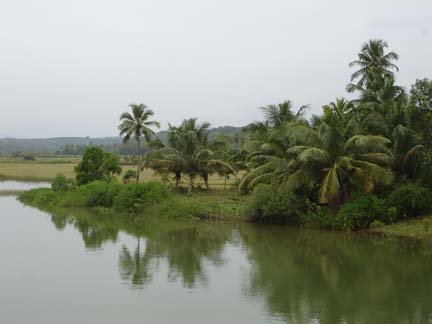
A Coastal estuary

A Coastal estuary
Holegadde near Honavar,Uttara Kannada dist, Karnataka

Copy? Right - but kindly remember to acknowledge!

Creative Commons License
This work is licensed under a Creative Commons Attribution 3.0 License.

" tulu-research.blogspot." ತುಳು ರಿಸರ್ಚ್. ಬ್ಲಾಗ್‌ಸ್ಪಾಟ್‌. ಇನ್

" tulu-research.blogspot."  ತುಳು  ರಿಸರ್ಚ್.  ಬ್ಲಾಗ್‌ಸ್ಪಾಟ್‌. ಇನ್
Have a nice day !