Showing posts with label Kenya. Show all posts

Monday, June 16, 2014

339. Kinnara – Origin of Myths

   Indian mythologies have described a number of mythical exotic people such as Kinnara, Kimpurusha, Yaksha, Gandharva, Rakshasa, Kirata, Vanara etc. Some of these might have referred to specific immigrant tribes. For example, Gandharva may refer to those who hailed from Gandhara which was the ancient name for the present day Afghanistan. Kirata may refer to a tribe of hunters. Vanara may refer to a specific species of humanoid apes. Kinnara people were considered to be fine musicians.
 Half human-half bird form of  Kinnara in South east Asian  artworks


However, it appears that the visualizations of  some of these tribes  have been exaggerated beyond the scope of realities, especially  for the purpose of lending curious phantasy elements in the anecdotes. Kimpurusha has been described as lion headed human being. The term Kimpurusha in Sanskrit means a questionable human form or literally  “is it a human being”!

 In some of the Puranas, the Kinnara people, well versed in music, have been described as horse-necked people or human beings with long necks. The long necked humans might have been inspired by some of the African tribes who lengthen their necks by wearing a series of rings around their necks as a traditional practice. While in some Buddhist  and Hindu mythologies,  Kinnara is a mythical character with an upper  half-human and  a lower half-horse form especially in India;  or a half-bird (lower body) and half human (upper body)  in South-east Asian legends. The evolutionary changes or deviations in Indian and South-east Asian myths on ‘KInnara’ show that the formats have been inspired by phantasies that have evolved with time and distance elements.
In Southeast Asian mythology, Kinnaris, the female counterpart of Kinnaras, are depicted as half-bird, half-woman creatures. The Kinnara character is described in the Adi parva in the Mahabharata, they are depicted as perpetual lovers and celestial musicians. They are also featured in a number of Buddhist texts, ilike the Lotus Sutra. An ancient Indian string instrument is known as the Kinnari Veena or simply Kinnari. In Burma (Myanmar), kinnara are called keinnaya or kinnaya. Female kinnara are called keinnayi or kinnayi.
Migration of tribes
We talk of the global village nowadays but the human tribes were migrating from one country or region to the other since the beginning of the human history even though in those days they had to travel exclusively by feet or by means of horses. Thus the Indian subcontinent and the Africa were connected since early history by migrating tribes and travelers.
The Gandharva were the people from Gandhara or ancient Afghanistan. Immigration of white skinned people from Eurasia has been recorded in ancient Indian place names. Place names containing the indigenous phrases suggestive of immigration and settlement of white skinned people such as Bola (Tulu), Bela/Bellar (Kannada), Vellar (Tamil/Telugu), Gore (Marati/Hindi) can be found all over India.

Tribes from Kenya
There is a village known as Kinnaur in Himachal Pradesh. The Kinnaur tribes living in the area consider themselves as descendants of Kinnaras, referred to in our mythologies. One Puranic reference   describes Kinnaras as long necked human tribes. This reminds us of several African tribes who traditionally lengthen their necks by inserting rings. The mythical half horse imagery of   epics might have been sparked by the fleet footed athletic African tribes. The fast paced runners from African tribes could have helped modeling the half human-half horse phantasy attributed to Kinnaras. The Burmese equivalent word of Kinnara is Kinnaya or Keinnaya possibly suggests the tribes from Kenya.

Kenya in Tulunadu
Tribes from Kenya could have wandered along different areas of India including the coastal Karavali and Tulunadu, where a number of ancient place names suggestive of Kenya are still surviving (Post 217) .
There are atleast two villages in Karavali known as Kinya (Mangalore Taluk) and Kenya (Sullia Taluk). Besides, there a number of ‘Kinni’ villages such as Kinnigoli, Kinni Padavu, Kinni Kambala,  etc.
The Kenya/Kinya/Kinna/Kinni villages are found all over India of which a sampling is given in the list here below:

Kenya / Kinna places in India
Andhra Pradesh: Kinnamguda, Kinnarpalle, Kinnervada, Kinnerle, Kinnamguda, Kinnisapugh, Kinnisadak,
Haryana: Kinnar, Kingra, KInana, ,
Karnataka: Kinna, Kinnarhalli, Kinnya, Kenya, Kinni, Kinnisultan. Kinnigoli, Kinnikambala,  Kinni-padavu,
Madhya pradesh: Kinnapura, Kinna, Kindri, Kiniya, Kenjar?, Kenjur?
Tamilnadu:  Kinnakorai, Kinnimangalam.
Bihar: Kinnu Dehri, Kinaur, Kinjar.
Himachal Pradesh: Kinnu, Kinner.
Uttar Pradesh: Kinnupur, Kinoti, Kinaura, Kinki, Kinawa, Kinauli.
Chattisgarh: Kinari.
Jharkhand: Kini.
Maharastra: Kinhi, Kinhala, Kini.
Orissa: Kinam, Kintala
Punjab: Kingra.
Uttar Pradesh: Kinnupur, Kinner Patti.
Uttar khand: Kina, Kinath, Kinsur
West Bengal: Kinkarkoti.

Inference
The ancient mythical concept of Kinnara could have been recreated on poetic imagination as phantasy creature based on immigrant fleet footed athletic tribes with long necks from ancient Kenya. Ancient settlements and villages named after the Kenya tribes distributed all over India lend credence to the concept of immigration and settlement of ancient Kenyan tribes in India who might have been assimilated in indigenous heritage in the course of passage of time.

\

Sunday, May 23, 2010

241. Mysterious mountain of Meru


The migration of human tribes from Africa to Asia, India ( and other countries ) since ca. 50,000 years ago and later have been confirmed by genetic studies. Along with the migrating tribes many primitive words have migrated to different countries. We have shown in some of the past posts, the existence of several African words remaining as obscure and strange remnants in the place names in Tulunadu.
Yet, the concept of migration of words from African to Dravidian and other Indian languages during the historical period appear strange and unbelievable to many. The skeptics point out that the languages of Africa and India are distinctly different. It is true that the languages were different. However, the fact is that the words, only the words, have been absorbed by the recipient land and not the language. The languages have grown in the land according to a destined pattern determined by the dominant majority of the population. The migrating people being in smaller number have not been able to impose their language patterns on the recipient land, but strange foreign words introduced by them have been seamlessly absorbed, in some cases temporarily, by the recipient language. Strangely, our place names have faithfully preserved some of the temporarily accepted foreign words. These words can be considered ‘temporary’ absorption because we have lost the meaning of those words due to disuse.
For the benefit of skeptics, we shall give a glowing example that has been entrenched in many of the Indian languages and epics.
Mt. Meru
The mountain of Meru (or ‘Sumeru’) has been a prominent geographic feature in several Hindu, Buddhist and Jain mythologies. The ‘Meru Parvat’ is considered to be the centre of ‘Jambu dwipa’(peninsula) and abode of Brahma and other Gods. Ancient Indian texts described to be about 84,000 ‘yojana’ high or so.
Mt. Meru, is a conical shaped volcanic mountain, 4,566 m high, located in Tanzania at the border of Kenya, Africa. It is located on the equator, which compares well with the Indian descriptions of ‘centre of the Jambu-dwipa’!. Even though now it is considered as the fourth highest mountain in Africa geological studies have shown that it was about 6000m during the ice ages (period of glaciation) and the height was reduced subsequently on account of erosion. Volcanic mountains are generally conical in shape being wide at base with a narrow summit. Indian texts describe the Meru mountain precisely as wide at base and narrow at top.

The word ‘Meru’ in Sanskrit means ‘high’, possibly after the Meru mountain.
Why an African mountain finds respectful mention in ancient Indian epics?
It can only mean that people from Africa were frequenting India during the period ca 1700 BC to 500 CE when most of the Indian scriptures and epics were considered to have been composed. Either the composers of these epics had first- hand knowledge about these African places or they envisaged the features based on the descriptions of the immigrants.
Mt. Meru was considered as abode of Gods by African tribes. Even the origin of African God ‘Murunga’ has been traced to the Mt. Meru. The ancient cult of African God Murunga has entered south Indian theology as Muruga!
The word ‘Meru’ has entered Indian languages as an expression of greatness. In Kannada, the phrase ‘meru nata’ means a great actor.
Mt. Kenya
Mt. Kenya is another African mountain. Kenya is also the name of an East African State, bordering Ethiopia, Somalia, Sudan and Tanzania. The African (Kikuyu) word ‘Kenya’ means the abode of Gods. Several districts and regions within Kenya have been named after Meru. In Tulunadu, there are at least two places known as ‘Kenya’ (Sullia Taluk) or ‘Kinya’ (Mangalore Taluk). However, the local people have lost the original meaning and significance of these place names after the passage of time.
And many now unknowingly resort to misinterpretation of these toponyms as ‘small’ (=‘kinya’) or ‘listen’(=‘kenya’)!
Meru Peak in Gharwal Himalayas
An anonymous recent comment has provided information on the Meru Peak in Gharwal Himalayas, Uttar Khand State,India.This information is likely to have disputes with the data discussed in this post.
However we find several African place names repeated in Indian subcontinent.
We shall discuss these things more in the forthcoming blog posts.
®

Friday, December 18, 2009

217. Kenya

Migrating tribes in the antiquity, who set out on a long trail from Africa to India, obviously with several periodic stops in between, have brought in many antique words along with them. Tulu, Bantu, Siri, Sira, Kola etc are some of the common words deduced in these blog pages to have been brought from Africa to India.
The place name ‘Manki ‘ appears t have been introduce into Karavali in the similar way, either from Papua New Guinea or from the side of Northwestern region of Indian subcontinent as discussed in the previous post.
Kenya-Kinya
One more such place name that is found in Africa as well as in Tulunadu is the word Kenya or Kinya. Kenya is a State in Africa. Kenya means the abode of Gods in African language.
We have similar sounding two places in Tulunadu that bear the name of Kinya and Kenya. In southern part of Mangalore taluk, there is one village called ‘Kinya’. And in northern part of Sullia taluk is another village called ‘Kenya’. Both these place names could be the variants of a single name Kenya. It may be recalled that the region Kenya in Africa is also pronounced as Kinya.
In the Tulu language we can somehow find meanings for both these names, but it would be neither logical nor appropriate. The word ‘Kinya’ means smaller in present Tulu. However, this meaning appears inappropriate and may not be the original meaning of the place name. Similarly, word ‘Kenya’ means ‘listen to me’ in Tulu which again is inappropriate, if not absurd, as a place name. Besides, we have analyzed in previous posts that -ya or –ia are the spatial prefixes/suffixes with (divine connotations) not only in Tulunadu (eg. Aikala, Murulia, Sullia etc) but also in Africa and Asia and Asia Minor (Arabia, Namibia, Kenya, Tunisia, Ethiopia etc).
Therefore since, -ya is a spatial suffix, Kinya and Kenya should be analyzed as
kin +ya and ken +ya.
However, the words kin and ken apparently do not have any logical meanings in present Tulu language. Therefore it is proposed that the mysterious spatial name ‘Kenya’ has been brought to Tulunadu along with immigrants in the historical past.
®

Blog Archive

Books for Reference

  • A Comparative Study of Tulu Dialects By Dr. Padmanabha Kekunnaya. Govinda Pai Reserach Centre, UDupi. 1994
  • Koti Chennaya: Janapadiya Adhyayana. By Dr. Vamana Nandavar. Hemanshu Prakashana ,Mangalore.2001.
  • Male kudiyaru. Dr B. A.Viveka Rai and D.Yadupathi Gowda, Mangalore University,1996.
  • Mogaveera Samskriti By Venkataraja Punimchattaya. Karnataka Sahitya Academy.1993.
  • Mugeraru:Jananga Janapada Adhyayana. By Dr Abhaya Kumar Kaukradi.Kannada & Culture Directorate,Bangalore & Karnataka Tulu Academy, Mangalore,1997.
  • Puttubalakeya Pad-danagalu. Ed: Dr B.A.Viveka Rai,Yadupati Gowda and Rajashri, Sri Dharmasthala Manjunatheswara Tulu Peeta. Mangalore University.2004
  • Se'erige. Ed:Dr K.Chinnapa Gowda.Madipu Prakashana,Mangalagangotri,2000.
  • Studies in Tuluva History and Culture.by Dr P Gururaja Bhat (1975).Milagres College,Kallinapur,Udupi.
  • Taulava Sanskriti by Dr.B.A.Viveka Rai, Sahyadri Prakashana,Mysore 1977
  • TuLu naaDu-nuDi By Dr.PalthaDi Ramakrishna Achar, Puttur.
  • TuLu NighanTu. (Editor in Chief: Dr U.P.Upadhyaya, Govinda Pai Research Centre,Udupi. Six volumes. 1988 to 1997
  • Tulu Patero-A Philology & Grammar of Tulu Language by Budhananda Shivalli.2004.Mandira Prakashana Mangalore. p.317. (The book is in Tulu Language using Kannada script)
  • TuLunadina ShasanagaLa Sanskritika Adhyayana. By Shaila T. Verma (2002) Jnanodaya Prakashana,Bangalore, p.304.(Kannada)
  • Tuluvala Baliyendre. Compiled by N.A.Sheenappa Hegde,Polali,Sri Devi Prakashana,Parkala,1929/1999

A Coastal estuary

A Coastal estuary
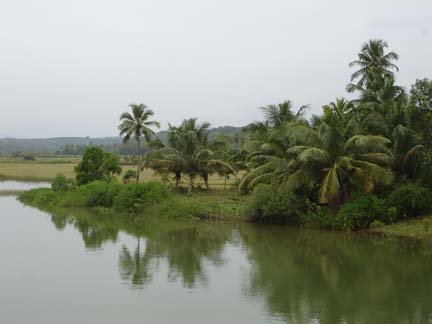
Holegadde near Honavar,Uttara Kannada dist, Karnataka

Copy? Right - but kindly remember to acknowledge!

Creative Commons License
This work is licensed under a Creative Commons Attribution 3.0 License.

" tulu-research.blogspot." ತುಳು ರಿಸರ್ಚ್. ಬ್ಲಾಗ್‌ಸ್ಪಾಟ್‌. ಇನ್

" tulu-research.blogspot."  ತುಳು  ರಿಸರ್ಚ್.  ಬ್ಲಾಗ್‌ಸ್ಪಾಟ್‌. ಇನ್
Have a nice day !