Showing posts with label Migrations. Show all posts

Tuesday, December 21, 2010

263. Forgotten words in Tulu language.2

One and a half years ago, in this blog (post No. 123), we discussed about some of the strange words existing in Tulu language whose meaning is difficult to comprehend at present. Two of the words enlisted in the post were: Mijar and Miyar.
Miyar, Miyapadavu.
There are atleast two Tulu place names that contain the prefix ‘miya’.(There may be more,readers, kindly enlighten me!).Therefore the analysis of these words would be:
Miyar=Miya+ar.
Miyapadavu=Miya+padavu.
In these words above, ‘ar’ means an open ground and ‘padavu’ means an elevated area.Miyar is a sylvan and rocky rural area close to the Karkal town. Miyapadavu happens to be a sylvan plateau area in the interior of Kasargodu district, Kerala.
Mijar
The other word in the group is Mij ār, a village located between Mangalore and Mudabidri on NH13. If we analyse this word independently,we may feel that it is: Mi+jar, wherein j ār represents a sloping ground(ja+ar).
However, the analogy of words Miy ār and Miyapadavu suggest that Mij ār was originally, miy+j ār which became Mijar in pronunciation in the due course.
Miya
Many of the green, sylvan Tulu rural areas are similar to forests even now. It can be visualized that these rain-fed Tulu regions were dense forests some four six millennia ago. Miya is a word of African origin, existing even now in Somali and other areas of Africa. It means forest.
Miya (Somali) =forest.
Therefore, the word ‘miya’ (=forest) appears to have been brought to Tulunadu by African immigrants in the antiquity. With the passage of time, the original meaning of the word ‘miya’ has been forgotten and lost in Tulu language, even though some of the ancient Tulu place names have preserved these heritage words, as invaluable trophies of history and heritage!
®

Wednesday, February 20, 2008

93. Pedestrian journeys

In the olden days walking was an essential part of life. Now it has been reduced to a dignified exercise designed to burn the extra calories we tend to accumulate.
It can be hardly believed now that most of the human migrations in the history were covered on foot. Here is an example of Natha ‘Zhundi’ to remind us how our ancestors covered long distances by walk systematically over a prolonged period.
Natha Zhundi
The Kumbha Mela at Triambakesvar (now, Maharastra) recurs once in every twelve years. Twelve regional heads of Natha (Barapanth) monks assemble at Triambakesvar during the Mela and customarily elect the Natha monk to head Kadire Jogi Mutt for the next duration of twelve years. Following the selection, a ritual holy vessel (the ‘patra devata’) is handed over to the newly elected chief of Kadire Matt and a troupe of some 600 to 700 Natha monks used to commence their long pedestrian journey from Triambakesvar to Kadire in Mangalore, a distance of about 1150 kilometers.
The pedestrian troupe covers the distance in about six month time. They halt and rest in some 78 places before reaching the destination,Kadire. Jogi Ananda Nath (2003) describes the 'Zhundi' and lists the rest points between Triambakesvar and Kadire as follows: 1.Nasik 2.Saikheda 3.Sinnar 4.Drodibudrak 5.Nadursigot 6. Sangamner 7.Haibargaon 8.Chandanapuri 9.Dolsa 10.Dhargaon 11.Peepalbandi.12.Gunjalvadi. 13.Arti. 14.Savargaon. 15.Paunda. 16. Chincholi. 17.Khilarwadi. 18.Mahalunge. 19.Badagaon..20.Manchar. 21.Khedagaon 22.Chakan 23.Mosi 24.Bhosari 25.Pune 26.Aranyesvar 27.Bairavanala 28.Hadapsara 29.Sasvad 30.Bhivandi 31.Kikvi 32.Sivale 33.Buij 34.Udthara 35.Satara 36.Koregaon 37.Kumata 38.Rahimathpur 39. Ogalewadi. 40.Karad. 41.Vadagaon..42.Macchendragad..43.Islampur. 44.Retaredharan..45.Battis Sirala 46.Mangalegaon. 47.Mohuregaon. 48.Kollapur .49.Gandhinagar. 50.Kagal. 51.Nippani. 52.Sankeswar. 53.Belgaum depot. 54.Belgaum city.55.Khanapur. 56.Donagregaon.57.Kharola.58.Balevadi.59.Londa. 60.Handibadanga..61. Nagargali. 62.Godagiri. 63.Mangalvad. 64.Haliyal. 65.Keralkatte. 66.Sambarani. 67.Yellapura. 68.Manchagiri. 69.Sirsi. 70.Chandragutti.71.Sagara. 72.Hosanagara. 73.Nagara. 74.Halavari. 75.Barkur. 76.Udupi. 77.Mulki. 78. Panambur.

Consistent long pedestrian journeys were a common feature in the historical past.
®

Tuesday, October 9, 2007

42. Origin of the word Tulu -II

The word ‘Tulu’ itself is of remote antiquity. Online search shall convince you that the word Tulu is more global in dimension than we can imagine.It appears that the word 'Tulu' originally meant 'water and water related aspects' in the language of its origin, but might have acquired additional meanings subsequently due to changes in environmental situations.
In the ancient Sumerian language“tu” morpheme represented ‘water spring or well’ or ‘water connected activities like bathing or washing’ and the morpheme “lu” was indicative of quantity or abundance, people etc. There was another Sumerian word “tulu” or “tule” that meant ‘soft or placid’. (Compare similarity of the latter meaning with our ‘tuluve’ jack fruit.).Tulu is found in the list of African personal names and the word means ‘spread out in different directions’, possibly implying migratory character of the Tulu tribes. Another vocally analogous African word ‘Zulu’ also means water.
I believe that the word ‘Tulu’ existed since Sumerian period of early civilization (ca. 6000-4000 BC) in north African-Mediterranean region, where from these original ancient Tulu tribes migrated. The ancient Sumerian and related languages form the basis for the evolution of many of the Afro-Asiatic languages of present day. The word 'Tulu' originally meant (1) water or activities connected with water (2) placid and soft.These ancient meanings still survive today in spite of the passage of several millenia in the time scale. These Sumerian meanings are analogous to those interpreted by Sediyapu Krishna Bhat and Manjeswar Govinda Pai in the context of present Tulu in Tulunad.
The Ethiopia can be described as cradle of human race, since the earliest human fossils (Homo sapiens) Omo I and Omo II dated back to 165,000 years were found in Ethiopia. As reconstructed by the genome studies complemented with archeology and paleontology, human migrations started out of Ethiopia and Africa in several phases.
Tulu place names
Tulu is the name of several Ethiopian towns and settlements. ‘Tulu’ is also a surname or part of the name among the Ethiopian people. For example, Derartu Tulu is an Ethiopian female athlete. There are at least four places (towns, settlements) called ‘Tulu’ in Ethiopia, at least one each in the other neighboring African countries like Kenya, Sudan, Nigeria and Zaire. In Ethiopia there are more than 12 places in the online maps with ‘Tulu’ as prefix, such as Tulu Bolo, Tulu Bora, Tulu Ferda, Tulu Guracha etc.
Tulu Migrations
On the basis of these data I suggest that the original Tulu tribes originated in Ethiopia in northern Africa and migrated out of Africa under adverse environmental conditions.Based on environmental geological data scientists have interpreted that around 2000 BC, wide spread desertification of northern Africa prompted many tribes to migrate out of Africa. Tulu place names in other African countries are suggestive of migration of early Tulu tribes in different directions. The present African meaning of ‘spread in different direction’ for the word ‘Tulu’ could have been the result of migrations.
The exact nature of the language of the primary Tulu tribes hailing from Ethiopia is difficult to conjecture now but we can presume some of the original words are still preserved as fossils in present Tulu language.
The Tulu language has grown or evolved independently of African languages during the last 6000 years in such a way that they have entirely separate identities and characteristics. A lot of things change as a result of divergent evolutionary trends. But some fossil root words may exist still!
Outside the African continent, Tulu place names can also be found in Pakistan (‘Thulu’), Afghanistan, Mynamar, China, Bolivia, Brazil, Papua New Guinea and Phillipines.
The Afghan Television channel, at present, is called ‘Tulu TV’, the word ‘Tulu’ in the present Afghan language means something like ‘the rising’ or ‘the dawn’. Note that Afghan meaning of ‘Tulu” is different from the African roots. Afghanistan is close to Pirak where many of the tribes settled during the period ca.2000 to 500 BC. The Pirak episode of Tulu tribes has been discussed in several earlier posts in this blog.
The Tulu tribes settled and lived in the Pirak area for some 1500 years, then again migrated (ca 500-300 BC) to their present homeland in Tulunad.

The original ‘Tulu’ may have been the name of the mother who migrated from Africa to Pirak along with her family. The original ‘Tulu’ family carried several root words along with them during the migration from their early homeland. A few such Tulu families or clans were active in the last millennium also around Kundapur, Honavar and Banavasi region.
And Krishnadevaraya who ruled Vijayanagar was product of one such family that called itself Tulu clan.

Blog Archive

Books for Reference

  • A Comparative Study of Tulu Dialects By Dr. Padmanabha Kekunnaya. Govinda Pai Reserach Centre, UDupi. 1994
  • Koti Chennaya: Janapadiya Adhyayana. By Dr. Vamana Nandavar. Hemanshu Prakashana ,Mangalore.2001.
  • Male kudiyaru. Dr B. A.Viveka Rai and D.Yadupathi Gowda, Mangalore University,1996.
  • Mogaveera Samskriti By Venkataraja Punimchattaya. Karnataka Sahitya Academy.1993.
  • Mugeraru:Jananga Janapada Adhyayana. By Dr Abhaya Kumar Kaukradi.Kannada & Culture Directorate,Bangalore & Karnataka Tulu Academy, Mangalore,1997.
  • Puttubalakeya Pad-danagalu. Ed: Dr B.A.Viveka Rai,Yadupati Gowda and Rajashri, Sri Dharmasthala Manjunatheswara Tulu Peeta. Mangalore University.2004
  • Se'erige. Ed:Dr K.Chinnapa Gowda.Madipu Prakashana,Mangalagangotri,2000.
  • Studies in Tuluva History and Culture.by Dr P Gururaja Bhat (1975).Milagres College,Kallinapur,Udupi.
  • Taulava Sanskriti by Dr.B.A.Viveka Rai, Sahyadri Prakashana,Mysore 1977
  • TuLu naaDu-nuDi By Dr.PalthaDi Ramakrishna Achar, Puttur.
  • TuLu NighanTu. (Editor in Chief: Dr U.P.Upadhyaya, Govinda Pai Research Centre,Udupi. Six volumes. 1988 to 1997
  • Tulu Patero-A Philology & Grammar of Tulu Language by Budhananda Shivalli.2004.Mandira Prakashana Mangalore. p.317. (The book is in Tulu Language using Kannada script)
  • TuLunadina ShasanagaLa Sanskritika Adhyayana. By Shaila T. Verma (2002) Jnanodaya Prakashana,Bangalore, p.304.(Kannada)
  • Tuluvala Baliyendre. Compiled by N.A.Sheenappa Hegde,Polali,Sri Devi Prakashana,Parkala,1929/1999

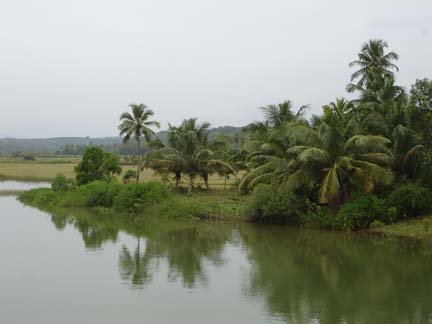
A Coastal estuary

A Coastal estuary
Holegadde near Honavar,Uttara Kannada dist, Karnataka

Copy? Right - but kindly remember to acknowledge!

Creative Commons License
This work is licensed under a Creative Commons Attribution 3.0 License.

" tulu-research.blogspot." ತುಳು ರಿಸರ್ಚ್. ಬ್ಲಾಗ್‌ಸ್ಪಾಟ್‌. ಇನ್

" tulu-research.blogspot."  ತುಳು  ರಿಸರ್ಚ್.  ಬ್ಲಾಗ್‌ಸ್ಪಾಟ್‌. ಇನ್
Have a nice day !