Friday, July 18, 2008

128. Bairās and Mundās

Origin of the two Tulu words, bairās and munDās, posed by Manjunat, may be explained by visualizing and reconstructing the period of initial interaction between Tulu immigrants and Munda native tribes in the Karavali zone, probably dating back to ca. 800-600 BC.
The clothing accessory ‘bairās’(bahiras) is the ancient equivalent of modern bath towel and ‘munDās’ is the popular ancient headgear of the coastal area.

The Interaction
The immigrant Tulu tribes were in for a cultural shock in the Karavali land they chose to settle down. The immigrants coming from northern India were tall in stature, about six feet, fair skinned and wore full body-covering cloths designed and suited for the cold climates of the north. The native tribes of that time were shorter generation, about five feet, dark in complexion and wore minimal clothing that suited the sultry climate of the coastal Karavali. Basically, the natives wore a sheet of cloth wrapped around their loins. Another sheet of cloth was cloth was fashioned into a turban. Probably this was the standard attire of the leader of the native tribal group, known as Munda.
The immigrants had to coin new words to describe these exotic clothing accessories used by the Munda. The loin cloth the Munda wore was called ‘munDu’ and the headgear was designated ‘munDas’. (=munDa + ās).
The interaction was deep and strong. Many items were designated after the MunDa. Most of their ancient tribal habitations were named accordingly. Reconsider the still surviving place names all over the Karavali such as MunD-kur, Kalla-munD-kur, MunD-aDi, MunD-oDi, MunD-oli, MunD-aje, MunD-ūr, MunD-goDu and so on. The average height of the Munda person was employed as a unit of measure: One ‘munDu’ stands for a length of about five feet. The common prickly shrub used by MunDa tribes for preparing mats stream-boiled mooDe, was called ‘munDevu’. The conspicuous broad ‘forehead’ characteristic of MunDa tribes was named ‘munDa’ or ‘munDo’.

Bairās
 The ‘Baira’ were another ancient tribal group that sauntered across Karāvali and rest of the peninsular India. ‘Bairam-palli’ is an example of their ancient habitation. The origin of the cult of tribal God ‘Bairav’ who was later considered as a form of Shiva can be attributed to Baira tribes. And words like ‘bairagi’ (nomadic recluse) have been derived from Baira-s'.Narayana Shetty cites the relevant name of a hamlet: 'BairaLi guthu'.
Similarly the word 'baikam' as in place name 'Baikam-padi' meant 'beggars' or 'nomadics surviving on alms'. Later in the history ‘Bairarasa’ were popular rulers in parts of the Karāvali.

Bahiras, the towel
Thus ‘bahirās’ (=bahir + ās) is the smaller piece of cloth originally worn by the natives and adapted by Tulu tribes as bath towel. The word may not be directly connected to the Baira tribes. The Bahir-as ('bahir' =outer) refers to the sheet of cloth used to cover the upper part of the body or the sheet used to wipe the body. The word probably was derived from an ancient Pisacha- Prakrit sources.The suffix 'ās'stands for a sheet of cloth, earlier form of 'hās';one of the component in weaving is also called 'hās'.
**
bairās āpuni
Viswanath adds a few idiomatic expressions related to 'bairās':
There is a phrase "bairas aapuni" (falling a prey to a yarn /believing the false statement without checking. Akin to the modern 'April fool'). This could have been based on the notion that mendicants ('bairas') are given to lying or fooling.

'ChanDi bairas'( or even 'chanDi Kamboli'; 'chanDi'=wet) mean "lazy fellow" or 'thing not suitable for the purpose'. The expected utilitarian aspect of 'kamboli'(=blanket) or 'bairas' like warming the body or driving away chillness or removing water by rubbing is lost when they are wet.
**
The 'Tulu NighanTu' (p.2594) cites a funny and sarcastic Tulu proverb:
AnD'g arive ijji, manDeg munDās nāduve!
=No cloth to cover the private parts, yet (he) searches turban for the head !

®

Tuesday, July 15, 2008

127. Ancient proper names

What is in a name? Yes, but the style and pattern of names have changed drastically in Tulunadu over the years. Older generation of Tulu people carried names that now remain exclusively with illiterate tribes; or are in the process of getting obsolete. Many of the names are generally unintelligible. Do you have meanings for these names especially those in the boldface? The symbol (f) denotes female names.

(Possible logical meanings have been added as running updates.)


aNNu [=boy,brother]
biyalu'
bileyecchi(f) [=very fair lady.'Bili'=white,fair; 'ecchi'=1.more 2.trance 3.shiver 4.form]
bommi (f) [= from bomma <. brahma]
chennu(f) [= beauty]
choma [= <.Soma,moon]
choukaru [?]
dabbu =1.useless fellow,dullard .2.Coin/money (Telugu)3.Force,energy?
Dangu
=Bent or hunchbacked ? ;2.announcement as in 'Dangura'?
deyi [=lady]
dooma ?= Smoky?
dugga [=<.'durga',fort]
duggu(f) [=<.'durga',fort, the Goddess Durga]
Gail-akka (f) =graceful?,shrew?
haniya [=<.taniya, shani,saturn]
hukra [=<.tukra, shukra. venus]
kāmpara [= a tribal,>.'gāmpa',dull fellow?]
kanDu(f)
kargi (f)[=dark lady]
kariya [dark man]
kepu [=red or reddish?]
koira=Kokila , Koyil > Koira, i.e. cukoo?
koraga [= Man,tribal type]
korapoLu(f)[= Woman,tribal type]
koregedi(f)[= Woman,tribal type]
kunji(f) [=child]
kurumbila= one with curly hair.
kuTTi[=child]
mābu= short form of Mahabala?
madara=sturdy man?
madaru (f)=fertile lady?
māda = from Mahadev?
mādi (f)
mayire(f)= [ from mayuri,'mayura'-peacock]
māyila [=1.mother. 'Mayi' from Buddhism? 2.cf. 'māya']
Mecchu (f)=favorite
meNku(f)[=shining,star]
monTa [short fellow?]
monTi (f)[short woman]
mudara
munDa [=leader,man; a tribal group]
muTTi
narsi (f)[=from Narsu, female of Narasimha?]
natu : corrupt form of 1) Nath or 2) Nataraj ? 3) a grand child ( Marathi.)
niTToNi= nitt (straight) + Oni (lane ) , a upright and tall person (?)
ODi=sorcerer?
pakira= nomadic
pāncha
piletti (f)
sooru=valiant
taniya [=shani,saturn]
tanni-māniga(f)[=sister,>'tangi';respectable(lady}]
toma [=soma,moon]

Other Planetary proper names:
Aita, Aite(f) Choma/Toma, Angare, Booda, Guruva, Tukra/Hukra, Taniya/Taniyaru(f).
(Planets representing the days of the week from Sun [Aita.< Aditya] to Saturn[Shani>Tani-ya}
**
Narayana T.Shetty adds some more such older names:

baikle
bekku [=cat]
bermu [=bermer]
biTTu(f)
biyālu(f)
boLe [=fair man]
bUche= from 'Bhoja/e'? 2. 'boochi'= a plug
challe
chungle
=
donbe [a tribal, street player 'domba']
dogu
doye
dUje
=sharp-witted fellow.
jāku (f)
giriyamme (f)[ =hilly woman,Parvati 'giriamma']
jāru
kāDye [=Naga]
kanboLi [woolen blanket]
kanki (f)['kanka/kanki'? a tribal name- cf. place name:'KankanāDi']
kattoDi
kOchu
kOtu [=from 'Kota', a tribal]
kuDpe [=Naga? One who 'shivers' or 'stings'?]
kuppe [=stocky man?]
kUsu [=a tribal man,'Koosa'.'Kosar' in Tamil Sangam, later meaning 'a child']
munglie [='munguli',mangoose]
nātu
pakire [=wanderer,nomadic]
pUnke
pOnkre
=prankster, related to pokri/ponkri?
sankri (f)[=Parvati, from 'Shankara']
sUru (f) [=sun,'soorya']
tātu (f)
tungu (f)[=Tunga, river?]
Uvayye [='hoovayya',floral man]
**
Hosabettu Viswanath has added some useful notes on sarcastic tinges in the ancient proper names:

Most of the names are adjectives, highlighting the types of physique, physical/mental abilities or defects, generally coming under the word: 'idiosyncrasies', and therefore, invariably sarcastic.

Bittu/Bitte = small. Hence a person with short constitution.
Biyalu' (Woman walking like a galloping horse, i.e. 'vaihali'?)
Challe = A man with bent or afflicted legs. (Ashtavakra), one who walks unsteadily.
Pincha/e = A man with twisted body
Cheenkre/Seenkre = a man with thin and delicate body
Bikle/Bikkele = A man talking with gasping or a stammerer
Duje = a man with needle-like smartness
POnkre = A dirty and dull man
PUnk = 1.from Pooki (dirty gas coming out of ass) or 2. Mould. Therefore, meaning a dirty man with bad odour/smell.
Mudar = Fertile soil. Mudarmuttu = attaining puberty. So, Mudara may mean a sturdy/robust/vigorous/manly person and mudari = a woman with fertility.


Some houses take names of such old-fashioned names of ancestors (Tankalthil, i.e. my house, Deralthil, Baddalthil, Mayilthil, Bontalthil, Montalthil, Keppalthil, Panchalthil, Konikalthil, etc. - all in Hosabettu) (... + alta + il)

Kurumbila = A kind of weed growing in paddy field. Hence, a despicable person
Kurumbile = a man with curly and dishevelled hair. A man with 'African' curly hair?
KOchu = Koche, Kochappa (Gumma). Angular,thin person?
ODi = a tall person(?)
Nodakka = a good looking woman (?)
Bayakka = a loud-mouthed woman? Or from 'Bāyi',lady.
Achchumakka = A well-shaped woman?
Derakka = ?
Chillakka = ?
Poovanni/Poovanne =Person having the qualities (smoothness/delicacy/fragrance) of a flower
Abbayakka = From 'Abbaga' = a star.
Dareyakka = Daramakka = Taramakka (Tarame) = A woman shining like Star.

Mangura
Mangura/Mangure = a deceitful person (?). Mangu is a kind of insect (resembling the shape of a tortoise or lice), living/hiding inside the loose soil/sand by burrowing tiny cylindrical pit at undisturbed places. It is supposed that this insect is at the tip of that cone below but it lives away from that point. In childhood, it was a competitive game for us to find out as many 'mangus' as possible. Because of the deceitful nature of hiding, 'Mangu' is identified with deceit/cheating (eg. Mangu pattavuni = to cheat)
'Mangu' also means a she cat. Hence applied to a girl of silly and docile nature.

natu : 1) Nath (Lord) gets corrupted to Natu as an endearment; 2) Nataraj is shortened to Natu as a pet name and 3) Natu, a grand child (?), as in Marathi.
Koira - As Mayoor is to Maira/e, could Kokila mean Koyil > Koira, i.e. cukoo?
Dangu: Bent or hunchbacked woman.
Dabbu: Worthless coin, hence a good for nothing fellow/dullard
Mabu: Short form of Mahabala
NittOni: nitt (straight) + Oni (lane or line or is it Aeni (Ladder), hence a upright and tall person ( ? ).
Chungle
= A sticky/troublesome person whom one finds it difficult to avoid. Alternatively, an obscure person.
Chungu = Dunchi = Sungu = Kuchchi. It means a pointed/protruding tip/shaggy or thorny edge of grass, hay, fabric/cloth, hair, shoe , etc. It sticks to clothes or pinches fleshy parts of our body. Study this wise-cracker in Tulu: 'Poddare salo, Poddeppuda ulayina/da chungu'. This saying advises a person not to take loan from father-in-law or relatives. Such loans are as pricking as a thorn in a blanket.
Chungudi = small changes/coins, hence a worthless thing or unimportant thing.
***

**

Sunday, July 13, 2008

126. Totems in our antiquity


An image of a totem of Rabbit.

We generally take for granted that totems were traditionally used by the primitive aborigines of Africa or America. The Oxford dictionary defines totem as ‘a natural object or animal believed by a particular society to have spiritual meaning and adopted by it as an emblem’.
Our analysis and earlier discussion on the antiquity of Sāliyān lineage led straight into the realm of totems. Analytical inputs from Manjunath and Ashok Shetty unravelled ‘spider’ (or ‘Tālya’) as an ancient totemic emblem of the Sāliyān/ Tāliāna lineage of Tulu communities. This leads us to investigate deeper into the footprints of totemic emblems in Tulunadu.

African heritage
I have emphasized earlier that Tulu people were immigrants and have had African heritage in their antiquity. This is in conformity with the popular recent concept of migration of people from Africa. The basic words ‘Tulu’ and ‘Bant’ have been shown to be imported from our African roots. Similarly our word ‘Kola’ (the celebration or reception, the custom) is from Africa. There have been several other borrowed items that have been part and parcel of our culture: the cult of Spirit worship, Tree worship (Marava), the tradition of Oral literature (PaDdana), Totems

Totem of Rabbit:‘Muger’
One of the major tribal groups at present in Tulunadu is called ‘Mugera’ or ‘Méra’. The words ‘muger’ or ‘mér’ refer to rabbit. Dr. Abhaya KaukraDi in his work on ‘Mugeraru’ (1997) infers that the word ‘Mugera’ or ‘Mera’ came into being because these tribes are experts in hunting rabbits. However there is a strong possibility of the rabbit being a totem for this tribal community in the antiquity.

There is one more community not related to ‘Mugera’ / ‘Mera’ tribes discussed above but also called ‘Mugér’ or ‘Moger’ especially along the coast. These are fishers by profession and in Tulu regions they have been renamed as ‘Mogaveera’ during the beginning of the Twentieth century. I have tried to explain the word origin of ‘Moger’ (now, Mogaveera) earlier based on the words ‘mogaru’ or ‘mugér’ which means river-plains (as in ‘Jeppina mogaru’, Narimogaru etc). There is also a view that Moger is derived from the word 'moge' to draw water.The availbility of alternate choice of meanings for the words is inevitable during word-analysis due to ambiguities in the origin and existence of dual (or more) meanings for many of our words.
However in the light of our discovery of totemic roots of Sāliyān/ Tāliāna lineage, it appears that apart from the tribes ‘Muger /Mera’, there is a possibility that ‘Mogera’(Mogaveera) tribes in the antiquity also may have had rabbit as their totem in the antiquity.
More data on these aspects would be welcome.

Iruva
One of the ancient tribes I described based on relics of village names is the tribe of ‘Iruva’ or ‘Irava’. These may also be related to ‘Irula’ tribes and language found in interior Kerala. The name has close affinity to the tiny animal ant (‘Iruve’) which is a totem among some of the primitive African/American tribes.

More on elucidation on these aspects and suggestion of other totems may be expected from knowledgeable persons.

®
Reference:

Dr Abhaya KaukraDi (1997) ‘Mugeraru: Janjanga, Janapada adhyayana’ (in Kannada). Directorate of Kannada and Culture Bangalore. 292 p.

Friday, July 11, 2008

125.Kepula


Kepula,Kuntala,Nerala etc berry shrubs /tree end in suffix -la. Kepula is a wild shrub bearing red coloured flowers and berries,common in humid country sides.It is also known as 'Jungle flame Ixora'(Botanical name:Ixora coccinea Linn)
There is also an interior village named Kepu in Bantvala taluk.
'Kepu'2 (derived from English 'cap')nowadays also means small circular firecracker or a device used in blasting.
The red berries of the native shrub Kepula are edible; rural children use the berries as a prank bullet in native toys known as 'Kepulabedi' or 'Petlu', which is a small flute-shaped bamboo reed with openings on both sides.
A kepula berry or a 'petlukayi' is pushed to top side of this 'bedi' (musket/gun) by a stick (close-fitting shaft) and another berry is again pushed to shoot out the first berry with a bang.(Tulu Nighantu,p.921).The prank bullet or 'petlukai' is a small berrylike fruit, borne by a tree with with odd smelling jasmine-like white flowers ('kelenji tappuda mara') or other similar berry/seed bearing shrubs like 'allimar' etc.

Common names in other languages: 
 Sanskrit: Bandhuka, Raktaka,
 Malayalam: Thetti, Techi 
 Tamil: Sinduram, Thetti ,
Telugu: Koranan, Mankana .

**
What is the meaning of the word 'Kepu' or 'Kepula'?
Does the word 'kepu' designate an older root form of the word  for 'Kempu'(=red)?

Monday, July 7, 2008

124. Dissecting Strange words II

There are many strange sounding and unintelligible words around us in Tulu and Karavali Kannada. Some of these words transgress beyond the limits of Tulunadu and are found in diverse areas of the subcontinent.
*
Manjunat has added the following place names to the list:

Aerya(Erya)
Karinja(kAriJja)
Parappale(parappale)
Kayyara (kayyAra)
Kukkadi (kukkADi)
Mantampadi

* *
Narayana Shetty has added some more village names to the list of unintelligible words.

baNāl,
dembuge,
domDōLi,
hirgāna,
kampān,
kawDoor,
kudi,
maNāyi?
‘HaDamkOLi’, ‘Hamamja’(small hills)
Mumrgi(a rivulet in KawDoor village)
VarvāDi,

* *
Regarding the word ‘Kawdoor’ in his list, I was thinking of the sharp analogy between the words ‘Kawda’ and ‘Gauda’ and possibility of the two words being variants with the same meaning. Hosabettu Viswanath has attempted to decipher some of these words. I combine Viswanath’s notes with my stray ideas to logically demystify some of these strange words.

Aerya
Aer+ya=elevated area,ridge.

Heranje
'Haer' = to load, to fill a sack or sack itself filled with goods. 'Herett gaaDi' = Bullock cart used for transporting goods between ghats and Mangalore in olden days. Hence 'Heranje'(haer+anje) must be a loading centre, thus the village taking the name thereof.

Hirgāna, Naringāna
Hirgana=Hiregana: Hire(=large)+kāna(=forest).
Naringana: Narim(=fox, jackal)+kāna(=forest).

Kampān
The word ‘kampa’ may represent a extinct or assimilated tribal sect. There is a place called ‘Kamparabail’ in Bantvala Taluk.Similar to Kavada>Gavda transformations discussed below,it may may be worthwhile to explore possible kāmpa>gāmpa transformations.Sloven persons are called as 'Kampari' (woman) and 'Kampara' (man). These names are also used as proper names.

Kārinja
Kar+inja/e=dark/wooded+region/habitation

Kawdoor
There was a tribe of people called as 'KawDer', inhabiting ghat sections of the district around Puttur and other areas. So it is: Kawdera+Oor = Kawdoor. The ‘Kawde’ may be an ancient variant of the word ‘Gauda’. There are people in Maharashtra with surname of 'Kawade' and ‘Gawade’ (compare with: ‘Gowda’).
ShamBaa has suggested the origin of the word ‘Gauda’ as ‘Gawli’(=milkman, cowherder)>Gawda. One of the villages in Udupi taluk near Avarse is named 'Gawali'.
There is a sect called ‘Halu-matha’ (‘milk cult’) among the Gauda community of southern Karnataka.
The Tulu Lexicon (p.1009) describes Kaude = Milkman, A man bringing contribution to temple feasts. The other related words (and meanings) are: Kaudu = Fraud, Deceit.; Kaudig = smallpox. ‘KawaDe’ also stands for ‘cowries’ (small sea shells; ‘gavva’ in Telugu), used as money in olden days.

Kayyāra
Kayy+āra=hand/palm shaped(semicircular) ground. Compare with similar'KaibaTTalu' at Kadire,Mangalore.

Kemrāl, Mogrāl, Arala.
Kem (kempu=red)+ arāl (flower). Ruby- like bloomed flowers. The village must have been named after trees with ruby - red flowers. (Tulu Lexicon , p..904). Kemraal alternatively might be representing a "land abounding with ponds of Red Lotus flowers". In Tulu parlance lotus is "aralpoo or allipoo".Compare this with the villages called 'Tavarekere' in other parts of Karnataka.
If ‘Kemral’ is red flowers, then ‘Arala’ village stands for bloomed flowers or bloomed lotus. Similarly ‘Mogrāl’ would represent ‘mogg’ (=jasmine bud?) flowers or lotus buds.

Kukkādi
Kukka+aDi= Kukka, a tribal group+ aDi/pāDi(habitation). Compare with KukkeDi,Kukkandur(Karkal),Kukanur(Raichur),KaukraDi(<.kukaraDi),etc.And 'Kukke' of Subramanya.

MāNayi, MāNi
The place name MāNayi has several cousins in southeastern part of Tulunādui like Māni, Mānila etc. There is also another set of places with shorter vowel like ‘Manipura ‘ or Manipalla (>Manipal). For preliminary observation, the word ‘mani’ (=gem, pebble stone) looks different from ‘Māni’ (=lad or hero).
Generally, the word ‘māNi’ refers to male lad especially among Tulu Brahmins. But the word has other meanings beyond this. The MāNi is a spirit God popular in Uttara Kannada. (MāNi, MāNesvara (male), MāNakka (female) etc are the traditional common names among people in Ankola- Karawar region. That the spread of fame this Spirit God (a martyred war hero?), now worshipped in Uttara Kannada was not exclusive to northern Karavali is proven by the place names Māni and MāNila in the southern interiors of Tulunadu.
MāNi also refers to Spirit Oracle/Priest ('darshana pātri'). 'Maanechhidi barpuni' refers to a Spirit possessing the impersonator (pātri), manifested by physical shivering of the pātri.
Mani was also the name of an ancient dark skinned tribes of African origin widespread also in the Southeast Asian countries.

Mantampadi
Mantam+paDi=Mantam (<.manTap?)+ paDi(habitation).

Odilnāla, Oddathamuki
One possibility is ODu (Curved Tile, known as dambe) + ill’(house) + āla (stream, fluvial course). Does Odilnāla represent ‘a stream course by the side of the tiled house’ (?). Alternately ‘oD’ or ‘oDDa’ were a tribal sect represented by modern ‘oDDa’ or ‘VaDDa’(stone workers).Note for example,the hilly place name oDDathamuki (in Sullia taluk). And 'Oddarse'(VaDDarse).

Parappale
Para+pāle =Old Pāle tree.The bark of the Pāle tree oozes a bitter tasting milky latex that is traditionally considered to be medicinal in value.

Pilya
Possibly represents name of a tribal group. Note pilya – piLLe (Keralite) analogy. Other possibilities of ‘Pilya’ apparent include relation to ‘pile’ (=dirt, pollution)?

Pollya
Again the word Pollya is possibly related to name of tribal sect. Poliya may be related to tribes Poleya (>Holeya) or even Polla (>HoLLa). Other possibilities include relation to ‘pollu’(to stitch) or ‘poLLu’ (empty, barren, without seed).The word may be referring to rattan,cane and creeper considering its probable affinity to 'pollu'(to stitch or knit).

®

Wednesday, July 2, 2008

123. Strange words!

I have tried to impress upon the unintelligible nature of several place names in Tulunadu. Though accustomed to these place names in routine life and utter them frequently, we invariably use these words without knowing their exact meanings. Words could not have existed without specific meaning. Therefore, the logical deduction is that many of these strange sounding unintelligible words might be the relics of language(s) that prevailed in this land in the antiquity before Tulu language replaced them and became the popular medium of communication.

A list of some of the common quizzical village names without apparent clear meanings in Karavali/ Tulunadu is provided below for you to find the answers:

ADyaar (shallow ground?)
Ampaar
ArkuLa
Avarse
BagvaDi
Balya
Bantra
Baarya
Hebri
Herga
Gavali
IDikiDu
Inna
Irde
KaDthala
Kalanja
Kaliya
Kanyaana
Karaaya
Karje
Kemraal
Kenya
Kepu
Kervase
KoikuDe
Koila
KokkaDa
KokkarNe
KoLambe (=wet,marshy field)
Kolthige
KooveTTu
Kumbra
Kuriya
Laila
Macchina
MarNe
Mijar
Miyaar
Nanchar
Naaraavi
Naringaana
Neriya
Nettila
NiDDoDi
Nitte
NoojaDi
Noojibail
ODDarse
ODilnaaLa
Parenki (a tribal sub-group/language of Munda group)
Perabe
Pilya
PoLyaa
Puttila (=new+house)[Puth=new;Kodagu]:2.ant-hill?
Sarve
SooDa
Sullia
VanDaar
VanDse
Vogga (=1.Vaghra,tiger;2.Varga,class) [Prakrit]

Try to find the origin and meanings of these words so that they can be discussed further and understood better. Those with in depth knowledge of Koraga, Munda(la), Kota, Irava/ Irula and other older set of languages may excel in this exercise.
®

Tuesday, July 1, 2008

Blog Archive

Books for Reference

  • A Comparative Study of Tulu Dialects By Dr. Padmanabha Kekunnaya. Govinda Pai Reserach Centre, UDupi. 1994
  • Koti Chennaya: Janapadiya Adhyayana. By Dr. Vamana Nandavar. Hemanshu Prakashana ,Mangalore.2001.
  • Male kudiyaru. Dr B. A.Viveka Rai and D.Yadupathi Gowda, Mangalore University,1996.
  • Mogaveera Samskriti By Venkataraja Punimchattaya. Karnataka Sahitya Academy.1993.
  • Mugeraru:Jananga Janapada Adhyayana. By Dr Abhaya Kumar Kaukradi.Kannada & Culture Directorate,Bangalore & Karnataka Tulu Academy, Mangalore,1997.
  • Puttubalakeya Pad-danagalu. Ed: Dr B.A.Viveka Rai,Yadupati Gowda and Rajashri, Sri Dharmasthala Manjunatheswara Tulu Peeta. Mangalore University.2004
  • Se'erige. Ed:Dr K.Chinnapa Gowda.Madipu Prakashana,Mangalagangotri,2000.
  • Studies in Tuluva History and Culture.by Dr P Gururaja Bhat (1975).Milagres College,Kallinapur,Udupi.
  • Taulava Sanskriti by Dr.B.A.Viveka Rai, Sahyadri Prakashana,Mysore 1977
  • TuLu naaDu-nuDi By Dr.PalthaDi Ramakrishna Achar, Puttur.
  • TuLu NighanTu. (Editor in Chief: Dr U.P.Upadhyaya, Govinda Pai Research Centre,Udupi. Six volumes. 1988 to 1997
  • Tulu Patero-A Philology & Grammar of Tulu Language by Budhananda Shivalli.2004.Mandira Prakashana Mangalore. p.317. (The book is in Tulu Language using Kannada script)
  • TuLunadina ShasanagaLa Sanskritika Adhyayana. By Shaila T. Verma (2002) Jnanodaya Prakashana,Bangalore, p.304.(Kannada)
  • Tuluvala Baliyendre. Compiled by N.A.Sheenappa Hegde,Polali,Sri Devi Prakashana,Parkala,1929/1999

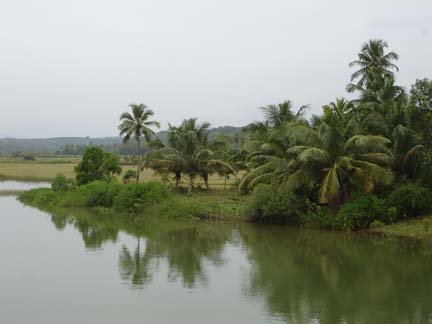
A Coastal estuary

A Coastal estuary
Holegadde near Honavar,Uttara Kannada dist, Karnataka

Copy? Right - but kindly remember to acknowledge!

Creative Commons License
This work is licensed under a Creative Commons Attribution 3.0 License.

" tulu-research.blogspot." ತುಳು ರಿಸರ್ಚ್. ಬ್ಲಾಗ್‌ಸ್ಪಾಟ್‌. ಇನ್

" tulu-research.blogspot."  ತುಳು  ರಿಸರ್ಚ್.  ಬ್ಲಾಗ್‌ಸ್ಪಾಟ್‌. ಇನ್
Have a nice day !