Sunday, September 27, 2009

208. Murudeshwara


MuruDeshwara is a well known temple town near Honnavar in the Karavali Coast of Karnataka. RN Shetty group has invested special interest to develop Murudeshwara temple town into an interesting tourist attraction.
The original geomorphic feature of the Murudeshwara is a tombolo structure. A tombolo is a littoral rocky island connected to the coastal mainland through a strip of sand bar. Due to civil modifications in the area it is difficult to distinguish the original tombolo structure.However the tombolo features can be recognised if we watch the profile of the area at a distance from the beach north of Murudeshwara ( as can seen in the photo below)


The place name Murudeshwara has special historical significance as it unravels a hidden layer of theological history of the region. It reveals that the place renowned for the worship of Lord Shiva in the form of Murudeshwara, probably since 5th Century CE (or the Kadamba period) was earlier a site of Muruda (or Muruga) worship. Apart from documenting the cult of Kanda in the Karavali during the early centuries of CE, the toponym has also preserved the lesser known word ‘Muruda’.
Now the place name Murudeshwara is popular as a center of Shiva worship. However it can be deduced that the place was originally known as ‘Muruda’ during early history before the onset of Shaiva cult in the area.There are similar places known as Muruda in other parts of India. One such Muruda village still exists in Orissa in the east Coast of India.Another Murud is in coastal Raighad District of Maharashtra known for its famous beach.There is one more Murude village in Maharastra.
This specific place name ‘Muruda’ apparently was transformed into ‘Murudeshwara’ possibly ca. 5th to 6th Century CE. We have discussed earlier the significance of place names that end with the suffix of ‘eshwara’ as ‘eesh+vara’ or divine habitations ( see Post on suffix -va).

Muruda
Muruda literally means the God of the village or the vice versa. (muru=God,spirit. da=area,village). The component word Muru, discussed below, is of ancient African origin. Da is an ancient word from Munda languages.

Apart from the above we can also discuss some of the related words for comparison:
Mu = Three (as in Munneer = ocean)
Mu = Muddy soil, left by receding flood water.
Muru= A 'U' shaped ear ornament with a big precious stone - white or red), worn by men of older generation. A big 'OnTi' opposed to 'Tikki'.( OnTi and Tikki are two popular ear ornaments among Tuluvas of older generation.
Morod (Konkani)= a rough, coarse dry elevated land.
Murul= Punarpuli (Kokam or birinda) a medicinal sour fruit bearing plant.
Muru Meen = a fleshy and tasty fish. It is slightly curved below belly and deeply curved on upper side.

Muruda=Muruga
Muruda, the forgotten word preserved only in place names appears to be the equivalent (or regional variant) of the other familiar word Muruga. Muruga represents the ancient south Indian God also known by alternate names such as Kumara, Kanda,Skanda, Subramanya, Shanmuga etc. The suffix –ga, in Muruga, also represents a village or an habitation (as in place- names Herga, Binaga etc, for example). Therefore Muruda= Muruga.Thus both the ancient words Muruda as well as essentially originally meant: the God of the village.
The name Muruga ( Murugan) for Kumara or Kanda has been in usage mainly in Tamilandu. However, there are indications that the word was earlier in vogue in Eastern Karnataka also as evident by the name ‘Murugha Rajendra’ used by religious institutions based in places ranging from Gulbarga to Chitradurga.
The available data on Muruda=Muruga suggests that the equivalent cult was known as ‘Muruda’ in northern Karavali and Orissa Coasts dominated by Munda tribes in the historical past.In the southern Karavali place names like Kandavara provide evidence for the existence of Kanda (.> Skanda) cult.

Kumara=Muruga
It has been suggested that several early tribes in southern India had adopted worship of trees. Place names like Maravoor, Maroli, Maroor,Marodi etc in the Tulunadu remind us the heritage and footprints of Marava tribes in the region.In south Indian languges the word mara represents a tree.Early Tamil Sangam literature also documents anecdotes of spirits in trees. The soul of King was considered to have been lodged in a specific tree.The Kadamba tree was held sacred by early Munda tribes. Successive tribes adopted worship of other trees like Banyan, Peepal (Ashwatha or Bodhi), Banni, etc.The cult of Spirit in the tree (‘mara’),possibly evolved into the cult of Māra.The cult of Māra was evident during early centuries of CE, when Buddhism held sway in southern India also as evident from early Buddhist texts.
The cult of Māra subsequently evolved into the cult of Ku-Māra, the youthful God. Kumāra means an unmarried young man. It appears that the cults of youthful God prevalent among different tribes like Kumara, Kanda, Muruga and Muruda were unified and later considered synonymously.The regional cult of Kanda (=child) cult was later sanskritised as Skanda. And apparently the Kumara cult was Sanskritized as Subramanya (Su+brahman+ia).
The cult of Māra as tempter in certain regions later evolved independently into or equated to the cult of Kāma or the cupid.

African roots
There are overwhelming evidences for the suggestion that the word Muru originated in Africa and was distributed to other region probably along with the human migrants. For example, the name of the country ‘Morocco’ is said to have been originated from the Persian word ‘Marrakech’which in turn was derived from the Berber word ‘Mur-Akush’ that means the Land of God.
The word Muru also occurs as a surname in Arab names such as : Abd al-Fattah Muru.
It has been suggested by earlier researchers that the cult of Muruga (Murugan) is derived from the ancient East African concept of spirit God ‘Murungu’. In several African cults, Murungu is a Spirit God, the supreme being, the almighty, all-seer, all-giver, master of life and death, creator of all things and of man.The evolution and transition of spirit worship into Deity worship apparently has origins in Africa. In Meruimenti and Merutig languages, Murungu means God. In Nyaturucha languge it means evil spirit,spirit,ghost or apparition.In Nyaturwil languge it is Spirit or God.In Shona language it means employer.
In Uganda, the God Murungu is also known as Mulungu. Murungu is also a surname among Akamba tribes of Uganda and among speakers of Shona langauge, for example, Solomon Murungu. In Zambabwe,the word Murungu (=God) is also applied to white –skinned persons, mostly in an invective sense. Murungu is also the name of a place in Tanzania,United Republic of Kigoma.

Early tribal people have freely borrowed cults, concepts and above all words, from other civilizations. In other words migration of tribes during different periods in the history have carried cults originated in one region to the other.
The world was a global village long before the internet was invented!

-with Hosabettu Vishwanath
®

Sunday, September 13, 2009

207. Tottam tremors

Earthquakes of various magnitude are known to our people as judged by reference to such events in our ancient texts including Ramayana.
The peninsular terrain of southern India was generally considered to be a stable zone free from major devastating earthquakes. However it does not rule out the posibility of having minor eathquakes. Minor tremors are usually felt in the monsoon season in the coastal Karavali / Tulunadu due to imbalances (especially the overload and choking of flood waters )in the coastal rivers. Recently a minor tremor occurred at coastal Tottam village near Malpe and Udupi, on 22nd August 2009.
Check a short note on this minor tremor that fortunately lasted for only a few of minutes.
Tottam tremor 2009

Sunday, August 30, 2009

206. Poli Poli

The emotive chant of “Poli Poli Baliyendra” has been reverberating in Tulunadu during annual Deepavali, festival of lights, since centuries. The word ‘poli’ has been accepted in this environs as representative of the prosperity. Let us explore the origin and evolution of this word. Pola The word ‘pola’(=agricultural field) is not familiar at present to Tuluvas as it is not employed in current usuage in general. However there are indications that the word (pola) was in frequent usuage in Tulu also in olden days. Pola is the ancient equivalent of ‘hola’ or the agricultural field as used in current Kannada. In Kannada language during evolutionary transition from old to middle Kannada p>h consonant replacement has taken place. Therefore, the word 'pola' existed in Kannada language also during the early centuries of CE.But the widespread occurrence of the word 'pola' suggests that it could be ancient Dravida or Munda word existing in India since early farming days. Thus it seems the original meaning of poli is the produce from the pola. During early days of civilization the agricultural produce was the measure of wealth and prosperity. Good crops meant prosperity. Thus the word ‘poli’ (agricultural produce from the pola) came to be accepted as prosperity and wealth. Pola festival The word pola however is not unique to Tulu and Kannada areas.It was spread widely all over India during ancient days. During Shravan Amavyasa (New-moon) day mostly in the month of August, rural folks celeberate pola festival annually in Maharastra, Madhya Pradesh, Uttara Pradesh , Bihar and other surrounding regions. Possibly the original meaning of the word ‘pola’(=agricultural field) has unfortunately been lost even in all these areas, even though the celebration has persisted over the centuries. During the Pola festival rural folks decorate and worship their cattles. In other words, the Pola festival has remained in these rural societies as token of thanksgiving to the animals that work in the agricultural field and contribute directly to the prosperity of the farmers. Dairy and farming were the major source of revenue during early periods of civilization . Thus cows,oxens and bullocks that are traditionally employed for agricultural field works are worshiped and sweetmeats like poli, kichidi etc are distributed. In other words, the Pola festival of Maharastra and northern India in its present state is equivalent of ‘Gow-puja’ (cattle worship) celebrated in Tulunadu during Deepavali. Note the name of the important sweetmeat distributed during the festival: Poli. Poli The sweetmeat name ‘poli’ (or poLi) may also appear unfamiliar to most Tulu and Kannada people, even though it is familiar in most of the other parts of India.However Tulu and Kannada people are aware of the sweet-dish ‘holige’ very well! Infact the ‘poli’ is presently known as ‘holige’ in Tulu and Kannada areas. It is also called as Obbattu or Bobbattu in other areas. If you again realize that p>h transitions that have taken place in kannada, it becomes clear that present ‘holige’ was known as ‘polige’ in olden days in Kannada areas. Idli : The addition of suffix ‘–ige’ to edible dishes seems speciality of old Kannada. Even the popular steam-baked rice-black gram dish ‘iDli’ was known as ‘iDDalige’ during the writing period of the first recorded Kannada text “Vaddaradane”( pron. vaDDārādane) of 10th century CE.The addition of suffix -ige could be considered as a feature of regional variance of those times. It has been suggested in an earlier post herein that Idli in the beginning was possibly invented or designed by or named after the Iddya (= Ediya, Yedia or Yadava) communities. In any case the name Idli has been named after them. Also note that both Iddli and Poli have suffix –li suggesting that the suffix (–li ) was applied to the name of the dishes in those days. Thus these discussions clarify that the dish holige was known as poLi even in Tulu and parts of Kannada areas during early centuries of CE. Poli = polige,holige, obbattu, bobbattu etc. The basic ingredients used for the preparation of poli (holige) are bengal gram, wheat flour and jaggery.These are all products of agriculture or derived from the pola! A 'poli' is a thin circular roasted pancake of wheat flour (nowadays replaced by maida) that contains within it a soft sweetish mixture (purana) of cooked gram and jaggery. Pūrana Northern Indians designate this sweet-dish as ‘purana poli’. The word ‘pūrana’ means the filler and refers to contents present inside the poli or the holige. (The word ‘pūrana’ is not to be confused with ‘purāNa’ =the ancient). The word ‘pūraNa’(=filler) still exists in Tulu language. It may be vestigial word brought by the immigrant tribes. Deepavali Deepavali festival has evolved to encompass several themes such as the return of exiled King Bali, execution of Narakasura,Cattle worship originally from the Pola festival, Worship of the place of business (shop, factory etc) etc apart from the festival of lights. During the coming Deepavali, if you happen to be in your rural environs where your folks chant ‘Poli poli Baliyendra’ try to recollect the related strings of evolution behind these words. The difference and the timing of these seasonal festivals 'Poli' (part of Deepavali in Dravidian languages speaking areas) and 'pola' (in Maharashtra and other Northern regions) is apparently governed by regional variations in weather conditions. These are festivals of Nature worship and Thanksgiving for Natures beauty and bounty.In other words Nature and the components of the Nature(like cattle) were considered as the primary divine force.
 Bringing harvested crop to home with devotion and joy is the essence of 'poli' festival. This is modified as 'Puddar'(=new rice) in Tulunadu, 'Huttari'(<. putt+ari =new rice) in Kodagu, 'Onam'(<.soNa or Shravana) in Kerala and celebrated during July-August months. These are the occasion of bringing home first spikes of paddy and having ceremonial special meal of new rice. Kural/Koral paduna/ kattuna parba) and Bali Padya during Deepavali (Oct.-Nov ). These are the occasions of remembering Bali Chakravarti and cattle-worship by farmers (See Post 'Bridge on mud crack'). The 'Pola' festival in Maharashtra and other parts of northern India represents the beginning of ploughing and sowing season whereas,during the Dussera /Deepavali time cattle are worshiped in the Karavali. 
 The other related harvest festivals are Pongal (in Tamilnadu and Srilanka, when the Sun and cattle are worshipped), Vasantotsava and Baisaki or Vaishakhi. 

  Rituals and language: Customs and rituals enrich a language. Poli vindicates this statement of truth. Expressions 'Pola' (=agricultural field) to 'Poli' (=crop) are tangible, but extention of the meaning of 'Poli' into auspiciousness and abundant wealth, is a perception of positive mind. Quoting some usages in Tulu Lexicon (p.2148) may not be irrelevant. Mark the following words and phrases: 
Poli = Granary 
Poli ODDaavuni = To bring first harvested crop into house. 
Poli paaDuni = To pile up paddy crop and sprinkle ashes in the form of lines on it. This gave rise to an idiom: 'Poli paaDandye baar aleppaDa' (Don't measure paddy prior to piling and sprinkling ashes around the pile in a linear form). This is an advice to farmers. This ensures protection of paddy - both from insects and pilferage. 
Poli = Interest, i.e. interest paid in the form of grains while returning borrowed grains (in a barter economy). 
Poli kanapuni = to borrow grains, promising to give more grains as interest while repaying. While the word 'poli' stood for auspiciousness and positivity in Tulu culture, the word 'pola' also gave rise to derived words like 'polus' (= soil,mud or dirt) which acquired different shades of meanings in different Dravidian languages in the due course. The interrelated words 'pola' and 'poli' and their regional distribution remind us the wider spread of the under currents of Dravidian language, culture and heritage in various parts of India in the antiquity. 
 -with Hosabettu Vishwanath ®

Wednesday, August 26, 2009

205. Harvesting Sites

We have discussed in the previous post about the Karavali place names in the form of agricultural settlements named after the process of planting seedlings, beginning with prefixes such as Nit-, Nid-, Net- and Ned-. These variants could be suggestive of the trends in the evolution of words during the passage of time.
Apart from the Planting agricultural sites, we also have several place names implying the sites of harvest in the Karavali and also other parts of Southern India. Thus the word 'koi' is not exclusive to Tulu or Kannada but is common for all south Indian Dravidian languages.
Koi tribes
The word “koi” means to cut (the crop)mostly using a sickle. Thus ‘koilu’ means harvest. Check the following place names for suggestion of harvesting sites in the Karavali. However, the word 'Koi' also represents the name of a tribe. Gond tribes were referred to as Koi and Koitur.There is a possibility that the word 'koi' originated from the said tribes.
Koikude: (koi+k+ude). (1)Koi= Gond tribes, ude=place of.Alternately,(2)Koi=to harvest,k=good, ude=place. Koikude is a village with scattered rocky outcrops and agricultural fields in Mangalore Taluk, located between Haleangadi and Kinnigoli.
Viswanath opines that it could be koi+kude, wherein 'kude' possibly represents sickle,used for harvesting.
Koila: (koi+ala). Harvesting (koi) site besides a stream(ala). Koila is a village near Uppinangadi. Another Koila is in Bantval taluk.
There are places with prefix koi- in Kerala and Tamilnadu. For example:
Coimbatore: (koi+ambatta+oor). A divine village of koi tribes or a harvesting village. Amba-tta = divine, (Amba=Mother goddess?). A major industrial city of Tamilnadu.
Koilandi: (Koi+ala+andi). A Taluk headquarters in Kozhikode (Calicut) district of Kerala.
Koyna (Maharastra). koy+na.= A habitation of Koi people.

Reproductive aspects
The 'koyilu' also meant the standing crop ready for harvest. Further 'koyyel' was the extent of crop area (about one tenth of an acre)that can be harvested by a single person in a day.Thus it is clear that even though the verb 'koi' originally means to cut, the derived word 'koyilu' has been applied to the reproductive (harvest) aspects of agricultural crops.This is further evident by the usage of the word 'koyile' for the reproductive parts of women.
It may not be surprising if the word 'kovil'( the temple) current in some of the Dravidian languages,was evolved out of some of these words.

-with Hosabettu Vishwanath
®

Friday, August 21, 2009

204. Agricultural settlements


Early human progress from forest life to farming and agriculture was considered to have been initiated some 6000 BC in Nile Valley region that hosted Sumerian civilization. Archeo-botanical studies have similarly suggested that agricultural culture was in vogue in southern India since 5000 BC.
The available data suggests that during that period Austro-Asiatics or Munda group of tribes prevailed in southern India and along the Karavali. Let us analyse the origin of place names like Nitte, Nitila, Nittur,Niddodi, Nidiyur,Nidambur, Nidle, Nidpalli,Nidikallu,Nettana,Nettaru, Nettara Padavu, Nettanige, etc.in the context of evolution of farming and agricultural cults in the Karavali.

neDu
A number of village names in Karavali suggest distinctly the initiation of agricultural practices in Karavali. ‘neDu is now a popular Dravidian word that means to plant seedling in Tulu, Kannada and other sister languages .
The word ‘neDu’ (ne+Du) originated as ‘ne’=to plant (or to straighten up a plant) in the (‘Da’,’Du’ or its variants ‘Ta’,’Te’ ) earth. ‘Da ‘ or ‘Ta’ has been cited as a word from Munda languages that represented the land, village or the habitation (Southworth, 2005).
naTTi
The word ‘naT’ was an variant of the agricutural word ‘neD’, as we see ‘naTTi’ represents the act of planting the crops.
naTT= (1) to plant.

nāDu vs. kāDu
Thus it follows that the word ‘nāDu’ (=land,country) was derived from ‘neDu’, or ‘naDu’ to plant. naDu.>nāDu.
nāDu= (1)cultivated land
The word ‘nāDu’ was invented by the early farming community as against the word ‘kāDu’(=forest,wilderness). Thus it is clear that prefix ‘na-‘ represents cultivation whereas ‘ka’- stands for wilderness or wild trees.
nāDava
The person associated with cultivation (farmer) or the one who lives in the cultivated region (nāDu) became known as ‘naDava’. The suffix va- represents habitation (cf. Post 197)
naDu, naDe
Cultivating crops became important activity of the civilized word. Thus the word ‘naDu’ (middle,central) became representative of the central or middle part of body or any object. Walking straight on two legs on the land was distinctly a progressive trait of civilized tribes, as compared to wild animals, therefore ‘naDe’ also stood for walking,behaviour or even the cattle owned by the civilized tribes.

Nitte & other farming villages
An older variant of the word ‘neDu’ was ‘niDu’ or ‘niTu’ as we see in the village name Nitte. Nitte is a popular educational centre near Karkala that has bloomed into an esteemed University.
Nitte : (niT+Te ). Ni= to collect seeds. niT= to plant seedlings,to straighten up (as in ‘nidpa’) Te=village. During early days of civilization ‘Nitte’ was also a proper name among tribals that obviously meant farmer!
Nitila :The word ‘niT’ repeats in other similar place names like Nitila (niT+ila, ila=village). Nittur(niTT+oor)
Nettila: neT=to cultivate; ila=village
Niddodi: (niD+oDi)niD=to cultivate; oDi=village.
NiDiyur: (niDi+ oor) . niD=to cultivate; oor=village. There are Tenka Nidiyur and Bada Nidiyur near malpe.(tenka=southern, baDa= northern).
Nidpalli: niD=to cultivate; palli=village.
Nidle: niD=to cultivate; le=village by the side of river.
Nettana: neTT+aNa. cultivated area.
Nettara: neTT+ ara. Cultivated open field.
Nettanige: neTT+aN+ige. Cultivated area + plains.
Nadsal: (naD+sa+al). Cultivated habitation beside a stream or river. Nadsal is a coastal village /locality near Padubidri.
Nadpal: (naD+pa+al). Cultivated area beside a river.Nadpal is a village in interior Karavali nearthe Ghats.


Humour
Tinges of humour can be delineated in the evolution of parallel words with slightly derisive meanings. For example, agriculture became a new-found passion among the evolving tribes that enterprising ones went on searching for new pastures suitable for cultivating crops. Thus the word nāD ( as in ‘nāDuni’) became equivalent of searching.
nāD=(2) to search.
Further getting the proper seeds for cultivating crops was not easy during those days. It often involved begging another person to part with seeds or seedlings under his custody. Thus we have the word nat( as in ‘naTTuni’)
naTT =(2) to beg!
®

Saturday, August 15, 2009

203. Heskattur

Heskattur ( ‘tt’ pronounced as in third) is one of the strange or unfamiliar sounding place names. Heskattur village is located in the northern part of Udupi Taluk and can be approached by road from Barkur and Siriyara. Heskattur obviously is not related to 'Hesarkatte' (=mule) as there is another village known as Heskunda, suggesting that ‘hes’ or ‘hesa’ is an independent word. It is not related to ‘unpleasantness’ (‘hEs’ or ‘hEsige’) since the word under discussion ‘hes’ with short e as in yell.
The locals correct the pronunciation of the village as "Hesakutur" even though most of the Government records show it as Heskattur.
The term "Hesa" means Wild Jack (Pejakai or Hebbalasu) in Kundapura Kannada.
Hes(a)+ kutta + oor
 Hesa means wild jack or Hebbalasu ’.
Hesa = Wild Jack tree.
The Wild jack tree common in Karavali and Malnad regions is mostly known as ‘Peja’in Tulu (as in Pejamadi,Pejattadi,Pejagangur etc ) or Hebbalasu in Kannada. Regional variants of the word Peja during the olden days can be visualized as follows:
Peja> Pezha> Pesha> Pesa
With transformation of p >h from Old Kannada to Mideval kannada
Peja (Tulu , Old Kannada) > heja( mideval Kannada) and
Pesa> Hesa

 In the meanwhile it can be concluded that Heskuttur and Heskunda are places named after wild jack trees.
®

Sunday, August 9, 2009

202. Madhva Vijaya: places and names

Madhvaacharya was a prodigious sage from 13th Century Udupi who disagreed with the Shankaracharyas doctrine of ‘Advaita’(unitary) theosophy and founded the religious school of ‘Dwaita’ or dualism of Atma or Jiva (Soul) and Paramatma (Creator). Narayana Pandithacharya subseqently wrote biographic narration of life and travels of the sage Madhva in a Sanskrit work known as Su-Madhva Vijaya. Poet Narayana Panditacharya was son of Trivikrama Panditacharya, the principle disciple of Madhva. Narayana Panditacharya was fond of Sanskrit, the pan-Indian link language at that time. He has translated even the local Tulu place names into complex Sanskrit words in his work and eventually also added explanatory notes to his poetic work called ‘Madhva Vijaya Bhava Prakashika’. Further Vishvapati Tirtha in a commentary called ‘Padartha Deepikodbhodika’has given some of the equivalent Tulu place names for the Sanskrit names created poetically by Narayana Panditacharya. On the whole these works provide some rare insight into the Tulu place names as well as general attitudes of people at that historical juncture.
Dr Uppanagala Rama Bhat wrote an interesting review paper in Kannada on the“ Tulu words in Madhva Vijaya”. The Kannada paper (entitled ‘Madhva Vijayadalli Tulu Shabdagalu’, pp 415-419) has been included in the compendium ‘Tulu Sahitya Charitre’(2007) published by Kannada University at Hampi. In this post let me share some of my observations and analysis derived from the reading of this interesting paper.
Madhva (1238-1317)
Sage Madhva was born at Pajaka in Belle village ,Udupi taluk bearing the name of Vasudeva. His father was known by his surname Naduvantillaya.His full name has not been recorded.The surname ‘naDillaya’ or ‘naDuvantillaya’ in Tulu means one hailing from the middle house. This pattern of surnames with -aya (=person) at the end are common feature among Tulu Brahmins. Narayana Pandita has translated the surname ‘Naduvantillaya’ into ‘Madhyageha’ Bhatta.
Vasudev was inducted as ‘Poornaprajna’ into sagehood by Guru Achuta Preksha and subsequently after taking charge of administration of the Mutt, Poornaprajna became known as ‘Ananta-tirtha’. However, Vasudev finally preferrred to adopt the name of ‘Madhvācharya’. (Acharya=learned person, teacher).
Madhva = Nadillaya
According to Narayana Pandita, the Sanskrit name ‘Madhva’ represents ‘Ananda-tirtha’. Madhu= Ananda (=happiness), va=tirtha(=sacred water). However, it is possible that the actual meaning of the name Madhva preferred by the sage for himself may be different from what Narayana Pandita has speculated. There are many Tulu village/hamlet/habitation names ending with suffix –va: Shirva, Kakva, Urva etc. Therefore it seems logical to predict that the Madh(ya) in Madhva possibly represented the ‘middle’ and –va suffix represented family house or habitation. Thus the original intention of the sage was to represent his family surname ‘Nadillaya’ or the ‘Madhyageha’, the one hailing from the middle house.
Rajatha-pita-pura
The area around the original Shiva temple in Udupi was known as Shivalli, the Shiva’s village.However, the town ‘Odipu’ or the ‘Udupi’ has been translated as ‘Rajatha-peeta-pura’in the work of Narayana Pandita.(‘rajatha’=silver; ‘piTa’= seat,foundation; ‘pura’=town). Many have wondered how the word silver(‘rajatha’) came to be associated with Shivalli and the Odipu.
One possible explanation to this riddle is that Madhva loved his native village, known as Belle.The word ‘Belle’ originally might have represented the immigrant white people, but the word ‘belli’ also means silver. Therefore Madhvaacharya could have named Udupi-Shivalli town (pura) as the theological foundation (peeTa) created by people of Belle (rajatha) village.
**
Brief notes on some of the place names cited in the commentaries on the Madhva Vijaya:
Pajaka: Uppanagal Rama Bhat has analysed the place name ‘Pajaka’ as pāja=pāde(rock) and ka=water.However the original Tulu toponym as recorded in Survey of India Topo-sheets appears to be "Paajai"
Kodavur-kana: The Kodavur village near Malpe was known as Kodavaur-kana during 13th century , (kāna=forest) implying that the area was covered with dense growth of trees.
Nayampalli: There is avillage known as Nayampalli or Neyampalli near Udupi. The Neyampalli vallage name has been translated as Ghrithavalli by Narayan Pandit. (The words ‘gritha’(Sanskrit) or ‘neyi’ (Tulu) means clarifed butter.However, the original name of the village appears to be ‘Nāyampalli ‘(village of the dog) rather than village of the refined butter. There are several villages in southern India named after dogs in the antiquity. Southworth has cited ‘Napalli’ or ‘Navalli’ from Maharastra as named after a dog.
Talikude: (Tali or tari=palmyra, toddy palm; kude= cavity). Talikude is said to be a part of Bannanje suburb near Udupi.
Kokkada: Kokk+kada. (Kokk or Kukke= an ancient tribe; kada=river bank). A village in Belthangadi Taluk on the bank of initial flow of River Nethravathi. It is said that Kokkada was also known as Iddya.The hamlet ’Idepadi’ that elicited the surname ‘Idepadittaya’ might have been an ancient locality near this village.
Ujire: The village Ujire near dharmasthala was known as ‘Ujiriya’ during the 13th entury. Ujir+iya, village with a water spring. Possibly there was a spring (Ujir) during early times that fetched the name.However, now there are no conspicuous springs in the area.
Goa: It is cited that the coastal territory of Goa (or specifically ‘gova’, gov+va,=cattle habitation) was also known as ‘Pashupe’ in Tulu.
Kumble :The Kumble town of present Kasargodu district Kerala,was known as ‘Kabenaad’.Cricketer Anil Kumble derived his surname from this village name.(Kabe=pillar).
®

Blog Archive

Books for Reference

  • A Comparative Study of Tulu Dialects By Dr. Padmanabha Kekunnaya. Govinda Pai Reserach Centre, UDupi. 1994
  • Koti Chennaya: Janapadiya Adhyayana. By Dr. Vamana Nandavar. Hemanshu Prakashana ,Mangalore.2001.
  • Male kudiyaru. Dr B. A.Viveka Rai and D.Yadupathi Gowda, Mangalore University,1996.
  • Mogaveera Samskriti By Venkataraja Punimchattaya. Karnataka Sahitya Academy.1993.
  • Mugeraru:Jananga Janapada Adhyayana. By Dr Abhaya Kumar Kaukradi.Kannada & Culture Directorate,Bangalore & Karnataka Tulu Academy, Mangalore,1997.
  • Puttubalakeya Pad-danagalu. Ed: Dr B.A.Viveka Rai,Yadupati Gowda and Rajashri, Sri Dharmasthala Manjunatheswara Tulu Peeta. Mangalore University.2004
  • Se'erige. Ed:Dr K.Chinnapa Gowda.Madipu Prakashana,Mangalagangotri,2000.
  • Studies in Tuluva History and Culture.by Dr P Gururaja Bhat (1975).Milagres College,Kallinapur,Udupi.
  • Taulava Sanskriti by Dr.B.A.Viveka Rai, Sahyadri Prakashana,Mysore 1977
  • TuLu naaDu-nuDi By Dr.PalthaDi Ramakrishna Achar, Puttur.
  • TuLu NighanTu. (Editor in Chief: Dr U.P.Upadhyaya, Govinda Pai Research Centre,Udupi. Six volumes. 1988 to 1997
  • Tulu Patero-A Philology & Grammar of Tulu Language by Budhananda Shivalli.2004.Mandira Prakashana Mangalore. p.317. (The book is in Tulu Language using Kannada script)
  • TuLunadina ShasanagaLa Sanskritika Adhyayana. By Shaila T. Verma (2002) Jnanodaya Prakashana,Bangalore, p.304.(Kannada)
  • Tuluvala Baliyendre. Compiled by N.A.Sheenappa Hegde,Polali,Sri Devi Prakashana,Parkala,1929/1999

A Coastal estuary

A Coastal estuary
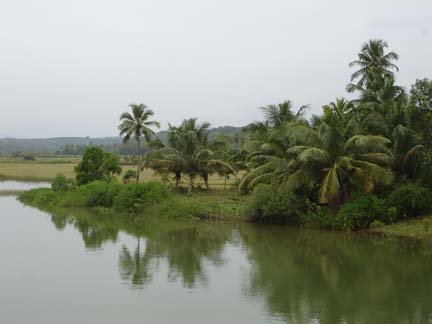
Holegadde near Honavar,Uttara Kannada dist, Karnataka

Copy? Right - but kindly remember to acknowledge!

Creative Commons License
This work is licensed under a Creative Commons Attribution 3.0 License.

" tulu-research.blogspot." ತುಳು ರಿಸರ್ಚ್. ಬ್ಲಾಗ್‌ಸ್ಪಾಟ್‌. ಇನ್

" tulu-research.blogspot."  ತುಳು  ರಿಸರ್ಚ್.  ಬ್ಲಾಗ್‌ಸ್ಪಾಟ್‌. ಇನ್
Have a nice day !