Thursday, August 30, 2012

304. Tulu-Dravida Relations


Tulu has been classified as a Southern Dravidian language, like Tamil, Kannada and Malayalam, all of which are considered to have been originated from a Proto-South Dravidian base. Linguists consider that from a branch of Proto-South Dravidian Tulu and Koraga languages evolved or developed.
Pre-Dravidian Languages
However, available data and studies suggest that Koraga (and other similar tribal) languages and cultures prevailed in the Karavali and in parts of southern India well before the advent of Dravidian languages proper, such as Tulu, Tamil and Kannada, even though they (the former) were subsequently modified and evolved after absorbing some of the features of Dravidian languages in the due course. Thus it is possible that Koraga and other similar tribal languages in their original form represent an earlier generation of languages that prevailed in this land. However in the race of evolution many of the tribal languages have receded in their prominence or have been weakened and erased ultimately.
South Dravidian Languages
The inter-relationship among the South Dravidian languages is interesting. All the three South Dravidian languages could have evolved simultaneously and contemporaneously, mainly through oral literature, even though Tamil has been regarded generally as the oldest because of the presence of ample ancient literatures dating back to the Sangam period. Tulu also had   its own contemporaneous Sangam period as evidenced by the presence of oral literature like the legends of Siri, preserved by the oral form of pāDdana   genre. Early Kannada also probably had similar oral forms which unfortunately may not have been preserved or documented after the introduction of written formats.
Tulu and Kannada have an intimate relationship evidently since the early centuries of Common Era. Tulu chieftains   and soldiers   migrated and found occupation with Kannada Kings in hey days. Thus old Kannada and medieval Kannada shared cultural aspects with common words, grammar and script.
Tamil and Tulu apparently had limited lingual interactions after the passage of Early Sangam period, after fourth or fifth century CE. However, they were closer to each other culturally in the early centuries of CE and period before that. Tamil Sangam literatures have documented appreciation of the merits of contemporaneous Tulu Kings and soldiers. Tulu has retained some of the old Dravidian words it shared with Tamils without alteration even after its hegemony with Kannada. Let us take for example the Tulu word kanDani.
Kandani =husband
Tulu (kanDani) shares the key word for husband with the Tamil (kanDan) which differs from the Kannada (ganDa) equivalent. [ D pronounced  as in Dog]. Check the equivalent versions in some of the southern Indian languages:
Tulu  = kanDani, kanDane           
Tamil =kanDan.
Kannada = ganDa.
Kota = ganDa.
Telugu = ganDa
**
Koraga  =( kor), koraga

It can be seen that Tamil and Tulu shared the common word ‘kanDan’ during the history. The original kanDan in Tulu modified into ’kanDani’, ‘kanDāni’ or ‘kanDane’ etc. The equivalent Kannada, Kodagu, Telugu, (also Kota, Havyaka) version is ‘ganDa’ [or ‘ganDu’=male.] which is a case of transition of consonants ka.>ga. This ka.>ga. replacement could have been a general regional variation in the pronunciation of the words or an evolutionary feature. In case this was a regional variant then it may suggest the pattern of movement and migration routes of the early Dravidian tribes (Fig 304).

 The -an suffix for masculine indicative tag prevalent in Tamil was also common in early Tulu as well as in Kannada. In Tulu it has been retained as a vestige in lineage names like Anchan, Kanchan, Maindan, Salian, etc. In some cases, the early –an became –anna as in Bangeranna, Kuberanna, Taburanna, Sundaranna etc. The lineage tag in Tulu –annāya ( for example, Saliannaya, Bangerannaya, etc) and –āya (for example, Pejattāya, Kukkillāya etc) was also evolved from the early –an suffix.

Tulu-Koraga: Dravida relations
Historical reconstructions and indirect evidences from the study of ethnonyms suggest that Koraga and other tribes had inhabited the Karavali well before the arrival of Tulu immigrants. In other words, the Koraga and other tribal languages predated the Tulu language proper. In such a situation effect of transition of predominantly prevailing language in the region to the newly introduced (and eventually dominated) language has to be visualized and understood. Thus Tulu language appears to have evolved and grown by adopting some of the words and features of the tribal languages that existed previously in the terrain. Similarly the original content and structure of the pre-existing languages, such as Koraga were apparently modified eventually as a consequence of invasion of the new Tulu language in the area. This event could have happened somewhere around  ca.700-500 BC or later.( This kind of give and take of amalgamation and transition of languages appears to have happened all over southern India especially in the case of Tamil Kannada, Telugu etc..)
It is interesting that Koraga do not have equivalent of the word kanDan or kanDani .In Koraga language the term ‘Koraga’ itself represents a man or husband.(This is the general case with many of the tribal languages wherein the name of the tribe means either man or human being or husband.). The Koraga tribes now are prevalent only in parts of the Karavali, but earlier these tribes or their equivalents pervaded all over southern India. Note that another word for husband in Tamil is ‘koruntan’. Wherein the prefix ‘kor’  clearly appears to have been borrowed during the early Tamil phase from the precursor language of Kor, Koraga or its equivalent.

Tulu-Tamil sharing
Tulu shares many words with Early Tamil like, for example, ill (=house), bākil (=door), unakal (=dried), oode (=place), okkel (=farming), kaTTa (=difficulty), tārage(=star), tingol=(moon), tirey (=wave), parel (=piece), pugar (=praise), puncha(=group), poli (=light) etc.

Sunday, July 1, 2012

303. Manipal , Manipura , Manila etc.


Manipal which was a sleeping   suburb in the outskirts of the temple town of Udupi, some five to six decades ago has grown into an internationally famous township,  known for educational and medical facilities, thanks to entrepreneurial skills of the Pai family. The Manipal is an elevated plateau with thick laterite capping and ample ground water resources relative to Udupi.
However, our interest in this note pertains especially to the origin of the place name Manipal and a group of other analogous place names that bear the name Mani, such as Manipura, Mani, Manila, Manihalla, etc.
Manipal
People say the place name of Manipal is derived from the name of a lake on the Manipal plateau known as Mannu-palla. The name Mannu palla for a natural water body appears a bit odd as ‘mannu’ means soil and ‘palla’ a lake. It could be that the earlier it was Manni Palla or Mani palla before being Mannu palla in native vocabulary.
Manipura
Now the name Mani palla is not an unique place name in the Karavali, There are many more places that carry the word or prefix of ’Mani’. When I cite Manipur at first you are likely to remember the Northeastern Indian State of Manipur. However, besides the Northeastern State there is also a place known as Manipur again in the outskirts of Udupi.
Mani halla
 A stream that flowing in the outskirts of Bantwal and joining river  Netravati  is known as Manihalla. You can across the stream Manihalla, on a narrow bridge while you travel from Bantwal to Guruvayakere, Belthangadi or Dharmastala.
Māni
A place Bantwal Taluk on NH 48 Mangalore to Bangalore Highway is known as Māni. Association with other place names suggests that it could have originally been Mani and later modified to Māni in peoples vocabulary. However, the usage Māni   could have been a later variant that is found in a number usages outlined below.
Manila
Manila is the capital of island State of Phillipines. However, there is similar sounding place name Mānila in Bantwal Taluk bordering Kerala.

Related words
There could be more such place names in different parts of southern and northeastern India. You can add similar other Mani place names known to you. Apart from these place names there are many words that contain the word Mani such as Manikya (a gem ; ruby), Manikarnika (An earring containing a gem; earlier name of Jhansi Laxmibhai; Name of a cremation Ghat at Varanasi),   Manikanta ( a person with gem stone around the neck; Lord Ayyappa), Manimekhala(a legendary Goddess of the Sea), Manikyadhara (Name of a Waterfall located at Babbudangiri, Chikmagalur district), etc.
Besides, Mani in Tamilandu and Māni, Maneshwara etc in Uttara Kannada are common proper names. Maniratnam is a  well known of a veteran film director.  In Tulu a Brahmin young man is  called Māni. The term Māni is also common in Spirit worship circles of Tulunadu. Tulu phrase  Maani ecchiD barpini denotes impersonation of a Spirit.

Mani
In the light of above discussion let us analyse the various meanings generally attributed to the word Mani in our culture. MaNi= (1) jewel, gem; (2) boy (3) Man.  Besides, there is another relevant word known as MaNN, or   MaNNu. Though the term mannu generally means soil in Tulu and Kannada we can see that this word was historically employed to denote a territory or an area or a village as in the place names like Belmannu, Kemmannu, KoDmaNNu, etc (discussed in older posts).
Mani tribes
In case,  you are content with the understanding that the term Mani exclusively means a gem stone you are in a small surprise: In fact, the wide geographic distribution of  place names such as (1) Manila in Karavali as well as in Phillipines and (2) Manipura  in West Coast apart from a Northeastern State reveals some clues.
Mani is the name of an ancient primitive (hunter-gatherer cultural style) tribe of African origin now largely domicile in southern Thailand and Malay Peninsula. The word Mani is of Mon-Khmer origin and means "human being". They are dark skinned and have been classified as Negrito people even though they speak Mon Khmer languages at present. In Malay language, they are known as ‘Orang asli’ or the original people,  that suggests that Mani people had settled in Malay Peninsula much before the advent of Mongoloid and Australoid people.
Mani people speak a language known as Maniq, a kind of Mon-Khmer language. The Maniq is alternately known as Tonga, Kensilu or Mos. It is considered that Mani people once spoke a language akin to Andamanese language but later adopted the language of the Mon–Khmer people living around them.
Tunga
The Maniq language is also known as Tonga or Tunga. Like Mani, Tunga is a common word in south India. People are called by names such as Tungappa or Tungamma. Similarly a well known river in Karnataka that flows in the district of Shivamoga  is known by the name Tunga.


Goy, Kui, Koye, Senoi, Sakai
The Mani tribes in Thailand were known by various alternate names that probably designated variants of the tribes. They have been referred to as Goy, Kui, Koye, Senoi or Sakai. The surname  Shenoy now prevalent among Konkanis  appear to have origin in the ancient term of Senoi.

Evolutionary significance
The distribution of ancient Mani and Tunga place names in Karavali Karnataka, Southern and Northeastern India , reminds us to consider undocumented obscure pages like that of Mani or Tunga tribes and their languages  and the footprints of impression they made in the evolution of languages and culture in the early history of our terrane.
Ò
Feed back: Feel free to shoot your impressions in the comment section after reading this note on Mani place names and the forgotten ancient  tribes.


Tuesday, June 26, 2012

Saturday, June 9, 2012

302. Padukone and Koni


Have you ever wondered about the meaning or origin of the place name Padukone? It is likely you thought about it sometime, since the place name has been made popular by the Bollywood actress Deepika Padukone or earlier by her illustrious father ace Badminton champion Prakash Padukone.
Anyway, the village known as ‘Padukone’ is located in Kundapur Taluk, Udupi District, Karnataka. Northern news readers prefer to pronounce it as ‘PaDukON’ whereas the locals of Kundapur call it simply as ‘PaDukONe’.
As such, the term PaDu-kONe in present Kannada means western room! [‘paDu’= West; ‘kONe’ (1) =room]. However the word ‘KoNe’ may also mean: (2) angle or angular corner (‘kona’) or (3) male species of buffalo (kONa).
(4) The term Koni as used in Kerala can also mean a ladders or stretchers made of bamboo and kusa grass or straw which are traditionally used to carry corpses.
Interestingly, the actual and original source of the word ‘KoNe’ in the place name under study may be anything other than the four explained above!
Words are wonderful units as building bricks of languages. At the same time, it is to be pondered that any region has thousands of years of civilization consisting of obscure undocumented history and what is at present the prevalent language in the region (like Kannada or Tulu) could have evolved and replaced what was earlier in usage  in the remote past.
Konni : the tribe and language
African continent widely known in science circles as cradle of human evolution still contain evidences of tribes and languages that migrated from their homeland before multiple millennia. Koni, Kona or Akona tribes and Konni language still prevails in parts of Africa like Ghana. Places named after Koni Like Wacha Koni can be found in African States like Kenya. And also in Mediterranean island countries like Cyprus.
Migration of African tribes in the past, thousands of years ago to parts of southern India and formation of settlements named after them. Settlements of Koni or Akona tribes with passage of time have been modified variously as Koni, Konaje, Konalu, Konandur, Konankunte, Konanhundi, Padukone etc. Besides place names, surnames like’ KonI’ or ‘Goni’ still remain among some of the south Indians. There is a Koni Amman Temple in Coimbatore, Tamilnadu.
Koni villages
Villages named after the ancient Koni (Konni) tribes can be found spread all over India. Check some of the following place names bearing the signature of tribe Koni :
Koni   1 (.Kundapur Taluk, Karnataka)
Konni 2. (Pathanamthitta district, Kerala)
Koni 3 (Near Bilaspur, Madhya Pradesh)
Koni 4.  (Sant Kabir Nagar District, Uttar Pradesh.)
Koni 5 (Ganganagar District, Rajastan).
Koni 6 (Nagpur District, Maharastra)
Koni 7 (Arwal District, Bihar).
Koni 8 (Satna District Madhya Pradesh)
Bada-koni  (Bilaspur, Chattisgarh).
Padu-kone. (Kundapur Taluk)
Kambada-kone. (Kundapur Taluk.)
Konaje. (Mangalore Taluk)
Padu-konaje. (Mangalore Taluk)
Mudu-konaje. (Mangalore Taluk.)
Konalu.(Puttur Taluk)
Konchadi (Mangalore)
Konandur. (Shimoga District)
Konanur .(Hassan District)
Konan-kunte. (Bangalore .)
Kumbha-konam (Tamilnadu)
Koni dena (Andhra Pradesh).
Koni dela (Andhra Pradesh).
Konark. (Orissa).
And so on.
Alternate Names
Kona (or Akona) language and speakers or tribes were also known by alternate names such as ‘Koma’ or ‘Komang’. We have discussed some aspects of ’Kom’ or ‘Koma’ tribes in earlier posts. Kom(a) tribes could have been a variants of the Kona tribes.
Konkana
The northern part of West Coast between Mumbai and Goa is usually known as Konkan. The origin of the word Konkan has been explained variously. It appears that that it could have originally been Kom-kona, a region of Kom(a) sect of  Kona tribes.
Gokarna
By similar analogy the original name of the place now famous as Gokarna in Uttara Kannada district could have been ‘Goy-Kona’ where the words Goy (also known as ‘Koi’) represent another variant of Kona tribes.
Kamangi
Kamangi is a Kannada slang of uncertain origin denoting a silly person. It is possible that the derogatory term originated from the Komang tribes that  inhabitated parts of Deccan, in the past.
Padukone and Koni
After an overall analysis of the place names relevant to Koni, I hope you are convinced about the ethnonym status of these place names. In summary, the Padukone village could have been originally known as ‘KoNi’ which was corrupted into ’KoNe’ in the parlance. The large ‘KoNi’ village was subsequently split into western ‘Padu-KoNi’ and eastern ‘MuDu-KoNi’. This is also the case with PaDu-Konaje and MuDu-Konaje, where Konaje represented an area (-aje or -anje) inhabited by Kona tribes.
Ò
Uם�#� 

Tuesday, May 29, 2012

Birds of Bengre

Birds in search of fish remains on the bank of Bengre spit, Mangalore. (View from the estuary)

Saturday, May 19, 2012

301. Naravi & Sun worship – an overview


Life of settlers of an area is a history - whether recorded or not. What is not recorded buries into quick-sand of time. Toponym assumes the role of an identity marker, thereby enriching occupational vocabulary of language of that area. This can be analysed by studying the socio-political situation, conditioned by geography.  Changes are the handiwork of events and geography. Languages, political forces, borders, and social order resulting from faith and assimilation, are agents of change. Occupations change with human movements and/or climatic conditions.  Religion of one region may thrive in another area, conditioning it to the geography and environment of that area.
Naravi
Naravi (pronounced as nArAvi, ನಾರಾವಿ) is a village in Belthangadi Taluk of District Dakshina Kannada on the foothills of Western Ghats.  It is 20 km from Karkala on Karkala-Dharmasthala Road.  There is a well-known Suryanarayana Temple, dedicated to Surya, the Sun God.
Naravi was also known by its old name ‘Narol’ (ನಾರೋಳ್). The word ‘Narol’ is comparable to ‘Narod’ in Gujarat. 'Nara' means 'water crane' .  It should be read as 'water fowl (mundeyi kori = pelican). Other Tulu equivalent of 'nara' is 'nore'.  These birds live in bushes near water-bodies.  So we can deduce that the locality possibly got the name because of their presence in abundance.

Haunting Name
Word Naravi is both interesting and intriguing by virtue of its indistinct meaning.  It rhymes and compares with Dharavi of Mumbai*, Sharavu (Mangalore), Madaavu (meaning a place by the side of a canal, stream or river in Tulu) and Dharwad (North Karnataka).  All these places are indicative of ‘presence of water’.  But the local legend of Naravi belies this phenomenon. 
(Dharavi, in Mumbai, is a swamp area with mangrove vegetation sandwiched between Bandra-Mahim creek and Sion-Koliwada on West and East sides and erstwhile colony of Koli Fishermen before reclamation. Mithi River on its North debauches to Mahim Creek).
The Legend
There is a legend around the Sun Temple, built in 14th Century.  Sadvi (Pious woman) Ramadevi, belonging to noble gentry of ‘Ramera Guttu’ is instrumental in constructing this Temple.  She was an ardent devotee of Lord Surya Narayana, the Sun God.  She did not partake food without seeing the rising Sun.  Seasonal changes could make it impossible for her to get a glimpse of the Sun, thus making her to starve for days until she had a view of the Sun.  Noticing her unwavering devotion, Lord Surya Narayana instructed her in a dream to install the deity with celestial energy, lying near a River in South Western Part of Naravi, by constructing a temple.
Sun Temple of Naravi through ages.Photos from SuryanarayanaTemple


  The newly found idol of the deity was enshrined in a Temple as per Vedic rites by Brahmin priests.  All devotees experienced the presence of a young priest, exuding tremendous energy, among the priests. It was a miracle.  The young priest uttered ‘Na Ravi, Na Ravi’, i.e. ‘I am the Sun, I am the Sun’. Thereafter the place was known by the name ‘Naravi’.  The legend does not tell what the earlier name for Naravi was.
Sun Temple at Konark (Orissa) is well-known to all Indians and foreigners. Surprisingly, the temple at Naravi is less known
Etymology
Splitting the word, we get Nara + vi where Nara means water or knowledge (as in Narayana, the one whose abode is water or one who is embodiment of knowledge). The suffix ‘vi ‘  (also ‘va’ or ‘ve’ means a place (197.Dravidian spatial suffix ‘Va’).
Sun worship from antiquity
The Nature’s Laws are equal to all.  So the objects or many phenomena in the Nature are held in great awe by all human beings in the world from pre-historic times.  Thinking human mind creates symbols and numbers to forces of intelligence. Concentrating solely on anyone of these forces, individual soul identifies itself with the Divine soul, the primordial energy, power or force (Readers would do well if they read the life story of Ramana Maharshi, who simplified this technique by his own example).  Sun worship is one of the practices found in all civilizations of the globe. The Sun God is known by different names. Some of the Sun symbols are comparable to Indian symbol, especially in Mayan civilization.
India:  Surya or Suryanarayana is the one common name for twelve Suns, called as ‘Adityas’ in Puranas.  In Astrology he takes the central place. Varahamihira (505-587 AD - a mathematician, astronomer and astrologer in the Court of Vikramaditya, Ujjain) tells that only Maga Brahmins are entitled to do rites concerning the Sun.  Puranas say that Maga or Saka Dwipi Brahmins are invited by Lord Krishna of Dwaraka to cure his son Samba from leprosy.  We know from Puranas and Mahabharata that Yadavas dispersed to various places on destruction of ‘Dwaraka Nagari’ by ingression of Arabian Sea. This phenomenon is now proved by archaeological surveys.  We can presume that Maga Brahmins also migrated to coastal South from Gujarat coast, along with Yadavas.
Egypt: Egyptian Sun God is called ‘Ra’.  The winged Sun was an ancient symbol (300 BC) of Horus, identified with Ra, who moves in a Solar Boat.
Celtic Sun has semblance of Nakedness.  He holds a spear in standing posture.
Sumerian: Sumerian Sun holds many weapons, standing in one leg raised.
Akkadian Sun is seen in sitting posture.
Roman Sun stands with legs spread wide and upper portion of the body bent backwards and holds a weapon.
Incas, is a civilization of Mayans (?).  Their Sun God is holding an object, resembling a flower in both hands as is seen in Indian Sun idol with lotus flowers.
The Sun as progenitor
In the Mythology of India and other Asian countries, the Sun is considered as Progenitor of important royal families and/or powerful Tribes. We know about Suryavamshi Kings from the Epic of Ramayana. In Buddhism, the Bodhisattva of the Sun is known as ‘RI Gong RI Guang Pu SA (the Bright Solar Bodhisattva of the Solar Palace).

SUN TEMPLES OF INDIA
The oldest temple, dedicated to the Sun, is at Multan, which is now in Pakistan. There are many Sun Temples in India, which are important pilgrimage centres now.
Naravi: The temple is considered to have been established originally in the year 1486 by Ramaadevi during the regime of ruler Somanatha. The Sun Temple at Naravi was renovated in 2011.  
Maroli, Mangalore: There is an ancient Surya (Sun) Temple dating back to Alupa period of administration in Mangalore. Maroli is a village adjoining Alupe village and in older posts herein we suggested that Alupa Kings hailed originally from the village of Alupe. The Alupe (or Alupa) village was an estuary and a port town at the former mouth of River Netravati before the regression of Arabian Sea (attributed to legendary Lord Parashurama in folklores) and emergence of Pandeshwara Port.

Konark :   Built in 13th C. by King Narasimhadeva (1238-1250 CE) of Eastern Ganga Dynasty, the Temple is known as ‘Black Pagoda’.  The legend is that it was first built by Samba, the son of Lord Krishna by Jambavati. History says that it was built and rebuilt when vandalised by foreign invaders.  Entire complex is designed in the form of a Chariot, drawn by spirited horses. Powerful magnets, inserted in between rock layers, used to disturb merchant ships, by attracting them to shore and grounding them.  It is said that the Portuguese partially destroyed the temple to uphold their trade hegemony.
Modhera: Sun Temple built in 1026 CE by King Bhimdeva of Solanki Dynasty (supposed to be from Suryavamshi clan) lies on the Bank of Pushpavati in Modhera near Mehsana in Gujarat. It is so designed that the first rays of the Sun fall on the idol at the time of equinoxes.  Though it was ruined by foreign forces, it was almost destroyed by Allauddin Khilji.  We can still gauge its grandeur from the remnants of the Temple.
Katarmal:  The Temple, called as ‘Burhaditya or Vraddhaditya’ (the old Sun God) is built by Katarmalla, a Katyuri King in 9th C. When presiding Deity’s idol (of 10th C) was stolen, intricately carved doors and panels are shifted to Delhi National Museum.  It is situated 7 km from Almore (Uttarkand), 70 km away from Nainital.
Dakshinaarka:  The Temple, facing east, is at Gaya, Bihar, with a Surya Kunda (Tank).  Maga Brahmins, seeking a safer place from Lord Brahma, followed the disc thrown by him and settled down in Naimisharanya in Bihar where the disc plunged into the ground. Magadha, the present day Patna, took the name from Maga Brahmins.  The old temple was rebuilt or renovated by King Prataparudra of Warangal in 13th C. Rock pillars of this temple bear images of Shiva, Brahma, Vishnu, Surya and Durga.
There are two more Sun temples (1) Uttararka near Uttaramanas and (2) Gayaditya on the bank of River Phalgu, at Gaya.
(Note:   The Sun idols at Modhera and Gaya adorn Iranian type of belt and boots.)
Bhramaranya Dev:  The temple is at Unao near Jhansi, Madhya Pradesh.  Royal families, such as Peshwas and Datia rulers, were patrons of this temple.
Surya Pahar: Sun Temple at Surya Pahar/Pahad in Assam has images of twelve Adityas, sons of Kashyap Rishi and Aditi.  They are sculpted in a circular tablet.
Kumbhakonam: In Suryanaar temple at Kumbhakonam (Tamil Nadu) main deities are Surya, Vishwanatha, Vishalakshi and remaining eight Navagrahas (Celetial Bodies).
Arasavilli:  The main deity of Arasavilli Suryanarayana temple is known as ‘Padmapani’ – a 5 ft. granite statue. Arasavilli is near Srikakulam in Andhra Pradesh. He has Usha and Chhaya on his sides.  Padma (Lotus) means wisdom and Usha and Chhaya indicate iternity. 
Martand:  Sun Temple at Martand, meaning the (Dead) Sun, in Jammu & Kashmir is of 8th C.  It is in Gandhara style of architecture, which is mixture of Buddhist and Greek styles. There are two more temples on this stretch of Srinagar-Pehelgam Road at Avantipur.  They are dedicated to Avantishwara and are built in 9th C.  All these temples are in ruins, clad with snow but remind us the glory of the Past.
Temples in Tulu Nadu
In hymns to the Sun, He is described as ‘Aadi Deva’ (Primordial Divine entity).  He is Life of Life.  Assimilation of Trinity (Brahma, Vishnu and Maheshwara) is almost clear when we see temples named ‘Mahalingeshwara’ in Tulu Nadu. ‘Linga’ symbol is the manifestation of Shivashakti when the other energies lay hidden in it. Surya is the integral part of Narayana and Shiva.  We find such assimilation in Martanda-Mallari in Jejuri of Maharashtra. Celestial Bodies (Navagrahas) and Nagabrahma (Snake God) are inseparable part of Temples in Tulu Nadu.
-H. VISHWANATH, PUNE  & Ravi

Monday, April 30, 2012

300. Hangarakatta


Hangarkatta is a coastal place on the bank of Seetha River in Kundapur Taluk, Udupi District. It was a marine trading port once upon a time. The place name may evoke several emotions regarding its obscure remote origin without any definitive answers. Because it is one of the familiar but odd sounding place names that have African descent in the remote past. It is peg defining the process of ancient migration of  human tribes from parts of Africa to India.
The place names such as Hangar, Hangalur, Hanga, Hangal etc clearly indicate some common elemental tribal name behind them. And this tribal name can be  traced back up to Africa. And incidentally it summarizes the facts codified under the Evolution and Journey of Man by renowned geneticists.

Hanga tribes
Hanga tribes, speaking a dialect known as Hanga are presently natives of Ghana in Africa. Some of the Hanga variants known as Angbaw are natives of Congo in Africa. The place names in Karavali and other parts of India trace the ancient migration paths of Hanga tribes in this part of the globe. There are no trace of Hanga tribes in Karavali Tulunadu. They have been well absorbed into the folds of coastal and interior communities in the course of time.
Hangarakatte
Thus, Hangarkatta (Hangara+katte, platform of Hanga tribes) is a village square named after the Hanga tribes settled in that area in the remote past. A 'katte' (pron: kaTTe) is a traditional raised platform built around and under the shade of  a large tree. Such 'katte' were used for rural transactions, meetings,courts or tax collection purposes in the antiquity. The Hangara-katte is also known as port town in the history.
Hangalur
Another place named after Hanga tribes lies close to Kundapur and is known as Hangalur  (Hangala+ oor) or the village of Hanga tribes.
Hangal, Hanagal
Film Artiste A.K. Hangal has popularized the place name Hangal in Maharastra. Similarly, Hanagal in Dharwad district could be a place name modified with passage of time from the original name of Hangal.
Hanga
There is a place in Maharastra, simply called Hanga.
Hangara
There is a place called Hangara (also known as  Khangara) in Afghanistan.

®

Blog Archive

Books for Reference

  • A Comparative Study of Tulu Dialects By Dr. Padmanabha Kekunnaya. Govinda Pai Reserach Centre, UDupi. 1994
  • Koti Chennaya: Janapadiya Adhyayana. By Dr. Vamana Nandavar. Hemanshu Prakashana ,Mangalore.2001.
  • Male kudiyaru. Dr B. A.Viveka Rai and D.Yadupathi Gowda, Mangalore University,1996.
  • Mogaveera Samskriti By Venkataraja Punimchattaya. Karnataka Sahitya Academy.1993.
  • Mugeraru:Jananga Janapada Adhyayana. By Dr Abhaya Kumar Kaukradi.Kannada & Culture Directorate,Bangalore & Karnataka Tulu Academy, Mangalore,1997.
  • Puttubalakeya Pad-danagalu. Ed: Dr B.A.Viveka Rai,Yadupati Gowda and Rajashri, Sri Dharmasthala Manjunatheswara Tulu Peeta. Mangalore University.2004
  • Se'erige. Ed:Dr K.Chinnapa Gowda.Madipu Prakashana,Mangalagangotri,2000.
  • Studies in Tuluva History and Culture.by Dr P Gururaja Bhat (1975).Milagres College,Kallinapur,Udupi.
  • Taulava Sanskriti by Dr.B.A.Viveka Rai, Sahyadri Prakashana,Mysore 1977
  • TuLu naaDu-nuDi By Dr.PalthaDi Ramakrishna Achar, Puttur.
  • TuLu NighanTu. (Editor in Chief: Dr U.P.Upadhyaya, Govinda Pai Research Centre,Udupi. Six volumes. 1988 to 1997
  • Tulu Patero-A Philology & Grammar of Tulu Language by Budhananda Shivalli.2004.Mandira Prakashana Mangalore. p.317. (The book is in Tulu Language using Kannada script)
  • TuLunadina ShasanagaLa Sanskritika Adhyayana. By Shaila T. Verma (2002) Jnanodaya Prakashana,Bangalore, p.304.(Kannada)
  • Tuluvala Baliyendre. Compiled by N.A.Sheenappa Hegde,Polali,Sri Devi Prakashana,Parkala,1929/1999

A Coastal estuary

A Coastal estuary
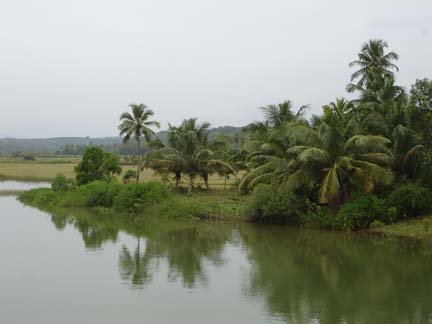
Holegadde near Honavar,Uttara Kannada dist, Karnataka

Copy? Right - but kindly remember to acknowledge!

Creative Commons License
This work is licensed under a Creative Commons Attribution 3.0 License.

" tulu-research.blogspot." ತುಳು ರಿಸರ್ಚ್. ಬ್ಲಾಗ್‌ಸ್ಪಾಟ್‌. ಇನ್

" tulu-research.blogspot."  ತುಳು  ರಿಸರ್ಚ್.  ಬ್ಲಾಗ್‌ಸ್ಪಾಟ್‌. ಇನ್
Have a nice day !