Monday, September 29, 2014

344. Panoli and Tāri Palm trees


An announcement, on the back side of a Kannada Newspaper clipping (brought during my visit to native place in January-February 2009) drew my attention. It is about Panolibailu Shri Kallurti Daivasthana (Sajipa Mooda, Bantwal Taluk,and Dakshina Kannada) not holding the periodical ‘Agelu and Kola’ as the day is intervening with the Nandavara Jatra Mahotsava, to be held between 9th and 14th February 2009. The word ‘Panolibailu’has been preying on my mind. It is inciting me to knowhow a name of a tree (in Tulu) is instrumental in giving a name to the village linguistically and culturally.Seized with a desire to educate myself and others, this article is written as a compendium on ‘Panoli’ vis-a-vis Taari/Taali Tree, another palm tree variety.

Popular Palms in Tulunadu
Coconut Palm is the most popular and commonly found palm tree in Karavali followed by Palmyra (Tāri in Tulu; TāLe in Kannada) or Toddy Palm. The latter is traditionally used for the manufacture of toddy, neera, and a special variety of flat, round, pan-cake shaped jaggery which is acclaimed for its alleged medicinal values.

TĀRI or PALMYRA PALM
Tāri/Tāli (Borassus flabellifer; Palmyra; Palmyra ತಾರಿ/ತಾಳಿ) Tree is a plant of the Palmae family, having   an unbranched trunk, crowned by large pinnacle or palmate leaves, resembling a fan. Webster English Dictionary defines a Palm tree as “any of tropical and sub-tropical trees with tall branchless trunk and bunch of large (hand-like) leaves.” Palmetto is a small palm tree with fan shaped leaves.
The genus of  Palmyra Palm has  six species, native to tropical regions of Asia, Africa and New Guinea, capable growing up to 30 m height.  Leaves are fan-shaped, 2-3 m in length.  Densely clustered spikes bear small flowers, which grow into large brown roundish fruits.
 Similar to Coconut palm tree, the palmyra palm tree is considered as another ‘Kalpavriksha’, mainly for its economic uses.  It is also called a ‘Trinaraja’ ( King of grass).
They are also cultivated for its economical uses. Borassus flabellifer is an Indian species of Palmyra as against the African species: Borassus aettiopum. So it is a native tree of India and not Africa as is inferred by editors of Hobson-Jobson Dictionary (p.664) based on their references available at that time.
On seeing the cultivated Palm trees from Ganga Valley to Delta in Bengal, the Portuguese exclaimed: ‘par excellence, palmeira’ (quoted in Hobson-Jobson Dictionary).
   In ancient India, Palmyra leaf blades were traditionally used as paper, like papyrus in Egypt. Matured leaves were selected according size, shape and texture and then preserved by boiling in salt water mixed with turmeric powder.  These leaves are then dried, polished with pumice stone and cut to proper size.  A hole is cut in one corner.  The writing is done with stylus and then leaves are tied up as sheaves (bundles).  Old manuscripts of scriptures and literature are written in such Talegari/Taada Patra (Olai chuvadi in Tamil). Besides, these leaves are used for thatching and weaving (mats, baskets, brooms, fans, hats, umbrellas, and capes, i.e. short cloaks, used as rain ware by farmers during monsoon cultivation).
    Panini, the Sanskrit Grammarian (ca.400 BC), wrote his book using Taala Patra (Palm tree leaves).  Likewise, Hindu, Buddhist and Jain scriptures are written on Taala Patra.  The Greek too knew about Palm tree leaf writing through Megasthanese.
The black timber of Palmyra is hard, heavy and durable.  It is highly valuable for construction, such as roof rafters and laths for houses, pilings for wharf.  In Cambodia, it is used for making canoes. Leaf-stalks are used for fencing and for basket making when split.

Indian Names of Palmyra
Tulu: Taarimara, Pongu (Kernel found inside the seed when sprouted).
Kannada: Taalimara, Taatinungumara. Malayalam: Karimpana, Nongu (Kernel), Pana, Talam.  Marathi: Tad, Talat-mad, Tamar.
Hindi: Tar, Tad, Tar-ka-jhar.  Gujarathi: Tad. Oriya: talo, Tando, Trinorajo.  Bengali: Tal, Talgach.  Tamil: Panai, Karumpanei. Nonku (Kernel).  Telugu:  Taadi-chettu, Taati-chettu, Tooti.  Assam: Tal.

Foreign Names of Palmyra
English: Palmyra Palm, Brab tree, toddy palm. French: Roenier. German: Palmyra-Palmira. Dutch: Jagerboom.Portuguese: Palmeira brava, panguera. Italian: Palma di Palmira. Burmese: Tan-bin. Khmer: Thnaot. Lao (Vietnam): Tan. Indonesia: Lontar, Tal (Java), Siwalan (Sumatra), Tala (Sulawesi). Malaysia: Lontar, Tah, Tai. Sinhalese: Tal Gaha, Kelengu (kernel of seedling).

 Diffusion of Palm tree to South East Asian countries is due to Indian Trade routes.When Buddhism spread to Burma, Thailand, Combodia (Angkor) and Viet Nam, Palm tree reached these places from South India and Ceylon.In Cambodia, it is a national symbol.  Angkor Temple is surrounded by palm trees. It is also a cultural symbol in South Sulavesi Province of Indonesia. Thailand landscape is enriched by palm trees as national prestige.
In some civilizations, a leaf of this tree was carried as a symbol of victory.

There are place names having a bearing on Taal and Tad/Tadi, For example: Taalipadi, Talipat (Remember this place where Ramaraya of Vijayanagara Empire fought a ruinous battle with Bahamani kings), Tadiwala Lane (in Pune City), and so on. (We expect that readers would give feedback about such names in their areas).

PANOLI  PALM
There is one more species of palm tree less common in occurrence but similar in looks to the Palmyra but with larger fronds: It is known as ‘Panoli’ in Tulu language and Fan Palm in English. (Corypha umbraculifera in botanical nomenclature). The place name ‘Panoli-bail’ in rural Bantwal Taluk, is named after this particular variety of Palm. It is called as ಶ್ರೀತಾಳಿ (Shritāli), ಪನೆ/ಹನೆಮರ (Pane/Hane tree) or ಪಣೆಳು (Brahmin Tulu), Tāliput/Tālipot or Pān (Tamil), Pāna (Malayalam), Pane (Kodava), Hane (Kannada), Shirtal (Konkani).
  These trees are planted in gardens as landscaping. In coastal belts (plains, hills and fields), we see them majestically standing to ones delight.  Even a lonely tree, standing stately on a hill, is also a wonderful sight.
It is a monocarpic flowering tree. It flowers only once in its life time (of around 70 to 80 years) in contrast to other annually flowering trees of the family, having longer life span. Cluster of flowers, on top of tree, are the longest of all plants in the world. It dies gradually after flowers ripen to yield thousands of (round yellow-green)seeds (3-4 cm dia.), say within three months to one year. One has to be lucky to see this rare and spectacular sight of flowered Panoli. A rare event of sighting the flowered species was reported from an area just behind the City Sub-Jail, Mangalore, by Fr. Leo D’ Souza, former Principal and Rector of St. Aloysius College, Mangalore (Deccan Herald, 16th October, 2008.)
   Panolibailu is famous for Kalkuda and Kallurti (the sculptor &his sister) Divine Spirits. The Deities, having legendary powers, are worshipped devotedly in Panolibailu Daivasthanaand in other villages of Tulu Nadu. Devotees do Sevas (votive offerings)of ‘agelu’ (Rice food offered with chicken curry) and Kola (periodical ceremony of invocation of deities through priest-mediums /impersonators) by paying prescribed fees.
  In Tamil Nadu, the tree is an official tree, respected as ‘Karpaha Veruksham’ (Celestial Tree).  Panaiveriamman (named after ‘Panai’, the Palm tree) is related to fertility.  The Deity is called ‘Taalavasini’ (The Goddess having Taala, i.e. Palm Tree, as her abode).
Taal Gach ek paye daariye’ is a nursery rhyme in Sahaja Path, written by Rabindranath Tagore in Bengali. During Laxmi Pooja, white kernel of ripe palm is offered.  Similarly, brooms made of palm leaves are considered auspicious things during Laxmi Poojan in Deepavali festival (Writer’s observation in Maharashtra).

Corresponding names of Panoli in other languages are: Bajarbattu (Hindi), Shritala (Telugu), Talipot (Marathi), Kudaippana (Tamil), Kudaappana (Kuda = Umbrella + pana = palm in Malayalam), Talipot (Sri Lanka), Pe-Pen (Burmese), Talipot (Malay), San Xing Xing Ye Ye Zi (Chinese), Palmier Talipot (French), Talipot palm (German), Talipot (English), Grote waaier Palm(Dutch), Palmeira Das Bermudas (Portuguese), Palma Talipot, Talipote (Spanish), and Palma Corifa (Italian).

Origin of the term Panoli

‘Pane’ in Tulu means ‘raised and levelled platform, or lofty place’. It appears that the term Panoli (pan + oli) represents a tree with lofty, large fronds (leaves). The ‘panoli’ also means an umbrella or parasol made out of fronds of the palm tree. (Tulu Lexicon,  p. 2904 / 1924).
   Besides Panoli-bailu in Tulu Nadu, we have come across similar place names in other places in India:
Panoli in Taluk Parnar,   Dist.  Ahmednagar,  Maharashtra.
Panoli   Village and Railway Station, Bharuch District,   Gujarat.

Palms in Water Management: 
   In South India, these trees were traditionally played important role in water management.  Traditionally, people thought that being tall, roots go vertically deep into the ground, thereby raising the water-table all along its path, even though scientists may not agree with the hypothesis.  Since the process is natural and balance of    consumption is well maintained, rivers remained perennial. One could find all the traditional ponds or lakes our ancestors dug had palmyra all around like a hedge or fence.    The writer witnessed several ponds in coastal line, dug for manually watering the coconut and casuarina trees (in the absence water pumps then), are surrounded by palmyra palm.  Alas, such ponds and palm trees are dwindling!
    The traditional farmers in Tulu Nadu employed split tree trunk pipes (Taari Dambe) as canal for irrigating or draining out excess water. A Paper by V.S. Ramachandran, K. Swarupanandan and C. Renuka describe the water pipes made of palmyra tree trunk is being used in Palakkad District of Kerala for irrigation, a traditional water engineering system.  (Ref: Propel Steps: Eco Preservation: Palmyra Palm Trees – The Paper is hidden in it).

Palmyra based Foods & Beverages: 
·         Sugar sap removed from the tree is called toddy and is used for drinking, making jaggery and alcohol.
·         Toddy has medicinal value as laxative.  All other parts have also medicinal values.
·         Kernel of nursery trees ('Pongu' in Tulu; 'Thavanai' in Tamil) is eaten raw as a delicious food.  Somewhere it is cooked as a vegetable or roasted.
·         Raw or tender palm fruit (Tulu: Taari Bonda or 'Irolu') is jelly-like and is eaten after drinking the water inside it. When summer comes, it is a cool and good refresher.
·         Ripe fruit (Taari Parundu) is eaten raw or roasted.  During scarcity of food (as we have faced in our childhood), it was a main eatable to children.  Present generation, especially urban, is not aware of this fact as the trend is forgotten. Girls eat fleshy pulp scraping by teeth so hard that fibres become white as hair of an old woman. They braid the fibres and cut jokes with their youngsters by calling and saying them to go after the old woman (i.e. eaten fruit).

Conclusion
Paddy fields and ponds/lakes, which are lined with palm trees, are disappearing rapidly with industrialization and urbanization.  We have noticed palm trees abounding in city suburbs but now the place is taken over by high rise modern buildings. Farmer and eco-friendly palm family trees need protection and preservation, considering their many uses. This article is intended for creating an  environmental awareness.  “Educating the mind without educating the heart is no education at all.”- Aristotle

- Hosabettu Vishwanath, Pune

Saturday, August 16, 2014

343. Jāra Villages

Jāra is a peaceful hamlet located on a river valley that you encounter while you travel in the northeastern sector of Mangalore city from Bondel Padushedde to Mudushedde along the sylvan and circuitous interior route. You will not the see the name of this hamlet in the list of villages of Mangalore Taluk. However, the hamlet must have been quite famous once upon a time in the past history.

Jārandāya
The Kingly Spirit (‘Rajan daiva’) of Tulunadu Jārandāya was said to be from the hamlet of Jāra. The term ‘Jārandāya’ means a man from the Jara. Note that the actual name of the Spirit is not mentioned but the place from which hailed has been affirmed in the name of Jārandāya. Thus the name of the place Jāra was quite known to the rural people of that time, even though decidely could not recollect his actual proper name!

Jāra
Jāra is an interesting place name, more so because it no longer has remained in our current vocabulary. Origin of unusual sounding ancient place names surviving around us like fossils of the past history continue to haunt, as vestigial reminders of bygone words from the languages that once dominated these lands we have inherited. Jāra is one such ancient place name surviving in Tulunadu, but surprisingly it is not an exclusive Tulu word as we find similar analogous place names all over India and abroad.

 Villages named Jāra exist not only in Tulunadu but also in the States of Gujarath, Madhya Pradesh, Himachal Pradesh, Jammu & Kashmir, Jharkhand, Uttar Pradesh and West Bengal. There are about 1000 villages in India having the name of Jara and its variants. Among variants commonly we find are: Jar, (Jhar, Jarh) or Jaru or Jari or Jarai. Also find modifications (with spatial suffixes) such as : Jaram, Jariya, Jarga, Jarige, Jar(a)ka, Jaraki (as in Jarakihole), Jargi, Jargipara, Jarwa, Jarapa, Jarad, Jarada, Jarasa, Jario, Jarkala, Jaroli, Jharwara, Jarara, Jaruha, Jaraila, Jarkheda, Jaronda, Jaranga, Jarigada, Jaripada, Jariput, Jaripal, etc. The State of Jharkhand carries the name ” Jhara” and besides a   large number of Jāra named villages exist in Jharkhand!

Jāra meaning
One possible way to understand the word is to search for the known meaning of this word in languages around us. Jara was a masculine name among Tulu tribes such as Jārappa. (Similarly in the Western countries we find that Jára is a short name for JarmilaJaromir and Jaroslav.). In some countries, Jara is a first feminine   name.

Besides, some of the possible related shades of usages in current Tulu, Kannada and Tamil languages are:
 Jaripu ,  jariyu,jāru(Tulu)= 1.slide, slip, 2.insult;
 Jāru, Jaragu (Tulu, Kannada)=1.slip,slide,move;
 Jaragu 2.happen; occur.
 JaraDi (Kannada )=sieve.
Ojjara (Tamil), ~Osar, uje, Uti (Tulu); Osaru, jzari (Kannada)=Spring, fountain,oozing water;

In other languages the term   Jāra means:
Jāra (Sanskrit) = 1.mistress; whore, 2. waterfall.
Jara (Pali) = aging; decay.
Jara (Rajastani) =rust.
Jara (Odisi/Oriya) =old, decrepit; fever
Jara (Slavic languages) = spring.
Jara (Turkish ) = strong, spring.
Jara (Sindhi) =water.
Jara (Bulgarian) = air, glow, mirage.
Jara (Hebrew) = he enlightens, he shines.
Zāra (Arabic) = flower; shining, bright. 
Jara (Australian/ aboriginal ) = seagull.

Jara names worldwide

Jara   is the name of a  Nigerian language.
Jara River, is a tributary of the Şuşiţa River, Romania.
Jara, Ethiopia , is a  mountain near Wallaga.

La Jara, New Mexico, census-designated place in Sandoval County, United States.
La Jara, Colorado, a   town in Conejos County, United States
La Jara, comarca in western Spain.

Coincidence vs. inheritance
While some of you may like to dismiss off the existence of analogous words in different parts of the world as mere coincidence, the general logical explanation for such similarities is that the primitive cultures inherited many of the basic words across the barriers of language and cultures on account of migration and interactions.
Also there is a possibility that there were several analogous words from diverse origins having different meanings.  Some of the basic meanings we can attribute to the word based on analysis as above are:

Jāra = 1.Spring, oozing source of water;waterfall.
Jāra =2.Sloping land; Sliding.
Jāra= 3. Sloppy morals,  fallen man or woman.
Jāra =4.Shining, bright object etc.
Jarā =5.Aging, sickness.

Jāra Villages

Based on the above discussions we may infer that Jāra actually meant a valley zone endowed with water or simply a village located on the banks of a river or stream. Thus in a sense the term Jāra was an alternate word for the ancient word Ala which also means a land on the bank of a river or stream.
In Tulunadu we also find compound place names that contain Jāra with additional adjectives such as:  Kenjār, Mijār, Kanajār, Kilinjar, etc.
For the time being, using the explanations given in previous posts, we can understand the meaning of these villages as follows:
Kenjar= Ancient Riverside Village of  ‘Red’ skinned (‘Kench’)  immigrant tribes.
Mijar= Ancient riverside village on an elevated plateau area.
Kanajar= Riverside village of Kanna tribes.
Kilinjar= Riverside village on the lower bank.


Chāra
Chāra is a village located on the bank of River Seetha in Karkal Taluk, Udupi District. The place name Chāra appears to be an alternate version of the term   Jara. There are several Chara village is located in different parts of India. The   Ja>Cha lingual variations may the source of these changes.
There are several Chāra based villages in Karavali such as Kolchar, Paichar, Kodichar, etc  

Ancient place names remain mute spectators to the drastic topographic changes in the land with the result we find some of these Jāra villages currently located on the banks of dried up river channels.

®

Monday, August 4, 2014

342. The Jambu-dweepa !

My blog partner Vishwanath guided me to an interesting, illustrated and colorful post entitled “Jambudweep-the global island” by Dr Vineet Aggaraval in his blog Decode Hindu Mythology. After perusal, the Post tempted me to express and share this bloggers notion of Jambudweepa with our readers. This is just an intellectual excercize for discerning readers to ponder how different inferences can be arrived at on the same subject especially in the case of   rather hazy and   poorly understood historical aspects.
 Vineet Aggarwal in his popular Post cited, reviews and considers description of Jambudweep (Jambu-dwipa) in our epics and scriptures and comes to the conclusion that the traditional Indian concept of Jambudweep essentially referred to the entire world (as a global island) rather than mere the region of India. Further, he explains and equates the global island to Pangea, a hundred to two hundred million years old past state of the world, when the continents of the world were huddled together over the globe as a single continental mass.

Geological History: Pangea
Vineet incidentally goes beyond the realms of human history and treads into past geological history of the Earth. Infact there is no harm in collating human history with geological history, especially when the time scales match with each other. However, most of the geological mega events are measured in terms of millions of years while the documented human history lasts merely for a few thousand years!
The theory Plate Tectonics envisages that the continents on the surface of the globe were united to form a single supercontinent some 300 million years ago.It was designated as Pangea.Further around 100  million years ago the supercontinent Pangea broke into two continents namely the northern Laurasia and the southern Gondwana.
However, the species of human beings evolved on the Earth only about 2 million years ago and they evolved into sensible cultured beings only about 6,000 to 10,000 years ago. Therefore, unfortunately none of our forefathers were able to witness the status of Pangea or Gondwana that occurred long before their arrival into this Earth!

Reinterpretation of Scriptural data
The Mahabharat and the Puranas were considered to have been composed during the period 500 BC to 500 CE. The oft quoted sloka describes Jambu-dweepa as alternate name for the Bharatha Khanda as in: “  jaambu dweepe bharath khande ..”. Similarly, the scriptural references cited by Vineet can be reinterpreted as below:

1.“The entire landmass of Jambu-dvipa is described as a continuous stretch of land subdivided into different continents by means of various mountain ranges with each of these divisions being governed by the 9 sons of Emperor Agnidhra, the grandson of Adam/Manu.”

-In the above quotation if you replace the word ‘continent’ with ‘region’ and interprete the ‘various mountain ranges’ as Vindhya, Satpura, Aravali, Kadapa,Sahyadri, Siwalik, Himalaya etc then again  the term Jambudweepa  would mean the Indian subcontinent.

2.Markandeya Puraan describes Jambu-dvip as being depressed above and below and broad in the middle just like a Globe.”
-If you happen to stand up on the ridge of any linear mountain range like Vindhyas of Sahyadris and look towards  opposite  (‘above’ and  ‘below’) directions you shall feel that the land is depressed on either directions.

3. “Srimad Bhagavatam points out that on Jambu-dvipa, night prevails diametrically opposite to a point where it is day and Sun sets at a point opposite to where it rises.”
- Theoritical deduction of persons who travelled rapidly from West to   East .

4. “Mahabharat describes the Universe as a series of shells divided in two by an earth plane called the Bhu-mandala; Jambu-dwip is the central landmark on this plane.”
- It reflects the concept of distribution of continents and oceans on the globe as understood during that time.
5. “Jain and Buddhist cosmologies indicate Jambū-dweep at the centre of Madhyaloka or the middle part of the universe, the place where Human-beings reside.”
-Again it reflects the distribution of continents, as seen from Indian eyes   as understood at that time.
6.” Various assorted texts describe Bharat Varsha or India as just one of the nine divisions of Jambu-dweep.”
-The citation envisages that the Jambudweepa, Indian subcontinent had nine divisions and one of these was known as Bharatvarsha. It can be interpreted that the “Bharatvarsha” region   at that point of time probably did not cover the whole of present India but represented a regional State, a geographic part of present India, governed by  or attributed to the famed King Bharata.

The Jambu fruit

The most common meaning of the term ‘Jambu’ is a light yellowish green or reddish, watery, succulent, bell shaped fruit common to India and Southeast Asia and variously known as Wax Apple, Water apple, Rose Apple, Bell Apple, Malaya guava (Syzygium sp.) and so on. It can be seen that the bell shape of the Jambu fruit in inverted form resembles the shape of the peninsular India. Since, the Jambu was a poppular and commonly known fruit in ancient India the term peninsular island in the shape of inverted Jambu fruit, appears to have known and envisaged as “Jambu dweepa”.
Peninsular India more or less resembles the shape of a Jambu fruit.

Mount Meru
Markandeya Purana and Brahmanda Purana describe that Meru Parvata forms the central part of the Jambudweepa. Surya Siddanta declares that the Sumeru ( Su+ Meru) mountain is located in the centre of the Earth. It is possible that the composers of the cited Puranas had described the position of Mt. Meru based on the observations of global travallers. In ancient times, people were travelleing between Africa and India and between India and South East Asia through land and sea routes. The 4565m high volcanic mountain of Meru is actually located in Tanzania, Africa, but most of the ancient Indian texts have described the magnificient esoteric qualities of the mountain, which is considered to be the abode of Lord Brahma. Some texts also mention mountains of Sumeru and Kumeru.
The confusion is evident not only the imaginary sizes attributed in various ancient texts but also in the declaration in the astrological text of Narpatijayacharyā (ca. 9th-century CE), that mentions "Sumeruh Prithvī-madhye shrūyate drishyate na tu" (=Su-meru is heard to be in the middle of the Earth, but is not seen there). However, the same text also mentions that India is located to the East of the Meru Mountain.

Dweepa
The term Dweepa (or dwipa) is normally translated as an island. However, the word as such suggests a land bounded by water on either sides (dwi =two; pa=water) whereas the term island basically refers to land area surrounded   on all sides by water.

The term Jambu
Apart from the watery Jambu fruit, the term Jambu has other shades of meaning especially in Tulu language such as: (1) swollen material such as mud, clay or laterite (as in Jambittige (Kannada); or swollen baggage as in Jambuli); (2) a water course (Jambāl); (3) a marsh or stagnant water (4) sky, etc.
There are places like Jamagodu Jamakhandi etc in parts of Karnataka. Jamadagni was the father of sage Parasurama. Jambava or Jambavanta was a bear during the period of epic Ramayana. Jambha is said to be the name of of Rakshas who fought with Lord Indra and was destroyed by  thunderbolt. There are caves named Jambu in Tulunadu, Maharastra and Tamilnadu, besides in Indonesia. The word 'Jamba' also means ego, pride or vanity in Kannada and Tulu.

Conclusion
The heritage term "Jambu dweepa" appears to have been attributed to the Jambu fruit shaped (or inverted bell shaped), peninsular India surrounded by water on three sides.

®

Saturday, July 12, 2014

341. Pagoda: an early Indian word

A Pagoda represents a multi-storied, turret like or pyramidal tower like structure mostly of Buddhist or Hindu origin. In China, Japan and South East Asia, the pagodas represent Buddhist temples.  It has been proposed that the word pagoda travelled to China and Japan along with tenets of Buddhism that spread to those countries during the early centuries of the Common Era. The word is   equivalent to the word ‘temple’. In many parts of ancient India including Tulunadu the ‘Pagoda’ was the name of the currency in use in early days. The word is said to be of Indian origin even though several obscure explanations have been proposed in this regard.

Butkada
One proposal suggests that it is derived from the Persian word Butkada which means the temple of idols. There has been a suggestion in the Wiki pages that the Portuguese word Pagode is derved from the Persian word Butkada. Whether the Portuguese word Pagode was derived from the Persian word Butkada or Portuguese picked up the word pagode directly from pagoda from their Indian connections is not clear.However the Persian word in the context, Butkada is quite interesting.
Early pagodas also known as Chaityas (Chitte in Tulunadu) were constructed to preserve the mortal remains of Buddha and his disciples. The turret like (or sometimes globular) structures preserving the remains of the dead were also known as Stoopa or doopa (derived into: doope, as known commonly in Tulunadu).
The prefix būt in the Persian word Butkada reminds us of bootha (or Buta), the Spirit of the dead. Similarly, the suffix kada reminds of the Kata the early Koraga word for representation of God or divine stone. The Persian word Butkada is explained as Temple of idols. The equation of the word būt or bhoot (the spirit of the dead) with idols envisages the ancient cults of worshipping the dead in the form of idols in ancient Persia also.
Besides relating 'Kada' to 'Kata' (natural object, say a stone, tree, or a place of pyre, for identifying the Spirit of the dead for worship), it seems that 'kada' could have been a corrupted form of ''kala' (=an open field or plot). The term kala was also used by Arab traders after seeing a lot small shrines or temples along the Western coast, which is then picked up by Portuguese and afterwards by other European traders. 'Kala' also means a small shrine, akin to  'Maada or Kaimaada' for the dead.  'Kaliyata' means an annual celebration for worshipping that Divine Spirit

Origin of the word: Pagoda
There has been a suggestion that the word is influenced by the Prakrit word Bhagodi which means divinity or divine structure.
An ancient Munda word Phagu has remained till today on account of the popular Phagu festival commonly associated with Munda tribes. The meaning of the word phagu is not clear even though traditionally it was also the name of the first month in the calendar years among ancient Indian communities as we find from the vestiges of ancient cults preserved in Tulunadu (Post 338). 
There are a large number of place names in Bihar, Chattisgarh ,Jammu & Kashmir, Jharkhand, Orissa, Punjab, Rajastan, Uttar Pradesh, Uttar Khand and West Bengal that begin with the prefix of phag which in turn suggests the distribution and survival of the ancient term in larger part of  India. Similarly we can find numerous place names beginning with the prefix of bhag also.
It appears that the Munda word phag or phagu is an ancient variant of the latter Prakrit/ Sanskrit word bhag.
The pa >ba (or pha >bha) consonant transitions along the history are quite common in Indian languages. Thus the ancient Indian word phag or phagu must have become bhag with along course of passage of time. The word bhag in Indian culture represents divinity or creation or a product of creation. On one hand words like Bhagvan (=God), Bhagvati (=Goddess) have been derived from the root bhag. On the other hand, bhag also meant female organ responsible for creation of life (or organ of reproduction, to be precise). The River Ganga is also known as Bhagirati or the divine flow. Bhagamandala in Kodagu is the divine place of origin of River Kaveri. Bhagwadi hamlet in Barkur, is famous for  Mahisamardini Temple. Thus, the term 'bhag' also means embodiment of 'divine qualities' (eg. Bhagawanta, Bhagamalini, Bhagavati, etc.). Bhagambila is an ancient hamlet near Kotekar in Mangalore Taluk.

The Prakrit word bhagoda, being bhag+oda, derived from Munda language roots, thus represents a divine structure, wherein oda (ora) means a house. Further, bhagodi being derived from bhagoda means divine in Prakrit language.


Oda
The suffix Oda at present generally means a boat in Tulu, Tamil Telugu and other related languages. However, it seems the word had other shades of meanings earlier in the history, such as a structure, a construction, an idol or a coin.

Pagoda: shades of meaning
Hobson Jobson Dictionary attributes a set of three meanings for the word pagoda: (a) a temple (b) an idol and (c) a coin. Since the three meanings are interlinked, it seems that the term pagoda during the early history originally meant (a) a divine structure/construction (b) a divine sculpture or idol and (c) a divine/gold coin bearing the image of a God or Goddess. The gold (sometimes silver) coins carrying the image of then popular deities such as Varaha (Panjurli in Tulunadu), or double fishes (Pandya and Alupa emblem which also turned out to be the insignia of Fish incarnation (Matsyavatar) of Lord Vishnu)

Thus, the term pagoda appears to be an ancient Indian term (of Munda or pre Munda origin) and meant a divine structure or representation or entity.. Since Spirit worship was the order of the day in those times the pagoda represented a spirit shrine or structure intended and designed to preserve mortal remains of the dead.The term pagoda must have been in wide usage in India during the early centuries of the Common Era when tenets of Buddhism were spread to the China and Japan. 

Friday, June 27, 2014

340. Puyinke, Paika or Payike – An Assay of A Class

Puyinke’, a historical word, reminds us of traditional wars and the soldiers who contributed their time and energy to such wars.. History, in its stride, from foraging and hunting stage, has seen several phases like, a secular way of living, to socio-religious and political stage. It is a case with the Tulu word “Puyinke” (Tulu Lexicon p. 2065). Its cognates are Paik, Paika, Paike, Payika, Payike and Painka.
 Originally the term Pāyi-ka possibly meant a foot-soldier (Padāti or Padātika in Sanskrit) or infantry, since pāyi (in Prakrit) means foot.  The soldier may be an archer, a sword fighter, a petty soldier or a commander.  The Paika, subsequently also meant a camping area of an army (Tulu Lexicon, p.2117).  There was a Paika Village in Hampi, the Capital of Vijayanagara Empire.  It can be inferred that a colony of this Class of soldiers takes the village name as ‘Paika’.  Thus the term is also  equivalent of the English word Cantonment. Similar village names of ‘Paika’ are still extant in Tulu Nadu and Malabar areas and for that matter, in many places in India. Besides, the word paik or paiki gives a meaning of ‘one among a group, party, class or section’ in Tulu and Kannada, thereby meaning ‘a relative’ in general.
Traditional armies in India, were known as ‘Chaturanga bala’, ( four-tier military forces) consisting of (a) Foot Soldiers, (b) Horse-mounted soldiers, (c) Elephant-mounted soldiers and (d) Soldiers on horses-driven chariots. The strengths and weaknesses of   royal armies have often been highlighted in many of the Indian epics and other historical narrations.  Of these the infantry was the first segment of   king’s army. 
The  infantry name is perpetuated in Chennemane Game of Tulu Nadu (See Note below).  Thanks for industrialisation, the game is nearly at the brink of extinction. but for Software version of it now available in Internet.
With passage of historical times, the eponymous word became a caste or community indicator with varying shades of meaning during the colonial era.  Let us study and analyse the situations and significance of these words in the History.

Puyinke:  in Chennemane Game
In the Tulunadu, traditionally a number of indoor board games were being played during the monsoon period in order to tide over the monotony of rainy period especially after the completion of seasonal farm works. Of these, in the game of   ‘Chenne mane, the name ‘Puyinke’ is applied to one of the players. (Post 95, dated 23.02.2008)
The equivalents of Tulu Chenne mane game are found in different regions. In Sri Lanka it is called as ‘Olida Kaliya’, in Kannada above the Western Ghats as ‘Alaguli/Andeyala’ as prevalent right from Vijayanagara reign, and Mancala or Mangala games in Egypt and Mediterrian region.
It is considered as an auspicious game and is also played on specific occasions. Certain taboos are attached to this game, such as playing between sisters and between husband and wife are generally prohibited. 
The enmity between Bangarasa of Mangalore and his wife Abbakka, a Chauta Princess of Ullal, is said to be the result of a false move in Chennemane by her husband. This enmity ultimately resulted in Mangalore and Ullal going into hands of British.  The Tulu folk lore of Siri PaDdana, depicts a suspected mischievous move in the Chenne mane game by younger sister Dāraga that prompted elder sister Abbaga to hit Daraga’s head with Chenne mane in anger which resulted in death of the latter. Subsequently, Abbaga committed suicide in repentance of her misdeed.
Chen’ means moon, red, beautiful, or good. A Pious or beautiful woman is called ‘Chenne’.  Naturally, game is played by women, off harvest time in general.  Scarlet or deep red seeds and wood used may also be instrumental in giving the name to this playing board.
Chenne mane is a wooden board with 14 circular depressions (called ‘houses’ or holes, pits ; Guri or Illu in Tulu) arranged in two linear rows consisting of seven holes in each row. In ‘Arasāta, (King’s game), six middle houses (three in each row) are assigned to King and remaining eight  houses (four in each corner) are assigned to ‘Perdani’ (Pradhāni, the Prime Minister) sitting on left of the King, and a ‘Puyinke aka Paike’ (a tenant-soldier or Commander), who sits on the right.  Each of the houses are filled with 4 seeds or cowries.  Seeds are from Hongaraka (the Indian coral tree) or from Manjetti (Manjotti or Gulagunji , bright scarlet seeds derived from a wild creeper).
As generally known, in ancient India, there were 56 Kingdoms (as often tautologically uttered as ‘Chappana Ivattaar’ Deshas in our Yakshagana dialogues).  We infer that this is represented in 56 (14x4) seeds or cowries.  This may satisfy a questioning mind why there are 14 houses only.  Nitty-gritty of this game is nearly forgotten by the writer and also by his seniors whom he enquired. Some terms are still in memory, say bule (4 seeds collected in a house) and perga (heap of more than 4 seeds) in a house/pit across an empty house, which is earned by a player when he puts the last seed in the house before the empty pit.  King rarely loses but combined efforts of the PM and the commander defeat the king, i.e. deficit of seeds on hand to continue the game.  The game reminds us the feudal and vassal system prevalent in Tulu Nadu prior to recent changes in land revenue laws.

Paika or Hale Paika
Hale Paika means ‘old soldier’ as we know now. This nomenclature could have also arisen from ‘Halu’ meaning milk, a product of husbandry as a Paika is partly agrarian. They are found in Uttara Kannada District, Shimoga Malenad areas and Mysore. They are also known as Divaru or Idiga because of their toddy tapping profession. Their cognates are known as Billavas (Archers) and Thiyas in (erstwhile) undivided Dakshina Kannada and Malabar Coasts.  Toddy tapping and farming are their main professions.  They served as mercenaries and commanders under many Kannada dynasties, such as Chutu Satakarni, Kadamba, Vijyanagara and Keladi, and other feudal kings and/or chieftains.  Kannada speaking Kumara Kshatriyas, later on known as Rama Kshatriyas, were brought to Bekal by Keladi/Ikkeri Nayaks as ‘Koteyavaru’ to guard the forts conquered by them.
Nayak, (meaning commander or leader), is a title which denotes their earlier profession as solider.  By legends, they were Shiva-worshippers. Later on, they espoused Vaishnavism, professed by Ramanujacharya. Epithet ‘Nāmdhāri’ is given because of their applying a ‘nāma’ (religious mark) on foreheads. Some bear Nāmdhari Gouda appellation akin to Vokkaligas.

Origin of Halepaika
What is the origin of Hale Paika as a community name? Sham.Baa.Joshi says in ‘Kanmareyada Kannada‘and ‘Maharashtrada Moola’ that they migrated from Central Provinces/Berar, which retain a population as ‘Halba’ who speaks ‘Halbi’ akin to Kannada but with heavy Marathi accent.  They further migrated to Gulbarga to Banavasi and Tulu Nadu. Prof. D.L. Narasimhachar dissented  this view-point.  According to Anthropological Survey of India, Hale Paiks/Komarapaiks are migrants from Andhra Pradesh.
Hale Paiks of Mysore speak both Kannada and Tulu. Gopalakrishna Raya, ruler of Vijayanagara Empire, granted Village of Halepaika aka Kumara Kshetra to Narayana, son of Ranga Naik & Laxmi Devi, for his unstinted loyalty in serving the king.
Heroics of Paikas were highlighted in Kannada Classic Poetry.  Adi Kavi Pampa (10th C) praised them in his ‘Vikramarjuna Vijaya’.  ‘Kanthirava Narasaraja Vijaya’ (17th C.) by Govinda Vaidya, woven around Mysore Wodeyar Kanthirava Narasaraja, describes a battle scene where Halepaika troops were in action against invading Bijapur Sultan’s army. Testimony to their heroism is evident from the Hero stones and dolmens of men and women of forgone days.  They are not forgotten but many are deified and are worshipped in temples built for them.

Paika System for Royal Service
There was a ‘Paika System’ of land holding during the rule of Ahom Kings in Assam. Pieces of communally held cultivable land (Roopeet) were distributed as grant, say 2 Puras equal to 2.66 acres each as ga-mati (wet paddy-growing land) by the king to people who undertook to fight as warriors to help the king during wars.  These holdings were neither hereditary nor transferable but a Paik could maintain his tax-free ancestral home and garden (basti and bari). Wastelands reclaimed by paiks or non-paiks, not covered by a royal grant, were subject to inclusion in ‘Roopeet’, which is distributed as ga-matiin next paik survey. Surplus cultivable land was distributed as ‘ubar mati’ among paik.  Ahom Kingdom did not have a standing army till the beginning of 19th Century.  Its fighting force was made of ‘citizen soldiers’.  Every male in the Ahom kingdom between the ages of 15 and 50 was a Paik except a noble, a priest, a high caste, a diabled or a slave. This system was in vogue in Bengal and Orissa as well.
There were two classes of Paiks – (1) Kanri Paik (archer), serving as solider or as a labourer and (2) Chamua Paik rendered as non-manual service and hence enjoyed a higher social standing.  Kanri Paiks could move up to the rank of Chamua. 
In the first major survey taken by Suhugmung in 1510 CE, Paiks were organized as families and lineage (Phoids) and resettled according to skills.  Royal service was rendered by 3/4th of a family and ¼ of household remained at home to continue ga-mati. There was rotation system for doing royal services.
From the above, it is seen that it was a type of corvee, a system of exacting unpaid labour.  Royal services of Paiks included defence, civil construction (embankments, roads, bridges dykes, etc), and military productions (boats, arrows, muskets, etc.). The entire population in ga-matis were divided into Khels (Guilds), each numbering about 1000 to 3000 able-bodied men (paiks) in a locality according to functions.  Specific services rendered in a Khel gave names to villages.   Later on these Khels were reorganized and made self-sufficient as trade guilds by infusing Paiks of various trades in each khel. The officers in hierarchical system, such as Borah, Saikia, Hazarika, etc., were responsible to mobilize the Paiks on requisition by the State.
The origin of this Paik-Khel system was obscure. According to ‘Burunjis’, i.e. Historical Chronicles in local Ahom language (later on in Western Assamese dialect), the first Ahom King Sukapha/Sutapha brought this system from South East Asia in 1228 CE, which was in force till the time of (Circa 1714) Rudra Singh. (Bu = Ignorants; ran = teach; ji = store; Buranji= Store that teaches). It is said that Khels & Paiks were the obverse and reverse of the same coin in a feudal system of revenue collection, not common in the rest of India.

Paiks in Medieval India
The Paiks who were Hindu Infantry-men, also   served the Sultans.  They formed a Royal Guard under Balban. Under the Khaljis/Khiljis (1290-1320), these royal Paiks played an important role.  The dynasty founded by Raja Ganesha (1415-18) ruled over Bengal from 1415 to 1435.    The Kingdom survived with the support of royal Paiks.

Paikas of Mogul Empire (1526-1857)
These Paikas were messengers or harikaras or couriers.  It is supposed to be a word borrowed from Mongols or Persians.  They are runners.  Their salaries were fixed on their running speed.  Some could run 50 to 100 Coss/Koss per day.  They are mentioned in Ain-i-Akbari written by Abul Fazal. The Persian original was translated in English by H. Blochman (Vol. I Calcutta 1873) and Vol. II and III by Col. H.S. Jarrett, 1891-94.(Skt. Krosa – roughly 3-4 miles according to Pakka and Kachcha type measurements practised in India.  Sultani Koss in Mysore was 4 miles).

Pyke or Paik in Colonial Era
Transitions of meanings occurred in Anglo-Indian speech.  These are reflected in records, letters and travelogues of Europeans and Arabs. Accordingly, a Pyke/Paik (qv. Hobson & Jobson Dictionary) was given different shades of meaning, such as a footman, an armed attendant, Peon or Payde, an inferior Police Officer & Revenue Officer, a messenger, a courier, a village watchman, a local militia holding land of zamindars (hereditary landlords) and Rajas (kings) by the tenure of military service (paik). It was a custom in those days (C.1590) that the palace of Bengal King was guarded by thousands of pykes, spelt as Payiks.  It is opined that the two terms are rolled together into one. The vestige of Paiks is visible in West Bengal and Bangla Desh under the name ‘Painka’, a labourer in Tea Gardens.
Treatment of entire land and Paiks as things at the disposal of Ahom Kings had a deleterious effect on Society.  Farmers were treated as slaves. If they refused to do royal services, they had to pay a heavy poll-tax.  This de-humanised tendency of Paik-Khel system was mitigated to a great extent by Gurus of Neo-Vaishavism, taught by Saint Shankardeo.  People took refuge in ‘Namghars’ (Prayer Halls).  With social awareness and British conquest of Assam (1826), there was a decline of Khel-Paika system. With the development of distinct professional army and an elaborate administrative bureaucracy, the labour services of Paiks became redundant and irrelevant (“The Cambridge Economic History of India”, Vol.2, p. 92, Editors: Tapan Raychaudhari, Irfan Labit, Dharma Kumar).
During colonial era, a word ‘Paik’ was coined to mean ‘to strike hard and repeatedly’.  It is a dialectal word and hence is not included in normal dictionaries.  Merriam-Webster Dictionary (Unabridged) has included this word, saying ‘Origin unknown’. It is definitely originated in India. Pseudo fight (Talim=Gymnastics) is still extant in Tulu Nadu in ceremonial processions.  Gymnasts hold a shield in one hand and in the other a sword, spike or a cane.  It is a relic of royal/feudal era when Paiks had significant role in battle fields
Oriya Paika Dance
The Paikas in the Paika Sahi were a warrior caste, serving the Gajapati Kings of Orissa (Utkal), in the battles of 15th and 16th centuries (Koraput Gazetteer, 1944).  Paika Dance with shields and swords is a famous dance form, which is practised by Paikas of Oriya Army.

Paika Rebellion& Ban on martial art centres
Paik Akhade was patronised by King Kharavela of ancient Kalinga. There was a Paika Rebellion in March 1817 under the leadership of Buxi Jagabandhu Bidyadhar Mahopatra against British colonial rule.  Though revolt lasted for a year, the British could quell it by September 1818. Martial art practices and teaching centres (Akhadas) were weeded out by the British in Orissa   thereafter..
Likewise, Garadi/Garodis, Kalaripats were also banned in Tulu Nadu and Malabar area after the revolt of Raja Ravivarma Narsimha Domba Heggade of Vitla Principality against British with help from Rajas of Kumble and Nileshwaram. Though he regained the kingdom with the help of the British after the beheading of his uncle Achuta Domba Heggade by Hyder Ali, he wanted to get rid of the British from South Kanara. On unsuccessful attempt, he was executed on 22nd August 1800 with nine members of his family by the British.

Paika Place Names
Vestiges of Paikas are evident from village names in Uttara Kannada and Dakshina Districts of Karnataka.  Paika is a village in Bantwal Taluk.  Paika Houses and Surnames are traced in Puttur and Subramanya and Kasaragod.  There is a news story of Paikas of Kodagu, who traced their ancestral root in Puttur and their family bond is re-established with Paikas of Puttur.  They are Tulu speaking Goudas, who were invited by Lingaraja to populace Kodagu as cultivators. This was necessitated as Kodagas were taken prisoners to Srirangapattanam by Tippu Sultan of Mysore.  History tells instances of migration of Goudas to and fro Kodagu as village watchmen during Hoysala conquest of Tulu Nadu.
In the historical past of Tulu Nadu, Pashuka (i.e. ‘Gorashtra’, country of cowherds) was northern border of Tulu Nadu. Paikas are mostly found in Honnavara, Kumta, Gokarna and other areas of Uttara Kannada.  We can also deduce this from transformation of Pashuka (“Tulu Nadu” by P. Gururaja Bhat) as Payika>Paika and now Haiga (Change of ‘Pa’ as ‘ha’ and ‘ka’ as ‘ga’ is common in Kannada/Tulu).
Proliferation of ‘Paika’ place names is common in India, as is evident from enlisted village names in Census records. In Karnataka, name of ‘Paika’ village not mentioned. It is observed that local name (Eg. ‘Paika’) in a village is normally left out in Census records. The following Paika village names tell the story of Paikas (peasant-soldiers of yester years):

Assam: Paikandara (Dist.Kokrajhar), Paikartol (Goalpara), Paikarpara (Dhurbi), Paikan (in Goalpara, Chachar & Hailakundi), Paikana (Kamrup), Paikarkuchi/Paikan Bonmaza/Paikandirua (Nalbari).
Bihar:  Paika Charia (Dist. Darbanga), Paikant (Khagria), Paikauli/Paikaulia (Kaimir & PaschimChamparan), Paikauli Bodo & Paikauli Naraen (Gopalganj).
GoaPaikapann, Paikara.
Kerala: Painkulam.  Paippad & Paivalike (part of erstwhile Tulu Nadu) could also be added, as they are enlisted under ‘Paika’.
Madhya Pradesh: Paikangaon (Rewa), Paikaura/Paikauri (Satna).
Maharashtra: Paikmari (Wardha)
Manipur: Paikholum (Churachapura)
Mizoram: Paikhai (Aizwal)
Orissa: Paika Miniguda, Paika Baranga Padar, Paikaantarada, Paikabadiguda, Paikabagad, Paikabahal, Paikabasisada, Paikabankatara, Paikabarabati, Paikabasa, Paikabati, Paikabhuin, Paikadahkhor, Paikajagannathpur, Paikajamuna, Paikjodi, Paikakatara, Paikakupakhal, Paikakusadhia.
Tripura: Paikhola
Uttar Pradesh: Paika, Paikapur, Paikarai, Pikaramau, Paikauli (7 villages of the same name), Paikauli Kala, Paikauli Khurd, Paikauliya, Paikawali, Paiki Shukla, Paikipur, Paikoliya, Paikora.
Uttar Khand: Paikatiya
West Bengal:  Paika (2), Paikan (2), Paikan Durjyodhan, Paikan Ghoshpur, Paikan Karanji, Paikanbalia, Paikanmunibgar, Paikar (2), Paikar Raut Chak, Paikarai (2), Paikarapura, Paikardanga.
Tracing back to Varna
Attempting an analogous process explanation, we can go back to Chaturvarna System of Vedic period. Brahmana, Kshatriya, Vaishya and Shudra categories or classes are known as four divisions of a society.  One could change his position by one’s deeds then.  The system collapsed with the obstinacy of Brahmins, having authority of dispensation according to scriptures.  Tussle between Brahmins and Kshatriyas (Kings) was proverbial. 'The prevailing position is that castes outside 'Brahmanism', are known by specific occupation-centric caste names'..  As we notice in Indian Epics, tribal warriors took part in Rama-Ravana Battle (eg. Vanaras, meaning forest-dwellers) and Mahabharata War between Kauravas and Pandavas (Eg, Samasaptaka warriors of Bhagadatta, made of eastern India tribals). There were warriors fromSages, Yadus, Hunters,Kshudraka-Malawas (Kuru = Mala = mountain dwellers), shepherds, cattle herds to cultivators. Kurubs aka Dhanagars attained royalty by their valour (Eg. Kanakadasa, Holkars). 
The Ambasththas of Punjab region (between Drastavati, ie. Beas and Chandrabhaga, i.e. Chenab) and Saindhavas (under Jayadratha of Sindhu) were the other armies from West who sided with Kauravas. Puranas say that  Ambashthas are created by Brahma from his body, so they are known as Kayasthas, the merchant class.
Bravery of Kshudraka-Malawa army could dent the advance of Alexander, the famous Greek world conqueror, across the River Beas. Greek Ambassador Megasthanese wrote that Iranian Kings used to entice them to join Iranian army.  But these Kurubas were called as ‘Kshudrakas’ (qv. Karnata Sanskritiya Poorva Pithike, Sham.Baa.Joshi, Part-1 page 70-71).  Indignance of the age could be guessed by this name. So propensity for adding ‘Arya’ is seen in various Caste Associations these days.

Summing up
 ‘Prehistory’ of Paika community  can be traced backwards on the lines of human development by means of oral poems, legends, and archaeological evidences – lingual and physical.  Puyinke, an analogous word to Paika/Paike, is retained as a caste name though they are not doing military services now as was vogue with monarchies, their provincial representatives, local feudal chieftains or landed gentry.  They are equated with Goudas, Vokkaligas, Bantas, Billavas, Thiyas, Kshatriyas, etc.  Legends say that they are fallen Kshatriyas.

Suggested Reading:
Mysore Tribes & Castes, Dr. L.K. Ananthkrishna Iyer
Our Posts on Mogaveeras, Bunts-Nadavas, Billavas, Thiyas, Weavers


-Hosabettu Vishwanath (Pune)

Blog Archive

Books for Reference

  • A Comparative Study of Tulu Dialects By Dr. Padmanabha Kekunnaya. Govinda Pai Reserach Centre, UDupi. 1994
  • Koti Chennaya: Janapadiya Adhyayana. By Dr. Vamana Nandavar. Hemanshu Prakashana ,Mangalore.2001.
  • Male kudiyaru. Dr B. A.Viveka Rai and D.Yadupathi Gowda, Mangalore University,1996.
  • Mogaveera Samskriti By Venkataraja Punimchattaya. Karnataka Sahitya Academy.1993.
  • Mugeraru:Jananga Janapada Adhyayana. By Dr Abhaya Kumar Kaukradi.Kannada & Culture Directorate,Bangalore & Karnataka Tulu Academy, Mangalore,1997.
  • Puttubalakeya Pad-danagalu. Ed: Dr B.A.Viveka Rai,Yadupati Gowda and Rajashri, Sri Dharmasthala Manjunatheswara Tulu Peeta. Mangalore University.2004
  • Se'erige. Ed:Dr K.Chinnapa Gowda.Madipu Prakashana,Mangalagangotri,2000.
  • Studies in Tuluva History and Culture.by Dr P Gururaja Bhat (1975).Milagres College,Kallinapur,Udupi.
  • Taulava Sanskriti by Dr.B.A.Viveka Rai, Sahyadri Prakashana,Mysore 1977
  • TuLu naaDu-nuDi By Dr.PalthaDi Ramakrishna Achar, Puttur.
  • TuLu NighanTu. (Editor in Chief: Dr U.P.Upadhyaya, Govinda Pai Research Centre,Udupi. Six volumes. 1988 to 1997
  • Tulu Patero-A Philology & Grammar of Tulu Language by Budhananda Shivalli.2004.Mandira Prakashana Mangalore. p.317. (The book is in Tulu Language using Kannada script)
  • TuLunadina ShasanagaLa Sanskritika Adhyayana. By Shaila T. Verma (2002) Jnanodaya Prakashana,Bangalore, p.304.(Kannada)
  • Tuluvala Baliyendre. Compiled by N.A.Sheenappa Hegde,Polali,Sri Devi Prakashana,Parkala,1929/1999

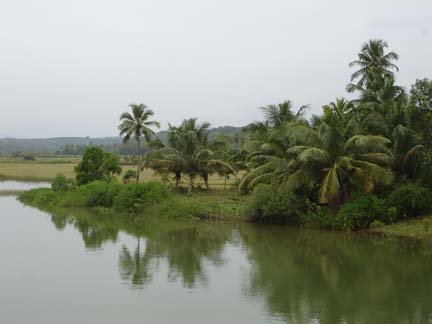
A Coastal estuary

A Coastal estuary
Holegadde near Honavar,Uttara Kannada dist, Karnataka

Copy? Right - but kindly remember to acknowledge!

Creative Commons License
This work is licensed under a Creative Commons Attribution 3.0 License.

" tulu-research.blogspot." ತುಳು ರಿಸರ್ಚ್. ಬ್ಲಾಗ್‌ಸ್ಪಾಟ್‌. ಇನ್

" tulu-research.blogspot."  ತುಳು  ರಿಸರ್ಚ್.  ಬ್ಲಾಗ್‌ಸ್ಪಾಟ್‌. ಇನ್
Have a nice day !