Showing posts with label Mundkur. Show all posts

Saturday, May 15, 2021

Dr. Ravindra Mundkur, a tribute


A Tribute


Dr. Ravindra Mundkur

14 March 1954 - 9 May 2021


Dr. Ravindra Mundkur, was born to Sri Budhananda Kundar (Udupi) and Smt. Lakshmi Bangera. on 14th March 1954, in ‘Mundkur’ village, of Karkala taluk, of the erstwhile South Kanara District, now ‘Udupi’. He was the eldest son among four children, other siblings being, Rajenda, Shakunthala and Raghavendra.  

He had his primary schooling at ‘Holy Angels Primary School’ Hampankatta, and  high school at Milagris High School Mangalore, PUC was in ‘Sharada Vilas PU College’, Mysore, thereafter, BSc in Yuvaraja’s College and MSc and PhD in Manasa Gangotri, University of Mysore. He had a distinguished academic career, having been a topper all through and secured first rank in MSc (Geology) and was a gold medalist.

His illustrious professional career began with his appointment as Assistant  Geologist with Department of Mines and Geology. He served in Mangalore, Bangalore and Hospet., He retired as Deputy Director, Mines and Geology, Mangalore. On superannuation he settled down in Mangalore.

His life time achievements include publication of more than 50 publications. He was considered as an authority in Ground water subject. The ‘Geomorphology of Karnataka’ map he had created, has become the standard map and has entered the text books. 

He had written many books. He edited the manuscript written by our father and published it, titled ‘TULU Pathero, a philology of Tulu Language’. He was very active in dissemination of knowledge. He has authored a Blog Spot “Tulu Research and studies”. It has more than 430 articles of academic interest about Tulu and Tulunadu. The Blog Spot ‘Geo-Karnataka’ is devoted to geomorphology and hydrology of Karnataka. “Mukta Manasu” is a Kannada blog on random subjects.

He has more than 10,000 edits to google map (Local guide: Level-8), which was his passion to add, rectify and vet the names of the places, street and so on. He was active in Quora and was educating the information seekers about geology and Tulu language. He has contributed many articles to Wikipedia (English, Kannada and Tulu). He has also edited wiki books. He played active role in KAGA (Karnataka Assistant Geologists Association) as Secretary/President.

He loved to travel a lot. While in service he had travelled nooks and corners of India in general, Karnataka in particular to gain in-depth knowledge of the geo morphological features. He accompanied his son during overseas assignments to Japan, Switzerland, Germany, France, Malaysia, Dubai, Singapore and other countries with an eternal desire to learn more about the geological aspects. Apart from travelling, his hobbies included, photography, painting, sketching and calligraphy. He was the banyan tree of the family. the key-link in holding the entire family and relatives together.  

He was married to late Ms. Bharathi Naik, who served as Principal of Women’s Polytechnic College, Mangalore. Their son Mr. R. Vijnandeep, is a software Engineer with an MNC. 

He was a simple, humble, generous and friendly human being full of love, compassion   and wisdom and had the respect of all those who came in contact with him. In his untimely death, the family has lost an adorable member, guide, mentor, academician. He will continue to live, gratefully remembered, by all those with whom he shared his morsel of food, gave love, emotional and financial support to those who needed it, created better lives with support for education and potable water facility.

     It was Covid-19 pandemic time when he breathed his last. Amidst the lock down and social distancing norms, many family members stood together extending emotional support to his young son. We are grateful to everybody. This tribute is never complete without mentioning about Mr. Mithun Kanchan. Even after knowing fully very well about the Covid risk, Mr. Mithun Kanchan stayed with Vijnandeep, gave moral support, nourished him well and sailed Vijnan through difficult times safely.  We are very grateful to Mr. Mithun Kanchan and his mother Ms. Mohini Kanchan.

During these testing times, please join us in offering our respects to him with a silent thought, a quiet prayer, for a very special person.


Monday, February 17, 2014

331. Munder, Mundkur, Munda Villages.


The people of Mund(u)kur Village in Udupi District in the coastal Karnataka are currently in festive mood as the annual season of Rathotsava (the chariot festival) celebrations connected with the Village Goddess Durga Parameshwari is scheduled to be culminating on 18th February 2014. We have discussed several historical aspects of  Mundkur (Mundukuru) village in some of the earlier posts in this blog in tidbit fashion (Posts: 5, 216, 219, 305, 309 etc). In this Post  we shall discuss some of the Munda village names that are distributed and found in different parts of  India such that some strings of historical data that many of us are not explicitly aware of (or do not want to believe because of inherent prejudices) can be appreciated.
The Mundkur Village presently has two alternate names used commonly: (1) Mundkur (Mundukuru) and (2) Munder.

Munder Village
While in Kannada the Village is usually referred to as Mundukur or Mundkur, (d pronounced as D in daughter), in Tulu language people call this village as Munder (pronounced as munDeir; with D pronounced as in Daughter).  Consequently, there is a tendency to believe that Munder is a Tulu word for the equivalent Kannada place name of  Mundkur (or Mundukuru).

However, it is quite interesting to note that the term Munder is not an original or exclusive Tulu word since similar place names are distributed all over India. Now there are villages called Munder (and also Mundera or Munderi) in Uttar Pradesh, Orissa, Rajastan and other States of India. Hence it can be deduced that the term Munder is an antique word borrowed from an earlier language and culture associated with Munda group of Austro-Asiatic languages which was widespread in various parts of India.

Thus the presence of Munder place names spread widely in different parts of India suggests that the word hails from the antiquity and not a word restricted to users of Tulu language.
It seems that Munder was the original name of the village since cultural antiquity which was modified to Mundaka and Mundakur with passage of time and introduction of Kannada  by the rulers.

Mundkur Village
In Kannada usage, the village is generally known as Mundkur. The word Mundkur or Mundukuru can be analysed as Mundaka+oor.  It seems that the place name Mundukur evolved in two stages. It could have been Mundaka to begin with and subsequently the suffix -oor (or –ur) was attached.
There are several similar village names ending with suffix -kur ,  like: Nandikur, Barakur , Pilikur etc in Karavali. Probably, these villages were originally known as Mundaka, Nandika, Baraka, Pilika etc (as in place name Kabaka, etc) to which the suffix –ooru was affixed later along the historical timeline.

Munda, the term
The term Munda basically referred to a hamlet level leader of tribal people. Several hamlets or a confederation of habitations had a leader known as Manki among the Austro-Asiatic tribes living in different parts of India. Somehow the term Munda was extended later to represent the Austro-Asiatic tribes and the term Manki was referred to their villages as a place name. The term Munda was adapted into some of the Indian languages and for a example it means a young man in Punjabi language.  
Places having Munda affixation in the name are quite common in Dakshina Kannada & Udupi Districts as well as in other parts of Karnataka and India. There are some 801 officially notified villages with ‘Munda’ as a prefix enlisted in Census of India list for 2011. There may be many more similar sub-villages and hamlets unlisted in the Census list. Besides, there are also numerous additional villages having the suffix of ‘Munda’ in their place names (for example, Permunde). It seems some place names like Permunde were modified with passage of time to Permude.

Munda Villages in India

Andaman & Nicobar Islands: Munda Pahar
Andhra Pradesh: Mundrai, Mundladinna, Mundla Pahar, Mundala, Mundur, Mundlapadu, Mundlamuru, Mundla palle, Mundlavaripalle, Mundlapudi, Munda basti,

Bihar: Mundamla, Mundiari, Mundipur, Mundaramchhapra, Mundwa, Mundichak, Mundisarae,

Chattisgarh: Mundadih,, Mundagaon, ,Mundadeori,,Mundadadar, MundaTola, Mundeli, Mundera, Mundara, Mundapal, Mundagarh, Mundenar, Mundaplli, Munderm, Mundwal,

Gujarat: Mundha, Mundamer, Mundhvay, Mundra, Mundi,

Haryana: Mundheta, Mundarka, Munda Majra, Munda khera, Mundhri, Mundh, Mundi Garhi, Mundlana, Mundhlian, Mundhal Kalan, MundhalKhurd, Mundakhera, Mundakera, Mundra, Mundia khera, Mundain, Mundra, Mundawa, Mundi, Mundhalia, Mundiakhera,

Himachal Pradesh: Mundah, Mundla, Mundha, Mundhal, Mundwin, Mundkher Genda, Mundkher Tulsi, Mund kher, Mundru, Mundi khurd, Mundi kalan, Mundar, Mundu,  Mundli,

Jammu & Kashmir: Mundli Gaon, Mundak Pal, Mundah, Mund dhar, Mund,

Jharkhand: Mundatanr, Mundradih, Mundhari, Mundro, Munda, Mundli, Mundih, Mundomala, Mundo, Mundudih, Mundar, Mundatoli, Mundari, Mundiedal, Mundul, Munduam, Mundadeo, Mundatand, Mundakati,

Karnataka: Mundwad, Mundaganur, Mundargi, Mundki, Mundaganamane, Mundagesara, Munduvalli, Mundkuru, Mundanahalli, Mundre, Mundagadore, Mundaghatta, Mundagodu, Mundanahalli, Mundur, Mundaje, Munderga, Mundodi.

Kerala: Munderi, Mundur, Mundathikode, Mundakayam, Mundothuruth,

Madhya Pradesh: Mundla, Mundrawaja, Mundhari, Munda, Mundia,Mundli, Mundedi, Mundla Parval, Mundiaram, Mundlakhurd, Mundlakalan, Mundri, Mundlasondhya, Mundlibhoj, Mundlidotru, Mundlasuleman, Mundat, Mundpura, Mundla Maina, Mundladev, Mundlana, Mundipur, Mundaheda, Mundana, Mundis Kalma, Mundla Husain, Mundlabag, Mundla Nayata,

Madhya Pradesh: Mundla Dordar, Mundal Jotkaran, Mundi, Mundia, Mundia Kheda, Mundiya, Mundla lodha, Mundra, Mundari, Mundala, Mundrai, Munditola, Mundhol, Mundol, Mundwada, Mundalwad, Mundalgaon.

Maharastra: Mundipar, Mund, Mundhari, Mundikota, Mundala, Mundhal, Mundra, Mundwadi, Mundagaon, Mundwali, Mundhani, Mundewadi, Mundhe, Mundhar, Mundka, Mundhela, Mundkati, Mundabele, Mundhwa (near Pune).

Orissa: Mundaghat, Munder, Mundagohira, Mundala, Mundajohire, Mundatopa, Mundasahi, Mundali, Mundakati, Mundali, Mundalo, Mundida, Mundabeda, Mundakeri, Mundaguda, Mundikia, Mundagan, Mundikia, Mundati, Mundabadi, Mundakuri, Mundadaka, Mundapada, Mundapadua, Mundakani, Mundagaon, Mundar, Mundapadar, Mundagad, Mundaguda,

Punjab: Mundi Karal, Mundi, Mundkhera,

Rajastan: Mundital, Mundana, Mundpuri Kalan, Mundraheri, Mundiya, Mundota, Mundwara, Mundoti, Mundeti, Mundata, Mundol, Mundele, Mundri, Mundli, Mundiya, Munderi,  Mundawali, Mundol, Mundwara,  Mundle,

Tamilnadu: Mundiyur, Mundachedu, Mundamalai,

Uttar Pradesh: Mundikheri, Mundet, Mundhol, Mundi,Mundali, Mundre, Mundhera, Mundia, Mundele, Munder, Mundera, Mund, Mundadeo, Mundala, Munder, Munderwa, Mundbara, Mundori,

West Bengal: Mundira, Mundamari, Mundakti, Mundukhola.

Antiquity of Munda tribes
The widespread distribution of Munda place names in India suggests that in the antiquity the Munda tribes were distributed all over India   even though they were marginalized later and presently restricted largely to under-developed tribal pockets especially in the States of  Chattisgarh, Jharkhand, Orissa and Madhya Pradesh.
The Munda tribes presently remaining in Tulunadu are usually referred to as Mundala tribes. Similar tribes and their languages  elsewhere in India are  referred to as Mundari in general.
The ancient Munda tribes of Tulunadu have been partially assimilated into the mainstream Tulu/ Dravida tribes during the passage of historical time. 
The existence of several Tulu surnames ( bari) such as Munda, Mundavarna, Mundittaya, Mundadittaya etc among various Tulu castes of present day, reveal the past assimilation of Munda tribes into Tulu communities. 
It is said that the Spirit Arasu Mundattaya represents the King Veera Pandya, a nephew of Bhutala Pandya according to some legends.

The word Munda in Tulu
In Tulu language, the word Munda has  been retained and is being is used in different contexts. In normal usage, the word munda in Tulu means forehead part of (human) body; similarly, mundu has several meanings, such as (a) an unit of measurement (1 mundu=2.5 ft), (b) knee, (c) a sheet of cloth wrapped around waist as an apparel (usually worn by South Indian men),  (d) calf (of cattle) (e) short and stout (physical feature) etc. Contrastingly in the neighboring Kannada the munda refers to the body part below head (as in usage runda- munda).
A munda also means a raised platform in coastal areas, for example, used by fishermen to display their fish catches.
 Mundappa is a masculine proper name as well as a coastal breed of mangoes.

®


Thursday, October 18, 2012

305. Mulki: An Emerged Land


Mulki is an unassuming small coastal town located midway on the National Highway 66 (formerly NH17) that connects the port city of Mangalore with the temple town of Udupi along the West Coast. It is located on the southern bank of the West flowing River Shāmbavi. The name for the town of Mulki was said to have been given by the Kanakadasa (ca.1508-1606 CE), a renowned proponent of Bhakti cult in Karnataka. Kanakadasa introduced the place name Mulki in the 16th Century CE for a place earlier known as Volalanke. Mulki was ruled by Samantha chieftains, whose inheritors still remain in the present day as landlords in the area.
The Shambavi and Pavanje Rivers and theVillages around Mulki Town.

Somewhere in the period of 7th or8th Century CE, a Muslim merchant from the Beary community, faced an acute problem   as his merchant boat laden with rich goods was struck at the Port of Volalanke. Someone from the locality advised him to pray to Goddess of the area Bhagavathi/Durga and build a temple in her honour. Merchant Bappa prayed to the Goddess and that he would build  a temple in her honour if his boat was  salvaged from the rough weather.
The edicts of King  Ashoka,  ca 3rd Century BC, refer to Satiyaputo   which can be correlated with legendary Satyanapura documented in the Siri PaDdana. The Eastern part of Mulki is the fabled domain of legendary lady Siri  comprising the present villages of Mundkur, Bola, Kadandale and Kallamundkur. Further,the legend of Parashuram essentially envisages a major event of retreat of the Sea and emergence of land in the west Coast of India (known generally as ‘regression of the sea’ in geological parlance). Combining these anecdotes we may infer that Siri legend predates the legend of Parashurama.

Recent geological studies coupled with analysis of the available scanty historical data by this Tulu research team reveal that Mulki is part of the coastal strip of land that emerged from the Arabian Sea approximately during the beginning of the Common Era. However, the natural process of emergence of land from the Sea has been metaphorically attributed in the prevalent coastal legends of the West Coast of India to the miraculous feat accomplished by mythical Lord Parashurama. Similarly the flow path or position of River Shambavi has altered and indications suggest that the river has migrated laterally towards North in the recent history of the Coast. We shall discuss some of these interesting historical aspects in the light of our recent studies in this post.

Volalanke- Mulki
Writer Narayana A. Bangera in his Kannada serial Hari bhakti sāra being published in Mogaveera periodical of Mumbai, states that Kanakadasa who visited this coastal area while he was travelling around the temple town of Udupi, sometime in the 16th Century CE, renamed the place originally known as Volalanke as Mulki. The name Mulki has been Sanskritised in some references as Mulikapura.
The term Mulki possibly refers either to (1) the herb (moolike) or to (2) the land (derived from Urdu word Mulk).
The Volalanke (or simply Olalanke) still remains as the name of a hamlet within Mulki located about 2.5 km East of the Coastline. The area near the Venkataramana Temple in the Eastern part of Mulki is still known as Volalanke. The term Vola-lanke means an inner island or in other words an island within a river. The coastal rivers of Karavali invariably consist of numerous small islands generally known as kuduru in Mangalore Udupi area (or kurve  in Uttar Kannada).

Thus Volalanke represents an ancient kuduru or river island within the former course of the River Shambavi. The area west of Venkataramana  Temple extending up to  Mulki Bus stand, consisting of an elevated land area that was formerly an island (or kuduru) within the erstwhile course of River Shambavi. The River Shāmbavi has changed its flow path and migrated northwards during the course of evolutionary history   leaving the ancient kuduru of Volalanke as part of the landmass.

Bappanad
One of the major landmarks of Mulki town is the Durga Parameshwari temple which is also popularly known as the Bappanād Temple. The original temple of Bappanad was said to have been constructed under the direction of a Muslim Beary merchant called Bappa Beary, sometime during 7th or 8th Century CE. Anecdotes prevailing in the society describe that a merchant ship owned by Bappa was stranded in the Sea and could not be brought to safe anchorage   at the ancient port of Mulki. When he pleaded help of the locals in bringing his ship to safety, someone suggested him to pray to the native presiding diety of the region Bhagavati Durga Parameshwari. Accordingly merchant Bappa vowed to build a temple for the diety if his ship loaded with merchandise was rescued. Legends state that Bappa succeeded in retrieving his ship from the troubled waters and later he accomplished his oath by building a Temple for the Bhagavati Durga Parameshwari near the Bundar area of Volalanke. The area around the temple was known as  Bappanad and the temple was famous as Bappanad.
Location of ancient coastline of Mulki region  with Bundar (Port) during the period of Bappa Beary.(Purple line shows the deduced ancient coastline ca 6th Century CE and the yellow beach strip indicates the current coastline.Volalanke means an island within river or a 'kuduru'. Note the presence of islands or  'kuduru's in the current River Shambavi.)

 The local people report that the ancient Bappanad Temple was originally located near the Old Bundar in Mulki and was shifted to its present location West of National Highway some 400 or 500 years ago.

Old Bappanad Bundar
Ports are invariably located on the mouths of the estuaries or closer to the beaches so as to facilitate convenient marine navigation for merchant ships. However, as pointed out in older posts herein, many of the Karavali Ports are located on river banks, a few kilometers inland from the Sea.
In Mulki we have an area called Bundar located on the southern bank of River Shambavi and about 2 km East of the present coastline. The term Bundar (=Port) is of Arabic origin and appears to have been introduced in the West coast after the Arabs entered into trade in the ports of Karavali.

Migration of Shambavi
The Volalanke area was an island within River Shambavi when it was flowing further south around Volalanke several centuries earlier. It means in other words that River Shambavi has shifted laterally northwards during the recent history. This observation is also confirmed in the case of other Rivers of the Karavali like Phalguni, Netravati etc.
The lateral migration of rivers is an event of relatively lesser importance from the point of history compared to the miraculous, sequential emergence of coastal land by gradual retreat of the Sea. The aspect of miracle in the natural event made people to attribute the event to the mythical powers of the legendary Parashurama.

Parashuram legend
Legends of a mythical hero known as Parashuram acquiring surplus land from the Lord of Sea are rampantly widespread in the West Coast of India. While old fashioned believers piously consider the story of Lord Parashuram quite seriously, atheists with scientific bend of mind scientists spurn the legends. However, the compiled geological data coordinated with available historical data reveal that retreat of the Arabian Sea and emergence of extra land in the West Coast of India was a real geological event that occurred sometime during or before the inception of the Common Era.

Domain of the Legendary Lady Siri
The oral genre of folklore of Tulunadu known as ‘Siri PāDdana’  (D pronounced as in Dog, d as in ‘the’) describe the anecdotes of a brave lady called Siri. Folklore experts tend to believe that the Siri PaDdana was initially composed around 10th Century CE or later. However, we have suggested in older posts that the folklore was originally composed in an older period probably contemporaneous with the renowned Sangam Period of Tamilnadu. Probably, similar to Sangam in Tamilnadu there was a Tulu Sangam period in Tulunadu. Since its early composition, the original folklore might have been revised several times over during the course of subsequent history.
However, one of the curious observation of historical significance is that the Siri anecdote occurs mainly in the present villages of Bola, Mundkur, (Saccheripete) Kallamundkur and Kadandale. These villages can be considered as the central area or domain of Siri folklore. Probably the earliest form of Siri PaDdana was originally composed in this region. In the PaDdana, We also hear about Karkala town market, parts of  Nandalike, Kalya, Pilar etc that are located North and North-East of the principal Siri domain. We can also judge that Basarur, the town to which the Siri was married off to  Kantha Alva, was another important principality and Port town of the time (ca. 4th-3rd Century BC).
But the key point to be highlighted is that the folk document totally lacks any reference to the important coastal towns of today. Note that none of the present coastal towns of Karavali like Kundapur, Udupi, Mulki or even Mangalore find mentioned in the Siri folk document. Indirectly it may point out to the fact that none of these present coastal towns actually existed during the original composition of the Siri fable. And this could only happen because these coastal towns were under the Sea and hence, did not exist during the Siri times! Indirectly this data points to the fact that the Siri domain (Mundkur, Bola, Kadandale and Kallamundkur) was the located on the ancient   coastline during  the Siri period! Thus the circumstantial evidences reveal that the Siri legend in original form predates the legend of Parashurama.
(Fig 305-2).
The Arabian Sea receded after the composition of the Siri PaDdana. The process of regression could have begun before the  original composition of Siri legend period. And it continued slowly and progressively westwards thereafter as evidenced by the  position of Barkur and Mulki Ports.
(For comparative discussion on regression of the sea in the West Coast also read articles on Basrur and Alupe in the Older Posts herein.)

Retreat of sea
Retreat of the Arabian Sea and consequent emergence of coastal strip of land is a fact supported by geological and historical data. Overall data reveals that the ancient coastline of Arabian Sea was near Mundkur-Bola-Kadandale  before and during the period of King Ashoka, corresponding with the time slot of ca 4th to 3rd Century BC.
Further the Bappanad legend reveals that the inland area even now known as ‘Bundar’  was the actual estuary and Port during the period of Bappa Beary, estimated roughly as ca. 6th to 7th Century CE.
From the overall analysis of the data it can be concluded that the regression of the Arabian Sea has taken place continuously during the last 2500 years. Possibly it has continued even after the composition of the legend attributed to Lord Parashurama.

An Emerged land
Thus the region Mulki that emerged from the sea during the last two millennia reminds us the pages of bygone colorful history admixed with seemingly unexplained mysteries of regression of the Arabian Sea that have been converted by our ancestors with rich poetic imagination into everlasting legends attributed to mythical Super-humans like Parashurama.

-Hosabettu Vishwanath & Ravi Mundkur

Thursday, February 18, 2010

229. MUNDKŪR: Obscure pages of history


Mundkur Durga Parameshwari temple celebrates annual car festival this year on 18th February 2010.
A friendly comment by M.A. Acharya, on an earlier rather hastily written post on ‘MunDkūr’ prompts me to add some additional data on the obscure history of this place:
Mundkur [pronounced ‘MunDukoor’] is a large village that can be met on the way from Murukaveri to Belman. Murukaveri is a place name derived from ‘three ‘kayar’. It can be reached either from Kinnigoli or Kateel. Inna hamlet that can be accessed from the Padubidri -Karkal main road constitutes northern part of the Mundkur village.
River Shāmbavi
Mundkur village is located on the bank of River Shāmbavi. River Shāmbavi originates near Saānur and flows westward and meets the Arabian Sea near Mulki town. Hence it is also known as Mulki River. Interestingly, it takes an unusual rectangular U shaped bend south of Mundkur village. This unusual shaped fluvial path has been induced by tectonic movements in the Earth surface.
Origin of the name of the river is not clear. It appears that the name ‘Shāmbavi’ is a variant of ‘Jāmbavi’ the female counterpart of ‘Jāmbava’. The name ‘Jāmbava’ is a Tulu form of ‘Jāmbavantha’, a bear character associated with Sugriva in Ramayana. A bear spirit named Jumādi (or ‘Doomavathi’) is being worshipped in Tulunadu. Thus, the River Shāmbavi has possibly been named after the ancient spirit of the region, Jumādi.
It may be recalled that a river flowing in Kundapur Taluk has been named Varāhi, possibly after the cult of Panjurli, the ancient spirit of a wild boar.
The name Shāmbavi has been considered as an incarnation of Goddess Shakti, but there are no known temples dedicated to the worship of Shāmbavi in the region.
Place-name: Mundkur
The place name Mundkur (munD+kur) has been attributed to one demon called Mundāsura, who was exterminated by Goddess Durga Parameshwari according to the Puranic lores. Apart from this, the place name carries significant vestiges of the early history of Tulunadu. The ancient words ‘mund’ and ‘munDa’ have remained in our vocabulary as a fossils providing evidence to the notion that tribes belonging to Toda and Munda group survived in these region in the past.
Toda mund
The word ‘mund’ represents a hamlet in Toda language. And the word ‘munda’ represents ‘village headman’ in Munda group of languages. The word ‘munda’ (=young man) has also survived in languages like Punjabi.
Toda tribes now live in Niligiri are a hilly tracts of Tamilnadu. It is said they migrated to southern India from the north. Toda tribes used to follow polyandry like Tibetans. Polyandry was followed among certain tribal communities in the past. Mahabharata has documented polyandry among Pandavas, with Draupati being married to five Pandava brothers. Toda were traditionally dairy farmers, closely associated buffaloes and activities. They traditionally live in huts with semicircular to conical roof sloping in either directions.
It appears that Toda tribes lived in Mundkur and Kallamundkur region in the past. There is also another village in the neighborhood known as ‘Todar’, near Mudabidri, distinctly named after Toda tribes.

Toda-Munda
Robert Caldwell and succeeding linguists have classified the language of Toda tribes under Dravidian Group of languages. However, the basic Toda word for house, ‘mund’ and its relation to the word ‘munda’ suggests connection with Munda group. It is possible that some of the tribes and their languages now linguistically classified under Dravidian were formerly members of the older Munda group of langauges.
Mundala tribe
There are several places in the West coast that carry Munda tags such as Mundadi, Mundaje, Mundugodu, Kallamundkur, Hermunde, etc. The ‘Mundāla’ tribes of the Karavali - Tulunadu are the surviving members of the ancient Munda tribes that pervaded large parts of the southern peninsula once upon a time in the antiquity. The Munda Group of Austro-asiatic tribes, are now distributed in parts of Central India like Orissa, Jharkand, Chattisgarh, Madhya Pradesh, apparently were spread all over southern India in the antiquity. Their languages have not been studied in detail. And it is possible that some of the languages presently classified under the Dravidian Group may might actually be evolved remnants of the older Munda group of languages.
Kallamundkur village is located to the south of Mundkur, separated by River Shāmbavi. Apparently, the southern Kalla-mundkur was distinguished from northern Mundkur at a later time. The ‘ kalla’ prefix in Kallamundkur probably refers to the rocky (‘kallu’=stone) outcrops in the area rather than to the kallar/ kannar or kalavar tribes.
‘Kotrupadi’ area, reminiscent of ancient ‘Kotru’ or ‘Koitur’ Gonda tribes , is a hamlet in the northern part of Kallamundkur.

Spatial suffix –kūr
The spatial suffix ‘-kūr’(or -koor) is less common in Tulunadu. It appears it developed as ‘ku’+’oor’ (= good +village). Apart from Mundkūr, we have Nandikūr village towards north. Nandi represents bull.
Some people believe that the name of Bārkūr, a major historical city of Tulunadu was derived from the words ‘bār+kūr’, where bār means paddy. However, analogy of similar place names duplicating along the West coast (such as Kalyana, Uchila, Pandeshwara, Bārke, etc) suggest that Barkur was Barka + oor. Historical reports of Ptolemy ( ca. 150 BC) for example refer to the Gulf of Cutch as Gulf of Baraka. Similarly, the Barkur during the early historical period was located in the gulf or estuary of Seetha and Swarna rivers. The combined river mouth of Seetha -Swarna has been altered during subsequent history. Besides, the estuary of Kudroli -Bokkapatna was known as ‘Barke’. The name Barke near Bokkapatna, Mangalore still exists.
Bellar: White tribes
One of the interesting features in the ancient history of Tulunadu is the documentation of arrival and settling of white races. There is a distinct set of villages carrying names of ‘Bel ‘or ‘Bellar’ (kannada) and ‘’ or ‘Bollar’(Tulu).
Tulunadu There are several villages around Mundkur that carry the names of Bella/Bolla/Vella (=white) tribes. Originally the southern India was a habitat of dark skinned tribes. Fair or white skinned tribes immigrated into these areas at a later period in the history. Village names Belman, Bola, Beluvayi, Balkunje (originally this village might have been known as ‘Belkunje’) and probably also ‘Inna’ suggest the invasion of white skinned tribes. These villages are located on the either periphery of Toda-Munda villages and probably there were historical clashes between the Toda Mundas and Bella tribes, possibly during the early centuries of the Common Era. The clashes have been glorified and reflected in the theme of Devi Mahatme.
Inna
Inna is also a strange name without any appropriate meaning in the native languages. It is possible that ‘Inna’ represents an immigrant tribe from Caucasian/Russian region. Possibly the villages with ‘kencha-‘ (=reddish) prefix also refer to such reddish tanned European immigrated into these areas during the early history.
Gururaja Bhat (2009 edition) has cited the presence of Bellar tribes in Tulunadu and other parts of southern India. He opined that they existed during the Rigveda period. Therefore it may be tentatively proposed that ‘Bellar’ white skinned immigrants entered southern India during the period ca.1200-800 BC.

Durga Parameshwari
The idol of Mundkur Durgadevi temple has been identified as Mahisha Mardini. Durga Devi is known as Durga Parameshwari in the region suggesting supremacy of Shakti cult. (‘Parameshwari’= parama + eshwari=supreme goddess).The idol in the Durga temple is 75cm in height with slim body holding conch (‘shanka’) and wheel (‘chakra’) in upper hands. It has a small crown on the head. The lower left hand is carved showing the act of seizing the tail of ‘Mahisha’ (the buffalo demon)and the lower right hand holds the trident-spear (‘trishula’) vertically slaying the Mahisha.
Based on the sculptural style, the idol has been dated at 6th Century CE. (Murulidhara Upadhya & Narasimha Murthy, 2000).
Mahisha Mardini
Several versions of “Devi Mahatme” puranas, describing the prowess of the goddess Durga Devi are in vogue. Historians believe that the Bhagavathi cult during the waning stages of Buddhism in southern India , probably under the influence of Hindu revivalist sages like Shankaracharya later developed into Durga worship cults in Kerala and Tulunadu. Devi Mahatme envisages several villainous Asura characters like like Chanda, Munda and Mahisha, who were ultimately slained by the Goddess Durga. She acquired the name ‘Mahisha Mardhini’ (mahisha=buffalo, mardhini=slayer) after slaying the Mahisha-asura. ‘Mundkur kshetra Mahatme’, a variant of ‘Devi Mahatme’ envisages that the place name Mundakūr came into being, consequent upon Goddess Durga killing the Asura Munda.
Infact, Asura tribes were one of the members of Munda tribes. Ancient tribes like Munda and Toda , being dairy farmers, held ‘mahisha ‘(=buffalo) in respect. Or in other words, the dairy animal buffalo was representative of the Todas and Mundas.
It appears that the entire concept ‘Devi Mahatme’ (ca. 6 century CE) consisting of extermination of the buffalo- demon (‘Mahishasura’) was probably built on the theme of driving off Toda tribes from the region. Buffaloes were integral part of Toda culture. The ‘Asura’ were also a sub-sect of Munda tribes. And the cult of ‘Mahisha Asura’ probably depicted the villainous elements among the Toda Munda tribes that clashed with Bellar tribes over various socio-political issues, before being driven out of the area.
Todas tribes possibly had evacuated the region (ca. 1-3 century CE) before the creation of the legend. And Mundkur region might have been the original site where the concept poetic theme of buffalo slayer ‘Mahisha Mardini’ in Devi Mahatme was conceived.
The West face: Vāstu
Originally the main entrance to the temple and the idol was built and installed facing towards the West facing the proximal segment of the Shāmbavi River. An old ‘kalyani’ (temple pond) still exists on the Western boundary of the temple, providing substantial evidence to this fact. Later the main entrance and the idol were changed to face the East direction. This appears to be the result of a major shift in the architectural (Vāstu ) concept during this period. The main entrance of many old Shiva/ Durga temples of Karavali like Sharavu (Mangalore), Chitrapura, Bappanadu etc still face Western direction. It is a Vastu concept that the devotee should face eastern direction while praying to the God.This concept might have been initiated on account of Sun worship wherein the devotee to faces Sun in the East direction. Therefore,in the Vastu concept, to enable the devotees to pray towards east the idol and the main entrance are to be placed facing west.
Somehow this concept underwent changes apparently during the eminence of Natha cult.Thus, Mangaladevi temple, Mangalore, has been built with idol and main entrance facing towards East. The Kadri Shiva temple faces north,but the main entrance to the temple premise faces East. Thus, it seems the periodical changes in the Vastu concepts,during the history, prompted alteration in the direction of idol and entrance in the Mundkur Durga temple.
®

Thursday, November 1, 2007

52. Munda aborigines of Karavali

When Early Tulu tribes migrating from Pirak region came and settled in Karavali (coastal tract) of present Karnataka around 750 -600 BC, they found the coastal tract was already inhabited by civilized people living in village type settlements with agricultural, farming and pastoral occupations. The whole of southern India, especially all hospitable river banks and estuaries were inhabited by proto-Munda tribes.

Proto-Munda (south)
Let us use the word ‘Proto-Munda (south)’ to denote these aborigines of southern India because the generally prevailing socio-anthropological impression is that there are no Munda (language/ culture) groups in southern India at present. But there are distinct and strong evidences for their presence in southern India and by the time Early Tulu and Dravidian tribes arrived on the south Indian scene ca.750-600.
The Munda tribes are currently distributed in parts of central and eastern India. This present limited distribution of Munda tribes may be only the relics of a bygone vast empire of Proto-Munda groups that were spread all over India during the Neolithic period. They evolved into several subgroups and sub languages of their own before the arrival of relatively later entrants. The civilized among the Proto-Munda tribes during the course of subsequent history, were eventually assimilated with later entrants into the region like Dravidians and Indo-Aryans.

Early Tulu and Proto-Munda encounter
Early Tulu tribes initially settled in favorable estuaries of rivers proximal to the sea. Probably the estuaries and river banks of Sharavathi (around Honnavar), Swarna-Seetha (around Hoode-Hangarakatta), Haladi (around Barkur-Kundapur), formed the initial settlements of Early Tulu tribes judging by the distribution of major ancient primary settlements (moolasthanas).Adequate archeological supporting data may not be available for want of detailed studies or because of destructions due to extensive rainfall, fluctuation in the sea levels, changes in the river courses and floods that characterize the region.
Proto-Munda tribes must have been a dominant cultural group in Tulunad when people with ‘Tulu’ tag arrived from the north. As the Early Tulu tribes encountered Proto-Munda tribes, the former noticed that the latter are relatively a shorter breed, a physiology characterized by broad foreheads, Munda were wearing different attires or dressing styles. Early Tulu people coined several words containing Munda affixes to denote items new or strange to them but common for the pre-existing Mundas! Obviously,these words are not from Munda language but coined by early Tulu people.
So Tulu language acquired a few new words like ‘mundu’1 (= a sheet of cloth traditionally wrapped around the hips) ‘mundas’(a sheet of cloth wrapped around the head), ‘mundu’2 (a measure about five feet, average size of a Munda man in those days),’mundu’3 (=knee),’munda’(=forehead) etc. (The Munda tribes apparently had prominent, high or wide foreheads and their knees were exposed, unlike the new comers from colder region who covered their entire body in the beginning).
Newcomers from the northwest were of tall breed. They called themselves ‘aaL’ (=literally means one person) One ‘aaL’ represented six feet of height.
Both these relative height measures of ‘mundu’ and ‘aaL’ co-exist even now in rural Tulu usage.
Tulu tribes slowly encroached into the Karavali inlands, where Munda tribes already had built settlements. For convenience of refernce, Tulu tribes named these Munda dominated settlements like Mundadi, Mundukur,Mundaje etc.

‘Munda’ related words in Tulu
Some of the Munda related words coined in Tulu language are cited below:
1. Names of Munda villages/settlements:
Mundukur, Mundagaru, Mundagodu, Mundadi, Mundodi, Mundaje, Mundur, Mundrupadi, Mundaka, Kallamundukur etc
2.Names of Munda plants:
‘Mundevu’ (Pandanus utilis), Mundu tevu, Munda kalli,
3. Names for Munda Attire:
‘Mundu’(waiste cloth, a standard part of rural attire even now in southwestern coastal India), ‘Mundas’ (=a native headgear, fashioned by rolling and tying a longer cloth around the head),
4. Names of Munda measure:
1.one ‘Mundu’=about five feet. (Average height of a short Munda man).
Possibly Munda men were of shorter stature than the newly arrived Tulu tribes.
2.one ‘AaL’= about six feet (An average height of a tall man).
5. Names of parts of the human Body:
‘mundu’= knee, ‘munda’ =forehead. (Kasha ) ‘mundana’ =shaving head.
(The word ‘munda’ in Kannada refers to the trunk or the body part below the head, as against runda=head .
6. Name of Tribe/language: Mundala.

Blog Archive

Books for Reference

  • A Comparative Study of Tulu Dialects By Dr. Padmanabha Kekunnaya. Govinda Pai Reserach Centre, UDupi. 1994
  • Koti Chennaya: Janapadiya Adhyayana. By Dr. Vamana Nandavar. Hemanshu Prakashana ,Mangalore.2001.
  • Male kudiyaru. Dr B. A.Viveka Rai and D.Yadupathi Gowda, Mangalore University,1996.
  • Mogaveera Samskriti By Venkataraja Punimchattaya. Karnataka Sahitya Academy.1993.
  • Mugeraru:Jananga Janapada Adhyayana. By Dr Abhaya Kumar Kaukradi.Kannada & Culture Directorate,Bangalore & Karnataka Tulu Academy, Mangalore,1997.
  • Puttubalakeya Pad-danagalu. Ed: Dr B.A.Viveka Rai,Yadupati Gowda and Rajashri, Sri Dharmasthala Manjunatheswara Tulu Peeta. Mangalore University.2004
  • Se'erige. Ed:Dr K.Chinnapa Gowda.Madipu Prakashana,Mangalagangotri,2000.
  • Studies in Tuluva History and Culture.by Dr P Gururaja Bhat (1975).Milagres College,Kallinapur,Udupi.
  • Taulava Sanskriti by Dr.B.A.Viveka Rai, Sahyadri Prakashana,Mysore 1977
  • TuLu naaDu-nuDi By Dr.PalthaDi Ramakrishna Achar, Puttur.
  • TuLu NighanTu. (Editor in Chief: Dr U.P.Upadhyaya, Govinda Pai Research Centre,Udupi. Six volumes. 1988 to 1997
  • Tulu Patero-A Philology & Grammar of Tulu Language by Budhananda Shivalli.2004.Mandira Prakashana Mangalore. p.317. (The book is in Tulu Language using Kannada script)
  • TuLunadina ShasanagaLa Sanskritika Adhyayana. By Shaila T. Verma (2002) Jnanodaya Prakashana,Bangalore, p.304.(Kannada)
  • Tuluvala Baliyendre. Compiled by N.A.Sheenappa Hegde,Polali,Sri Devi Prakashana,Parkala,1929/1999

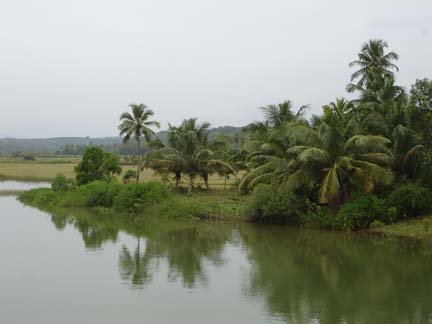
A Coastal estuary

A Coastal estuary
Holegadde near Honavar,Uttara Kannada dist, Karnataka

Copy? Right - but kindly remember to acknowledge!

Creative Commons License
This work is licensed under a Creative Commons Attribution 3.0 License.

" tulu-research.blogspot." ತುಳು ರಿಸರ್ಚ್. ಬ್ಲಾಗ್‌ಸ್ಪಾಟ್‌. ಇನ್

" tulu-research.blogspot."  ತುಳು  ರಿಸರ್ಚ್.  ಬ್ಲಾಗ್‌ಸ್ಪಾಟ್‌. ಇನ್
Have a nice day !