Contributed by Hosabettu Viswanath
Since my contribution on ‘Bailare’ (Post 120), I was thinking about the irretrievable damage done to ‘Bailare of Hosabettu (Olden name ‘Posodi’ ) and onwards. For that matter, such wanton damage is also true to Bailares elsewhere.
Genesis
Genesis of degradation of this Bailare starts from the time of construction of feeder road to Hosabettu (in late fifties) and other areas in early sixties to mitigate the difficulties of coastal people during monsoons and the creation of artificial harbour at Panambur in early seventies. This is the irony of development. Analogy may be drawn to the present-day craze of authorities in having Special Economic Zones on fertile lands. The then Prime Minister of India late Shri Lal Bahadur Shastri, who coined the slogan of “Jai Kisan, Jai Jawan”, expressed his surprise, while laying the foundation stone for the new harbour, on the sanity of choosing that fertile agricultural land to go under sea water.
Emotional attachment
Bailare is a vast low lying arable land, fed by natural water course, i.e. storm water from adjoining elevated areas around Hosabettu. This Bailare, alongside NH-17 on the West, starts from Hosabettu and now extends upto Chitrapur/Baikampady, where it is by-passed to Arabian Sea through a man-made outlet. Earlier this Bailare stretched right upto Panambur/tip of Kulur (West) before joining Gurupur River naturally. In the casuarinas’ grove (chauri pady), skirting the beach, of Pancha Catte (P.C.) House in Panambur we had a Citizenship Educational Camp (Nagarika Shikshan Shibira) some time in 1953-54. I have connection to four sons of this House. Two scions were my teachers at Iddya Vidyadayinee School, of whom I was the favourite of late PC Vasudeva Rao, third - my SSLC mate (brother of PC) and the fourth was my colleague at Century Enka (brother of Ratnakara Rao Kavoor - amateur dramatist in Mangalore). I ensconced my emotional attachment to this Bailare in a poem (Ondu Bayala Kate) to keep it for myself and tried afterwards to get it published but in vain.
Wholesale Plunder
As the adage goes, “A wilful waste makes a woeful want.” The present wretched condition of ‘Bailare’ is a burning example of how unscrupulous people cause irretrievable damage to the Nature. We hear of flooding in monsoons in all upcoming Apartment neighbourhoods in South Kanara. There are outcries and appeals by residents to stop the indiscriminate land filling of the expanse of the ‘Bailare’. Natural water courses and water-bodies are disappearing, leaving no relics. It is a wholesale plunder. It is an eye-sore to see some water-logged pockets of fertile paddy fields here and there in the midst of unplanned cluster of apartment buildings.
Note on Posodi
The old name of Hosabettu is Posodi, which is still alive in conversations among local people. But the fact, that the present day generation is not knowing, is that part of Iddya-Suratkal is also known as Posodi in records. This is vindicated in its finding an entry in the Tulu Lexicon (Vol.5, page 2152). This is further corroborated by what my chikkamma was saying. The Vidyadayinee Primary School was started at Iddya Shri Mahalingeshwar Temple in Nov 30, 1916. When own buildings for Primary & Higher Elementary and High Schools were envisaged in the present site, there were building fund raising campaigns. The team which visited Mumbai was cajoling people from Hosabettu to donate munificently as these schools are their own as it is located in Hosabettu. This is a fact that Vidyadayinee is within the precincts of Hosabettu. The house of our teacher late Shri H. Rama Rao is just touching the school premises. This information has some historical relevance and hence the disclosure. It should not be considered in a different hue, i.e. as a statement of glorification. When Iddya is considered as part of Suratkal, it came to be believed that Vidyadayine is in Suratkal. It is customary to apply the name of important place name to entire stretch of adjoining areas, eg. Mukka is now considered as part of Suratkal.
Contributed by Hosabettu Viswanath
*

A heritage blog by: Ravindra Mundkur & Hosabettu Vishwanatha
Showing posts with label Panambur. Show all posts
Showing posts with label Panambur. Show all posts
Tuesday, August 12, 2008


Friday, June 13, 2008
117. Panambur II
An amendment is desirable on my earlier interpretation on the origin of the toponym- Panambur. Based on the place name ‘Nambur’ cited in an inscription, I suggested earlier that Panambur may be an abbreviated form of Padu-Nambur.
The available data further suggests that Panambur might have been an ancient settlement of tribes called Panamb.
Pani and Panamb
ShamBaa Joshi (1967) while discussing on the early tribes of ancient Karnataka, traces the tribes called Pani (pronounced paNi) to Rigveda, dated ca.!500 BC. The Pani tribes cited in Rigveda were notorious for pestering Aryan sages. They used to steal and hide the cattle belonging to the Aryans.
Joshi mentions that Pani and Hanab tribes migrated to (present) northern Karnataka and Karavali from the Kalyan region of (present) Maharastra. The ‘Hanab’ is a later Kannada version of the Old Kannada word ‘Panab’ or ‘Panamb’
The Pani and Panamb may have been two related tribes. Signatures of both of these tribes have remained in the Karavali/Tulunadu.
Paniyadi, Paniyur.
There are several Karavali villages bearing the names of the Pani tribes such as Paniyadi and Paniyur especially in the coastal Udupi district. These could have been the ancient settlements of the Pani tribes.
Panikkars may be related to or variants of Panis, as suggested by Hosabettu Viswanath.
Panambur, Padu Panambur
Another ancient tribal group known as Panambs apparently settled around places now known as Panambur (the present location of New Mangalore Port) and Padu Panambur. So, the real derivation of the place name Panambur must have been Panamb + Oor, rather than Pa(du)+Nambur as proposed earlier. Interestingly, there is one more Panambur known as ‘Padu (=Western) Panambur’ near Haleangadi, north of the New Mangalore Port. The fact that both Panambur and Padu Panambur are along the West coast, suggests that the ancient immigrant Panamb tribes from the north preferred coastal settlements.
The place name ‘Nambur’ cited in the inscription (that refers to Panambur) may be (a) a later name preferentially used during Vijayanagar Period (b) an error caused by the inscription writer or(c) error during deciphering/ interpreting the said inscription.
With spatial-temporal evolutionary changes in the languages, the Panambs were later known as Hanabs and further as Halabs. Several places with Hanab as prefix are known in the districts of northern Karnataka. The Halabs were one of the warrior groups in the Kannada armies. They are also considered as equivalents of Halepaikas.
®
The available data further suggests that Panambur might have been an ancient settlement of tribes called Panamb.
Pani and Panamb
ShamBaa Joshi (1967) while discussing on the early tribes of ancient Karnataka, traces the tribes called Pani (pronounced paNi) to Rigveda, dated ca.!500 BC. The Pani tribes cited in Rigveda were notorious for pestering Aryan sages. They used to steal and hide the cattle belonging to the Aryans.
Joshi mentions that Pani and Hanab tribes migrated to (present) northern Karnataka and Karavali from the Kalyan region of (present) Maharastra. The ‘Hanab’ is a later Kannada version of the Old Kannada word ‘Panab’ or ‘Panamb’
The Pani and Panamb may have been two related tribes. Signatures of both of these tribes have remained in the Karavali/Tulunadu.
Paniyadi, Paniyur.
There are several Karavali villages bearing the names of the Pani tribes such as Paniyadi and Paniyur especially in the coastal Udupi district. These could have been the ancient settlements of the Pani tribes.
Panikkars may be related to or variants of Panis, as suggested by Hosabettu Viswanath.
Panambur, Padu Panambur
Another ancient tribal group known as Panambs apparently settled around places now known as Panambur (the present location of New Mangalore Port) and Padu Panambur. So, the real derivation of the place name Panambur must have been Panamb + Oor, rather than Pa(du)+Nambur as proposed earlier. Interestingly, there is one more Panambur known as ‘Padu (=Western) Panambur’ near Haleangadi, north of the New Mangalore Port. The fact that both Panambur and Padu Panambur are along the West coast, suggests that the ancient immigrant Panamb tribes from the north preferred coastal settlements.
The place name ‘Nambur’ cited in the inscription (that refers to Panambur) may be (a) a later name preferentially used during Vijayanagar Period (b) an error caused by the inscription writer or(c) error during deciphering/ interpreting the said inscription.
With spatial-temporal evolutionary changes in the languages, the Panambs were later known as Hanabs and further as Halabs. Several places with Hanab as prefix are known in the districts of northern Karnataka. The Halabs were one of the warrior groups in the Kannada armies. They are also considered as equivalents of Halepaikas.
®
Monday, April 7, 2008
107. Nagara at Panambur
Ancient Temples that contain preserved epigraphs provide interesting historical information during the study of the inscriptions etched in the past in order to perpetuate the celebration of rituals connected with the Temples.
One of such interesting historical tidbit is that Panambur, now the site of New Mangalore harbour was once also known as ‘Nagara’ from Tenth Century upto the beginning of Fourteenth Century CE.
Nagaresvara
The ancient temple of Nandanesvara located inside the Port area at Panambur was preserved intact during the construction of New Mangalore Port that involved massive displacement of the habitations in the area during the construction of the man-made harbour. The Temple also has been renovated due to dedicated involvement of local people in the recent years.
An inscription in the Temple dated 1305 CE (pre-Vijayanagar period) has described it as Nagaresvara Temple. It means that the area was popularly known as ‘Nagara’ or the city. Between the period of 10th and 14th Century CE, the coastal zone near Panambur must have been well developed as a city judging by the standards of those times. Alupa and Hoysala Kings were ruling the Karavali at that time. Since, Alupa had headquarters around Alupe, Maroli and Kulashekara areas of Mangalore, it can be surmised that Hoysala Kings contributed to the growth of Nagara around Padu Nambur. Murulidhara Upadhya and Narasimhamurthy (2000) suggest that the Panambur Nagara was an important commercial centre during the Hoysala period.
Nandanesvara
The Nagaresvara Temple may have been renamed as Nandanesvara Temple during the Vijayanagara period. During the Vijayanagara period the and township and the port was shifted southwards to Bokkapatna( Bolur) and Urwa area.
Padu Nambur
The place has been recorded as Nambur in inscriptions connected with Kadire Manjunatha Temple, Mangalore. The stone inscription in the courtyard of the Kadire temple dated ca.1386 CE corresponding to the period of Chieftain Banki Alupendra,who was ruling under the Vijayanagara King Harihararaya .The inscription mentions place names like Nambur (Panambur), Turithakali (Suratkal), Yedeya (Iddya), Kollia (Kulai) and Chitrapura (Gururaja Bhat, 1974.)
The Nambur village might have been a large village in the past and the western portion of it was designated later as Padu Nambur. The word ‘Padu’ stands for the 'West'. The word Padu Nambur has become Panambur with passage of time.
References:
Gururaja Bhat, P. (1974) “Kadri Shri Manjunatha Devalaya: Kshetra Mahatme mattu Itihasa” (Kannada).Published by: trustees of the Kadri Manjunatha temple.73p.
Murulidhara Upadhya Hiriyadaka & Narasimhamurthy,P.N. (Editors)(2000) ‘Dakshina Kannadada Devalayagalu’.(Kannada). Publication Committee of Shri Janardhana and Mahakaali Temple, Ambalapadi, Udupi, .472+76 p.
®
One of such interesting historical tidbit is that Panambur, now the site of New Mangalore harbour was once also known as ‘Nagara’ from Tenth Century upto the beginning of Fourteenth Century CE.
Nagaresvara
The ancient temple of Nandanesvara located inside the Port area at Panambur was preserved intact during the construction of New Mangalore Port that involved massive displacement of the habitations in the area during the construction of the man-made harbour. The Temple also has been renovated due to dedicated involvement of local people in the recent years.
An inscription in the Temple dated 1305 CE (pre-Vijayanagar period) has described it as Nagaresvara Temple. It means that the area was popularly known as ‘Nagara’ or the city. Between the period of 10th and 14th Century CE, the coastal zone near Panambur must have been well developed as a city judging by the standards of those times. Alupa and Hoysala Kings were ruling the Karavali at that time. Since, Alupa had headquarters around Alupe, Maroli and Kulashekara areas of Mangalore, it can be surmised that Hoysala Kings contributed to the growth of Nagara around Padu Nambur. Murulidhara Upadhya and Narasimhamurthy (2000) suggest that the Panambur Nagara was an important commercial centre during the Hoysala period.
Nandanesvara
The Nagaresvara Temple may have been renamed as Nandanesvara Temple during the Vijayanagara period. During the Vijayanagara period the and township and the port was shifted southwards to Bokkapatna( Bolur) and Urwa area.
Padu Nambur
The place has been recorded as Nambur in inscriptions connected with Kadire Manjunatha Temple, Mangalore. The stone inscription in the courtyard of the Kadire temple dated ca.1386 CE corresponding to the period of Chieftain Banki Alupendra,who was ruling under the Vijayanagara King Harihararaya .The inscription mentions place names like Nambur (Panambur), Turithakali (Suratkal), Yedeya (Iddya), Kollia (Kulai) and Chitrapura (Gururaja Bhat, 1974.)
The Nambur village might have been a large village in the past and the western portion of it was designated later as Padu Nambur. The word ‘Padu’ stands for the 'West'. The word Padu Nambur has become Panambur with passage of time.
References:
Gururaja Bhat, P. (1974) “Kadri Shri Manjunatha Devalaya: Kshetra Mahatme mattu Itihasa” (Kannada).Published by: trustees of the Kadri Manjunatha temple.73p.
Murulidhara Upadhya Hiriyadaka & Narasimhamurthy,P.N. (Editors)(2000) ‘Dakshina Kannadada Devalayagalu’.(Kannada). Publication Committee of Shri Janardhana and Mahakaali Temple, Ambalapadi, Udupi, .472+76 p.
®
Subscribe to:
Posts (Atom)
A Coastal estuary
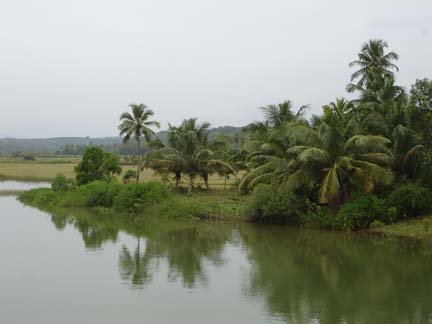
Holegadde near Honavar,Uttara Kannada dist, Karnataka
Copy? Right - but kindly remember to acknowledge!

" tulu-research.blogspot." ತುಳು ರಿಸರ್ಚ್. ಬ್ಲಾಗ್ಸ್ಪಾಟ್. ಇನ್

Have a nice day !