Wednesday, January 30, 2013

311. Reflections on a Tulu proverb: ‘On falling of a tree..!’

A Proverb (ಗಾದೆ:  Gāde in Tulu) is a simple, straight and concrete wise saying, popularly known and repeated in conversations.  “ಗಾದೆಟು ಗಂಟು ಇಜ್ಜಿ, ನೀರುಡು ಅಂಟು ಇಜ್ಜಿ” (Gaadetu gantu ijji, neerudu antu ijji) means that there is no knot in proverbs as is water without stickiness. That is to say, flow of meaning is easy to understand as is the flow of water, which is pure. It is a plain expression of truth, based on commonsense or experience of humanity.    Wolfgang Mieder, an American proverb scholar, puts it as “a short, generally known sentences of the folk, which contain wisdom, truth, morals, and traditional views in a metaphorical, fixed and memorable form and which is handed down from generation to generation.”  They are also called Maxims (Subhashtia = ಸುಭಾಷಿತ) wherein they teach the basic rules of conduct.  They are universal in nature, appealing to human mind.  All proverbs may not have the universal appeal at all times to come.  Characteristics, toned by place and period, and culture, influenced by beliefs and customs, of people of a region are well defined in its regional language. Ethnography and language are linked together when a proverb is based on ’Context of speech event.’  So a proverb gives an insight into a Society’s outlook as regards to values and beliefs.
Tulu Paremiology
Folk knowledge, permeating down the ages, has crystallized to a specific meaning over a period of time. Paremiology, i.e. Study of Proverbs, has not developed in Tulu to the standards as in other languages.  Collection of Proverbs (Paremiography) of Tulu is available in book form here and there, giving basic meanings.  There is no such book, which gives a critical analysis.   There is no dearth of proverbs in Tulu language.  Many of the Proverbs are encapsulated in the Tulu Lexicon (TL) while highlighting usage of certain words.
ಮರ ಬೂರುಂಡು, ಪಕ್ಕಿ ಪಾರುಂಡು
The above Tulu proverb (TL page 2520: transliterated herein:  ‘Mara Burundu, pakki parundu’) has been engaging my mind for a long time. On word to word translation, it means: “Tree fell; birds flew”.
 This is a natural phenomenon.
From Cause to Effect (A-priori)
It is a general knowledge that birds fly when a tree falls.  We are not concerned about how a tree has fallen but from the cause of a tree-fall, we can come to instance of birds flying.  It is a valid statement, independently of observation.
From Effect to Cause (A-posteriori)
Birds flew. It is a particular instance to a general principle of law.  It is based on actual observation.  When and why birds fly?  From the evidence, a theory or a general principle is drawn.  They fly either in search of food or when they are chased or deprived of their shelter. How they are deprived of their nest?  It could be that the tree has fallen naturally or is felled by human intervention – rightly or wrongly.
True Propositions
Falling and flying are two propositions.  Falling of tree, for various reasons, is true.  Flying is also true, subject to circumstances. On the event of a falling tree, we can envisage harmful repercussions from environmental and economic angles.
Allusion
This Proverb evinces allusion or comparison.  In a village setting of Tulu Nadu, guided by matrilineal system, this natural event is alluded to death of a husband when his wife leaves her in-laws house and returns to her maternal home with her children, to be taken care of. Matrilineal system is prevalent in Tulu Nadu. In the extant system, she has no rights of properties of her husband’s ancestral properties (barring husband’s self-acquired properties and the present legal laws of the country).
Bhutala Pandya’s Kattu-Kattalegalu (Injunctions)
The Tulu proverb, under study, has universal appeal, even though it applies to Tuluva Culture.  The custom is one of the injunctions of Bhutala Pandya (as codified in Bhutala Pandya’s Kattu Kattalegalu, i.e. Codes of Conduct).  It safeguards the economic security of women in Tulu Nadu. In patriarchal society, family-line continuity is ensured by male child.  Women’s economic security is suffering here under male dominance.
During British regime, Courts of erstwhile Madras State refer to Bhutala Pandya’s Law of Aliya Santana to answer disputes of right of property and succession in extended South Kanara of those days. Female members are heirs and are bound to be maintained irrespective of the fact that eldest male looks after the administration of ancestral properties for all practical purposes (even though there have been breaches of trust). A girl is taken to family fold even in cases when she is going astray.
Many books are available on Bhutala Pandya in Kannada for the story of heir-ship ordained to be given to Deva Pandya’s sister’s son instead of his own sons.  Translation (by B. Ramaswamy Naidu, 1872, of original books), is available in Google e-Book (though there are omissions/garbling at places).
Social Codes of Conduct
In pre-societies, woman was both a bread-winner and a householder and caretaker.  Her position is a predominant one and she takes part in all activities of a household.  This system has landed down from the early hunting stage to the present day in various societies. Woman takes part in farming and other ancestral trades or professions, besides rearing her children. It is very much prevalent in Tulu Nadu even today.   Rahul Sanskritayana tells a story of such a system in his Story Book: ‘Volga to Ganga’ (Note: There is a Kannada translation of this Book).  Elsewhere, a woman is considered as a ‘housewife’ and man as a ‘bread-winner/earner’, even in industrially developed countries some years ago.
Economically Conditioned
The present-day woman is doubly burdened in spite of economical independence. Besides having primary responsibility of house-stead chores, she works outside in schools, hospitals, offices, factories, scientific and social organizations, etc.  Generally, she is exploited, while competing with male dominated socio-economic spheres and has to content with low-paid jobs (barring certain exceptions).
This is valid even in industrially developed countries. She has to be a ‘housewife first’ and then a ‘wage-earner’.  These days Internet based matrimonies, seek ‘homely brides’ but in the end hunt for working girls with transferable jobs, preferably with heavy purse.
When the Last Tree is cut…!
Environmental Disaster: When I was thinking of writing on the subject, I came across a letter to ‘Quote Investigator’ in the Net seeking whether the originator of the following Proverb is Alanis Obomsawin, Prophecy of the Cree Indians, Osage saying, Sakokwenonkwas, Greenpeace, Anonymous, Apocryphal or not:
“When the last tree has been cut down, the last fish caught, the last river poisoned, only then will we realize that one cannot eat money”
The disaster is conceivable.
ELF: There was film ‘If a tree falls’.  It is story of Earth Liberation Cell (USA) - its rise and fall.
Falling Tree & Human Stress Syndrome Effect
“Even though plants do not show any change to the naked (or lensed) eyes, when a human is in their presence, systematic biological changes have been discovered that have grave effects on plant life when a person is within 300 metres.  This effect is Human Stress Syndrome.” (q.v. www: getodd.com)
When a tree is about to fall and if a human is around, cell walls of the tree get brittle because of Human Stress Syndrome and it falls with a familiar sound.  If a tree falls in a forest without the proximity of human, it does not make a sound. The sound is due to Ultraviolet gas emitted by human stressed trees. Lumber without human stress effect is spongy and hence not very strong, thereby rendering it unfit for building.
Summing up
In India, there are many laws now on women’s liberty, empowerment, domestic violence, dowry deaths, molestation, etc.  A girl is not safe irrespective of these laws.   The economic freedom of women is prevailing even today in Tulu Nadu in spite of demerits of the decree of Bhutala Pandya.  A woman is taken care of by her husband after marriage and is helped by her maternal family when in need.

-Hosabettu Vishwanath (Pune)

Thursday, January 24, 2013

310. A treatise on Kanaka dasa’s ’Hari bhakti sāra’

 It was a pleasant surprise when Narayana A. Bangera (NAB) called me up when he landed at Chinchwad Railway Station on the evening of 4th January from Mumbai and gave me a complimentary copy of his Kannada Book: ‘Kanakadasara Haribhaktisara Vyakhyana Male’.  He was on his way to Brahmasthana at Nigdi, Pune, where Mata Amritanandamayi, popularly known as ‘Amma’ (Mother) was scheduled to give audience to her devotees on 4th and 5th.
NAB’s exposition of ‘Haribhaktisara’ is being serially published from October 2009 in ‘Mogaveera’, the oldest Kannada Monthly from Mumbai. These articles are also published in ‘Bantaravani’ and ‘Amulya’ in Mumbai.
My introduction to ‘Haribhaktisara’ goes back to 1950’s when I was in 5th Standard at Iddya Vidyadayinee Higher Elementary School (Suratkal).  Subbanna Rao (popularly called ‘Subbanna Master’) was in charge of Stationery Shop of the School in a separate Hall (Building). He taught us cotton thread spinning by using ‘Takali’ (Hand spindle, a device with slender rod having circular metal base) and ‘Charaka’ (Spinning wheel) in our Craft periods there. Once he distributed to students unbound printed sheets of Haribhaktisara, which lay discarded in a corner.  Cutting the paginated sheets, I made a palm-size booklet and used to recite these songs, though not fully graspable at that age. Later on, I purchased a printed Book of Haribhaktisara, which also contained other devotional songs of Kanakadasa at Vidyanidhi Book Store at Fort, Mumbai.  I have lost this book some time in 1970 in Pune (when I loaned it to a friend). I memorize often some of the songs (though some stanzas in tidbits) whenever I am in bubbling spirits or am despondent. The stanza, soliciting news of well-being of delicate feet of the Lord, is my favourite one (q.v. Page 137 of this Book).
Prayers
It is true that we get solace and peace by praying God for favours - either materialistic or spiritualistic. His Holiness Sri Swami Shantananda Puri of Vasistha Guha (Himalayas), in his Booklet “Answers to Basic Spiritual Questions of Sadhakas”, says:
“Prayers are in effect talking to God……Those who are constitutionally more emotional and those who find themselves unable to sit in Japa or meditation will find prayers as an easy method to keep the mind engaged in God and to develop concentration.”
Haridasa Tradition
In Srimad Bhagavatam, the Title of ‘Haridasa’ is given to three persons – Uddhava, Yudhishtira and Govardhana Giri (Mountain) (q.v. Uddhava Geet in Shrimadbhagavatam/11th Skandha Part).  They are Bhaktiyogis as opposed to Jnanayogis and Karmayogis. In Bhagvad Gita (Song Celestial) Bhagavan Krishna is both the narrator and the subject himself. He brings out the subtle difference in Jnanayoga, Karmayoga and Bhaktiyoga – the Three Sadhanas (Paths) to Liberation.  One who is detached from actions chooses Jnanamarg (Path of Knowledge); one who is attached to mundane life with desires and activities are entitled to follow Karmayoga. So Lord Krishna taught Karmayoga to Arjuna.  Those who are neither detached fully nor so much attached to activities follow Bhakti Yoga.  In Bhakti Yoga, the aspirant takes delight in Plays (Leelas) of God and surrenders at the altar of service to God by doing virtuous deeds and eschewing bad ones.  Kanakadasa belongs to the Bhaktiyoga Paramapara (Tradition) as his contemporary Purandaradasa.  So also NAB is a devout devotee of Lakshmi Narayana and Amritanandamayi. 
Quintessence of Devotion
“Dig deep to get gold”. This is a simple and popular proverb. Narayana A. Bangera‘s expounding of the poetic work of Kanakadasa:  ‘Haribhaktisara’ (Quintessence of Devotion to Hari, the Protector) is proverbial. He brings out the nuances of each stanza in his own style of discourse.  His deep knowledge is reflected in the lucid exposition of each stanza.  To a layman, the words of praise of the God look similar in meaning but NAB dips deep into mind-ocean of Kanaka to gather shining thought-pearls of varying hues.
A peep into the Book
The Book has 34 Chapters.  This is the forerunner for the remaining Volumes to come. 
Heart Opens from inside:
The Book starts with the Chapter: Kanakana Kindi.  It relates to the event, which took place during his sojourn in Tulu Nadu.  When at Udupi Shri Krishna Temple, Kanaka, being low born, was denied the view of the Deity from the main entrance on the eastern side and chased away.   He prays ardently, singing the glory of Shri Krishna and seeking his compassion, outside the Temple on the western side.  This spontaneous and soulful singing of 108 stanzas is the genesis of ‘Haribhaktisara’.  This fervent prayer – a concentrated mental energy – makes a rupture in the west wall of the temple and moves the idol from east-facing to west-facing.  This wall opening is converted into a window with meshed holes and is immortalized by naming it as ‘Kanakana Kindi (Window of Kanaka).  It is a custom to peep from this window to have a first darshan (view) of the Deity even today.  It is a part of Tulu History, entwined with ‘Madhwa Sampradaya’. 
It reminds me a story ‘Heart Opens from inside’, told by HH Swami Shantananda Puri in his Book:  ‘Stories for Meditation’.  At a certain Haridwar Ashram, a Swamiji entrusted a famous painter with painting a picture based on scriptures on the double doors of the meditation hall.  He painted a human heart on the two doors with Krishna waiting outside playing flute.  On completion of the work, the Swamiji came, with an equally famous foreign painter, to inspect. The visiting painter lauded the painting as ‘excellent’ but pointed out the omission of handles outside to pull the doors.  The Indian painter quipped spiritedly, “Sir, I pity your ignorance.  The human heart opens from inside.  When you open your heart to the Lord by praying and calling Him with real longing and intense devotion, He walks in.”  The Swamiji endorsed the statement by nodding delightedly.
Volalanke > Mulike:
The Book also mentions the sojourn of Kanaka to Shri Venkataramana Temple at Volalanke.  He renames Volalanke as ‘Mulike’, now known as Mulki (Read Post-305/18.10.2012).
Epithets impregnated with Stories
According to the inner meanings of the stanzas, the Chapters are sub-titled aptly.  Each Chapter unveils many parables and stories hidden in Scriptures and Epics – not known or now forgotten.  Tulu Nadu is a land of “Yakshagana’.  So an aspiring Yakshagana artiste can do well by possessing a copy of this Book in his armour (to give witty replies to his opponent).
Sociology
NAB draws parallels to behavioral patterns of the past and the present.  He also points out the digression of present generation (Among other things, see pages 137 to 141).
In the Chapter “Aditya Hridaya, Valakhillaru” (Page 43) NAB narrates the story of ‘birth of Aruna and Garuda’, who became the charioteer of the Sun (Surya) and carrier of Lord Vishnu respectively.  Kadru and Vinata, both the wives of Sage Kashyapa, are sisters.  Their jolousy is highlighted in this Story.   NAB makes a social picture of Tulu Nadu where a sister loves and fondles children of her sister and vice versa still today.
Kulaguru Rama Panji (1844-1908)
The Book is rightly dedicated to Late Kannangar Rama Panji, who was instrumental in starting ‘Shrimadbharata Mandali’ in 1878, a foremost institution of Kannadigas in Mumbai.  It is a religious institution, to inculcate devotion to the God (Shri Lakshminarayana) on the lines of Dasa Paramapara.  It conducts Bhajans (Singing of Devotional songs) and discourses on Scriptures and Religious Epics periodically. NAB is one of the narrators during religious recitals.  Now the Shri Lakshminarayana Temple is located at MVM Educational Complex Road, Off Veera Desai Road, Andheri (West), Mumbai-400 058.
Blessings & Compliments
Prologue by Tonse Vijayakumar Shetty of Kala Jagat Group is informative. Blessings and compliments from Pujya D. Virendra Heggade of Dharmasthala Temple and other dignitaries vouch for the greatness of the Book.
Publisher
The 300-Page Book is published by Mogaveera Yuvaka Sangha (1934), 46, Veera Nariman Road, Islam Building, 2nd Floor, Fort, Mumbai-400 023 (Phone: 022-22880057).  It is priced at Rs.250.  The Book is also available with the writer:   Mr. Narayana A. Bangera, 4, Rajguru CHS, Gupte Road, Gaondevi, Dombivli (West)-421 202/ Dist. Thane/Maharashtra. (Cell: 09819778727, Tel: 0251-2403151)
Brief Sketch of the Writer
Mr. Bangera was born on 10th February, 1939 at Mitrapatna of Mukka-Suratkal, Karnataka. Studied at native place and Mumbai and is a Commerce Graduate.  Became Kannada Pandit under guidance of Suratkal Subbarao and Ramachandra Uchil.  Taught in Kannada Free Night High Schools (of Mogaveera & Kanara Vidyadayini) and was also a Professor of Kannada at M.L. Dahanukar College, Mumbai. Retired from Air India after a meritorious service of 40 years.  Being good orator, he is an interpreter and narrator of holy epics (ಪ್ರವಚನಕಾರ) over 50 years at Shrimadbharata Mandali of 135-year standing.  He contributes regularly articles in Mogaveera Kannada Monthly and other Monthly Magazines. Besides the Book under review, he has written Nelli Tirtha Kshetra Mahatme, Kandevu Kshetra Mahatme (Prose), Shri Satyanarayana Vrata Katha (in Kannada Vardhika Shatpadi).  Tuluvara Maranottara Kriye, ‘Naga Charitre’ is under print (earlier published in Mogaveera serially)
Conclusion
At places, the exposition seems discursive.  Nevertheless, it falls in line when taken in totality.  The Book will be a valuable addition to one’s library.
-Hosabettu Vishwanath (Pune)

Sunday, January 20, 2013

309. In search of Satiyaputo: the Siri Times


The Siri paDdana, possibly the only major remains of the Tulu Sangam literary Era, is one of the important historical accounts useful in tracing antiquity and environs of early Tulunadu. No doubt, the oral genre could naturally have been modified through passage of time as and when transpired from multitudes of ear to mouth deliveries since its first composition. Still the essence of the oral poetry is indispensably useful in establishing several early historical aspects of Tulunadu, especially the extent of coastal lands and cultural centers of those days.
Priyadarshini King Ashoka erected stone epigraphs in borders of his kingdom to spread his benevolent message among his subjects. The text of the epithet is in Prakrit/ Pali language that indirectly suggests that Prakrit and Pali coexisted with early form of Tulu at that time. This also explains the incidence/occurrence of numerous Prakrit words in Tulu.
The epigraph mentions southern Indian city-states of those times among which Satiyaputo has been considered to represent early Tulunadu.

Satiyaputo= Saccherapete
The name of city- state of Satiyaputo mentioned in King Ashokas edict suggests that Pali -Prakrit was the common language in this land at the period ca 300 BC. There are no towns or region in Tulunadu now that is called something like Satiyaputo. However it seems the ‘Satyanapura’ mentioned in Siri paDdana seems to be the modification of the place cited as ‘Satiyaputo’in Ashokas edicts. The Pali word ‘puto’ refers to ‘pura’ in Sanskrit/Prakrit. The common language of the region also might have changed with passage of time and Satiyaputo or Satyapura became Satyanapura.
The Position of  West Coast and the  beach line during the Siri time dating back to about 300 BC

Saccherapete: town of Spirits
In the present day village of Bola there is no evidence of any Satyanapura. However a hamlet on the border of Bola village known as Saccheripete deserves attention. It appears hamlet/town now falling within the limits of Mundkur village is also referred to as Saccherapete or the town of Saccher. The word ‘Saccher’ is plural form of ‘Saccha’. The word Saccha (equivalent of Satya, the truth) is apparently from derived from Prakrit (as we find the usage of ‘saccha’(=truth) in current Hindi also).In Dravidian languages the plural sense (like ‘Saccher’ for ‘Saccha’ is also used as a honorific form or respect to a noble person, soul or divinity. Further, the word 'Eri,' in the place name Saccheri, possibly refers to a ridge, a raised land or a river bank (as in usage 'mogaru'). Thus the overall meaning of the word Saccheri might have been the Ridge of the Dead, like the Sindhi word Mohenjodaro. The Ridge of the Dead probably was named after an incident of calamity where many people could have lost their lives.
It is well known that in Tulu culture the holy Spirits are worshipped devotedly since antiquity and referred to as ‘Satyolu’ (or respectable true beings or everlasting forms) because our ancestors considered that Spirits (or the soul) is indestructible even after death.
2. Alternately, the word Saccheri might have been a corruption of the usage 'chitteri' which refer to ancient Buddhist tombs (Chaitya) from the period of prevalent Buddhism in Tuluandu, where Chitteri housing Bermer and other Spirits/divinities  were worshipped during the period before the evolution of Temple cult.
Some Inferences
In the light of overall discussions, a few significant inferences are feasible:
1. The town of Saccheripete was named after Spirits. The Spirits now commonly designated  as  Satyolu were known as Saccher in earlier parlance..
2. The ancient town of Spirits, Saccheripete was also known as Satiyaputo and Satyanapura at different periods of early history of Tulunadu.
3. In the early history of Tulunadu, Pali and Prakrit words were in prolific use.
4. The earliest version of Siri paDdana folklore could have been a admixture of Pali-Prakrit and early form of Tulu.
5. The original composition of Siri paDdana (ca 200-400 BC) probably marks the transition of culture and language in Tulunadu from the older Munda-Pali-Prakrit milieu to an early form of Tulu-Dravida.
6. The essential meaning of the word Saccheripete has some parallels with the Sindhu cultural place name of ‘Mohenjodaro’ (=the ridge of the dead).
®

Saturday, January 19, 2013

308. Singadana – A Sacred Seat


‘Singadana’ is a word in Bhutaradhana, a traditional ritual of Tulu Nadu.  Its significance is not known to all. As said in Post-250: From Olasari to Varasari, there is a subtle difference between ritual and religion.  Religion is a system specific belief.  Rites rituals are a set of symbolic actions.  Religious rites are religion-centric.  Traditional rituals are landed down from pre-societies, centred around hero-worship.  So Bhutaradhana is a classless ritual.  This explains why Jains, Brahmins and others espoused these reverential rites of Tulu Nadu.
‘Singadana’ rhymes with ‘Simhasana’.  Simhasana, a Sanskrit word, means a throne of king, borne by Simhas (Lion forms).  Singadana is a Dravidian word, meaning a sacred seat made of ‘singas’ (horns). This is comparable to Singapore,  that is a country in the shape of horn. Splitting the word, we get Singa (horn) + da (‘s or of) + ana (raised seat), that is a Horn’s seat at a height.  Dictionary meaning is “A decorated seat of three compartments or steps, set for keeping the idols, masks and other objects of worship in Divine Spirit Ritual (Kola/Nema)” (Tulu Lexicon P-2935).  Thus, it is ‘a sacred seat’.
Dharma Shastara
Narayan A. Bangera of Mitrapatna tells an interesting story surrounding this Singadana (q.v. Mogaveera-May 2012).  The mighty Mahishasura usurps Devendra’s throne in Heaven.  So all the Devas go in hiding but the women are left behind. Voluptuous Mahishasura tries to spoil the chastity of Sachi, the wife of Devendra.  She prays ‘Shastara’, the formless entity of Shrimannarayana.  Spurned by her and afraid of touching the meditating Sachi, he sends his sister Ajamukhi – a woman of giant body with face (mukha) resembling ‘Aja’ (Goat) with horns. Ajamukhi approaches Sachi as a beautiful lady and persuades Sachi to marry Mahishasura.  Sachi soon realizes the true nature of Ajamukhi and appeals to the formless God to appear and save her.  God appears in the form of ‘Dharma Shastara’ (Strict and Stern Disciplinarian, upholding Dharma, i.e. Justice).  He kills Ajamukhi by breaking her two horns where her soft and secret point of life is located.  He sits in a meditating posture on the structure made of horns (Singada Mantapa) with his back leaning against the body of Ajamukhi.
Babbarya
N.A. Bangera told this story to his son-in-law Yashodhara on the eve of annual Babbarya Nema at Mitrapatna (05.04.2012), while explaining the decorated 4-compartment structure ‘Singadana’.  It may be noted that Babbarya – Bappa+Arya - (not Bobbarya) is Dharma Shastara of Tulu Nadu, equated to Dharma Shastara of Kerala,  Babbarya is worshipped in every village by all and especially by Mogaveeras in the coastal belt.
(Courtesy: N.A. Bangera)
Hosabettu Vishwanath (Pune)

Wednesday, January 9, 2013

307.‘POOKARE’: A Ritualistic Worship of Paddy Field

There are several customs and rituals practised in agrarian society in India, some resembling to practices in Tulunadu.  There are rituals, which are very specific to Tulunadu, such as Kambala, Pookare, Karangolu, Kangil or Kangilo-Mayilo, etc.  Now-a-days, these ritualistic dances are evolved as performing arts and are staged in theatres by artists in villages and urban areas alike.
Pookare (ಪೂಕರೆ)
Pookare is associated with the buffalo race known as Kambula (Kambala). The Kambala is a religio-social function.  (Post-276; April, 2011).  This article is to give some more insight into the significance of Pookare.
Tulu Lexicon (p.2087) explains the word meaning as “an ornamental post decorated with flower set with specific rituals in some selected paddy fields and fields of buffalo-race to ward off evil spirits”.  This ritual is evolved into a dance form, in which people worship Mother Earth before starting agricultural operations. We may recall that a ‘Pookare’ dance is staged on 11th March, 2011 on the eve of World Kannada Conference held in Belagavi (Belgaum).
Pookare Kanda means a dedicated paddy field where this ornamental ‘Pookare' Post is erected for Kambala event or for remembering the dead of family.
‘Kare’ (ಕರೆ) : ‘Kare’ generally means an edge or border or shore of sea or bank of a river.  It also means a boundary of a paddy field.  In particular, it means a track laid in an agricultural field, earmarking it for annual buffalo-race or planting the Post or Staff.  It is a narrow stretch of low-lying slush field, apportioned with ridges on both sides along the track.
We learn from news in vernacular newspapers, like Udayavani, etc., that college girls of Nalanda College, Perla, Kasargod District, are acquainted with the technique of Paddy Plantation under National Service scheme.  One such event took place recently in Pookare paddy field, owned by Battunni Master at Sheni, Enmakaje Grama Panchayat.  
Paniku Kulluni
Word meaning: ‘Paniku’ (under water drop, i.e. dew) ‘ Kulluni’ (Sitting, i.e. in open field at night when dew falling is common). It is a ritual of guarding of the field designated for buffalo race (Pookare Kanda) on the previous night against evil spirits as well as against evil intentions of miscreants of rival manor houses or other landed gentry. Members of the scheduled community sing, beat drums and dance throughout the night after worshipping their deity in the night, exposing themselves to the mist of night (q.v. Tulu Lexicon P.1923).
Stealing of Pookare
Pookare, the ritualistically decorated and venerated Pole/Staff is planted on the field to declare the consummation of buffalo race. It is considered as a protector against evils and harbinger of prosperity in the form of a good harvest. It is a centre of attraction and hence a coveted piece.  The splurge and pride speaks for it. Envious manor houses used to steal such Posts, making the owners to guard it even after the racing event. (q.v. e-Book of Castes and Tribes of Southern India Vol.1 Page 16 on Bants)
A serious Concern
The area under cultivation is dwindling day by day in Tulu Nadu owing to rapid industrialization and urbanization, thereby affecting Pookare Kandas and also the agricultural related customs and rituals. These days the Kambala Committees are coordinating the Kambalas, which is a welcome sign but the old pomp and pelf is missing.
-H. Vishwanath 

Thursday, December 13, 2012

306. Mayandaal Spirit


“
All wonder is the effect of novelty on ignorance”, says Samuel Johnson, a well-known British Author and Lexicographer (17th C). When we consider Faith, could we say, “Ignorance is bliss”? Another British Author and Statesman, Lord Chesterfield (1694-1773), exclaims, “History is but a confused heap of facts”. Could we afford to dismiss all PaDdanas, revolving around Divine Spirits of Tulu Nadu- manifest or living beings who attained Godhood on Death - as mere legends and not historical facts?Answer is in the negative. This is vindicated by the Tuluva way of living and tradition even today. These Tulu oral literatures are compared to Tamil Sangam literature by ethnographers and linguists and hence the surge of well-researched books on mystic beliefs and rituals, underlying the Tuluva psyche irrespective of caste and creed.
Mayandaal PaDdana is a part of Jumadi PaDdana. Annual ritualistic celebration is held wherever Jumadi is worshipped – in manor houses (Guttus) or other households and shrines of village or cluster of villages.Popularity and propagation of Mayandaal cult is a matter of study.  The changed values – intellectually, socially, economically and scientifically – make it all more interesting to know the guiding force for the spread of the faith among women of Tulu Nadu.

Etymology

In the Pantheon of Bhutas (i.e. Divine Spirits) of Tulu Nadu, the female ‘Bhuta’ by name Mayindaal >Mayanadaal is a powerful Spirit. Etymologically, it is split as ‘Maye+ind > Maya+anda (Mystical Spirit) +aal (She who is), literally meaning ‘She who attains, on mysterious death, divinity in invisible world in sky or space’.  It is Mani Baale who is spirited away to the Realm of Mystery (Invisible Mayalok) by the Deity Jumadi aka Dhuamvathi. She is also known as Mayandamani and Mayanda Baale.  She is worshipped by women for natural delivery without any complications and also for good health of new-born (qv. Tulu Lexicon p.2516).

Pedimana (Childbirth)
It is not out of place to depict a tradition followed in Tulu Nadu, during delivery and convalescence in olden days (and in some far-flung villages even now). In a joint family system during earlier days, an utmost care is taken of a pregnant woman.  An elderly woman of the village does the act of a Padeti (midwife). She is called for when labour pains sets in.  She is mostly without schooling but is highly skilled by dint of practice and age. There is a saying in Tulu: “Pattu peddinalegu onji peddinalu buddhi pandoluge (A mother, who delivered once, gives advice to a mother, who has given birth ten times)”  The advice does not carry weight as the experience of ten-times mother is more than the one-time mother.  This midwife offers free service and hence she is a respectable figure in the village. A ‘Nele’ (hanging line) is made by tying a rope or cloth (invariably a saree) across the beam in the delivery room.  This hanging support (kayinele) is held by woman in labour pains to help putting push-pressure.  This whole event is enacted by a ‘Maadira’ (Dancing girl) of Nalke families, who swoop down a village whenever there is any ceremonial ritual (Bhuta Kola/Nema) or temple festival. Enacting of folk song of agony and ecstasy of childbirth is worth watching (even though it is vitiated by lewd remarks by elderly onlookers).  Brought up in a rural setting, I had witnessed such performances.
Main Story
Central story revolves around the historical figures of Pangala of that time.  They are: Pangala Bannara, the local feudal lord, his errand-boys, tenants of the area under his control, specifically Alibali’s household and his niece Mani Baale and midwives taking care of her, baby of Mani Baale, Sooth-sayer Bhahmin, and Jumadi Daiva (Divine Spirit Jumadi), who spins the events to unfold.  The household of the Chieftain is afflicted by a new Spirit.  Cattle of his cattle shed are falling sick and dying.  He calls for the sooth-sayer (Balmeda Bhatru), who declares that the Bannara’s house is haunted by Jumadi, who wants him to worship and propitiate it. He decides to hold a ceremonial ritual (kola/nema) by raising a shrine for the Deity in his manor house. He sends errand boys to collect the obligatory contribution of one tender coconut (bonda) and one tender coconut leaf to make a costume of fronds (siri) from each house of his subjects. It is also customary to donate arecanut flower (Pingara) on such occasions. All but one obey the orders of the king.  Alibali Nayaka refuses to give and haughtily conveys his intention by uttering:  “For one ‘bonda’ and one siri, I will send one, kayerda kayi (nut of strychnine tree) and mundevuda oli (thorny leaf of a screw pine tree).”Alibali sends these articles on the night of the nema and Bannara refuses to accept.  Bannara reports these words to Jumadi during the nema.  Jumadi assures him of punitive action.
Jumadi in the guise of Pangala Bannara visits Alibali’s house.  Standing outside the threshold of labour room of Mani Baale, the maternal niece of Alibali, the Deity asks her to bring a burning cinder (kenda = lighted coal). (Note: Match sticks were scarce then and so it was customary to carry cinders from haves by poor householders to light their hearths). She entreats that she cannot come out as she is in confinement having given birth to a baby and is under puerperal treatment under the care of her household elders and midwives. She suggests waking up any one of them but the Deity commands not to do so but to herself come out to give the cinder. The Deity spreads a spell, sending her household to deep sleep. As soon as she steps over the door-step to give, Jumadi abducts her into Spiritual Realm of Divine Power (Maya).  Mani Baale wants her baby too, so both get ‘Maya’ Form. 
Mysterious disappearance of Mani Baale and her child saddens Alibali.  He hears the echoing words of his niece lamenting: “For one siri and bonda’you have cut the family tree“.  (In matriarchal system girl is instrumental in continuing the family line).  He repents for his insubordination and sends the ceremonial things to the arena where the Kola to Jumadi is taking place to please the Deity.  Bannara in turn rejects his offerings in vengeance whereupon Mani Baale, now with Divine Powers, sits in judgement to right the wrong.  She vows to cause the same pain which Bannara has inflicted on Alibali so as to uphold the dignity and right of a subject. She abducts Bannara’s niece and also her child (as told in some version of the PaDdana) in like manner.  From thence the cult of worshipping Mayandaal comes into vogue and the mask of Mayandaal is found seated with Jumadi. This is the gist of the main story, which is expanded or changed to suit the occasions.
There is difference in between singing in agricultural fields and actual singing by traditional performers during Kolas as is generally observed and as is studied in depth by Peter J. Claus, Professor of Anthropology & Asian Studies.  Story of Mayandaal is entwined in Jumadi PaDdana but Kolato Mayandaal is held along with the main Kolas for Twin Brothers Koti and Chennaya and other deities at various Garodies (Guru Mathas, i.e. Teaching Centres for martial arts). They are Billava Heroes, popularly known as ‘Brahma Baidarkulu’. Social structure or system of those days comes into picture here.  It is based on principle of Suzerain (Dhani, i.e. Feudal Lord) and Vassals/Tenants (Uligamanya).  On this background, we assume that Alibali, the Land Tenant, belongs to Billavas, a preponderant community in Tulu Nadu.  As a community affinity, Mayindaal is considered as sister of the revered heroes, who worship Bermer.  This may be the plausible reason for relating the legend to Koti-Chennaya legend.

Emotional & Psycho-medical aspects
Emotions, attached around childbirth, are ecumenical.  It is a touching situation, concerning all women.  They identify their condition with that of Mayandaal.  Attendant agony, ecstasy and perils of pregnancy, make them to look up at Mayandaal as succour in their distress.  Jumadi is considered as reincarnation of Goddess Parvatiand Mayandaal as ‘Annapurne’, another attribute of Parvati, meaning ‘Protector and Sustainer). Divine Feminine aspect has a psychological comfort-feeling effect to medical problems.  Mayandaal and Siri cults are regarded as examples of this faith healing.
It may be interesting to know that some of the Divine Spirits manifest in bi-sexual form.  Simple-hearted devotees worship the Male form out of reverential fear.  It is observed that traditional Bhoota dance impersonators draw moustache and keep breast form on left side.  Kodamanitaye is considered as Chamumdeshwari, who came from Mysore  to bless her devout devotee Kenjanna Alva, the feudal lord of Kodaman Guttu  in Belthangadi (C 17th C), who could not go, as usual, to Mysore  for Dussera festival owing to sickness.

Puttu-Parapu of Daivas
Most of the Divine Spirits (Daivas) are manifestation or incarnation of Ganas of Shiva.  All these Daivas have   a ‘puttu’ (origin) and ‘parapu/paraad’ (spread by wandering or proliferation with same names or with added names of village/s and/or household (eg.  Shrines/Temples of Adve Garody, Kanajaru Guttu, Mijaru Guttu, Kombady, Mammer Thota,  etc.).  PaDdanas go on adding miracles and heroic deeds, played by these Deities to punish the guilty and to uphold justice (Dharma).  It is no wonder that cult of Mayandaal is spread to length and breadth of Tulu Nadu.

Conclusion
These days we hear about ‘Birthing Sanctuary’ for water birth under water, hypno-birthing for stress-free birthing, ecstatic birth or orgasmic/Let go birth and Lotus birth.  In the Lotus births the placenta is kept connected through the umbilical cord to the baby until the baby is ready to disconnect from it naturally.  Now-a-days, career women take the help of Egg-freezing Techniques to store their Ova for later use.
Contrary to the above, the memory is still ripe of tragic death of Savita Halappanavar on 14th November in Ireland for denied medical remedy of early termination because of Government ban on abortion.  Miscarriage and septicaemia, complicated by bleedings noticed from early stage of pregnancy, cost the life of a young woman.  The medicines at last stage could not save her.
What remains to be seen is why Bhutaradhana (Worship of Divine Spirits) has taken deep root in Tuluva Psyche in spite of modern trends.

Suggested Reading:
·         Our Posts-250, 233, 97, 94, 35, 62.
·         Peter J. Claus’ Research Papers and Book on Possession Cult of Tulu Nadu
·         Folk Rituals by Dr. U.P. Upadhyaya & Dr. (Mrs.) Susheela Upadhyaya & its Book Review by S.N.D. Poojary


-Hosabettu Vishwanath (Pune)

Thursday, October 18, 2012

305. Mulki: An Emerged Land


Mulki is an unassuming small coastal town located midway on the National Highway 66 (formerly NH17) that connects the port city of Mangalore with the temple town of Udupi along the West Coast. It is located on the southern bank of the West flowing River Shāmbavi. The name for the town of Mulki was said to have been given by the Kanakadasa (ca.1508-1606 CE), a renowned proponent of Bhakti cult in Karnataka. Kanakadasa introduced the place name Mulki in the 16th Century CE for a place earlier known as Volalanke. Mulki was ruled by Samantha chieftains, whose inheritors still remain in the present day as landlords in the area.
The Shambavi and Pavanje Rivers and theVillages around Mulki Town.

Somewhere in the period of 7th or8th Century CE, a Muslim merchant from the Beary community, faced an acute problem   as his merchant boat laden with rich goods was struck at the Port of Volalanke. Someone from the locality advised him to pray to Goddess of the area Bhagavathi/Durga and build a temple in her honour. Merchant Bappa prayed to the Goddess and that he would build  a temple in her honour if his boat was  salvaged from the rough weather.
The edicts of King  Ashoka,  ca 3rd Century BC, refer to Satiyaputo   which can be correlated with legendary Satyanapura documented in the Siri PaDdana. The Eastern part of Mulki is the fabled domain of legendary lady Siri  comprising the present villages of Mundkur, Bola, Kadandale and Kallamundkur. Further,the legend of Parashuram essentially envisages a major event of retreat of the Sea and emergence of land in the west Coast of India (known generally as ‘regression of the sea’ in geological parlance). Combining these anecdotes we may infer that Siri legend predates the legend of Parashurama.

Recent geological studies coupled with analysis of the available scanty historical data by this Tulu research team reveal that Mulki is part of the coastal strip of land that emerged from the Arabian Sea approximately during the beginning of the Common Era. However, the natural process of emergence of land from the Sea has been metaphorically attributed in the prevalent coastal legends of the West Coast of India to the miraculous feat accomplished by mythical Lord Parashurama. Similarly the flow path or position of River Shambavi has altered and indications suggest that the river has migrated laterally towards North in the recent history of the Coast. We shall discuss some of these interesting historical aspects in the light of our recent studies in this post.

Volalanke- Mulki
Writer Narayana A. Bangera in his Kannada serial Hari bhakti sāra being published in Mogaveera periodical of Mumbai, states that Kanakadasa who visited this coastal area while he was travelling around the temple town of Udupi, sometime in the 16th Century CE, renamed the place originally known as Volalanke as Mulki. The name Mulki has been Sanskritised in some references as Mulikapura.
The term Mulki possibly refers either to (1) the herb (moolike) or to (2) the land (derived from Urdu word Mulk).
The Volalanke (or simply Olalanke) still remains as the name of a hamlet within Mulki located about 2.5 km East of the Coastline. The area near the Venkataramana Temple in the Eastern part of Mulki is still known as Volalanke. The term Vola-lanke means an inner island or in other words an island within a river. The coastal rivers of Karavali invariably consist of numerous small islands generally known as kuduru in Mangalore Udupi area (or kurve  in Uttar Kannada).

Thus Volalanke represents an ancient kuduru or river island within the former course of the River Shambavi. The area west of Venkataramana  Temple extending up to  Mulki Bus stand, consisting of an elevated land area that was formerly an island (or kuduru) within the erstwhile course of River Shambavi. The River Shāmbavi has changed its flow path and migrated northwards during the course of evolutionary history   leaving the ancient kuduru of Volalanke as part of the landmass.

Bappanad
One of the major landmarks of Mulki town is the Durga Parameshwari temple which is also popularly known as the Bappanād Temple. The original temple of Bappanad was said to have been constructed under the direction of a Muslim Beary merchant called Bappa Beary, sometime during 7th or 8th Century CE. Anecdotes prevailing in the society describe that a merchant ship owned by Bappa was stranded in the Sea and could not be brought to safe anchorage   at the ancient port of Mulki. When he pleaded help of the locals in bringing his ship to safety, someone suggested him to pray to the native presiding diety of the region Bhagavati Durga Parameshwari. Accordingly merchant Bappa vowed to build a temple for the diety if his ship loaded with merchandise was rescued. Legends state that Bappa succeeded in retrieving his ship from the troubled waters and later he accomplished his oath by building a Temple for the Bhagavati Durga Parameshwari near the Bundar area of Volalanke. The area around the temple was known as  Bappanad and the temple was famous as Bappanad.
Location of ancient coastline of Mulki region  with Bundar (Port) during the period of Bappa Beary.(Purple line shows the deduced ancient coastline ca 6th Century CE and the yellow beach strip indicates the current coastline.Volalanke means an island within river or a 'kuduru'. Note the presence of islands or  'kuduru's in the current River Shambavi.)

 The local people report that the ancient Bappanad Temple was originally located near the Old Bundar in Mulki and was shifted to its present location West of National Highway some 400 or 500 years ago.

Old Bappanad Bundar
Ports are invariably located on the mouths of the estuaries or closer to the beaches so as to facilitate convenient marine navigation for merchant ships. However, as pointed out in older posts herein, many of the Karavali Ports are located on river banks, a few kilometers inland from the Sea.
In Mulki we have an area called Bundar located on the southern bank of River Shambavi and about 2 km East of the present coastline. The term Bundar (=Port) is of Arabic origin and appears to have been introduced in the West coast after the Arabs entered into trade in the ports of Karavali.

Migration of Shambavi
The Volalanke area was an island within River Shambavi when it was flowing further south around Volalanke several centuries earlier. It means in other words that River Shambavi has shifted laterally northwards during the recent history. This observation is also confirmed in the case of other Rivers of the Karavali like Phalguni, Netravati etc.
The lateral migration of rivers is an event of relatively lesser importance from the point of history compared to the miraculous, sequential emergence of coastal land by gradual retreat of the Sea. The aspect of miracle in the natural event made people to attribute the event to the mythical powers of the legendary Parashurama.

Parashuram legend
Legends of a mythical hero known as Parashuram acquiring surplus land from the Lord of Sea are rampantly widespread in the West Coast of India. While old fashioned believers piously consider the story of Lord Parashuram quite seriously, atheists with scientific bend of mind scientists spurn the legends. However, the compiled geological data coordinated with available historical data reveal that retreat of the Arabian Sea and emergence of extra land in the West Coast of India was a real geological event that occurred sometime during or before the inception of the Common Era.

Domain of the Legendary Lady Siri
The oral genre of folklore of Tulunadu known as ‘Siri PāDdana’  (D pronounced as in Dog, d as in ‘the’) describe the anecdotes of a brave lady called Siri. Folklore experts tend to believe that the Siri PaDdana was initially composed around 10th Century CE or later. However, we have suggested in older posts that the folklore was originally composed in an older period probably contemporaneous with the renowned Sangam Period of Tamilnadu. Probably, similar to Sangam in Tamilnadu there was a Tulu Sangam period in Tulunadu. Since its early composition, the original folklore might have been revised several times over during the course of subsequent history.
However, one of the curious observation of historical significance is that the Siri anecdote occurs mainly in the present villages of Bola, Mundkur, (Saccheripete) Kallamundkur and Kadandale. These villages can be considered as the central area or domain of Siri folklore. Probably the earliest form of Siri PaDdana was originally composed in this region. In the PaDdana, We also hear about Karkala town market, parts of  Nandalike, Kalya, Pilar etc that are located North and North-East of the principal Siri domain. We can also judge that Basarur, the town to which the Siri was married off to  Kantha Alva, was another important principality and Port town of the time (ca. 4th-3rd Century BC).
But the key point to be highlighted is that the folk document totally lacks any reference to the important coastal towns of today. Note that none of the present coastal towns of Karavali like Kundapur, Udupi, Mulki or even Mangalore find mentioned in the Siri folk document. Indirectly it may point out to the fact that none of these present coastal towns actually existed during the original composition of the Siri fable. And this could only happen because these coastal towns were under the Sea and hence, did not exist during the Siri times! Indirectly this data points to the fact that the Siri domain (Mundkur, Bola, Kadandale and Kallamundkur) was the located on the ancient   coastline during  the Siri period! Thus the circumstantial evidences reveal that the Siri legend in original form predates the legend of Parashurama.
(Fig 305-2).
The Arabian Sea receded after the composition of the Siri PaDdana. The process of regression could have begun before the  original composition of Siri legend period. And it continued slowly and progressively westwards thereafter as evidenced by the  position of Barkur and Mulki Ports.
(For comparative discussion on regression of the sea in the West Coast also read articles on Basrur and Alupe in the Older Posts herein.)

Retreat of sea
Retreat of the Arabian Sea and consequent emergence of coastal strip of land is a fact supported by geological and historical data. Overall data reveals that the ancient coastline of Arabian Sea was near Mundkur-Bola-Kadandale  before and during the period of King Ashoka, corresponding with the time slot of ca 4th to 3rd Century BC.
Further the Bappanad legend reveals that the inland area even now known as ‘Bundar’  was the actual estuary and Port during the period of Bappa Beary, estimated roughly as ca. 6th to 7th Century CE.
From the overall analysis of the data it can be concluded that the regression of the Arabian Sea has taken place continuously during the last 2500 years. Possibly it has continued even after the composition of the legend attributed to Lord Parashurama.

An Emerged land
Thus the region Mulki that emerged from the sea during the last two millennia reminds us the pages of bygone colorful history admixed with seemingly unexplained mysteries of regression of the Arabian Sea that have been converted by our ancestors with rich poetic imagination into everlasting legends attributed to mythical Super-humans like Parashurama.

-Hosabettu Vishwanath & Ravi Mundkur

Blog Archive

Books for Reference

  • A Comparative Study of Tulu Dialects By Dr. Padmanabha Kekunnaya. Govinda Pai Reserach Centre, UDupi. 1994
  • Koti Chennaya: Janapadiya Adhyayana. By Dr. Vamana Nandavar. Hemanshu Prakashana ,Mangalore.2001.
  • Male kudiyaru. Dr B. A.Viveka Rai and D.Yadupathi Gowda, Mangalore University,1996.
  • Mogaveera Samskriti By Venkataraja Punimchattaya. Karnataka Sahitya Academy.1993.
  • Mugeraru:Jananga Janapada Adhyayana. By Dr Abhaya Kumar Kaukradi.Kannada & Culture Directorate,Bangalore & Karnataka Tulu Academy, Mangalore,1997.
  • Puttubalakeya Pad-danagalu. Ed: Dr B.A.Viveka Rai,Yadupati Gowda and Rajashri, Sri Dharmasthala Manjunatheswara Tulu Peeta. Mangalore University.2004
  • Se'erige. Ed:Dr K.Chinnapa Gowda.Madipu Prakashana,Mangalagangotri,2000.
  • Studies in Tuluva History and Culture.by Dr P Gururaja Bhat (1975).Milagres College,Kallinapur,Udupi.
  • Taulava Sanskriti by Dr.B.A.Viveka Rai, Sahyadri Prakashana,Mysore 1977
  • TuLu naaDu-nuDi By Dr.PalthaDi Ramakrishna Achar, Puttur.
  • TuLu NighanTu. (Editor in Chief: Dr U.P.Upadhyaya, Govinda Pai Research Centre,Udupi. Six volumes. 1988 to 1997
  • Tulu Patero-A Philology & Grammar of Tulu Language by Budhananda Shivalli.2004.Mandira Prakashana Mangalore. p.317. (The book is in Tulu Language using Kannada script)
  • TuLunadina ShasanagaLa Sanskritika Adhyayana. By Shaila T. Verma (2002) Jnanodaya Prakashana,Bangalore, p.304.(Kannada)
  • Tuluvala Baliyendre. Compiled by N.A.Sheenappa Hegde,Polali,Sri Devi Prakashana,Parkala,1929/1999

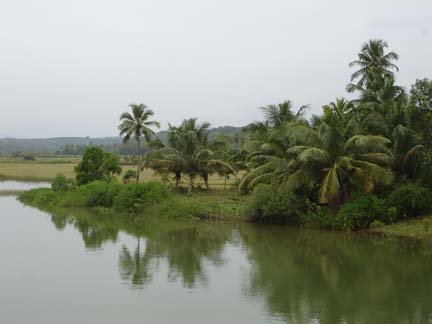
A Coastal estuary

A Coastal estuary
Holegadde near Honavar,Uttara Kannada dist, Karnataka

Copy? Right - but kindly remember to acknowledge!

Creative Commons License
This work is licensed under a Creative Commons Attribution 3.0 License.

" tulu-research.blogspot." ತುಳು ರಿಸರ್ಚ್. ಬ್ಲಾಗ್‌ಸ್ಪಾಟ್‌. ಇನ್

" tulu-research.blogspot."  ತುಳು  ರಿಸರ್ಚ್.  ಬ್ಲಾಗ್‌ಸ್ಪಾಟ್‌. ಇನ್
Have a nice day !