Saturday, April 28, 2007

22. THE TASTE OF TULU NADU-2: (q.v.21).

We were discussing about Taste. My grandmother (Doddamma) was a great cook. She would make the cumbersome, tedious, daily cooking headache into a lovely hobby. Once upon a time she told me this story. There was a poor lady. She had five children. Feeding them was very difficult, because she had little means of income. One day somehow she cooked rice. But there was nothing at home to prepare ‘sambar’(Curry). While she was pondering what to do, a well-to-do lady, who was passing by, expressed her long bothering doubt. “Your sambar always smells great, what is the secret?” The poor lady thought for a while and answered. ‘It is a secret, promise me that you won’t tell anyone”. Inquisitive lady got more curious and said, “Promise. I won’t tell anybody”. Lady-No.1 let the secret out and said, “It is because of the magic stone”. Lady-No.2 never expected this answer. “Will you please demonstrate?” came the request.

Lady-1: “Why not?, in two minutes I’ll be at your home!”.

Lady-2 hurriedly went back home to receive Lady-1. Lady-1 took one vessel to prepare the “sambar” (that day, that was the only ingredient she had at home), proceeded towards the house of Lady-2. On the way she picked up a nice looking smooth pebble of the size of a paper-weight.

Lady-2: “Oh! You came. Have you brought the magic-stone?”

Lady-1: “Yes.” [She cleaned the stone thoroughly and handed over to Lady-1].

Lady-2: “Lovely!, but it looks ordinary”.

[Lady-1 did all the necessary initial preparations. Now we are in the next scene, where the magic stone was dancing inside the vessel in the plain boiling water].

Lady-1: “Give me a few chillies- just to make little spicy”.

Lady-2: “Is it done?”

Lady-1: “Yes, almost!, Do you have a little tamarind?”.

Lady-2: “Yes please, what else do you need?”

Lady-1: “Nothing!. If you want it little thicker, you can add a little dal”

Lady-2: “Let it be thicker” [ Gave a little thoor dal]. “Don’t you need any vegetables?”.

Lady-1: “It is optional, what do you have?”

Lady-2: “I have a few beans, a few brinjal, and tomato”.

Lady-1: “That would be fine”.[ In between, she continued stirring the mix].

Lady-2: “Is it done now?”

Lady-1: “Of course yes!, only a little salt to taste”

The sambar was done. All along the magic stone was rattling inside the vessel. Lady-2 tasted the sambar. It was tasty, nice smelling and Yummy!.

Lady-2: “What do you do with the magic stone?”

Lady-1: “ You just take it out and throw it away”

That day Lady-1 had enough to feed her children. The moral of the story is – the taste is relatively simple-but you only have to know how to blend different ingredients.

I remember some more details about this magic stone. Let us continue discussing……….

Thursday, April 26, 2007

21. THE TASTE OF TULU NADU:

(Please also see Blog Sl.No.10,11).

When Neil Armstrong first landed on the Moon, what did he see? The answer is, a Kaka’s petty shop and a Udipi Hotel. This is an old joke. This is also a positive attribute to the people of TuLu Nadu who excel in Food and Hospitality industry. Kakas are one of the sects of Malayali people. Udipi Hotel is a generic term used to indicate that it is a South Kanarese Hotel. The joke simply means that they are ubiquitous. Leaving petty shop behind let us straight away go to Udipi Hotel. The reason why they are everywhere is because, people like their food. Madrasi’s from the land of Idli Sambar, like their Kadabus (a variant of Idli). Spicy Andhraites who have contributed the word “Andhra Meals” like their Kori Rutti (Chicken – Rice_Roti). Bangaloreans who generally eat Masala Dosa like their Neer Dosa. Bombay-wallas who make 100s of flavors of ice creams like their Gadbud. Delhi bai-saabs who are “sweet people” like their wheat Halwas. These are a few of the dishes which have become generic trade names and have enticed millions of people across the country and beyond. People like these dishes because these dishes are tasty. Physiologists say that ‘Taste’ is a subjective matter. One man’s ‘Yummy!!!’ may be another’s ‘yucky!!!’. But the chemistry of Taste is not that simple. The ones who have mastered the art of culinary expertise know the ‘taste’ of taste. Surely ‘Taste’ and some of the ‘Karavali’ dishes need more discussion.

20. Earliest popular fruit in the Indian subcontinent

Which is the earliest popular fruit in the Indian subcontinent? In my opinion, it is the humble jack fruit which was the most popular and possibly earliest used fruit in the Indian subcontinent. The fruit was called the ‘pela’ in Tulu, ‘palas’ in Kannada or simply the ‘phala’ in Sanskrit. Micheal Wizel (1999) who made a detailed analyses of the words used in Rigveda, the earliest Veda dated around 1700 BCE (early part of Rigveda), concluded that it contains several extraneous words that do not belong to the word structure of Sanskrit sensu stricto. Sanskrit words derived from Indo-european roots have a specific structure. His list of extraneous words includes the term ‘phala’.

Obviously, the extraneous Sanskrit word ‘phala’ in Rigveda must have been derived from the Tulu words ‘pela’ or ‘pala’ or the early Kannada word ‘palas’. Since the borrowed Sanskrit word ‘phala’ (=fruit) itself stands for the jack fruit, it should have been the most common fruit in those days and in those areas.

In Tulu language, both the ‘pela’ and ‘pala’ word versions are there. The Tulu word ‘palai’ (=wooden plank) is derived from ‘pala’ or ‘pela’ (=jack tree). The jack tree trunk was used for making wooden planks that were called ‘palai’.

The borrowing of Tulu/ Kannada/Dravida words into Rigveda by early scholars of Vedic tribes suggest that all these (Vedic, Tulu and other Dravida) tribes were living together (coexisting) in the Pirak region ca.1700 BCE, where early Vedas are considered to have been composed orally.

19. Moolasthana..

The bootha (spirit deity) shrines worshipped by Tulu people consist of small single room structures called ‘sana’ or ‘saNa’. The Tulu word ‘sana’ carries same meaning as the Sanskrit word ‘sthana’. The ‘moolasthana’ or ‘moolasana’ is actually the primary or the original (‘moola’) ‘sana’ for the particular family which became a lineage during the course of time Tulu people do not marry within the same lineage. For example, A boy from bangera ‘bari’ (=lineage) is not permitted to marry a girl of the bangera lineage. They are supposed to be brother and sister in relationship, being derived from the same bloodline or lineage.

The bari (lineage) concept is similar to the ‘gotra’ in Brahmin communities. The bari system exists among Malayalis or Kerala and Halakki gowda tribes of Uttara Kannada district also. The latter call it ‘baLi’in Uttara Kannada. I do not have information on lineage systems in Goa Maharastra and northern areas of India, at present.

Thus the bari/bali lineage system is common to people of West coast irrespective of the regional languages, Kannada Tulu or Malayalam.

Many of the bari names may have come from the place of their early settlement. The Bangera bari appears to have been named after ‘bangare’ or ‘bengare’ (= the sandy barrier spit along the coast), near Hoode, the estuary of Swarna and Sita rivers north of Udupi town. Similarly, the bari Suvarna might have been named after the river Swarna. Both these names indicate geographical locations where the tribes settled initially. The ‘kunda’ in ‘Kundar’ refers to an earthen or stone pillar or a place like the present Kundapur. ‘Suvarna’ means gold and similarly ‘Kanchan’ also refers to gold. The adjective gold may signify the gold extractor (gold panning expert) or simply may indicate the golden skin colour of the founder person of the lineage. Incidentally, the Tamil Sangam literature describe an unspecified ‘Koshar’ tribe from the west coast, who preferred to decorate themselves with golden ornaments. The Sanskrit surname ‘Shriyan’ refers to ‘shri’ or wealth. ‘Kotian’ refers to one who maintained the ‘koti’ (= the storehouse), if not the ‘kote’ (=the fort). ‘Kukkian’ may denote someone from a mango orchard, (kukku=mango). ‘Salian’ stands for the annual whereas ‘Tingalaya’ means the monthly.

All the lineage surnames may not be of single generation. There could be several generation of lineages as result of resettling of people.

Manjunath reports that Tulu baris have equivalent but different maternal lineage or ‘tavazhi’(bari is ‘Vadiari’ and Tulu bari ‘Suvarna’ is ‘Konkani’ in Kerala region. The term ‘Konkani’ refers to those who came from Konkan coastal region. The northern west coast mainly Goa coast is having a nonlinear, crooked coastline. The term Konkan (‘konk’=curved) probably refers to the curved, beak-like beach morphology. Therefore, the Konkani bari refers to those resettled lineages migrated from Konkan region.

Thus overall it appears that these coastal tribes Halakkis, Tulus and Malayalis came from north before settling in the west coast. They share similar lineage characters, the lineage names mostly being derived from the place of their settlement. Besides lineage, they also share the concept of ancient Brahma worship. Halakkis and others in Uttara Kannada call it ‘Bommaya devaru’, Tulu people call it ‘Bermer’ or ‘Bermeru’. The Bommaya devaru is an image of horse mounted soldier like Bermer of the Tulu people.

Saturday, April 21, 2007

18. Locations of Moolasthanas in Dakshina Kannada & Udupi districts

The Moolasthanas are the original settlements of Tulu tribes before they split into various castes based on their occupations. It can be estimated based on crude markers that the Tulu migrant tribes settled in coastal parts of Karnataka about 2200(±200) years ago. The estimation of settling date can be made more accurate with availability of more accurate markers. Fishing was, apparently, one of the earliest occupations they could adapt to.

The ‘Mogaveera’ monthly, Mumbai, (March 2007) has published a list of Tulu Moolasthanas that celebrate annual festivities during March to May period this year. The list is provided for studying some of the locations of Moolasthanas in the coast. There could be more Moolasthanas than given in the list. Documentation of more than one Moolasthana for a lineage possibly indicates subsequent migration of the fraction of the

Lineage

Location

Village

District

Amin

Yermal

Tenka

Udupi

Bangera

Hoode

Udupi

Gujaran

Sultan-battery

Bolur

Mangalore

Kanchan

Polipu

Udupi

Karkera

Baikampadi

Mangalore

Karkera

Yermal

Bada

Udupi

Kotiankar

Kaup

Udupi

Kundar

Kodi

Hejmadi

Mangalore

Maindan

Mulki

Mangalore

Mendon

Kote

Katpadi

Udupi

Pangalannaya

Baikamapdi

Mangalore

Puthran

Mulki

Mangalore

Puthran

Tadambail

Surathkal

Mangalore

Salian

Kadike

Haleangadi

Mangalore

Salian

Yermal

Bada

Udupi

Salian

Palimar

Udupi

Shriyan

Gudde

Pangala

Udupi

Shriyan

Kadapi kariya

Kuloor

Mangalore

Suvarna

Hiriyadka

Udupi

Suvarna

Kulai

Mangalore

Tingalya

Kadike

Haleangadi

Mangalore

lineage.

Wednesday, April 18, 2007

17. Historic Mangalore: Port of Bukkapatna

The geography of Mangalore city has changed quite a lot through the historic times. The famous two rivers Nethravathi and Phalguni (Gurupur) that gave the name Kudla to Mangalore city have changed their drainage courses several times in the past. The numerous valleys within the city are mute testimonials to the river courses that have been shifted many times like in delta areas. Italian tourist Piyatro Delavale who visited Mangalore during 1623AD reported that Mangalore is surrounded by water on three sides. Such a geographic feature was visible when the two rivers were joining the Arabian Sea between Bukkapatna and Kudroli-Alake area. Thus the Kodialbail and Attavara valleys were the locales where the rivers flew during the cited historic times.

While geological evidences like remnants of river valleys and pebble rich sediments indicate the ancient drainage courses of the two rivers, the historical place names corroborate the other half of the story.

Mangalore was under the rule of Vijayanagar Empire during 1336-1650 AD. Hakka and Bukka brothers ruled Vijayanagar at Hampi. Vijayanagar kings established a port at Mangalore for the purpose trade and exports. The port they constructed was not near the present New Mangalore Port or the old Port of British period at Bunder area. But surprisingly, it was located at the Bukkapatna area, near the present Urwa civic extension. Bukkapatna is a strange name for Tulunad. But then it was the port named after the Vijayanagar King Bukka. Even today there are many fishermen families around the area suggestive of relics of settlements around the ancient Bukkapatna port. Urwa is another old historic name. Uruwa in Tulu stands for the bamboo gate common in rural households. It also stands for the check-post. It makes sense to have an administrative check-post near the Bukkapatna port to verify materials and documents and to collect taxes in those days. Nearby Uruwa is Kottara extension. Kottara is a storehouse, stockyard or granary, again related to the Vijaynagar regality.

On the southern side of Bukkapatna is Kudroli, where the presently famous artful temple of Gokarnanatheswara has been built. The name ‘Kudroli’ has been interpreted as Kudure+Oli or horse-yard by some, implying that the location was named after the ground where horses were kept. But it seems to me that it was Kuduru+ Oli originally. ‘Kuduru’ means island within the river. ‘Oli’ means village, a word derived or influenced by Marati language. The reference name ‘island village’(<>

Tippu Sultan ruling from Sriranagpatna, constructed at Mangalore a battery for storing armaments and explosives, known as Sultan battery during ca. 1775 AD for warfare against enemies entering from the Arabian Sea. The location of Sultan battery is close to Bukkapatna, thus again proving the location of the ancient port at Bukkapatna.

Before the Vijayanagar Empire, the Alupa chieftains of Pandya dynasty were ruling Mangalore (ca 4th century to 13 century AD). It appears that their township was at Pandeswar which was on the banks of Nethravathi at that time. On the southern bank of Nethravathi was the township of Mangalapura, established after a queen from Malabar area who renounced her regality and settled in the area. Attavara (Atta+avara) is named after the ground on the other side of the river. Bolar (Bolu+Ara = barren or planar ground) was located near Mangalapura and Bolur (Bolu+Ooru=planar village) was near the port of Bukkapatna. For some time during 6th to 8th century AD, the Alupa chieftains ruled from Kulashekara area, named after the King (or chieftain) Kulashekara. At that time Kulashekara was located on the bank of a river. Apparently the rulers shifted their township from Pandeswar for some geomorphic problems like change of river course especially of River Nethravathi.

Somewhere during the end of 18th century AD, the river Phalguni (Gurupur) adapted a drastic change in its course. Until then, the river was bending near Panjimogaru and Marakada and flowing into Kottara and Kudroli areas. It took a westerly turn near Kulur flowed up to Tannirbavi and then adopted a southerly course and joined River Nethravathi. From then onwards, Rivers Gurupur and Nethravathi debouch into Arabian Sea together at a place near Ullal, south of Mangalore as can be seen today.

Sunday, April 8, 2007

16.Mangalore: Kudla and Nitria


Mangalore, the sultry and vibrant coastal town of Karnataka, has a long history. It also has several alternate names. Tulu people call it Kudla; Konkani’s prefer it as Kodiala; Malayalam people call it Mangalapuram; Beary people prefer the term Maikala. The Arabian traders preferred the term Maikala for Mangalore, possibly around 6th century AD. Possibly it was an Arab word. But there is little written history.

In Greek literature of early Christian era, there is said to be reference to an Oloikhera, which has been interpreted as Greek version of the name Aluva Kheda.

We do not find mention of either Mangalur or Kudla in Greek reports. Instead we find the port of Nitria mentioned. Nitria was probably the port located on the estuary of River Netravathy. Nitria must have been derived from an Indian word, possibly something like Netra or Netria. Geological inferences reveal that the near the confluence between the Rivers Netravathy and Gurpur there was an eye shaped island. This eye shaped half-island (small peninsula), Netra (=eye) or Netriya, must have prompted the Greek historians to refer to as Netria. In that case, name of the River Netravathy also must have been derived from the shape of the island. Netra or Netriya If this deduction is correct then the earliest known name of Mangalore appears to be Netra or Netriya.

Mangalore is the anglicized version of the name MangaLooru. Premilla, a queen of Malabar, renounced her kingdom and became a disciple of Matsyendranath of Nath cult. She traveled with her Guru towards Kudla (or Mangalore) but had to settle near Bolar as she fell ill on the way. Eventually she died there and local people built a temple in reverence to her. The temple was renovated subsequently by an Alupa ruler, Kundavarma during the year 968 AD. Thus the town was known as Mangalapura.

The term Mangala also means fort, so a few believe because an ancient fort the name came. Infact,the name Mangalapura is found in the inscriptions earlier to the period of installation of Mangaladevi temple, ie., 968 AD. The Mangaladevi temple in the southern part of the city, reminds us that the city was named after goddess Mangaladevi. Thus Mangalapura later became Mangalooru during the Vijayanagar period. They called it Mangalur Rajya.

The name Kudla is a native geographic term indicating confluence of two rivers. The words KooD or KooDi (joined)+ala(=rivers) have become (1) kooDala > Kudla , and (2) kooDiala > koDiala. In other words, Koodla or Kudla is the Tulu equivalent of the Sanskrit word, sangam.The word Koodala is also there in Kannada. The river confluence of Kudalasangama is quite famous since the time of Basaveswara, the social reformer.Similarly the township at the confluence of Tunga and Bhadra rivers in Shimaoga district is known as Kudli.

A number of significant geographic modifications have taken place in Mangalore area during the historical past. At present, River Nethravathy flows westerly and joins the Arabian Sea, south of Mangalore town and north of Ullal area. And the other River Phalguni (Gurpur) flows westerly up to Tannirbavi, near New Mangalore Port. Near Tannirbavi, very close to the beach, hardly 500 meters from the beach-sea interface, River Phalguni takes an abrupt southerly turn and flows southward till it joins the River Nethravathy north of Ullal.

This geographic situation was much different during the historical past. The rivers Phalguni and Nethravathy were flowing within the present city area of Mangalore and joining the sea near the Alake-Bokkapatna area.


Blog Archive

Books for Reference

  • A Comparative Study of Tulu Dialects By Dr. Padmanabha Kekunnaya. Govinda Pai Reserach Centre, UDupi. 1994
  • Koti Chennaya: Janapadiya Adhyayana. By Dr. Vamana Nandavar. Hemanshu Prakashana ,Mangalore.2001.
  • Male kudiyaru. Dr B. A.Viveka Rai and D.Yadupathi Gowda, Mangalore University,1996.
  • Mogaveera Samskriti By Venkataraja Punimchattaya. Karnataka Sahitya Academy.1993.
  • Mugeraru:Jananga Janapada Adhyayana. By Dr Abhaya Kumar Kaukradi.Kannada & Culture Directorate,Bangalore & Karnataka Tulu Academy, Mangalore,1997.
  • Puttubalakeya Pad-danagalu. Ed: Dr B.A.Viveka Rai,Yadupati Gowda and Rajashri, Sri Dharmasthala Manjunatheswara Tulu Peeta. Mangalore University.2004
  • Se'erige. Ed:Dr K.Chinnapa Gowda.Madipu Prakashana,Mangalagangotri,2000.
  • Studies in Tuluva History and Culture.by Dr P Gururaja Bhat (1975).Milagres College,Kallinapur,Udupi.
  • Taulava Sanskriti by Dr.B.A.Viveka Rai, Sahyadri Prakashana,Mysore 1977
  • TuLu naaDu-nuDi By Dr.PalthaDi Ramakrishna Achar, Puttur.
  • TuLu NighanTu. (Editor in Chief: Dr U.P.Upadhyaya, Govinda Pai Research Centre,Udupi. Six volumes. 1988 to 1997
  • Tulu Patero-A Philology & Grammar of Tulu Language by Budhananda Shivalli.2004.Mandira Prakashana Mangalore. p.317. (The book is in Tulu Language using Kannada script)
  • TuLunadina ShasanagaLa Sanskritika Adhyayana. By Shaila T. Verma (2002) Jnanodaya Prakashana,Bangalore, p.304.(Kannada)
  • Tuluvala Baliyendre. Compiled by N.A.Sheenappa Hegde,Polali,Sri Devi Prakashana,Parkala,1929/1999

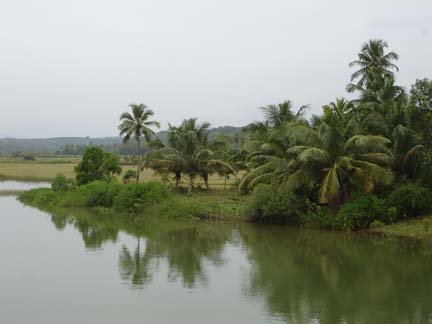
A Coastal estuary

A Coastal estuary
Holegadde near Honavar,Uttara Kannada dist, Karnataka

Copy? Right - but kindly remember to acknowledge!

Creative Commons License
This work is licensed under a Creative Commons Attribution 3.0 License.

" tulu-research.blogspot." ತುಳು ರಿಸರ್ಚ್. ಬ್ಲಾಗ್‌ಸ್ಪಾಟ್‌. ಇನ್

" tulu-research.blogspot."  ತುಳು  ರಿಸರ್ಚ್.  ಬ್ಲಾಗ್‌ಸ್ಪಾಟ್‌. ಇನ್
Have a nice day !